Painter & decorator covering Northampton and surrounding areas

Wallpaper Hanging in Guilsborough

Old High Street walls in Guilsborough rarely run true, so most papering here starts with lining paper and careful pattern set-out.

  • Over 30 years experience
  • Free quotes & advice
  • Fully insured & trained
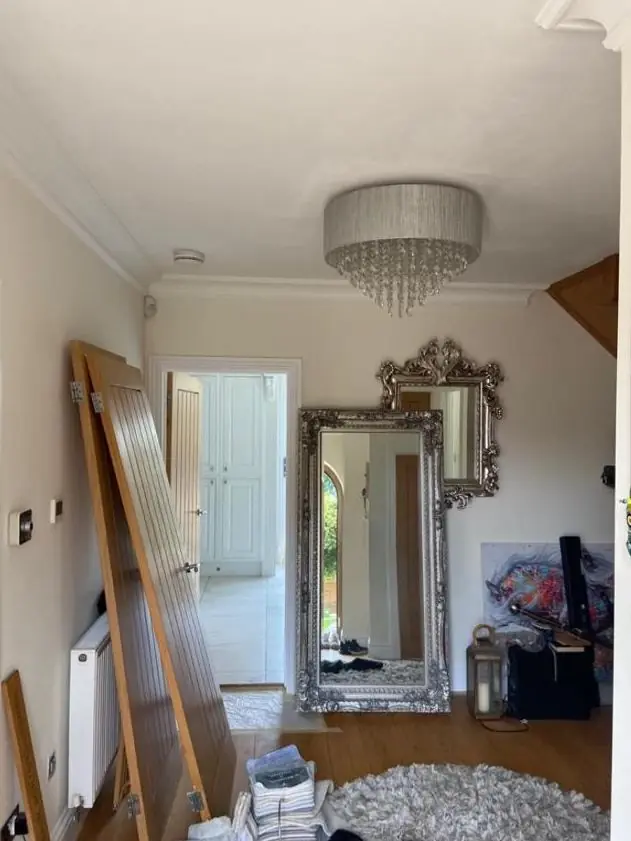
Hallway with chandelier and ornate mirrors, cream walls painted and oak doors propped ready

We hang wallpaper in Guilsborough, about 9.3 miles north-west of Northampton in NN6. In the village's 17th- to 19th-century stone and brick houses, uneven lime plaster usually needs lining paper first, while the later houses at Church Mount generally have flat walls that suit feature and large-pattern papers.

Lining paper comes first on old High Street walls

Many of Guilsborough’s older houses were built between about 1630 and the early 1800s, in lias stone or brick with plaster laid straight onto the masonry. Over time those walls bow, settle and pick up patch repairs in different materials. Hang a modern non-woven paper straight onto that and every hollow, ridge and filled crack shows through, especially under a low winter sun coming across the wall.

So in most of the older houses we start with lining paper, hung horizontally so its joins don’t line up with the joins in the finish paper. It evens out small dips, gives the paste an even surface to grip, and bridges hairline cracks in the lime. Where the plaster is loose or crumbling we make it sound first. Lime plaster is repaired with a compatible lime or flexible filler, never a hard gypsum patch that pulls away at the edges.

Old walls and breathable papers
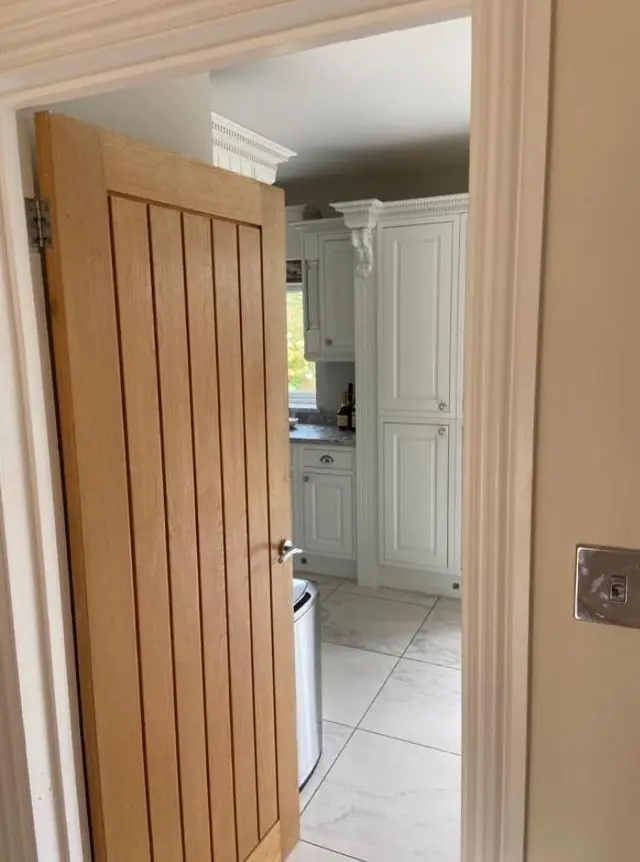
Oak door opening onto a kitchen, with off-white walls and freshly glossed frame

A solid lias wall moves moisture in a way a modern cavity wall doesn’t. Heavy vinyl wallpapers sit on the wall like a waterproof sheet, and in a damp-prone room of an old stone house that can lead to mould or lifting seams. For those rooms we usually suggest traditional paper-based or non-woven papers that let some moisture through, and we leave vinyls for kitchens and bathrooms in later houses. If a wall already shows damp, we will tell you before any paper goes up, because no paper will hide it for long.

Stripping is its own job in these houses. Old papers may have been painted over several times, and steaming too hard can pull soft lime plaster away with them. We score and soak gently, and stop to repair as we go rather than leaving a wall that needs replastering.

Where the pattern meets a 300-year-old corner

The real skill in an old room is deciding where the pattern’s errors go. In houses as old as Rose Manor or the Old Grammar School, corners are rarely plumb, ceilings slope, and window openings in thick walls have deep reveals that each need papering back to the frame. Our approach is:

  • Hang from a plumb line set out at the focal point, often the chimney breast, so the pattern looks straight where you look most.
  • Let the unavoidable mismatch fall in the least visible corner, usually behind the door.
  • Choose looser, smaller or organic patterns for rooms with obviously sloping ceilings. Strict stripes and geometrics show every degree of tilt.
  • Paper reveals with care so the edge against stone mullion or timber casement frames stays tidy.

Feature walls in the newer homes
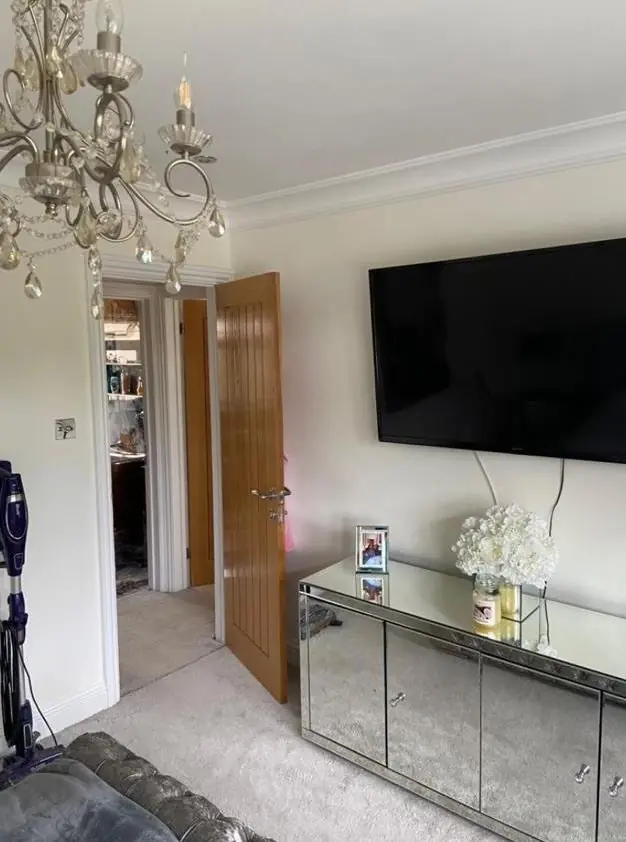
Living room around a wall-mounted TV, cream walls and white coving finished

The houses at Church Mount, built on the site of the old Guilsborough Hall, are much later than the High Street and usually have flatter plastered walls. These suit the papers that struggle in old houses: bold large-repeat designs, metallic and textured non-wovens, and feature walls where a single strong paper is set against painted walls. Lining is still worth doing on patched or previously stripped walls, but it isn’t the default the way it is in the older village.

If a house is listed, as twelve buildings in the village are, it is worth knowing that removing historic finishes can need consent from West Northamptonshire Council. Hanging new paper over sound plaster is normally ordinary redecoration.

Our full wallpapering process, from stripping to trimming, is on the main wallpaper hanging page. For other decorating we take on in the village, see our Guilsborough page. Guilsborough sits about 9.3 miles north-west of Northampton, and quotes are free.

Last updated by Dean, DH Painter & Decorator.
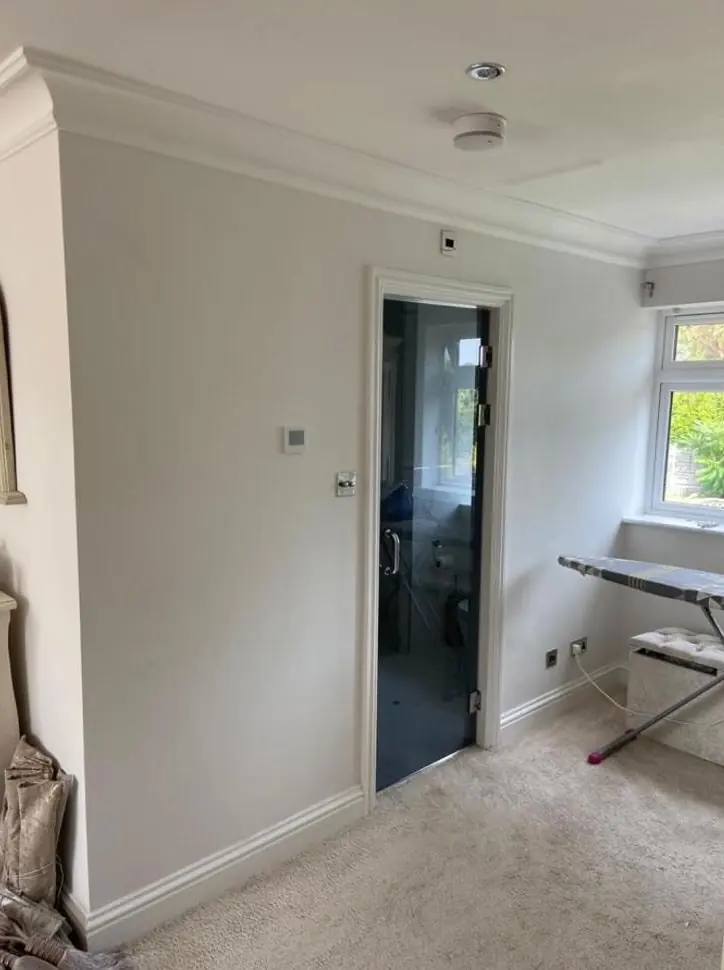
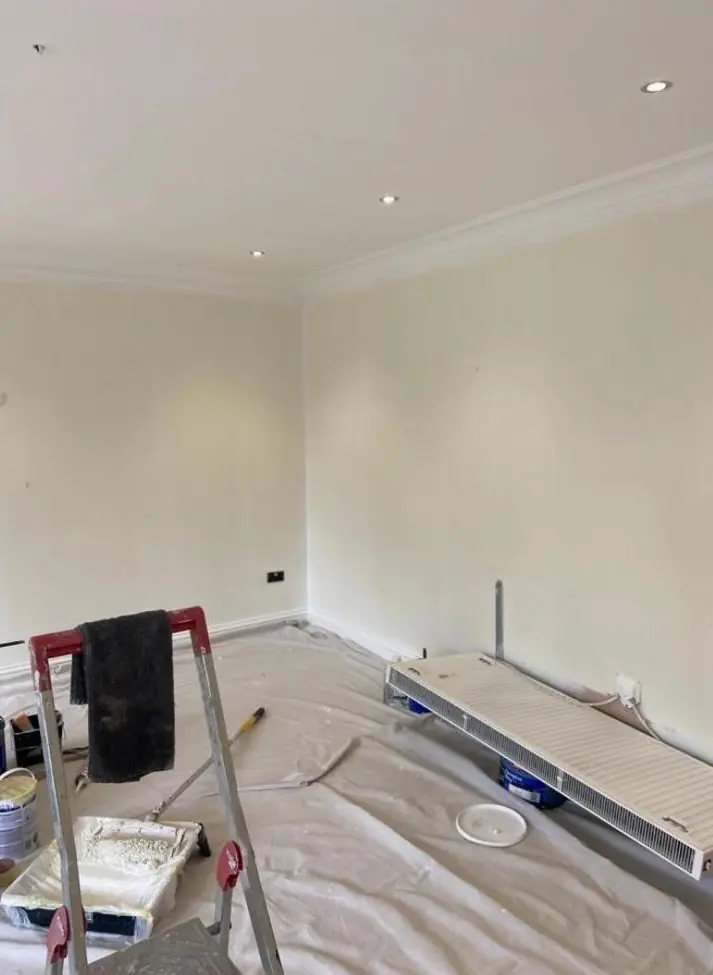
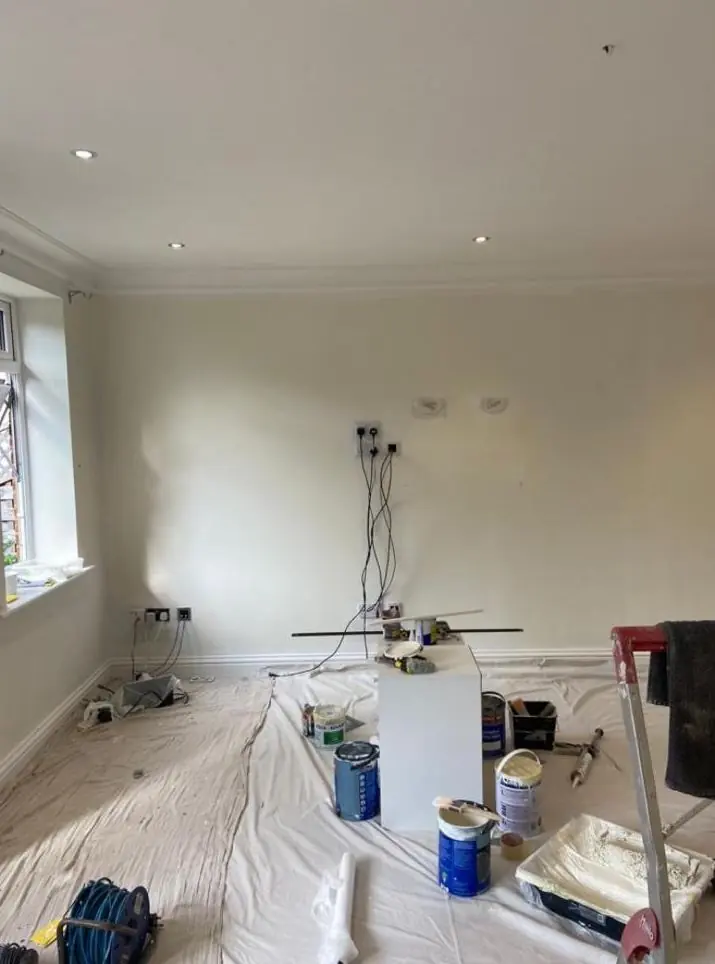
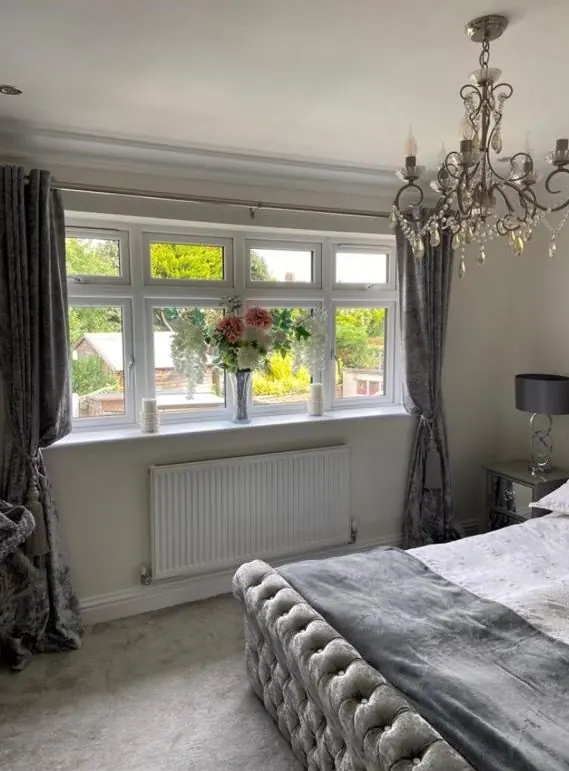
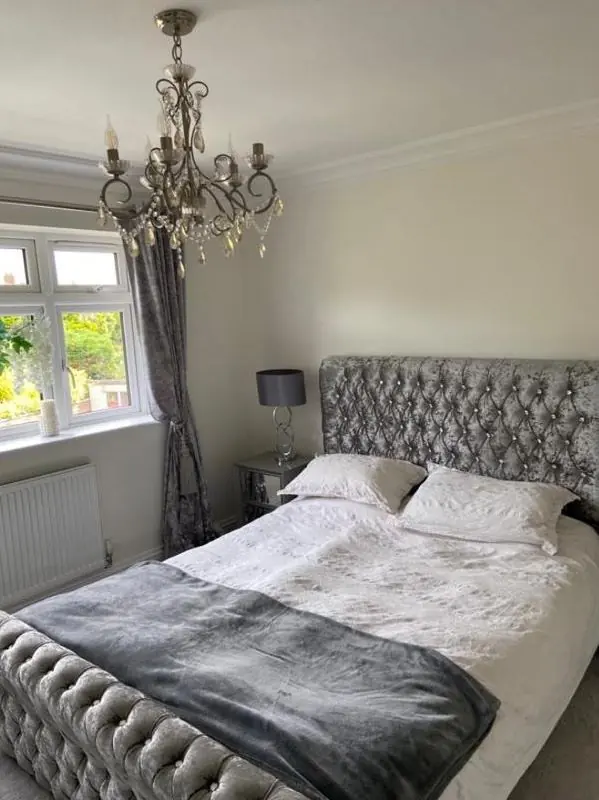
Room corner finished in pale grey-beige with white coving, skirting and door frame Corner of a lounge with walls painted soft white, dust sheets and radiator off the wall Living room walls painted off-white with dust sheets, roller tray and paint tins mid-job Bedroom window wall and radiator painted soft white, coving crisp above the curtains Bedroom walls finished in soft neutral cream by a Northampton decorator Bedroom in pale grey with white woodwork, French-style bed against the freshly painted wall

Wallpaper hanging in Guilsborough: your questions answered

Can't see your question? Call us on 07539 779 036 and we'll happily talk it through.

Why does wallpaper look bumpy in my old Guilsborough cottage?

The walls in the village's older lias and brick houses were plastered onto uneven masonry, and they move over the centuries. A thin modern paper shows every dip and crack. Hanging lining paper first, cross-lined so joins don't line up, gives a smoother base. Where the lime plaster is loose we repair it with a compatible filler before lining.

Can I use vinyl wallpaper in a lias stone house in Guilsborough?

In a kitchen or bathroom in a newer part of the house, yes. On the original solid lias walls we usually advise against heavy vinyls in living rooms and bedrooms, because they stop moisture passing through the wall and can encourage mould or lifting edges. Paper-based or breathable non-woven wallpapers are a safer choice on old stone.

Which wallpapers suit the newer houses at Church Mount?

Church Mount is later housing on the site of the old Guilsborough Hall, so its walls are generally flatter than those in the historic High Street. That makes it a good fit for large-repeat patterns, stripes, metallic finishes and single feature walls. Patched or previously stripped walls may still need lining, but many go straight to the finish paper.

Do I need consent to wallpaper a listed house in Guilsborough?

Hanging new paper over sound modern plaster is normally ordinary redecoration. Listing covers interiors, though, so stripping historic finishes, removing original plaster or covering panelling could need listed building consent from West Northamptonshire Council. If any of that comes up in your rooms, we will raise it before the work is booked.

What customers say about Dean

Most of our work comes from recommendations and returning customers. These are real reviews from customers after the job was finished, in their own words.

More customer reviews

After completing my gates I was then assured Dean was more than competent to repaint the inside of my property from top to bottom. It’s a large 4 bedroom house and was done to a very high standard. Once again I would highly recommend him.

Customer review Gates, then a full four-bedroom interior

I contacted Dean to get the outside of the house painted; the house is all roughcast render. He has done a fantastic job; the house is looking brand new. The same he did for our garage, painted our bedrooms x2, did extra jobs for us like skirtings and door frames, and painted even our gates. I could not recommend him enough; he is attentive, smiling, always on time, and nothing too much; I am so happy with what Dean has done; he went above and beyond. I have recommended him to all my friends and family.

Read full review
Customer review Roughcast render, garage, bedrooms and gates

Dean did a great job for a good price i'd be very happy to recommend him always on time polite and friendly.

Customer review Painting and decorating

Start your project

Get a free painting and decorating quote

Tell us a little about the job and we'll arrange a visit to look at it properly. Quotes and advice are always free, with no obligation.

What happens next

  1. We get back to you to arrange a convenient time to visit.
  2. Free visit. We look at the job and talk through colours, finishes and any repairs.
  3. Written quote. A clear price covering preparation, materials and the finish we agreed.

Request a free quote

Please enter your name.

Please check your email address.

Please enter a valid phone number.

Prefer to talk? Call 07539 779 036.

Call 07539 779 036Call nowFree quote