
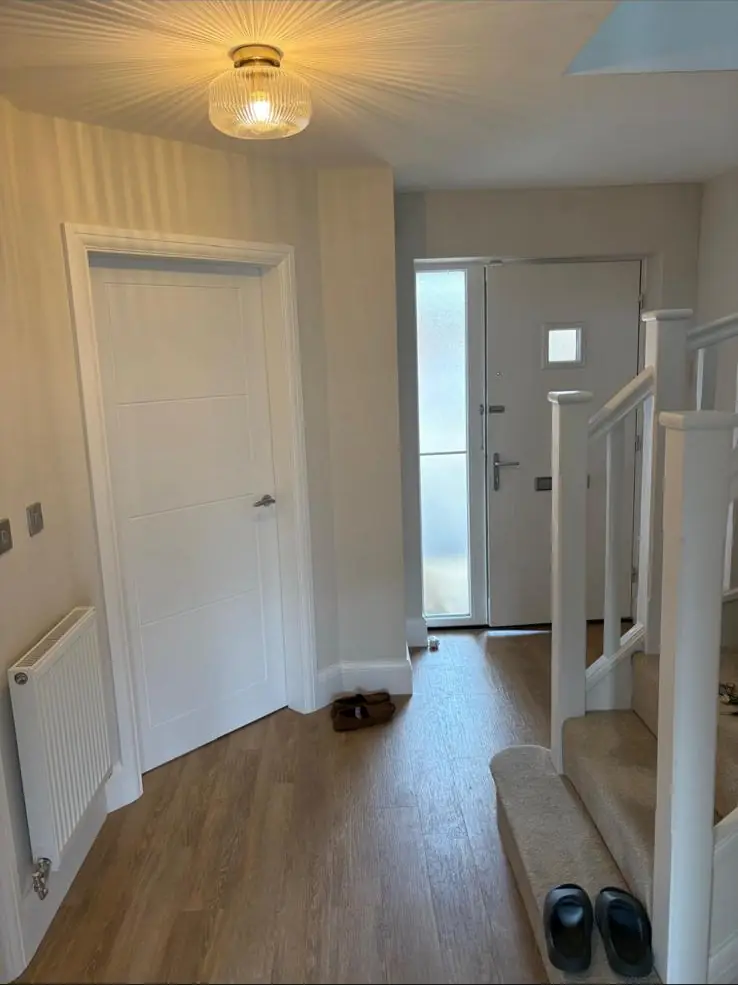


Much of Spinney Hill was built in the 1930s, and joinery of that age can carry old lead paint under later coats, so Dean tests before sanding. He paints doors, frames, skirtings, picture rails and stair woodwork in the semis, terraces and bungalows, and quotes after a visit.
| Fact | Detail | Source |
|---|---|---|
| Built 1930-39 | About 300 of 710 homes east of Kettering Road; 270 of 870 on the west side (VOA 2025) | GOV.UK |
| Ground floors | Suspended timber on sampled 1930s Greenfield Avenue houses | EPC register |
| Bungalows | 510 of 870 homes in LSOA 007B (VOA 2025) | GOV.UK |
| Semi-detached bungalows | 429-445 Kettering Road, 59 to 93 square metres | EPC register |
Is there lead in the paint on my 1930s doors?
Valuation Office records date about 300 of the 710 homes east of Kettering Road to 1930-39, and another 270 of 870 on the west side. Joinery in houses of that age has usually been painted many times, and the lowest layers may contain lead, which was common in household gloss and primers for much of the last century. Lead dust is harmful, especially to young children and during pregnancy, so before any dry sanding on original doors, skirtings, architraves or picture rails we test the old paint.
If the test is positive, the method changes: wet abrading instead of dry sanding, no burning off, sheets taped down and bagged up afterwards, and cleaning with a filtered vacuum rather than a brush. If it is negative, we key, fill and prime as normal. Either way, you know before the first sheet of abrasive comes out. The same goes for houses from 1955-64, the largest building band west of Kettering Road with 360 homes: their earliest coats can carry lead too, so any joinery that has never been stripped is tested.
Skirtings over a suspended timber floor
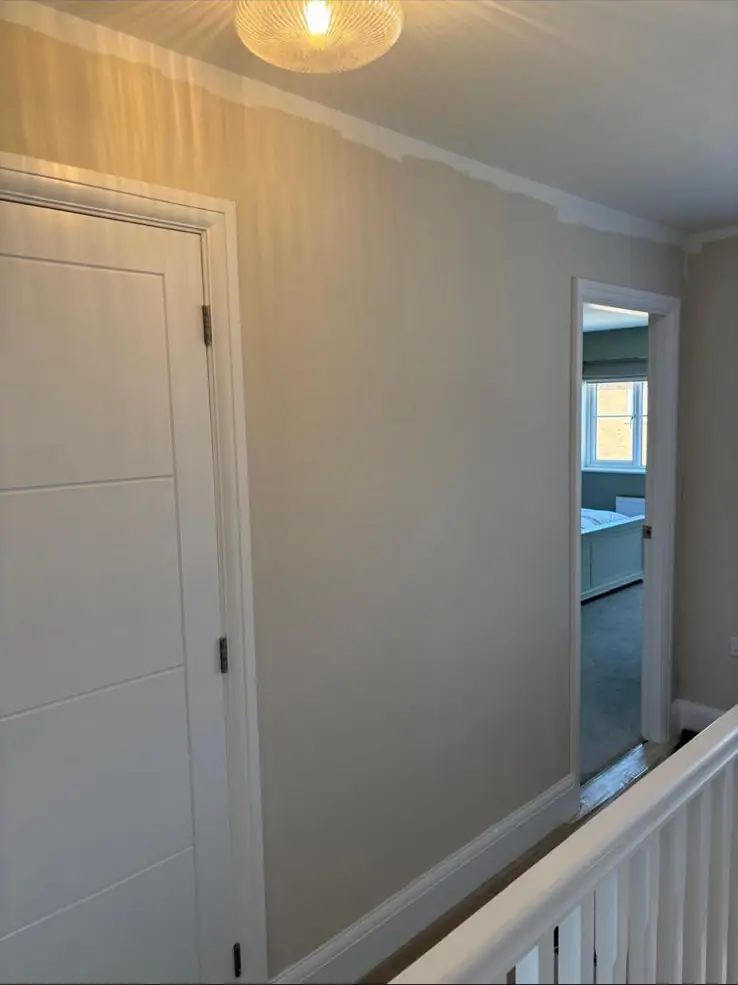
Energy certificates for Greenfield Avenue record suspended timber ground floors on the 1930s houses: joists over a ventilated void rather than a concrete slab. Those floors move a little with the seasons and with people walking across them, so the joint between skirting and floorboard opens when the heating dries the house in winter and closes again in summer. Hard filler in that gap cracks out within months. We run a flexible decorators’ caulk along the bottom edge, and along the top where the skirting meets the wall, and paint over it once it has skinned.
Those floors rely on airbricks to stay dry. If a skirting on an outside wall is soft or stained along its bottom edge, we look at the airbrick outside before painting, because damp timber won’t hold paint for long.
Keeping original joinery where it survives
No listing we found tells us how many Spinney Hill houses still have their original doors, skirtings and picture rails, and some have been modernised throughout. Where they survive they are worth keeping, and they repaint well once the build-up is dealt with.
| Joinery | Usual problem | What we do |
|---|---|---|
| Original panelled doors | Thick paint softening the mouldings; doors binding | Lead test, strip the worst build-up, ease the door, satin or eggshell |
| Deep 1930s skirtings | Gaps at the floor, dents from hoovers | Flexible caulk, fill and sand the dents, satin |
| Picture rails | Lost under wallpaper edges or several colours | Clean edges, then paint white or into the wall colour |
| Replacement flush or moulded doors | Factory primer that sheds paint | Key and use an adhesion primer first |
| Stair spindles and handrail | Wear from daily handling | Hard-wearing satin; handrail sometimes varnished instead |
Satin or eggshell suits 1930s joinery better than high gloss: it hides small imperfections in old wood and looks closer to the original finish. Water-based trim paints stay white; oil-based ones are tougher but yellow with age, which shows most in a dark hall.
A bungalow door job: every door off one hall
West of Kettering Road the Valuation Office counts 510 bungalows among 870 homes, including the semi-detached bungalows at 429-445 Kettering Road. In a bungalow every door usually opens off one hall, so a whole-house job on doors, frames and skirtings is easy to protect and needs no work on stairs. We do the doors in batches, so most rooms can still be closed at night, and finish the hall last, once the traffic through it has calmed down.
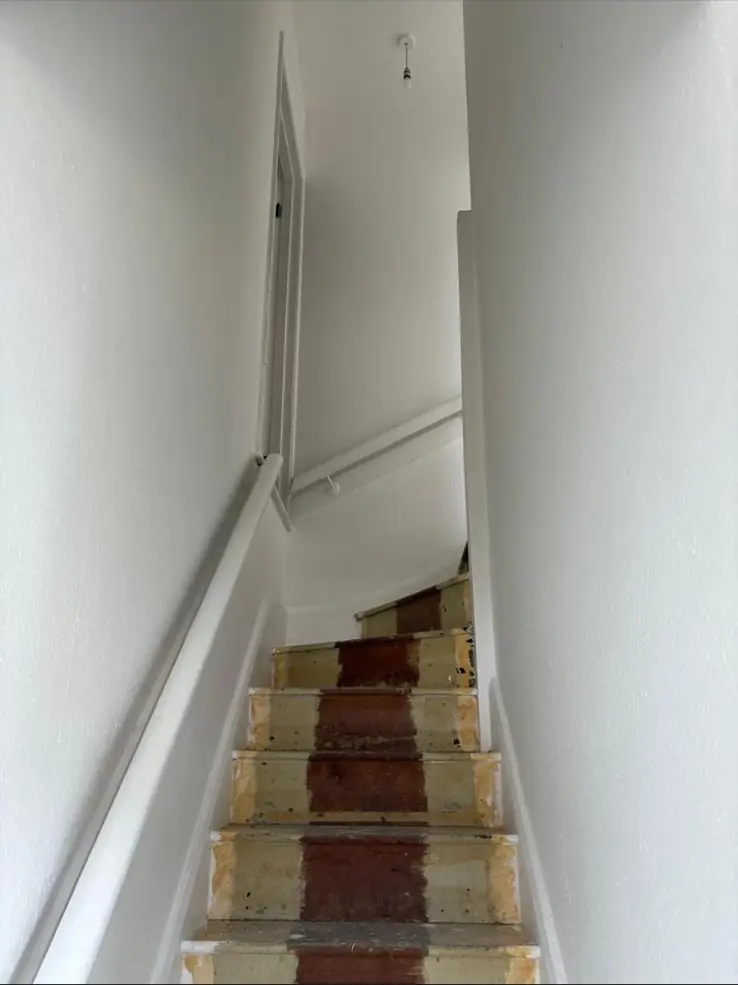
In the houses, the hall and landing doors and the stair woodwork go together; our hallways and stairs page for Spinney Hill covers the stairwell. For our general method on woodwork see the door, skirting and woodwork painting service, and for what moves a price, the cost guide. The rest of the area is on the Spinney Hill page.
Sources
- Council Tax: stock of properties, 2025, Valuation Office Agency (accessed 2026-11-16)
- Energy certificate, 1 Greenfield Avenue (solid brick, suspended floor, single glazing), EPC register (accessed 2026-11-16)
- Energy certificate, semi-detached bungalow, Kettering Road, EPC register (accessed 2026-11-16)
- Bay-fronted semi, Spinney Hill Road (sale listing), OnTheMarket (accessed 2026-11-16)
Last updated .