Dean hangs wallpaper in Spinney Hill, NN3, 2.1 miles north-east of Northampton's centre. The usual spots are chimney breasts and alcoves in lounge-diners and the angled walls of bay windows, with extra care in the listed Manfield Grange apartments.
Chimney breasts and alcoves in the lounge-diner
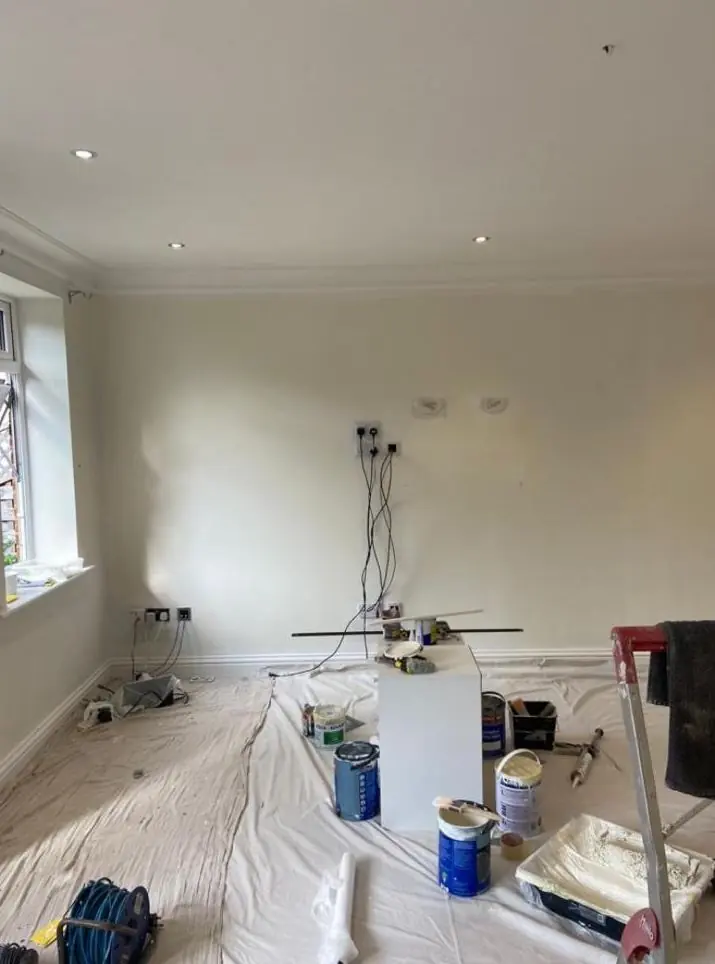
In the 1930s to 1950s semis that make up most of Spinney Hill, the chimney breast and its two alcoves are often still the focal point of the through lounge-diner, even where the fire itself has long gone. That makes the breast the natural place for a patterned paper. The alcoves can take the same design, a plain paint pulled from the paper, or lining paper painted to match the rest of the room.
A chimney breast is rarely as true as it looks. In houses of this age the breast can lean a few millimetres over its height, and the plaster on the return edges is sometimes soft or rounded. Before hanging, Dean drops a plumb line from the ceiling at the centre of the breast so the pattern sits symmetrically, then works outwards to both corners. Large motifs are centred on the breast rather than on the room, because that is where the eye lands as you walk in from the hall.
Papering the bay window wall
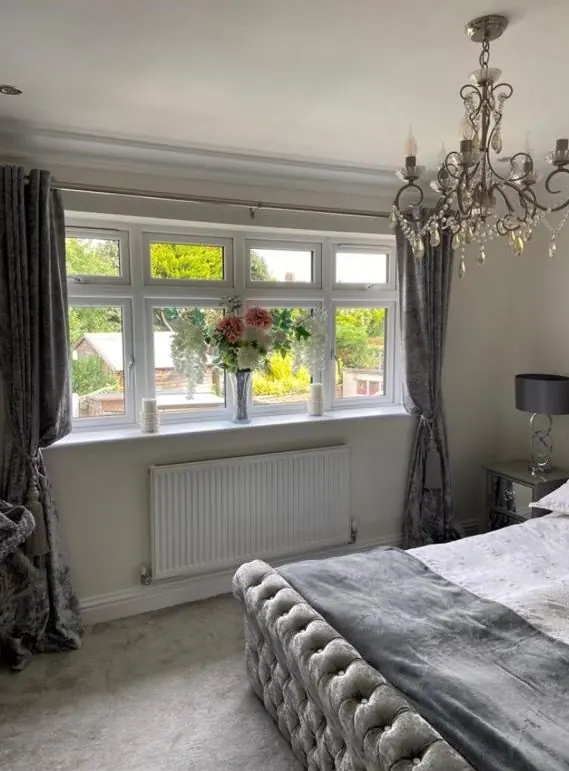
Bay fronts are a defining feature of the semis along Spinney Hill Road, and the walls inside a bay are among the trickiest in the house to paper. The faces are narrow and angled, each corner turns at more than ninety degrees, and the window reveals need wrapping. A bold geometric print exposes every small misalignment there. A random or small-scale pattern, or a textured plain, copes with the angles far better.
Some houses still have leaded-light bays, and where the frames are timber we trim carefully against them so paste stays off the leads and glass. Bays also run cool and catch condensation in winter, so we check the plaster beneath the window for damp staining before any paper goes up. Paper hung onto a damp patch will lift at the seams within a season.
Extended semis: lining paper over mixed walls
Lots of Spinney Hill houses have been extended at the rear with family rooms, annexes and conservatories. When a feature paper runs across a wall that is partly original plaster and partly new, the surface underneath varies in both porosity and texture. New plaster has to be sealed first, or it draws the paste out too quickly and the paper shrinks at the joins. Older walls with years of emulsion on them may need keying so the paste can grip.
Cross-lining evens out both. The lining paper is hung horizontally, so its joins never line up with the vertical joins of the finish paper. It adds time to the job, but it stops the old-to-new junction ghosting through a thinner paper. For heavy vinyls or grasscloth on these walls, lining is close to essential.
Traditional papers inside Manfield Grange
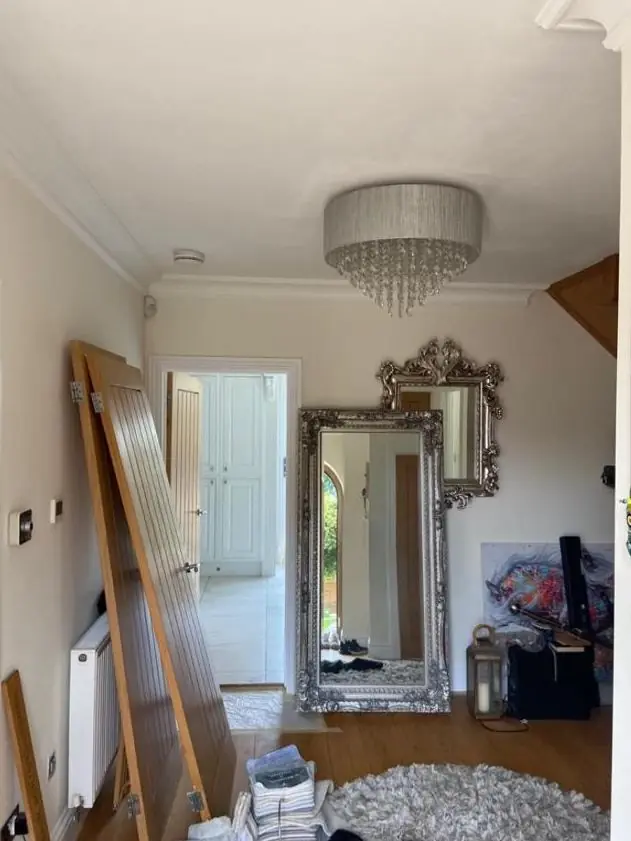
The apartments at Manfield Grange sit inside a Grade II listed house built between 1899 and 1902 for shoe manufacturer James Manfield, and the listing records panelling and decorative plasterwork inside. Wallpaper should not go over original panelling or plasterwork, and anything that would cover or affect original fabric needs checking with the council before work starts. Walls that are plain plaster, without listed detail, are a different matter. Damasks, stripes or Arts and Crafts style designs suit a house of that age, and we hang them with a paste that lets the paper be stripped cleanly later without pulling the plaster.
How a wallpapering job in Spinney Hill runs
Most semis here have a front driveway, so the pasting table and rolls come in close to the door. A single chimney breast is often done in a day once the wall is ready; a whole room with stripping and lining takes longer, and Dean will say how long when he quotes. For how we strip, prepare and hang, see the main wallpaper hanging service, and for everything else we cover locally, our Spinney Hill area page.
Last updated by Dean, DH Painter & Decorator.