DH Painter & Decorator paints fascias, soffits, gutters and downpipes in Little Billing, about 3.2 miles east of Northampton town centre. Most of the work is on the later houses around Valley Road, with a few traditional eaves in the listed core treated with extra care.
Why a Little Billing roofline survey starts with the roof covering
Ask for fascia painting in most Northampton suburbs and the job is much the same from house to house. In Little Billing the roof decides it. The thatched cottages on Church Lane and Orchard Hill, including Church Lane Cottage, Pyket Cottage, Knight’s Cottage and Corn Ricks, have no conventional fascia boards at all: the thatch overhangs the wall and sheds water clear of it. There is nothing to paint at the eaves, and we would not set a ladder against thatch to reach anything there.
The slate roofs are where traditional roofline joinery survives. The Priory has Welsh slate behind a stone parapet, so its rainwater is usually handled behind the wall rather than at a painted board. 2 Orchard Hill, the former Home Farmhouse, has a hipped Welsh slate roof with wide eaves, which means deep soffits and long runs of timber exposed on four sides.
Wide eaves and a bracketed cornice
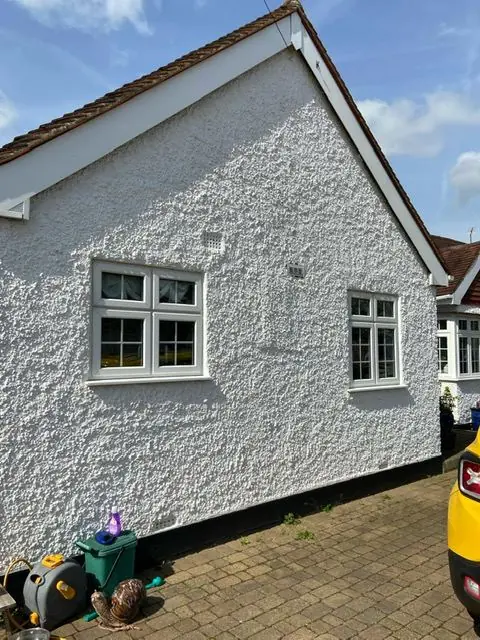
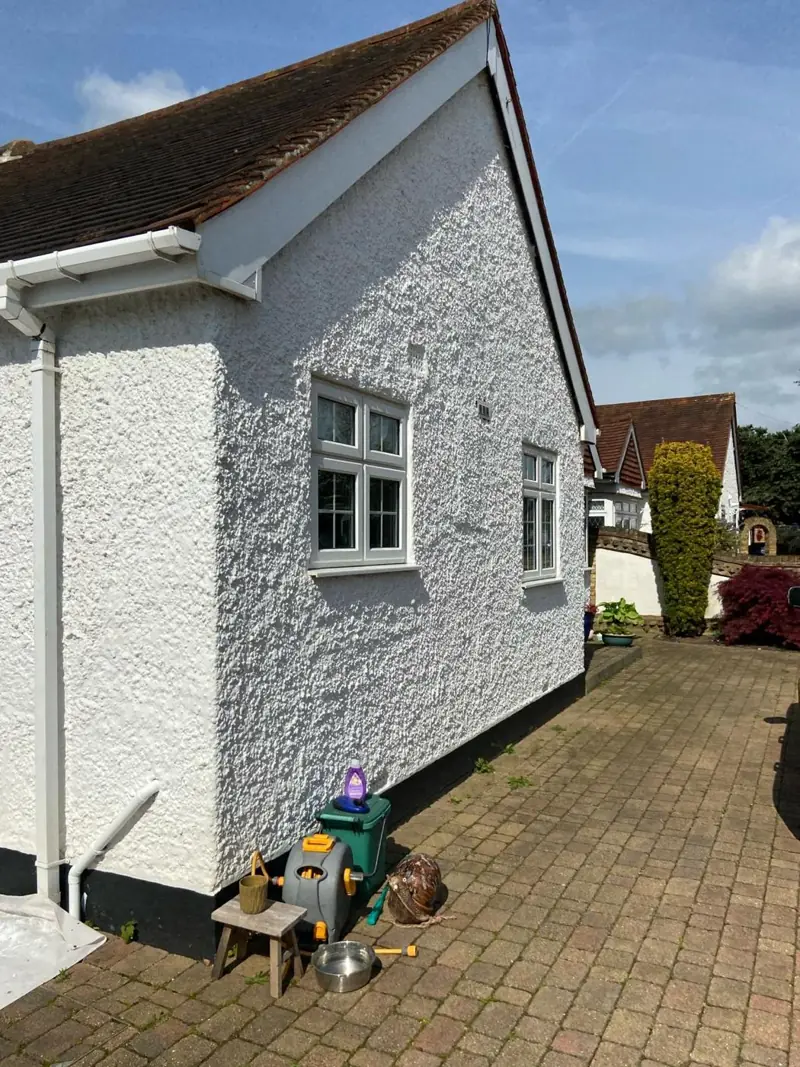
Wide eaves give good shelter to the walls but take a lot of weather themselves. The underside collects cobwebs and damp, and the boards on the north and east sides dry slowly. On a listed house like 2 Orchard Hill, we repair and repaint in the existing pattern, using a microporous system that lets old softwood move and release moisture, rather than proposing cladding or replacement boards.
The Old Rectory on Church Lane has a bracketed wooden cornice at the top of its front. A cornice like that is decorative joinery with brackets, mouldings and end grain, and each bracket is cleaned, primed and cut in by brush. Because the building is listed and now houses a day nursery, the timing and the product choice both matter: quick-drying, low-odour coatings and work planned around the nursery’s day.
Boards, gutters and downpipes on the later closes
Most roofline work in Little Billing is on the houses built around the old core, on streets such as Fishponds Road, Valley Crescent, Damson Dell and Blossom Way. These have standard timber or uPVC fascias and soffits. Timber boards are checked for soft spots, scraped, spot-primed and given undercoat and top coat. Weathered uPVC can be cleaned, keyed and painted with a primer made for plastic if you want a colour change or a fresher look.
Houses backing onto the Billing Brook woodland are worth a closer look at the back. Trees along the brook corridor drop leaves and seed into gutters, and blocked gutters overflow onto the boards below. When we paint, we also check gutter outlets and joints, because a fresh coat on a board that is soaked every time it rains will not last.
Reaching the eaves on a cul-de-sac
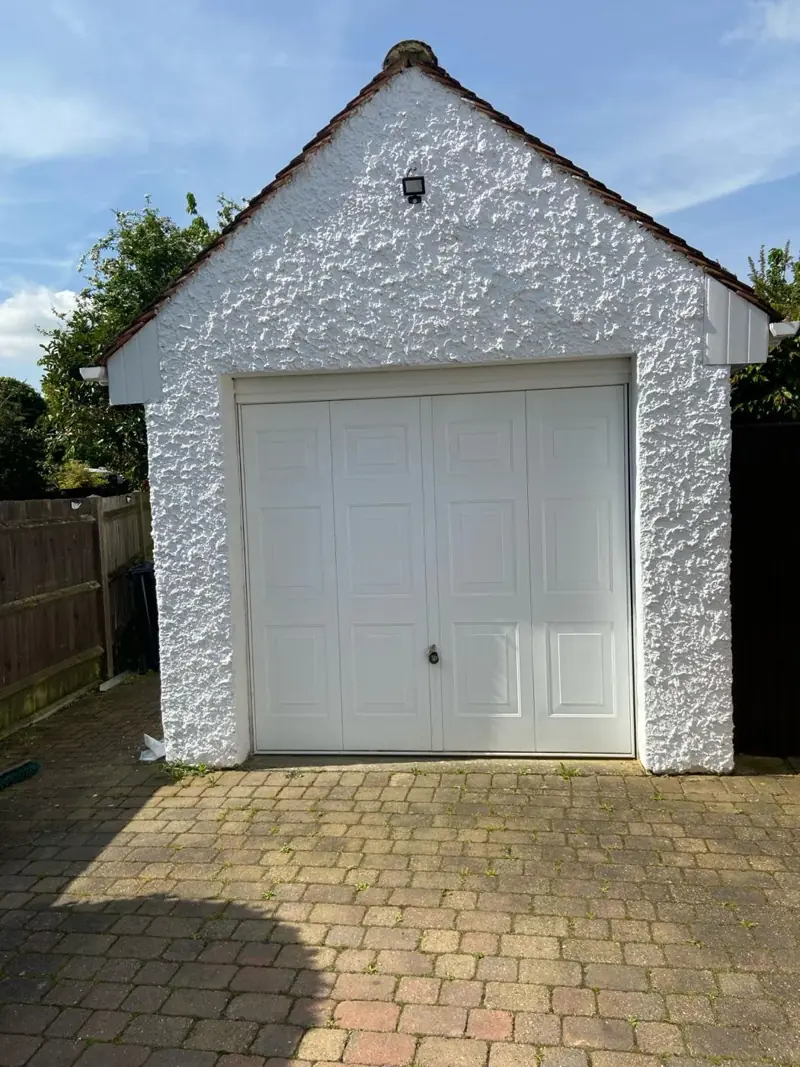
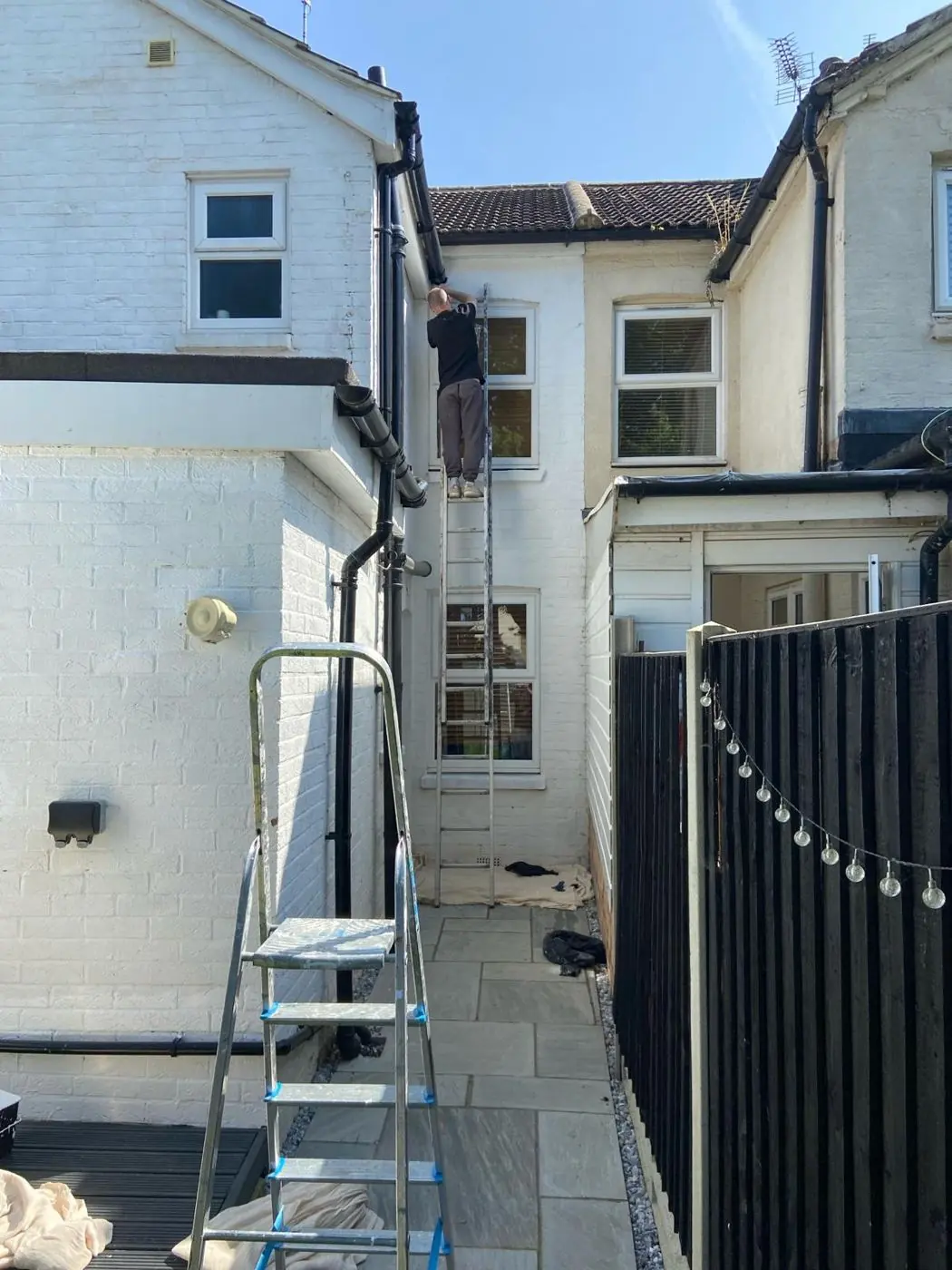
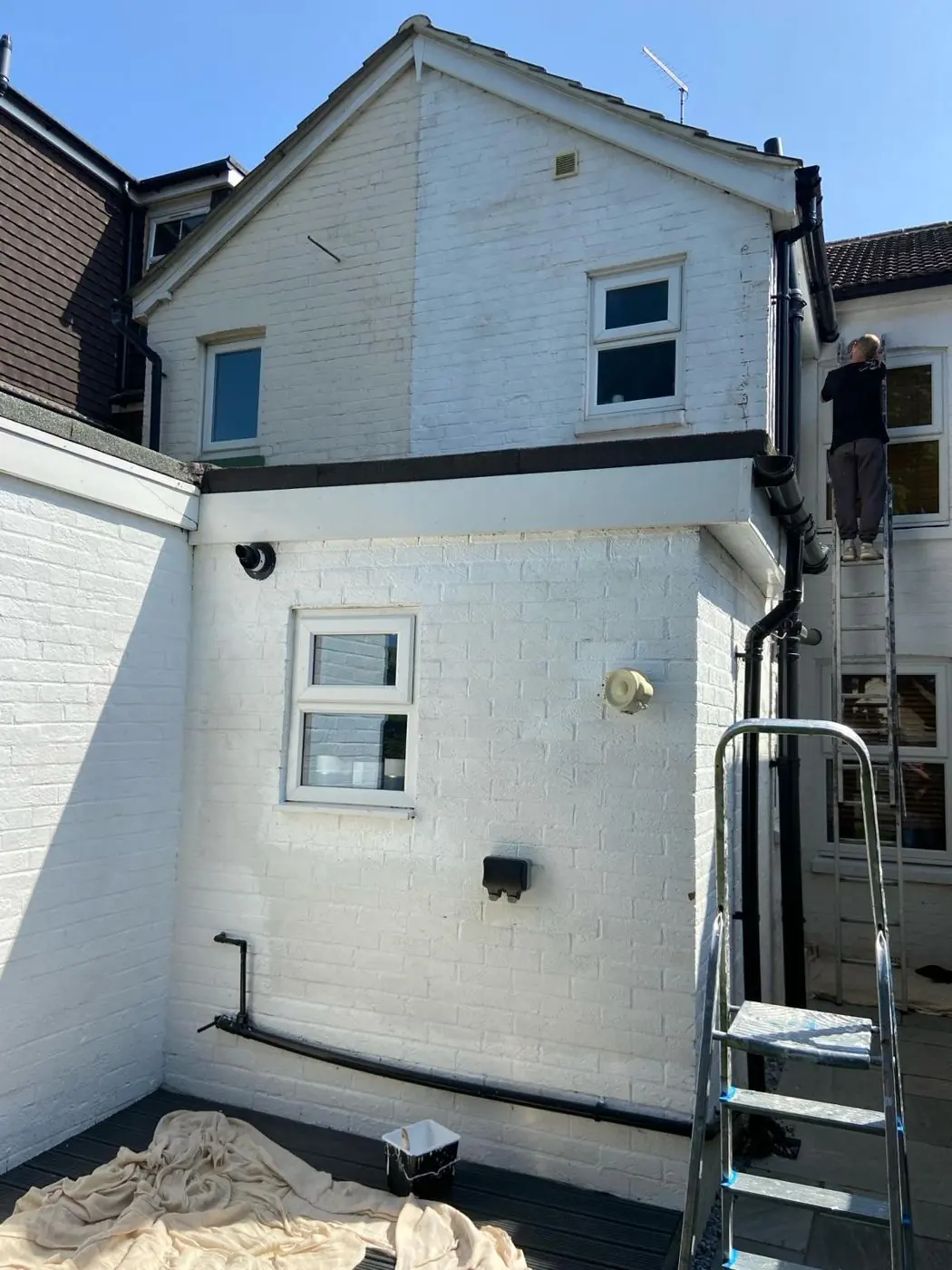
Front rooflines on the closes are usually easy to reach from the drive. The backs are harder, because side passages between the houses are narrow. We bring towers through in sections or work from ladders with stand-offs that keep weight off the gutter. Planning that on the survey visit keeps the quote accurate.
Colour is simpler on the closes than in the old core. A switch from white to a darker roofline on Home Farm Close or Pear Tree Close is the owner’s decision, with no conservation area in Little Billing to consider. The same change on 2 Orchard Hill’s listed eaves or the Old Rectory cornice is a matter for West Northamptonshire Council first.
The fascia and soffit painting page lists every stage of a roofline job. For other work in the village, see our Little Billing page.
Last updated by Dean, DH Painter & Decorator.