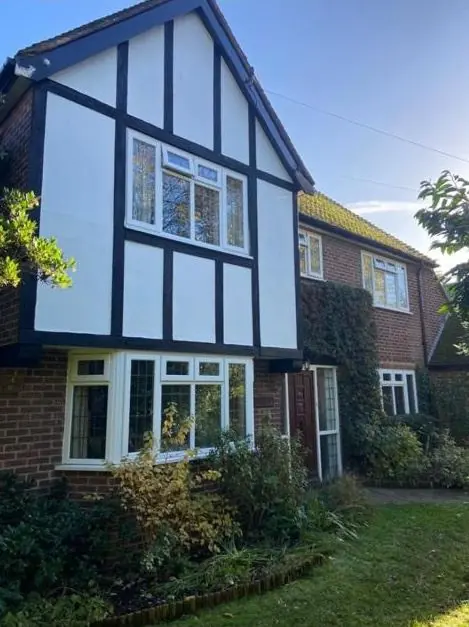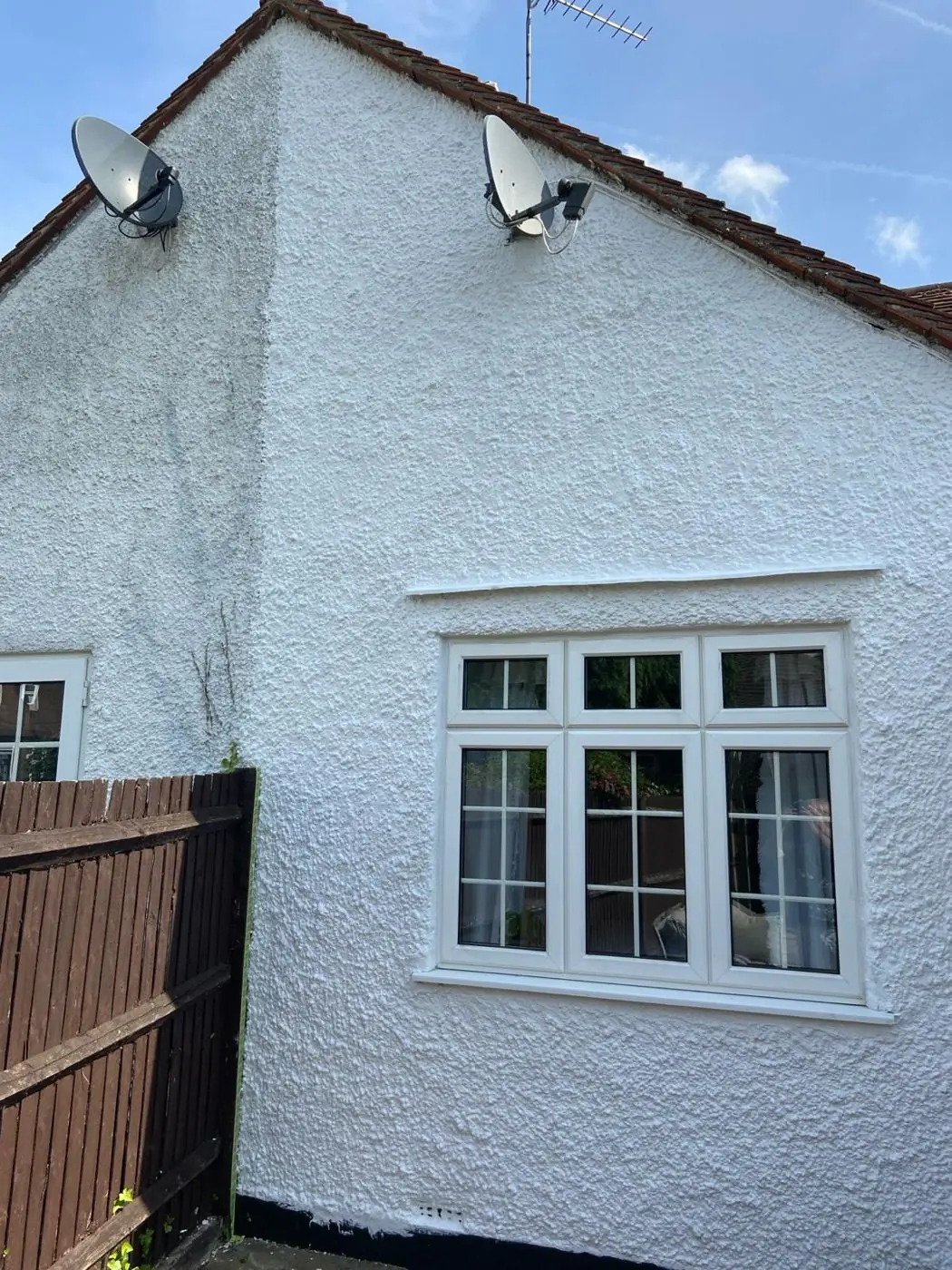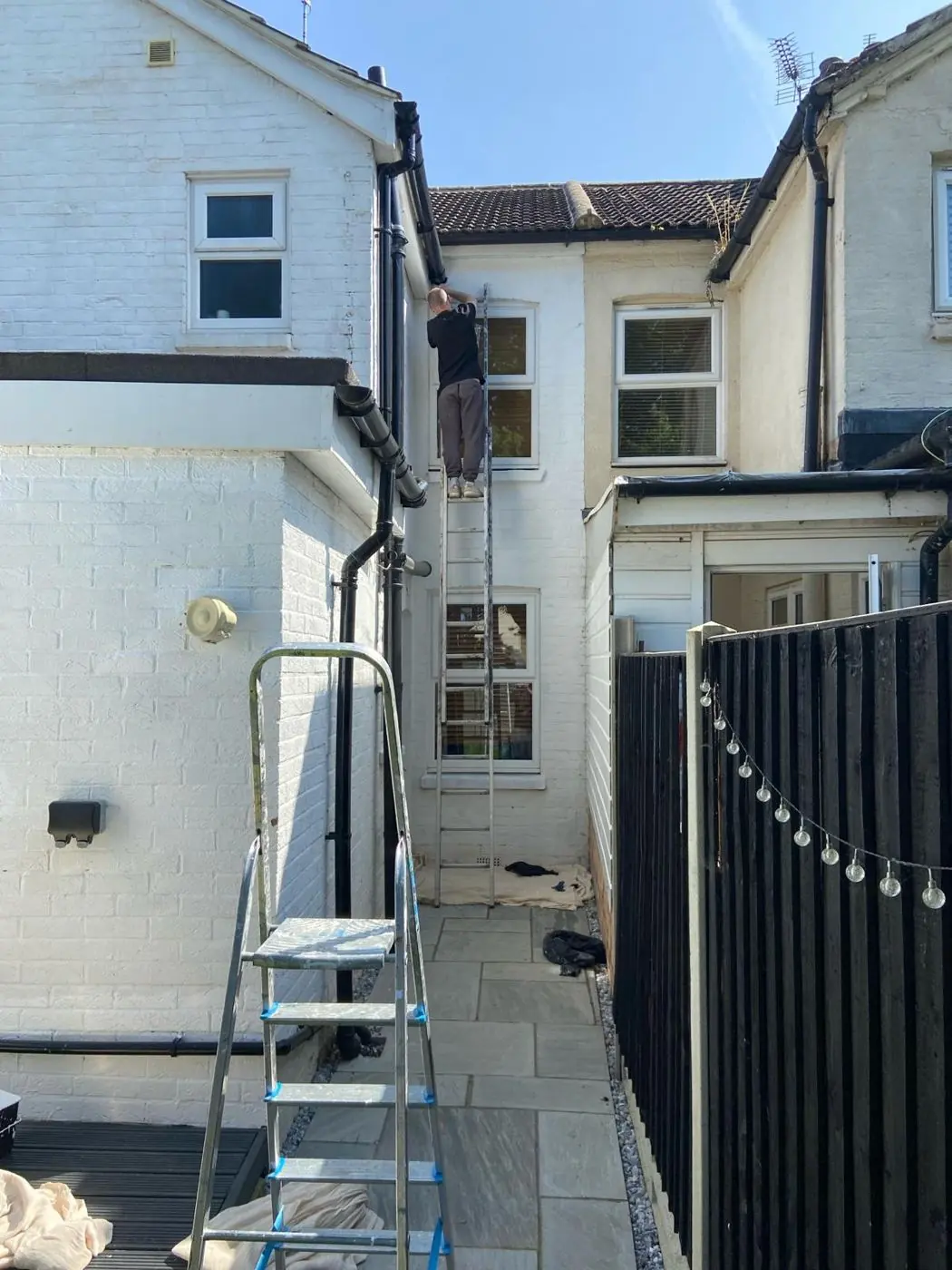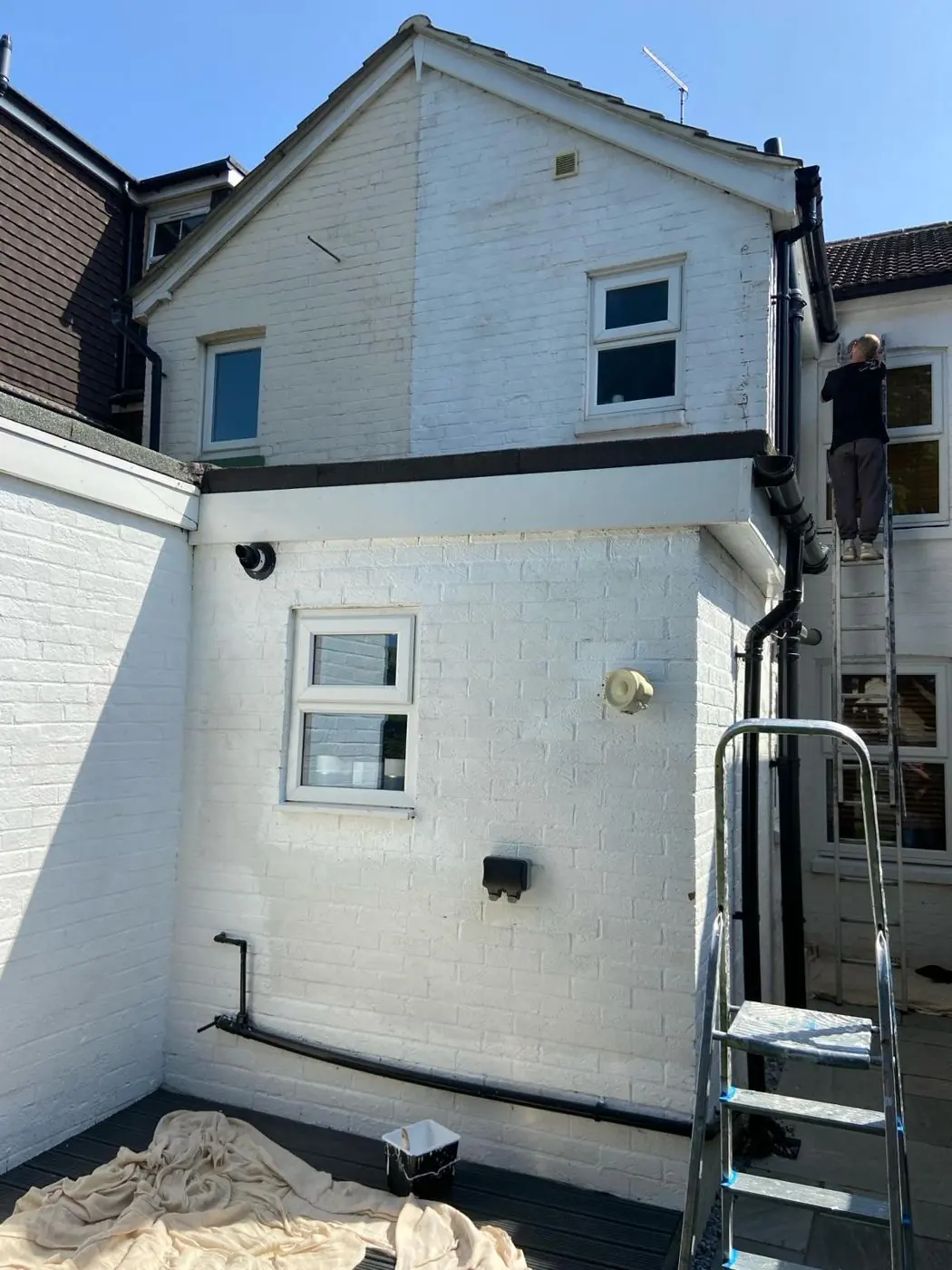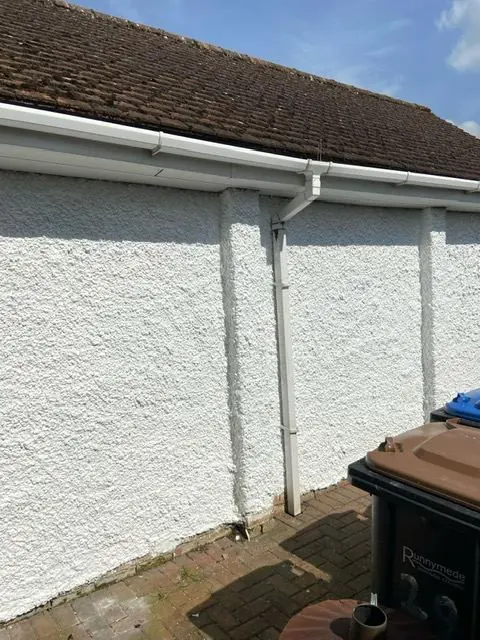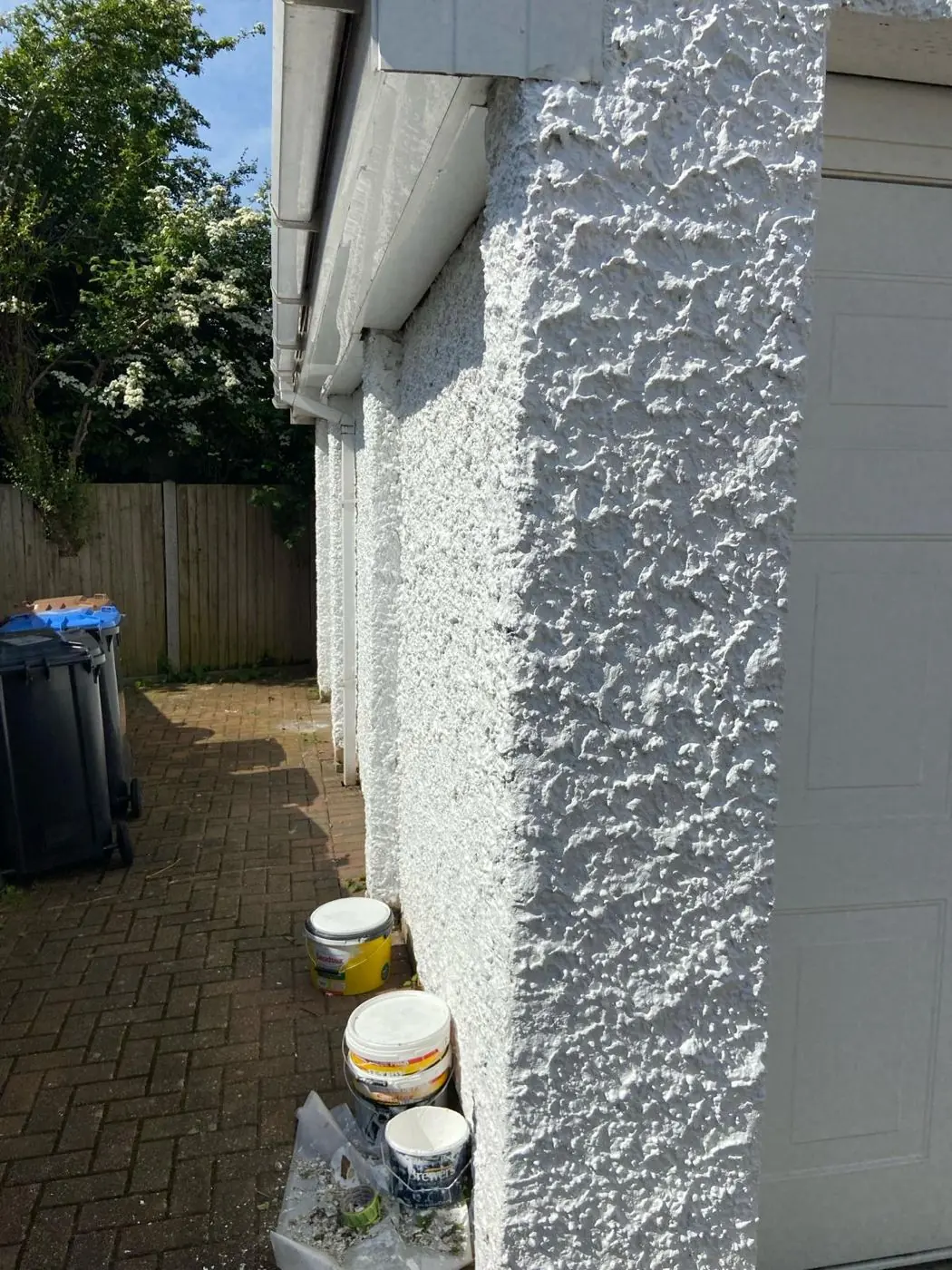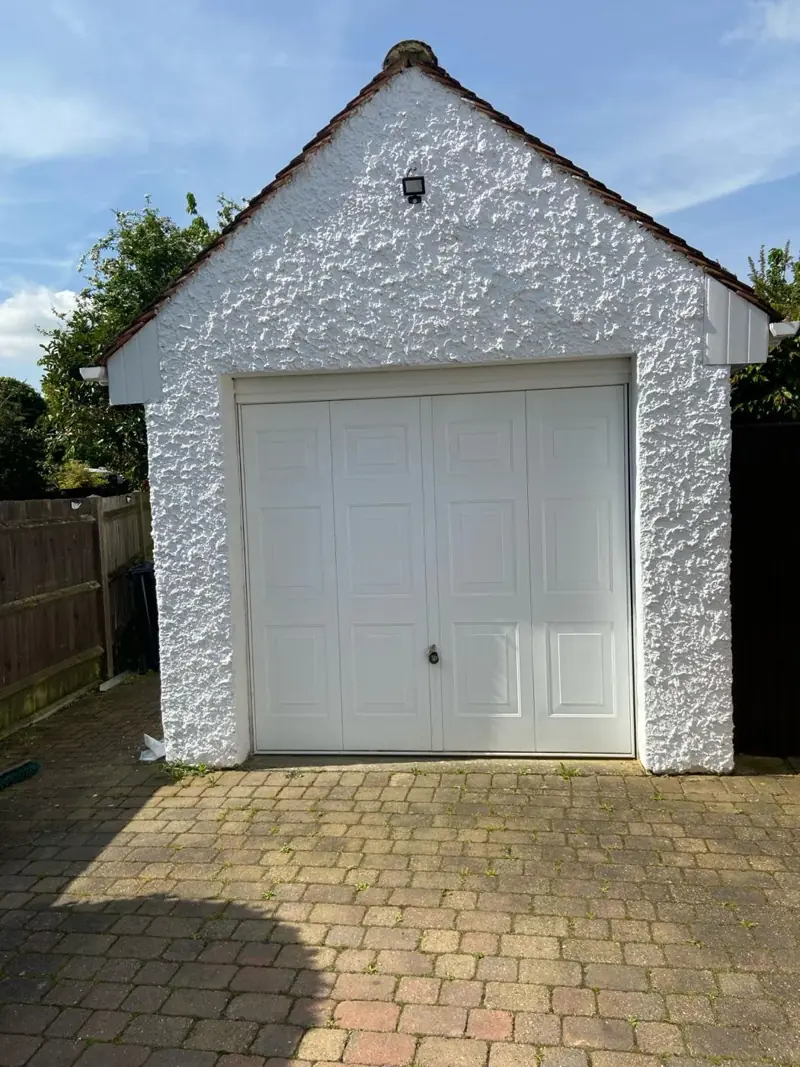
We repaint timber fascias, soffits, bargeboards and gutters in Moulton Leys, the NN3 estate roughly 3.3 miles north-east of Northampton town centre. Dean checks for soft timber first and plans ladder positions around the estate's narrow closes and shared drives.
Timber or uPVC: the first question
Many estate homes have had their rooflines replaced with uPVC over the years, and some were built with it. We do not know the mix on Moulton Leys, because no source records it, so the first thing we do is check. Where the boards are still timber, painting them is worthwhile and keeps the wood sound. Where they are uPVC, conventional exterior gloss is the wrong product; we can advise on whether a specialist coating is suitable or whether cleaning is the better answer.
Why rooflines wear faster up here
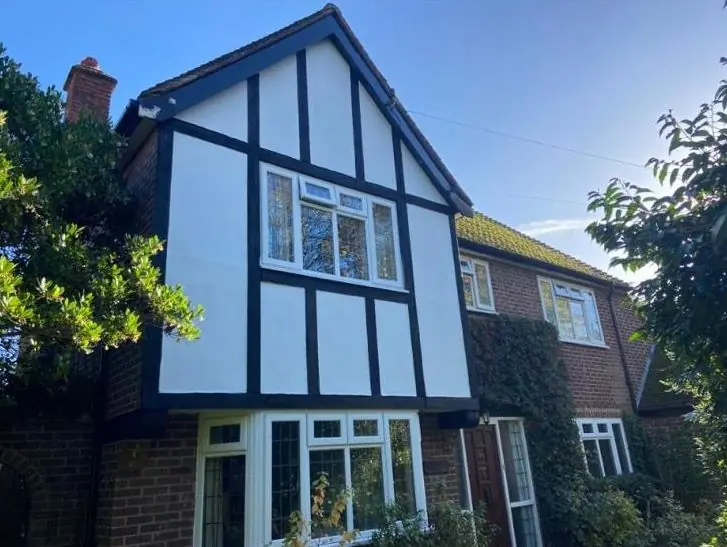
The roofline is the highest painted surface on a house, and in Moulton Leys the houses themselves stand on high ground. The adjoining Moulton Park is described as about 130 metres above sea level, among the highest land in Northampton, and the estate is open to farmland on the north. Fascias on the windward side get rain driven under the drip edge and onto the soffit, and the ends of boards at gable corners stay damp longest.
So we spend more time on the corners and board ends than a sheltered house would need, pushing a point into the timber to find soft spots, cutting out and splicing small rotten sections, then sealing end grain before primer goes on. Gutter joints are checked for drips, because a leaking joint will ruin new paint on the fascia below within a season. Soffits on the exposed side also tend to grow a dark bloom of mould near the vents, which is washed off with a fungicidal solution and left to dry before priming, otherwise it grows back through the new coat. Gloss or satin top coats are chosen for flexibility, since timber on a windy elevation moves more with wet and dry spells. The general method for prep and coats is on our fascia and soffit painting page.
Ladders in a turning head
Moulton Leys is built as a series of cul-de-sacs and courts off Manning Road and Underbank Lane: Woodrush Way, Wagtail Close, Lowick Court, Rides Court, Hollow Bank and the three Leys Courts among them. Houses in a turning head often have drives that converge, and the side of one house may be a metre or two from the neighbour’s front path. Roofline work there needs thought:
- Ladder feet go where they will not block a neighbour’s car in or out
- Ladder stand-offs keep weight off gutters on the run
- Dust sheets and scrapings are cleared the same day so shared paths stay usable
- Neighbours are told before we start if a ladder needs to stand on or near their boundary
Around Manning Road we also avoid putting ladders up or taking them down while parents are walking to and from Kings Meadow School.
The dormers on Moulton Lodge
Moulton Lodge on Moulton Way is the estate’s one listed building, Grade II, with a tiled roof carrying three box dormers and stone-coped gables rather than modern timber bargeboards. Repainting the dormer joinery is a careful hand job on old timber, and as the Lodge is listed, listed building consent is needed for works to it. We would discuss materials and consent before giving a firm plan.
Doing the roofline with other outside work
Because ladder access is the awkward part on a close, it often makes sense to paint the roofline in the same visit as doors, render panels or gutters lower down. Our Moulton Leys exterior painting page explains how we time outside work around the weather here, and the Moulton Leys area page lists everything else we cover on the estate.
Last updated by Dean, DH Painter & Decorator.