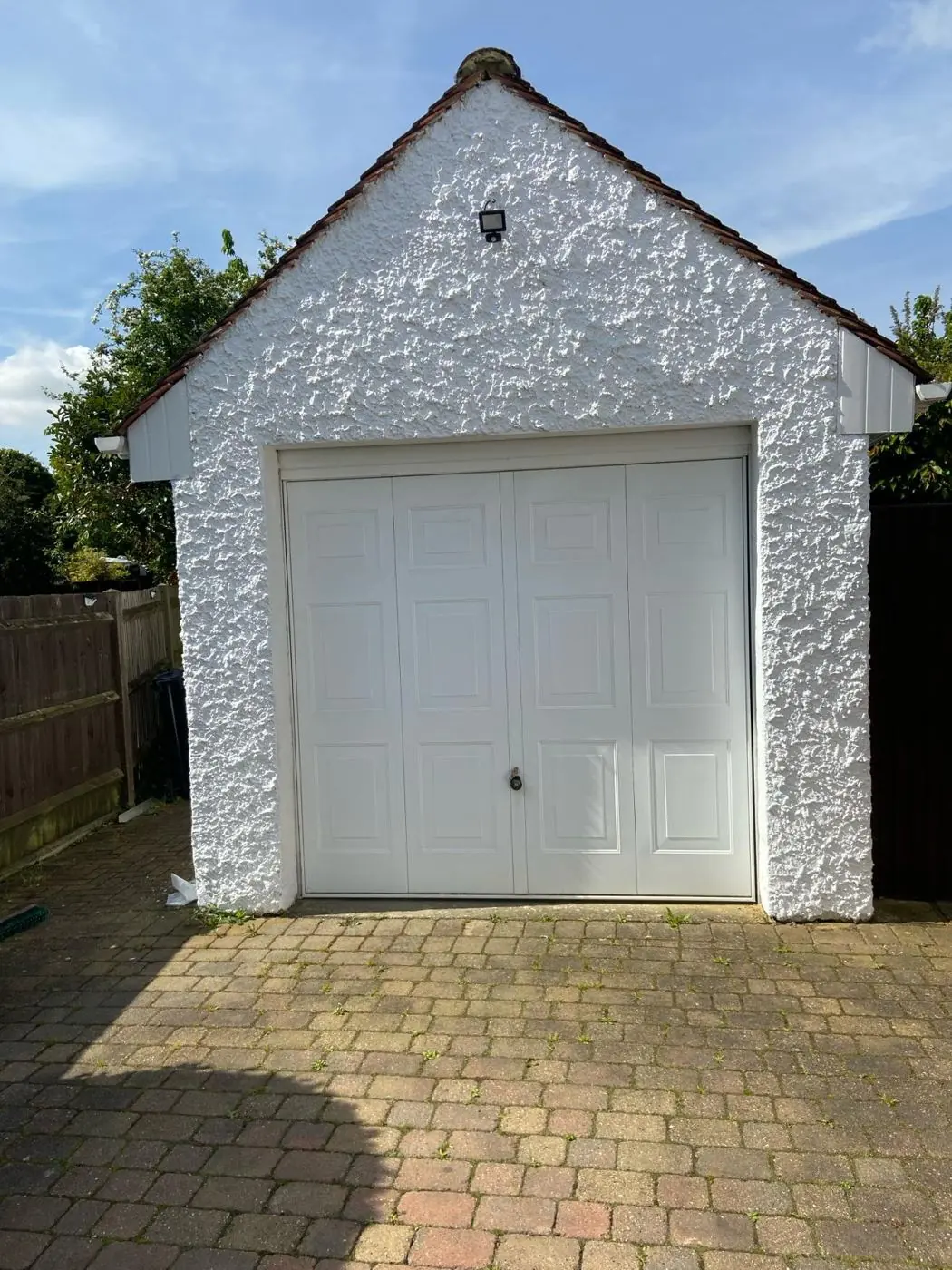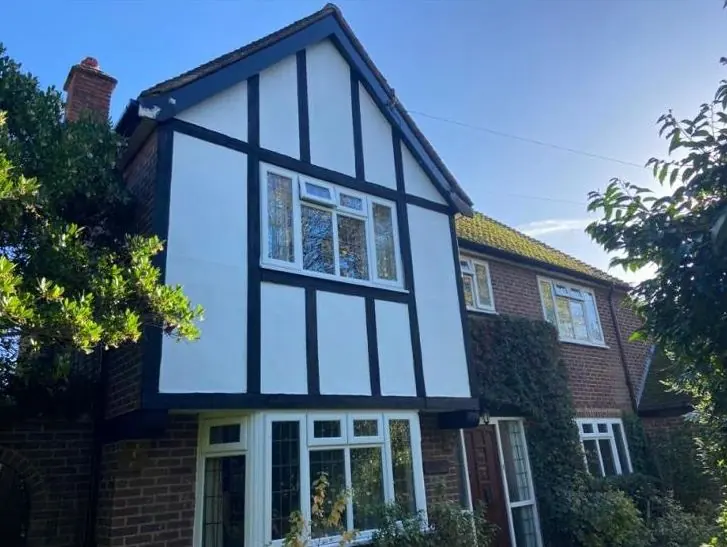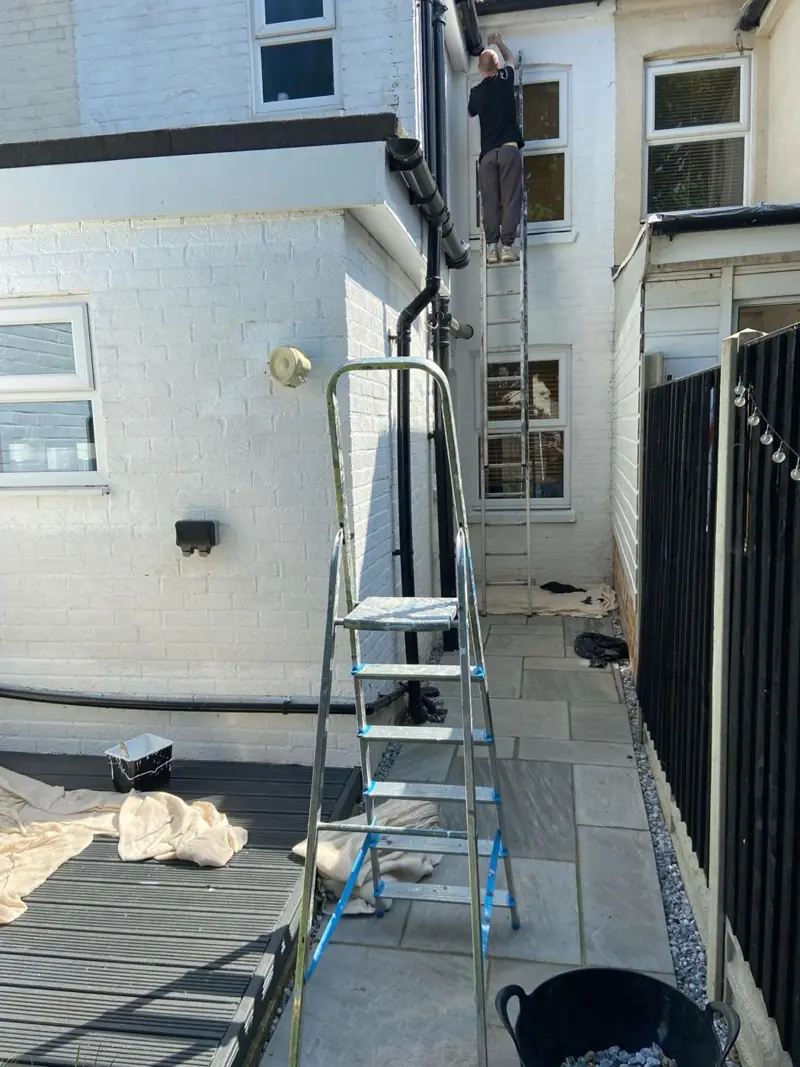
We paint timber fascias, soffits, bargeboards and gutters on homes in Spinney Hill, NN3, around 2.1 miles north-east of central Northampton. Dean quotes after checking the boards from ground level and, where needed, from a ladder.
Two rooflines on every bay-fronted semi
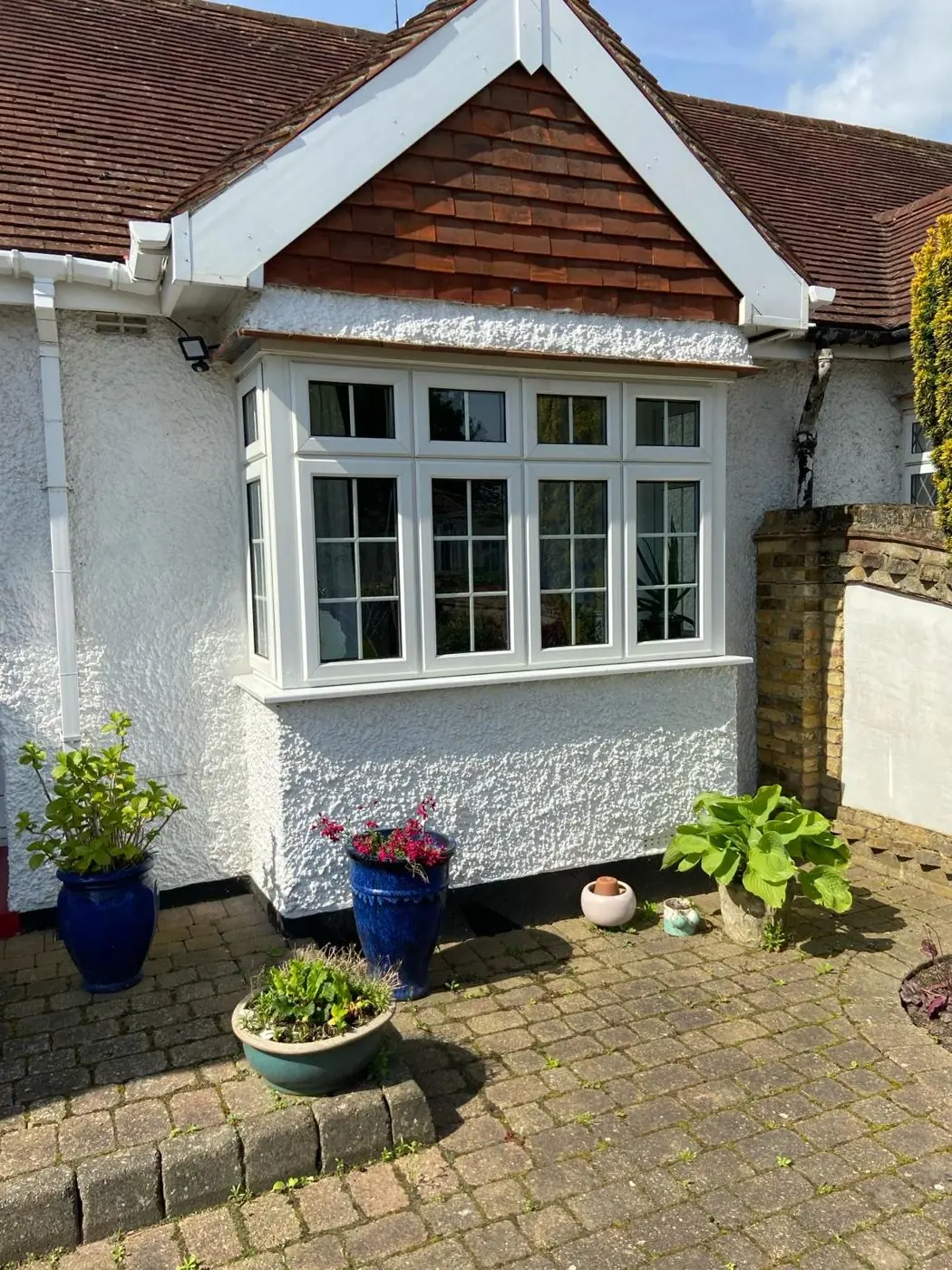
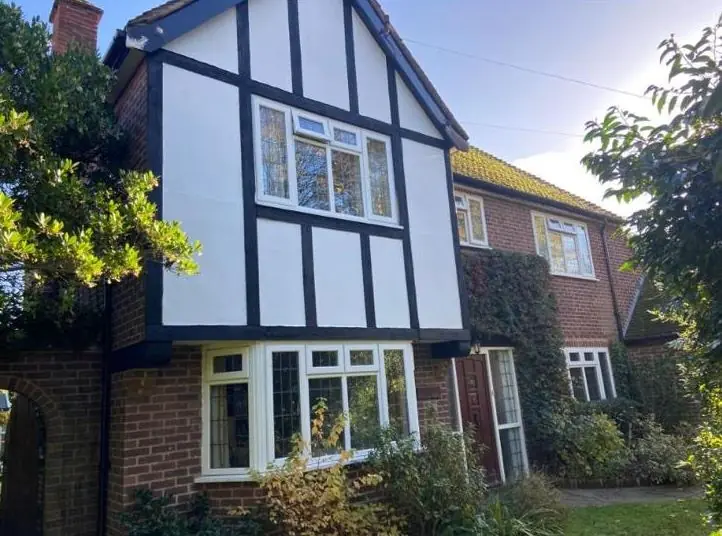
A typical Spinney Hill semi from the 1930s to 1950s has two sets of eaves to look after. The main roof runs along the first floor, and below it the bay window has its own small roof with its own fascia and soffit. The bay board is the one that tends to fail first. It sits lower, catches splashback from the bay roof, and on many houses has had less attention than the main eaves over the years. When we quote, both are checked separately so you can see where the work is needed.
Where a roofline has already gone over to uPVC there is nothing to paint, but where painted timber remains, the job runs scrape, sand, spot-prime bare wood, fill, undercoat and top coat. Soft timber is pointed out before painting starts, because paint will not hold rot together for long. Where only the bay roofline is timber and the main eaves are already uPVC, we can quote for the bay alone, and we clean the uPVC so the two lines look consistent from the street.
Dormers and steep slopes on Lindale Close
The later chalet-style semis on Lindale Close, a no-through road, are built differently. Their upper rooms sit in the roof, so instead of a simple first-floor eaves line there are dormer cheeks, dormer fascias and boards running along steep roof slopes. These are harder to reach than a standard semi’s eaves, and reaching them safely needs the right access equipment rather than a ladder leant against a slope. Dormer cheeks are often clad or boarded, and the joint where they meet the roof covering is a spot where water gets in, so we look closely at the paint along that edge. We plan access before the start date, and because the close is a cul-de-sac with open-plan front gardens, setting up is usually straightforward.
Trees, leaves and gutters
Spinney Hill borders Bradlaugh Fields, a nature reserve of about 60 hectares with mature trees and ancient hedgerow fragments, and sampled listings describe rear gardens with mature trees and shrubs. That brings leaf litter into gutters. A blocked gutter overflows onto the fascia behind it, and that constant wetting is what lifts paint and softens timber. While the roofline is being painted we check gutter outlets and joints, and a gutter that is leaking onto the board is flagged so it can be sorted before the new paint goes on.
- Inspect main eaves and bay boards, and note any soft timber.
- Check gutters for leaf build-up and leaking joints.
- Prepare, prime and undercoat bare or patched areas.
- Finish fascias, soffits, gutters and downpipes so the colours match.
- Protect conservatory roofs, drives and borders below.
The 1901 lodge and its deep eaves
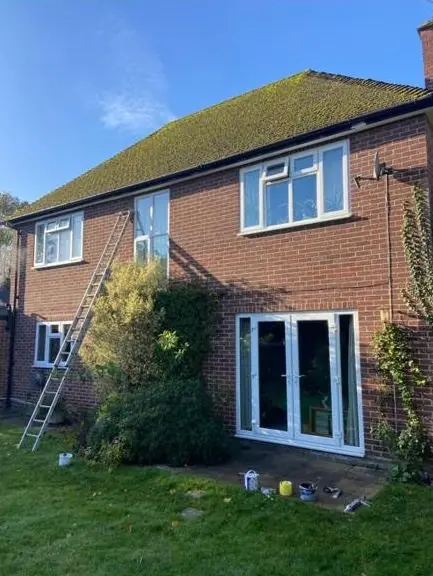
The Grade II listed entrance lodge north-west of the former Manfield hospital, dated 1901, has exposed rafter ends under deep eaves. Rafter ends are end grain, which soaks up water, and they have to be painted carefully by hand rather than boxed in or replaced. As a listed building, works there need listed building consent, and materials should suit historic timber.
Many Spinney Hill houses also have conservatories at the back, sometimes sitting right under the eaves. We cover conservatory roofs before any scraping, and work from boards or a tower rather than leaning anything on the glazing. Read how a full roofline job works on our fascia and soffit painting page, or see what else we cover locally on the Spinney Hill area page.
Last updated by Dean, DH Painter & Decorator.