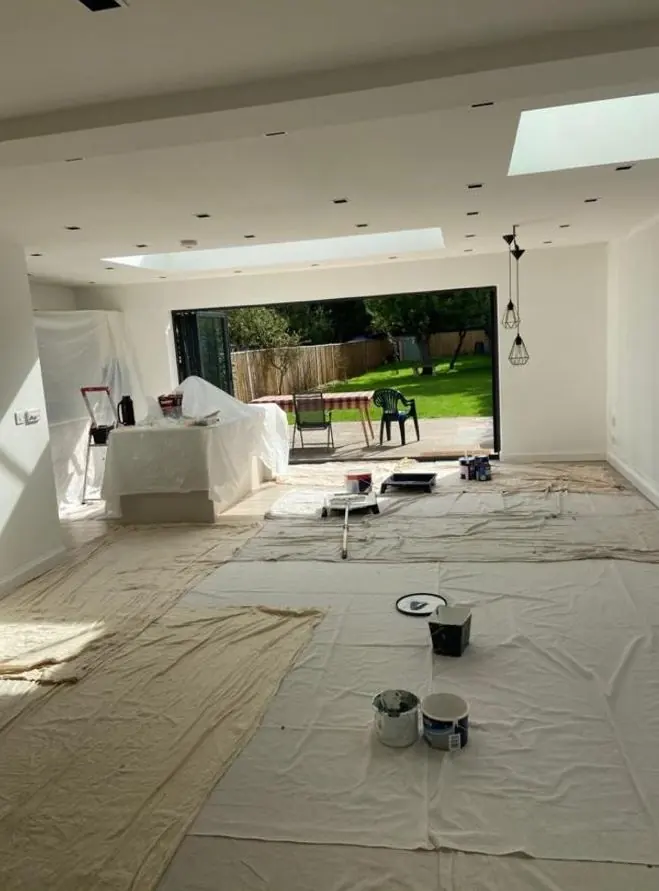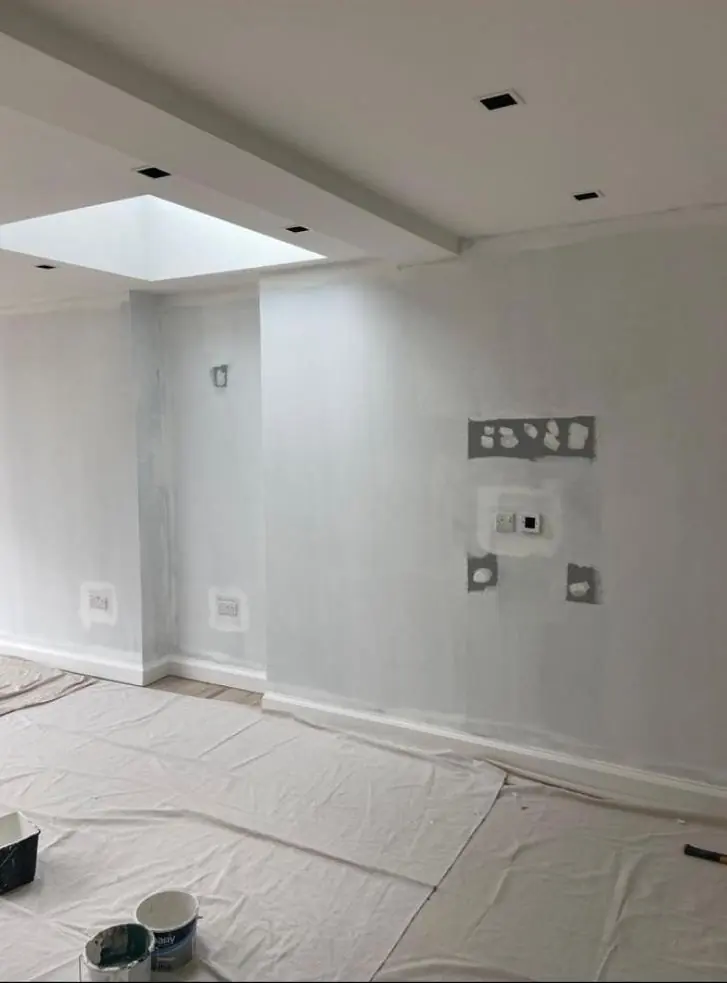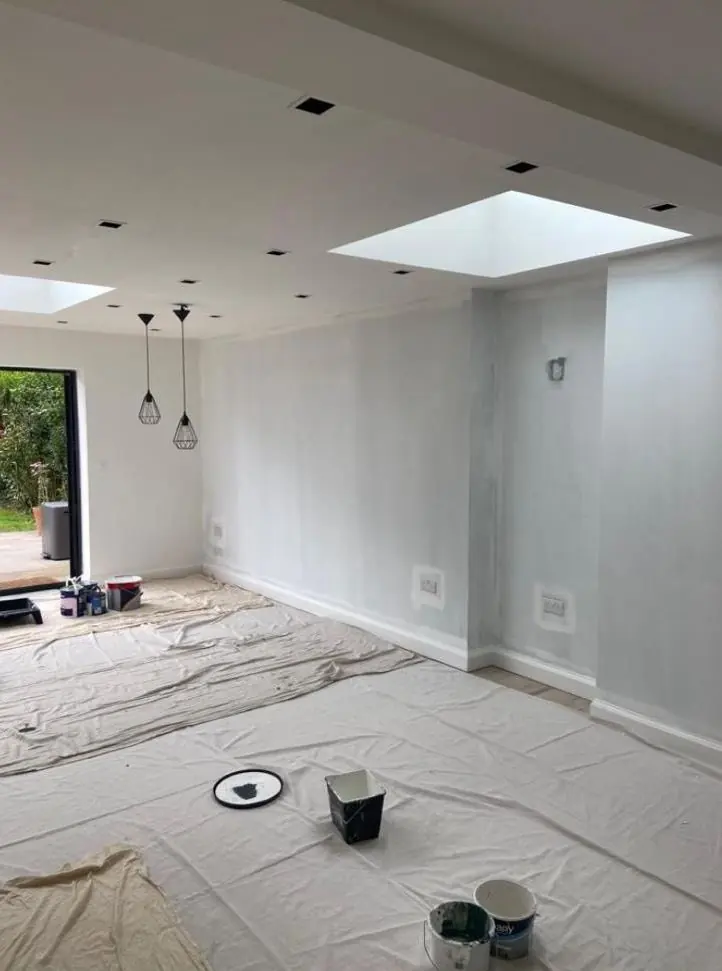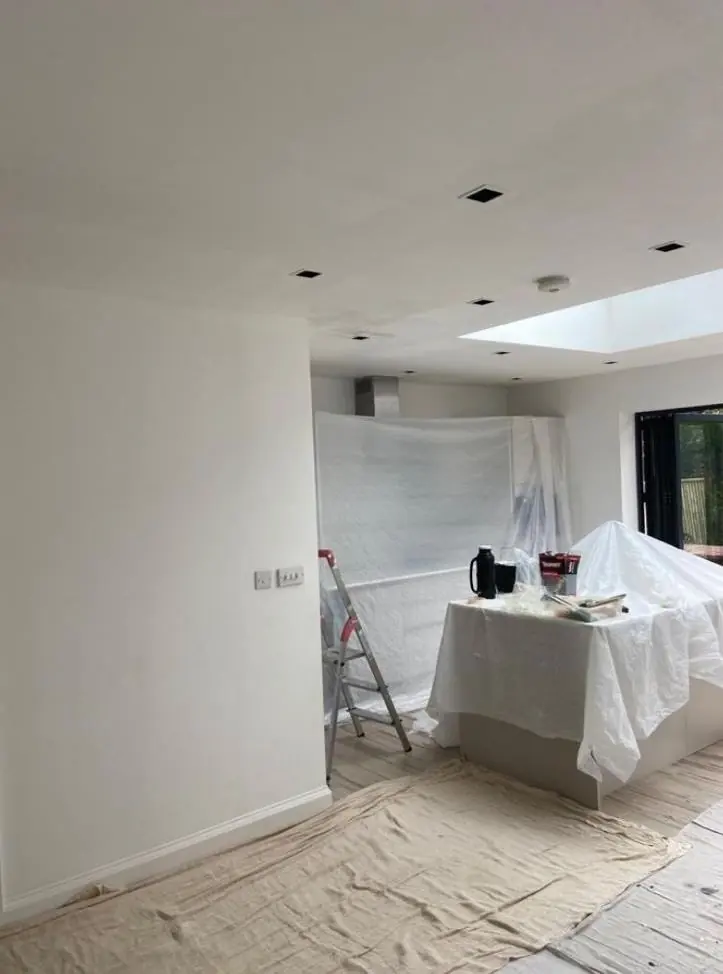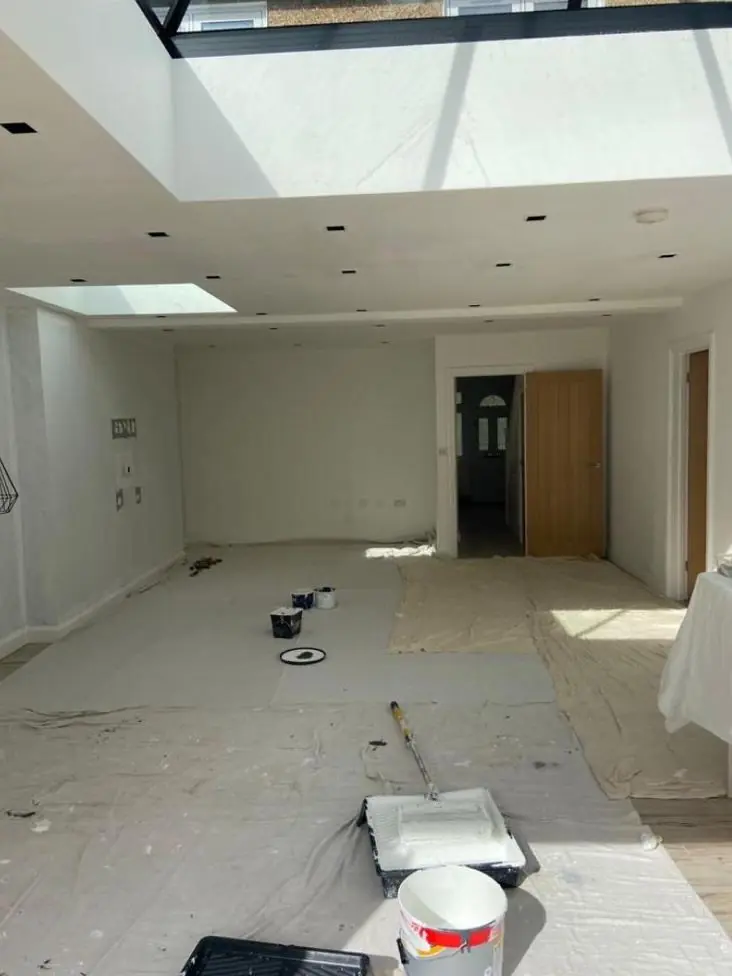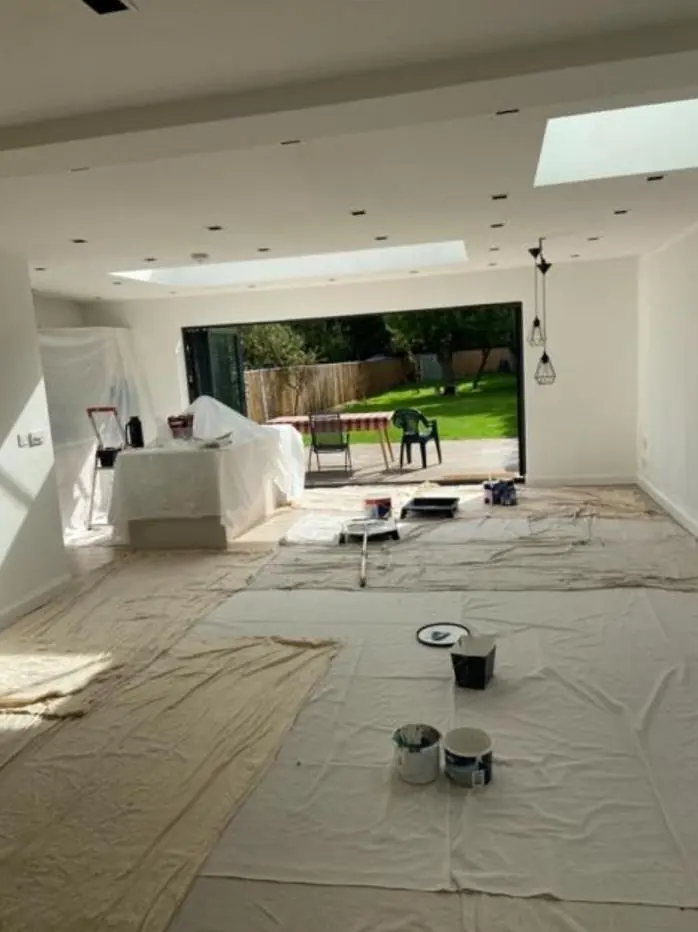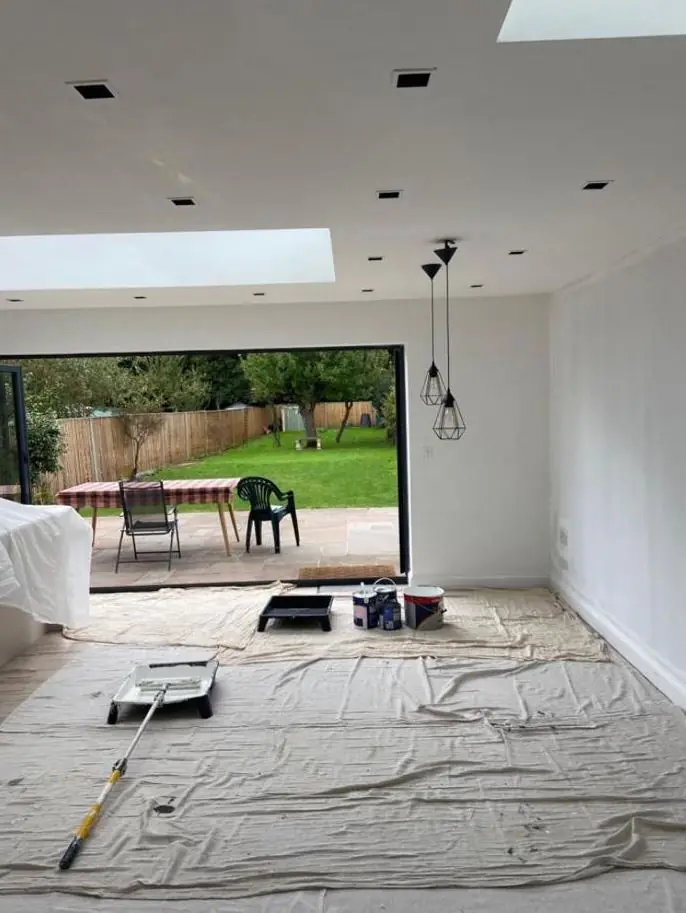
DH Painter & Decorator decorates freshly plastered rooms, extensions and garage conversions in Moulton Leys, NN3, about 3.3 miles north-east of Northampton town centre. Dean checks the plaster is dry, applies a diluted mist coat, snags the surface and finishes walls, ceilings and new woodwork.
Why new plaster turns up in an established estate
Moulton Leys is a settled estate of houses on closes and courts off Manning Road and Underbank Lane. Homes like these change as families grow, so fresh plaster usually arrives for one of a few reasons:
- a single-storey extension at the back, often a kitchen or family room;
- a garage converted into a study, playroom or bedroom;
- a room re-skimmed after old wallpaper came off and took the surface with it;
- patches of new plaster after rewiring, a new boiler flue or a replaced window.
Each leaves a room with raw plaster or new plasterboard sitting next to walls that have years of emulsion on them, and the job is to make the two read as one room.
The mist coat, briefly
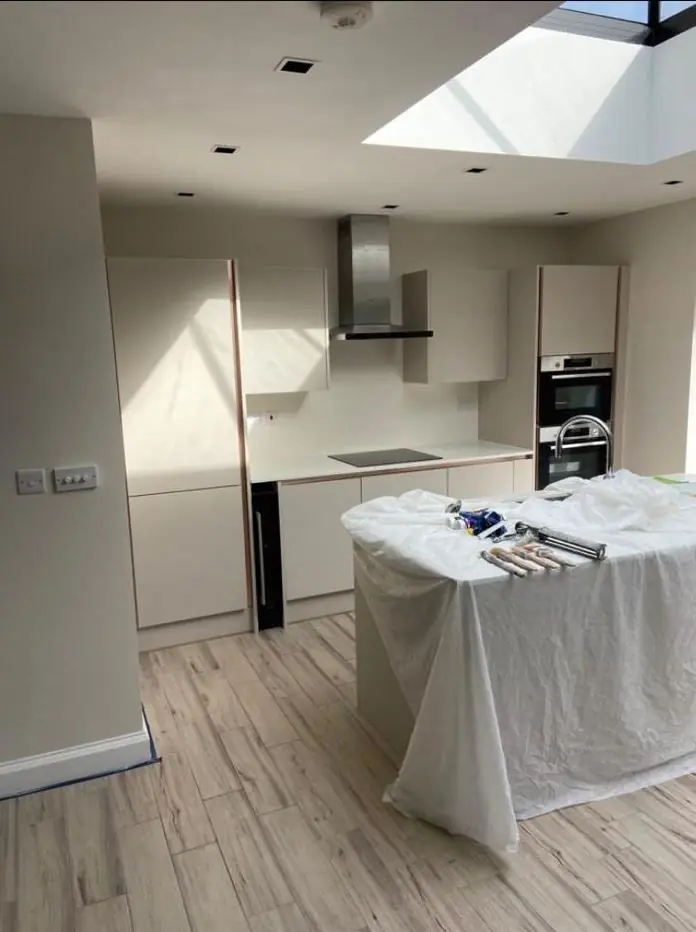
Fresh plaster is thirsty. A normal emulsion straight onto it sits on the surface, dries before it can bond and later peels. The fix is a mist coat: a diluted coat of breathable, non-vinyl emulsion that soaks in and gives the finish coats something to grip. We only start once the plaster has dried to an even pale colour all over, including the corners, window reveals and behind radiators, which in a converted garage with a solid floor can take longer than people expect. New plasterboard that has only been tape-and-jointed rather than skimmed behaves differently again: the paper face and the jointing compound absorb at different rates, so it needs a proper sealing coat or the joints will flash through the finish. Our mist coat guide covers drying times and mixes in detail.
Joining the new room to the old house
The tricky parts of an estate extension are the joins. Where a knocked-through opening meets the original wall, the old surface has been cut and patched, and settlement cracks in the existing rooms often run right up to the new work. We fill and sand these before the mist coat so the defects show up under the first coat and can be snagged, not discovered after the finish goes on.
Garage conversions bring their own details: a new stud wall where the garage door was, a new window or door frame in fresh timber, and new skirting that needs knotting, priming and two coats to match the rest of the house. Because no conservation area covers Moulton Leys, there is no heritage restriction on the colour you choose for that new front-facing window frame or door, unlike Moulton village to the north.
The one exception on the estate is Moulton Lodge on Moulton Way, a Grade II listed squared-rubble house. Any alteration there needs listed building consent, and an old solid-stone building needs breathable paints on its walls, not the vinyl emulsions that suit modern plasterboard.
Working alongside builders on a close
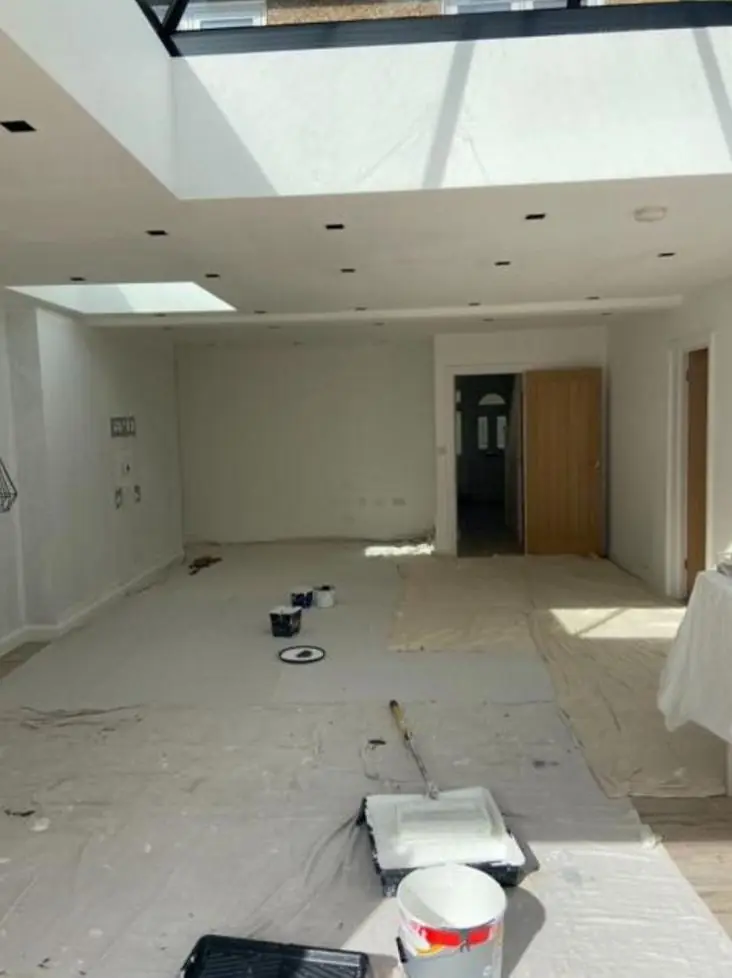
Most homes here are reached from one end of a cul-de-sac with little turning space, and extension work often means a skip or builder’s van is already on the drive. We fit around that: materials come in by hand, nothing blocks neighbours’ drives, and the decorating is booked for once the plasterer has finished and the room is drying, not squeezed in while trades are still working. If the house is near Kings Meadow School off Manning Road, arriving outside drop-off and pick-up avoids adding to the congestion.
See the new plaster and extension painting service for what a typical quote includes, or go back to our Moulton Leys area page for other work in the estate.
Last updated by Dean, DH Painter & Decorator.