Dean paints timber fascias, soffits and bargeboards on homes across Parklands in NN3, which we reach from our Northampton base 2.5 miles to the south-west. The estate has very different roof heights side by side, so access is planned house by house, with a free quote first.
High gables and low eaves on the same estate
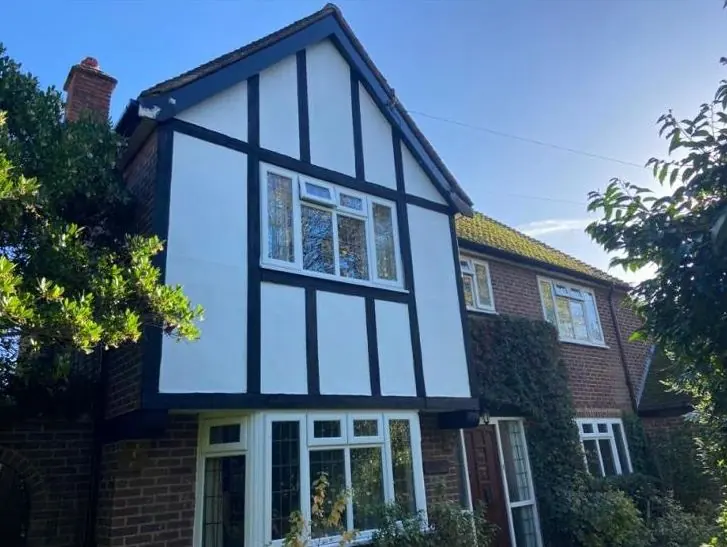
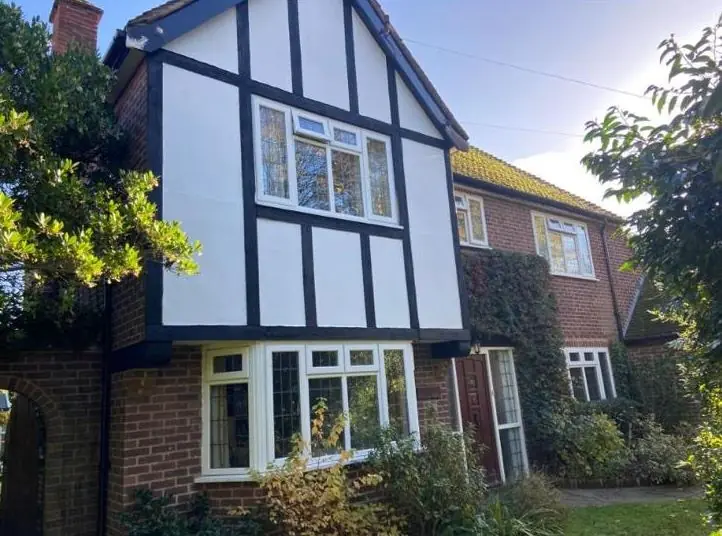
Parklands has an unusual spread of roofline heights for such a small area. On Parklands Avenue and Parklands Crescent, a roof room lifts the gable of many semis and puts the bargeboards well above a normal first-floor eave. On Coppice Drive there is at least one semi-detached bungalow of about 53 sq m, where the fascia is low enough to reach from steps or a short ladder. Then there are the flat-roofed maisonettes above the Coppice Drive shops.
That variety matters because the price and time of a fascia job are mostly about access. A bungalow eave can be prepared and painted in a fraction of the time of a roof-room gable. We quote each house on what it actually needs rather than using a flat rate, and our painter and decorator cost guide sets out what pushes a quote up or down.
Working on a roof-room gable
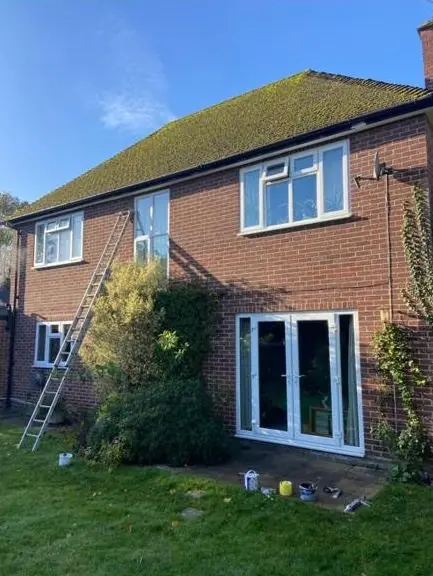
On a semi with a room in the roof, the fascias along the front and back are similar to any two-storey house, but the gable end rises further. The bargeboards follow the roof pitch up to the apex, and the soffit returns at each corner. Most of these houses have side access, so a ladder with a stand-off or a small tower can stand on the side path. Where the path is narrow or the ground slopes, we use a tower for safety and so the top of the board gets proper sanding.
Roof-room houses also have dormers in some cases. The small fascia and cheek boards around a dormer are easy to miss and often the first part to fail, because they sit in exposed positions. We include them in the quote so the whole roofline is done in one visit. On attached semis, the fascia often runs straight across both halves of the roof, so a freshly painted half next to a weathered one shows clearly from the street. If your neighbour is thinking about the same job, doing both at once shares the access and leaves an even line.
Timber, uPVC and the parade flat roofs
The EPCs record full double glazing across the estate, but fascias and soffits can be either painted timber or uPVC, so we start by checking which you have:
- painted timber: scraped back, rotten sections cut out and filled or replaced, knots spot-primed, then undercoat and gloss or a microporous exterior finish
- uPVC: cleaned with a degreaser, keyed lightly and coated with a primer made for plastics, if you want a colour change
- flat-roof edges on the parade: the fascias over the shops sit just above the signage zone, so they are usually painted together with the sign board and upper windows
Numbers 1a to 1d, the flats over the Coppice Drive shops, sit above working businesses, so any work on that roofline needs a plan for customers on the pavement below and the opening hours of the businesses.
Green space and road dirt
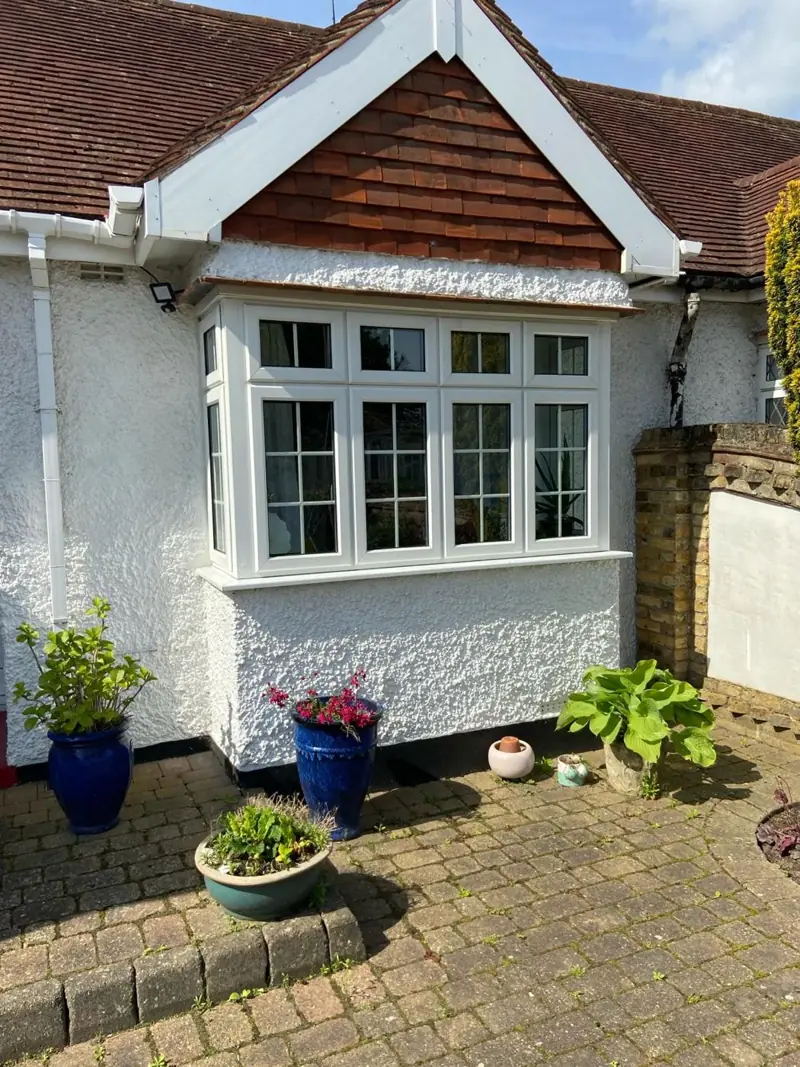
Houses backing towards the Bradlaugh Fields hedgerows, the allotments or the estate’s patch of woodland get leaf debris in the gutters and algae on shaded soffits. Gutter blockages push water over the fascia board, which is a common reason for paint lifting at the bottom edge. Houses facing Kettering Road get grime on the boards instead. In both cases the boards are washed and dried before any sanding, and we will point out overflowing gutters while we are up there.
The main fascia and soffit painting service covers the products and process in full. For other work on the estate, see our Parklands page.
Last updated by Dean, DH Painter & Decorator.