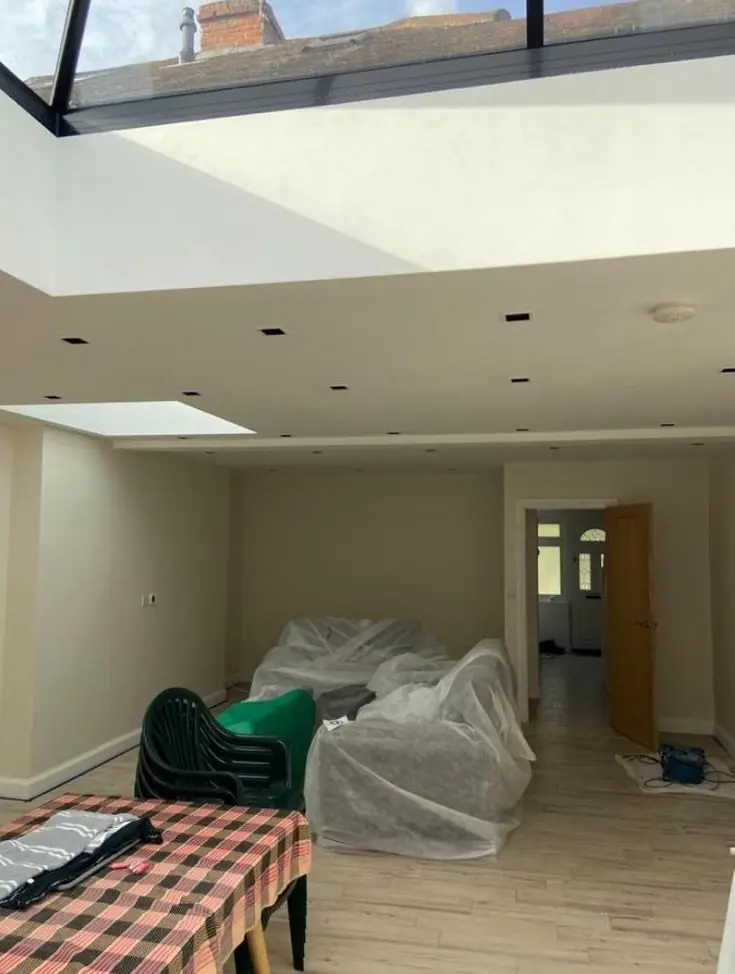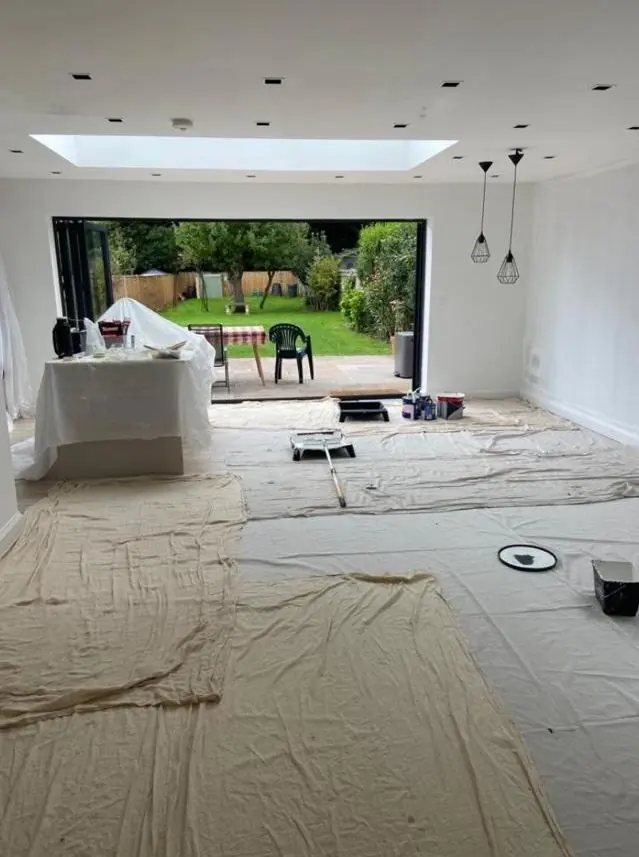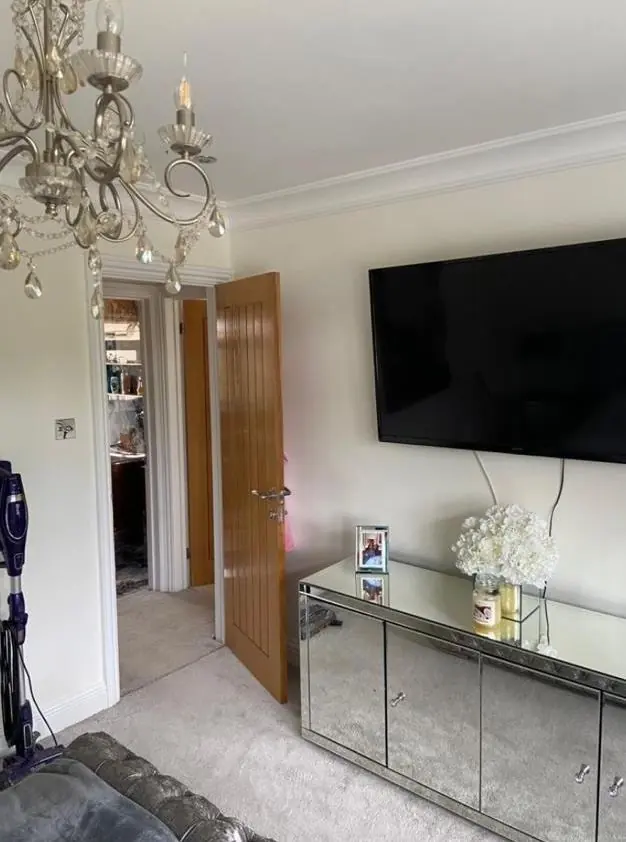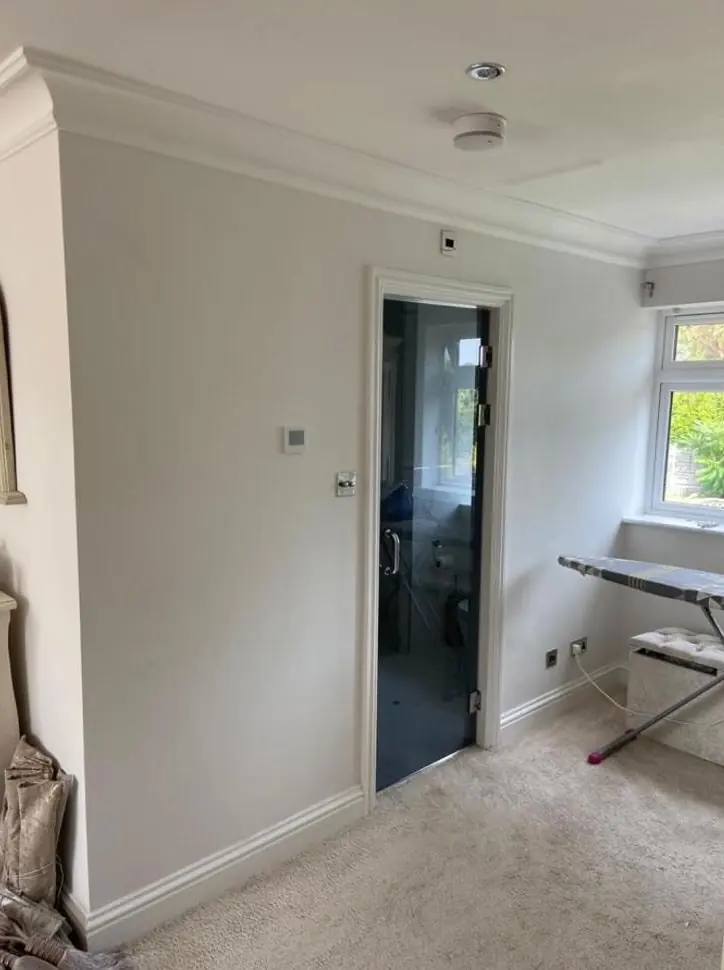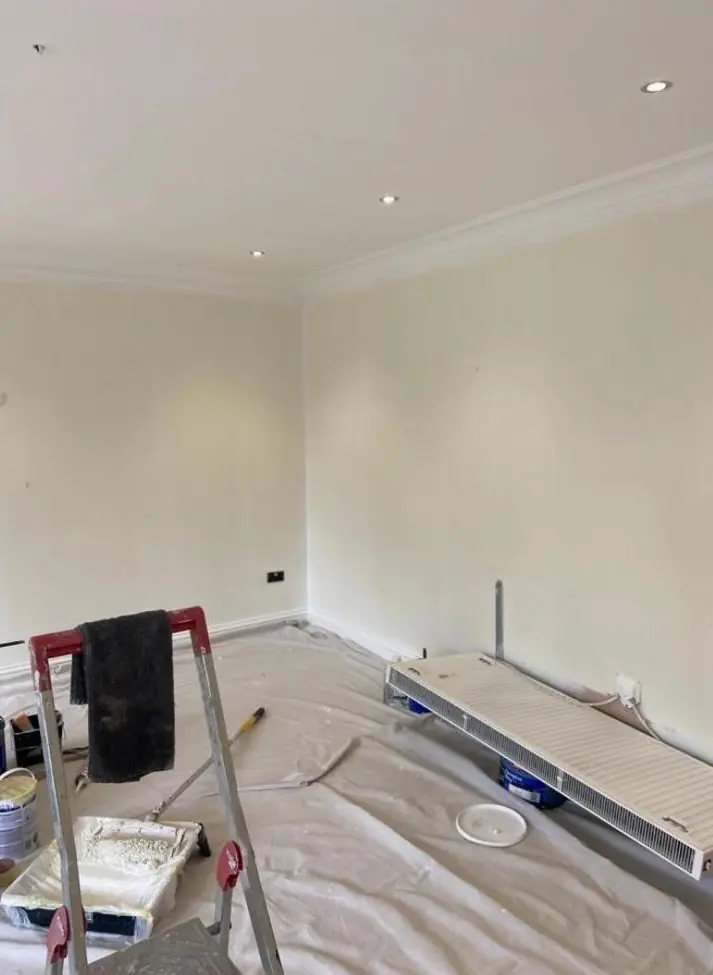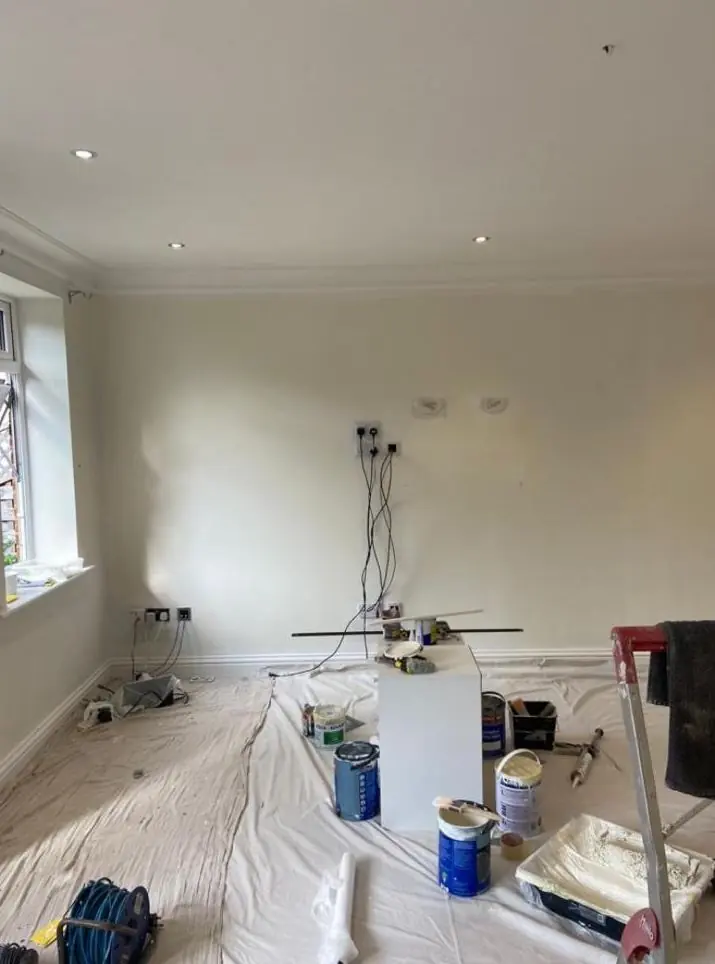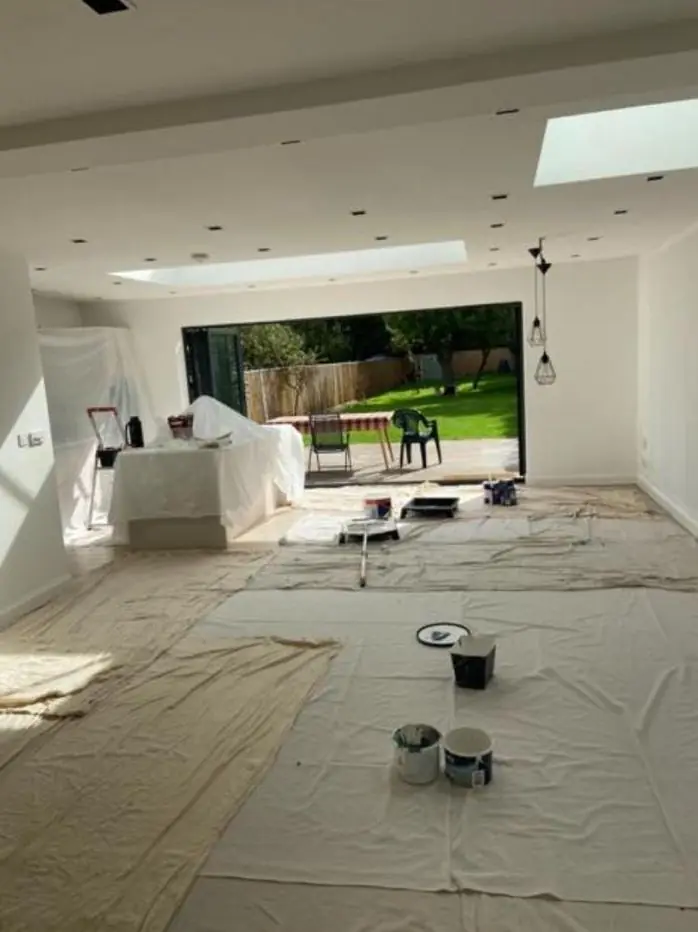
DH Painter & Decorator paints new plaster, re-skims and extensions in Pineham, Northampton NN4, where newer phases such as Dragonfly Meadow sit off Upton Valley Way North. Dean checks the plaster is dry, applies a breathable mist coat and finishes walls, ceilings and new woodwork, including putting right builder's emulsion that has started to peel.
Two kinds of new plaster on the estate
New plaster in Pineham comes from two directions. The first is the estate itself: Pineham Village and Dragonfly Meadow were built in phases after archaeologists cleared the land beside Upton Valley Way North, and homes in the newer phases may still have walls that were plastered only a short time before handover. The second is what owners add afterwards. Once a family has been in a Taylor Wimpey house for a few years, a kitchen-diner extension, a garage conversion or a re-skimmed room may follow, and each of those leaves bare plaster that needs decorating.
Both need the same thing first: a mist coat that soaks into the plaster and gives the finish coats a sound base. Where they differ is in what might already be on the wall.
When builder’s emulsion went on too soon
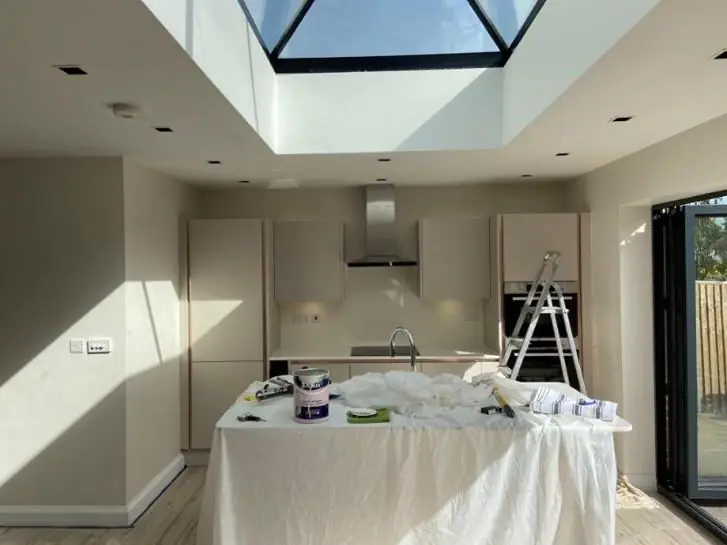
On a new-build, plaster is often painted with a contract emulsion close to completion so the house can be shown and handed over. If the plaster still held moisture, or the paint was a heavy vinyl that formed a skin, the emulsion may not have bonded. A few years later it shows up as paint lifting in sheets when masking tape is pulled off, blistering on ceilings, or flaking at external corners.
Painting over that just adds weight to a coat that is already loose. Instead we test the wall with tape in several places. Where the builder’s paint is sound, it is cleaned and lightly sanded before recoating. Where it lifts, we scrape back the loose areas, feather the edges, and treat the exposed plaster as new, with a mist coat before the finish.
| What we find | Likely cause | How we deal with it |
|---|---|---|
| Bare pink plaster in an extension | New skim, never painted | Dryness check, mist coat, two finish coats |
| Builder’s paint peeling off with tape | Painted before plaster dried | Scrape back, feather, mist coat exposed areas |
| Fine cracks at ceiling line | Normal settling in the first years | Rake out and fill after mist coat shows them |
| Dark patches on new plaster | Still drying out | Wait until uniform pale colour before painting |
Drying time before we start
Fresh plaster has to be fully dry before it is painted, and a large extension with a concrete floor and new blockwork can take several weeks, longer through a cold, damp winter. We look for an even, pale colour across the wall with no darker patches, especially in corners, behind radiators and around window reveals. If an extension has rooflights or a roof window, we check the reveals closely, because those slopes are often the last to dry and the first to show marks.
If you are booking us alongside a builder, it helps to agree a date for decorating after the plasterer finishes, not on the same week. We are happy to come and look at the walls first and tell you honestly whether they are ready.
Joining an extension to the original house
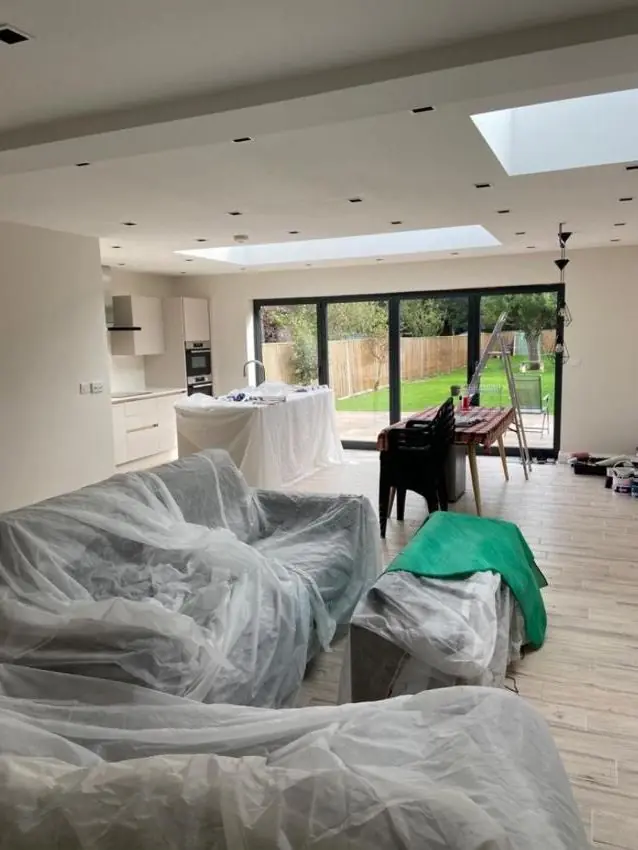
The hardest part of an extension job is often the join. Where a new wall meets the existing Pineham house, the old walls still carry builder’s emulsion and the new ones are bare. We mist coat the new plaster, prepare the old surfaces properly, and then run the same finish coats over both so the colour and sheen match across the opening. New skirtings, architraves and doors in the extension are primed, undercoated and finished to match the woodwork in the rest of the house.
Our guide to painting new plaster with a mist coat explains the method step by step, and the main new plaster and extension painting page covers what a full extension job includes. For other work across the estate, see our Pineham area page.
Last updated by Dean, DH Painter & Decorator.