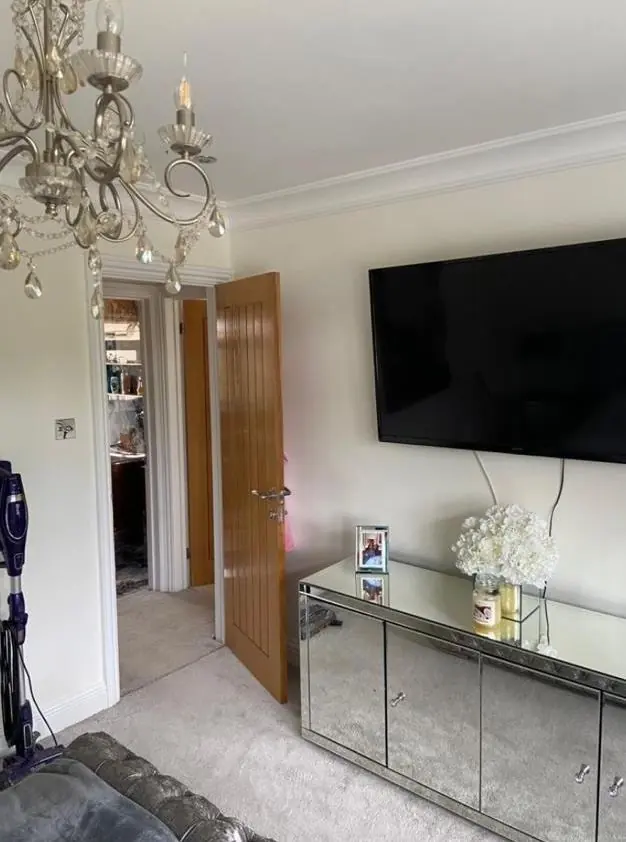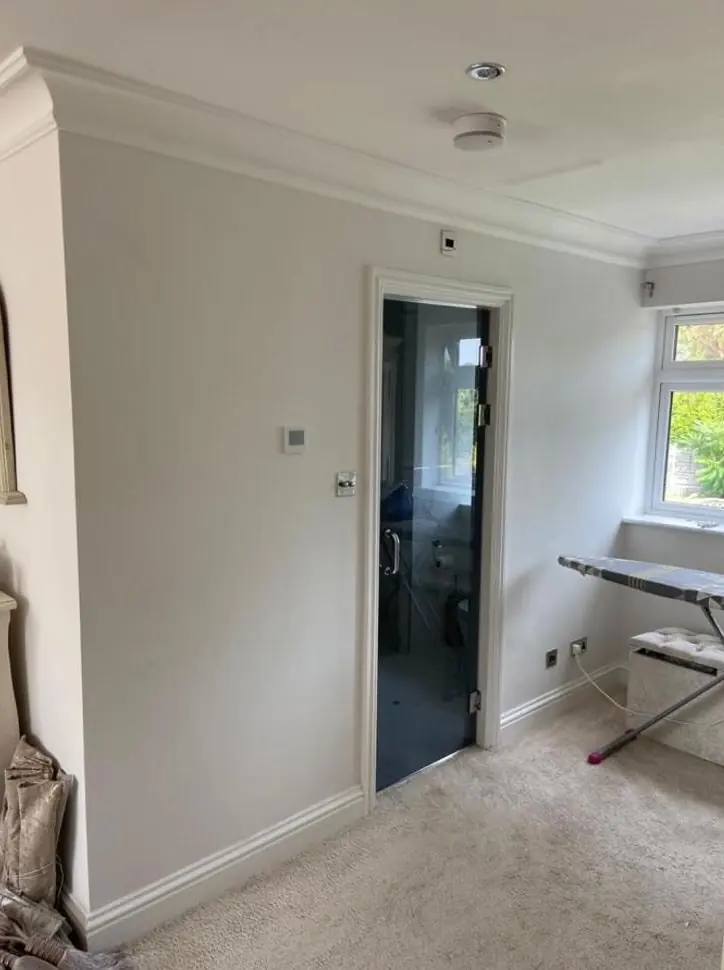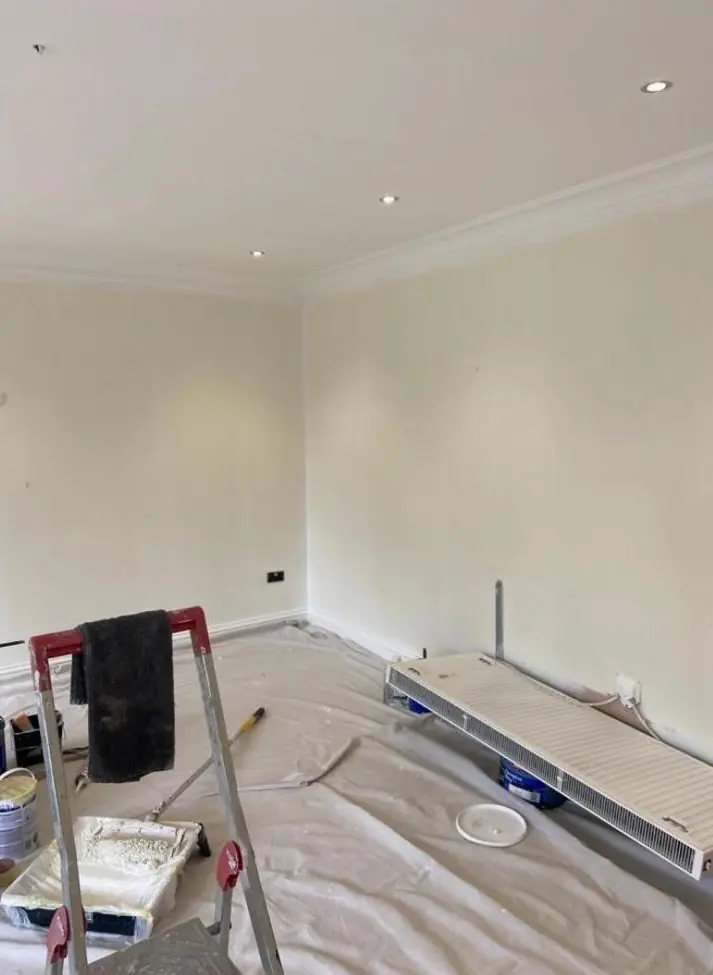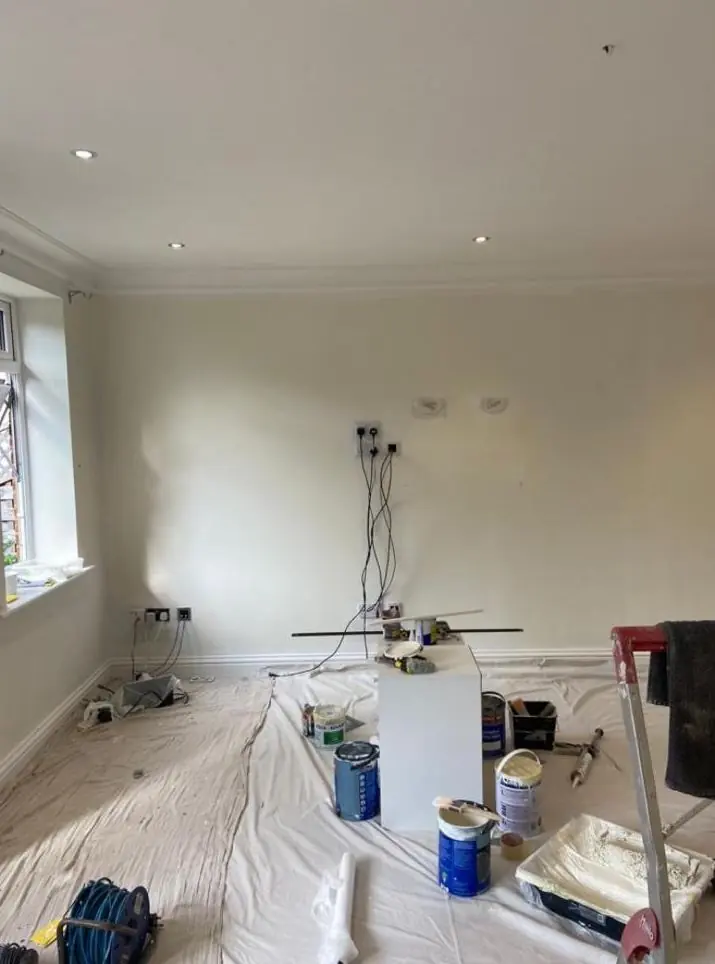
We paint feature walls, two-tone schemes and panelling for St David's homes in NN2. St David's is about 1.9 miles north of the town centre, and Dean quotes for each scheme free of charge after seeing the room.
Plain rooms, not period mouldings
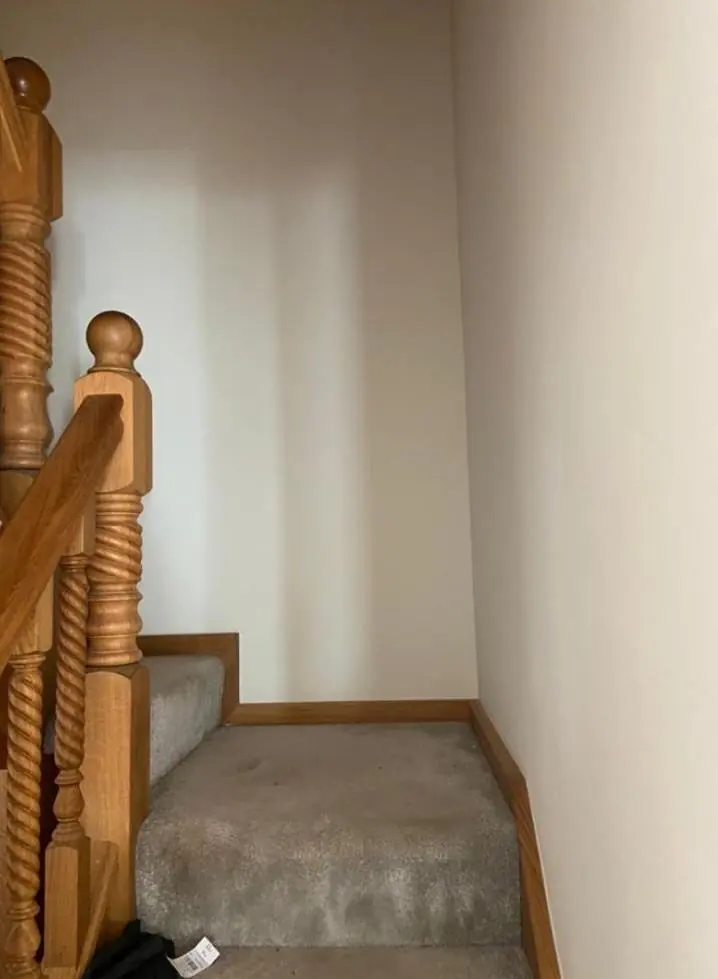
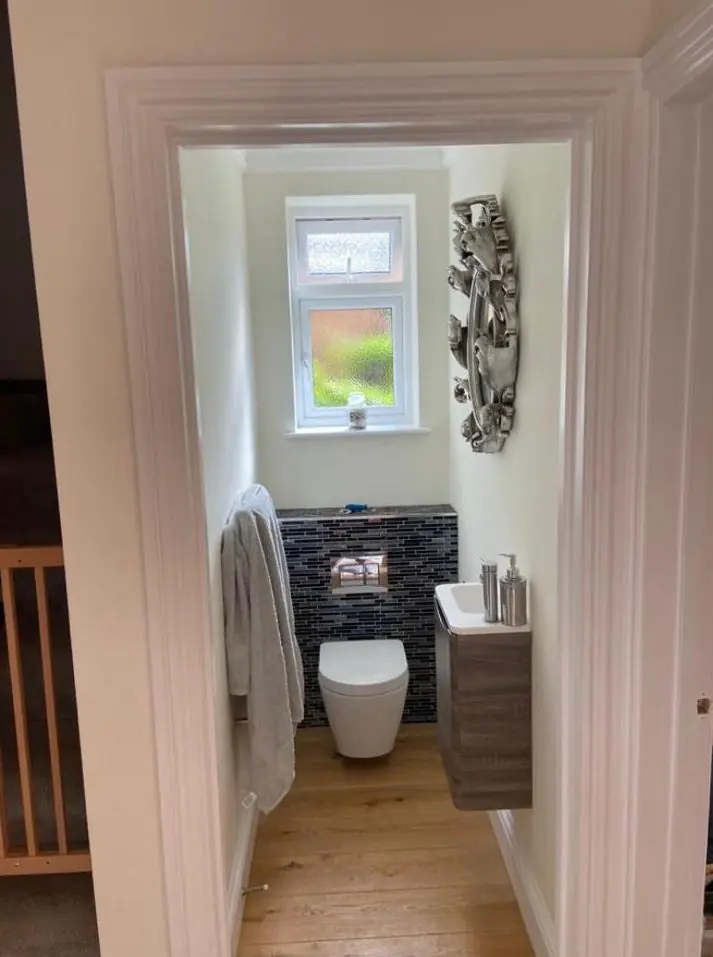
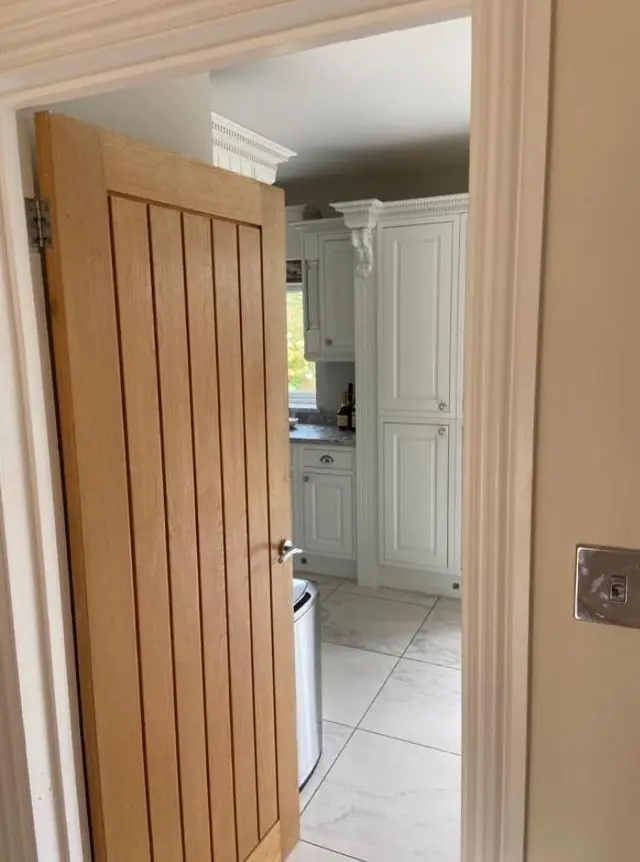
Restoring cornices and ceiling roses rarely comes up in St David’s. The housing is mostly interwar and post-war estate housing, built simply, with little period detail inside. You are more likely to find plain plastered walls, simple skirting and square doorways than ornate plasterwork.
That shapes the decorative work that suits the area. Decorative finishes here usually mean adding interest to a plain room with colour and shape, and occasionally new panelling, rather than restoring old features. The one notable older building, the Grade II listed St David’s on Harborough Road, is an 1882 stone house that is now a care home, and it says little about the houses on the estate.
Feature walls sized for a two-up two-down
The interwar terraces on Hastings, Cranford and Rosedale Roads have compact living rooms, often with the chimney breast as the only natural focal point. A deeper colour on the breast and its alcoves, or a colour wrapped onto the ceiling over the alcoves, gives the room some structure without making it smaller. We avoid busy faux effects in rooms this size, because a strong texture on every wall makes a small lounge feel cramped.
Older walls matter here too. A strong dark colour shows every ripple in uneven interwar plaster. On these streets we often line or fill the wall carefully before putting a deep colour on it.
Colour blocking and panelling in the 1950s semis
The post-war semis around Eastern Avenue North, Bondfield Avenue and Holdenby Road include the estate’s main owner-occupied street, Eastern Avenue North, and their owners are the ones most likely to want bolder work:
- Two-tone walls split at dado height, with a deeper colour below to hide wear in family hallways.
- Painted MDF or timber panelling in halls and bedrooms, filled and caulked so pins and joints disappear under the paint.
- Painted arches, circles or blocks of colour to mark out a desk or a reading corner.
- Ceilings and woodwork painted the same colour as the walls, to give one even, single-colour finish.
In the semi-detached bungalows, picking out a single wall or a run of built-in shelving in a contrast colour adds interest without breaking up the single-level layout.
When we would talk you out of it
Many St David’s homes are rented, either social housing or private lets. A tenant usually needs the landlord’s agreement before a feature wall goes up, and a strong decorative scheme can mean extra coats to cover it at the end of the tenancy. For rented homes we normally suggest something easy to reverse: an accent colour on one wall in a standard emulsion, not a layered glaze effect. For owner-occupiers we will still say so if a finish you have seen online will look busy in a small terrace room.
Whatever the finish, the order of work is the same. We prepare the whole room first, paint the ceiling and the base walls, then mask and cut in the feature colour last, so its edges stay sharp. In an Eastern Avenue semi that usually means one room at a time, with the rest of the house in use.
The full range of effects is on our main decorative finishes in Northampton page. If a feature wall is going onto fresh plaster in a new extension, read our mist coat guide first. Our St David’s page covers the wider neighbourhood.
Last updated by Dean, DH Painter & Decorator.