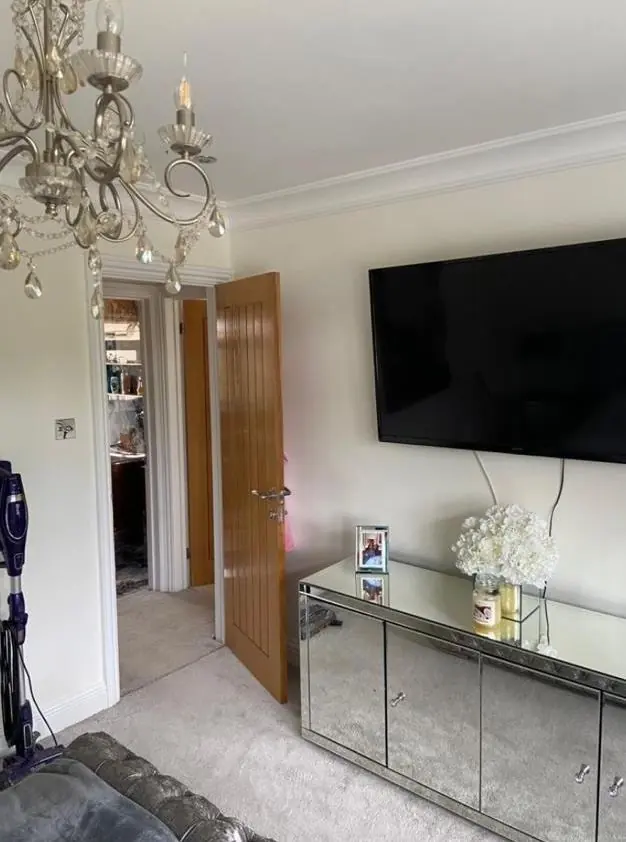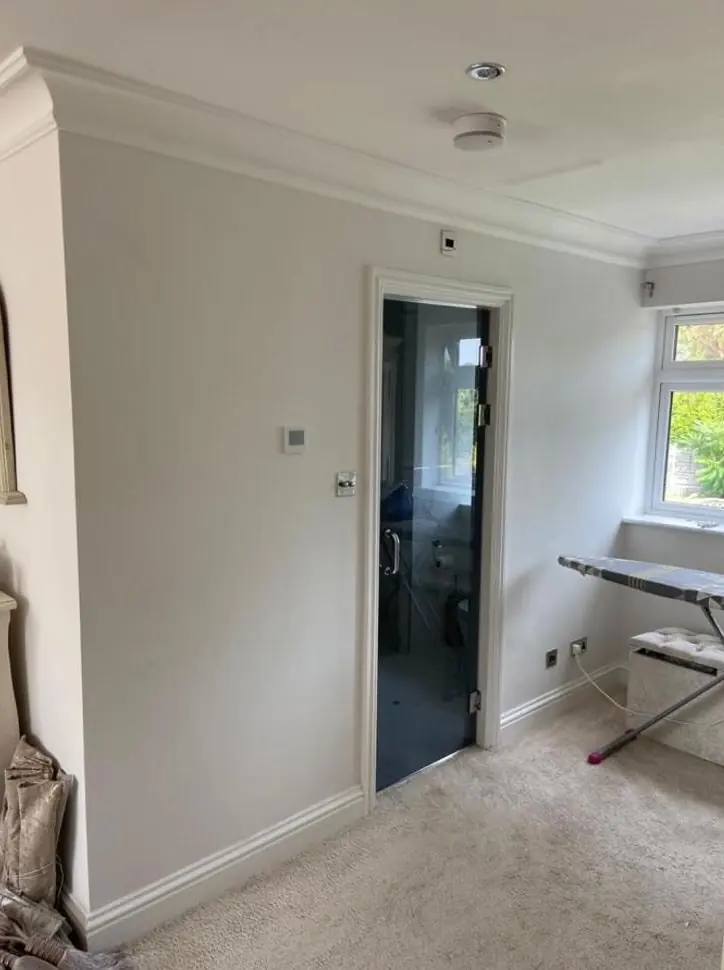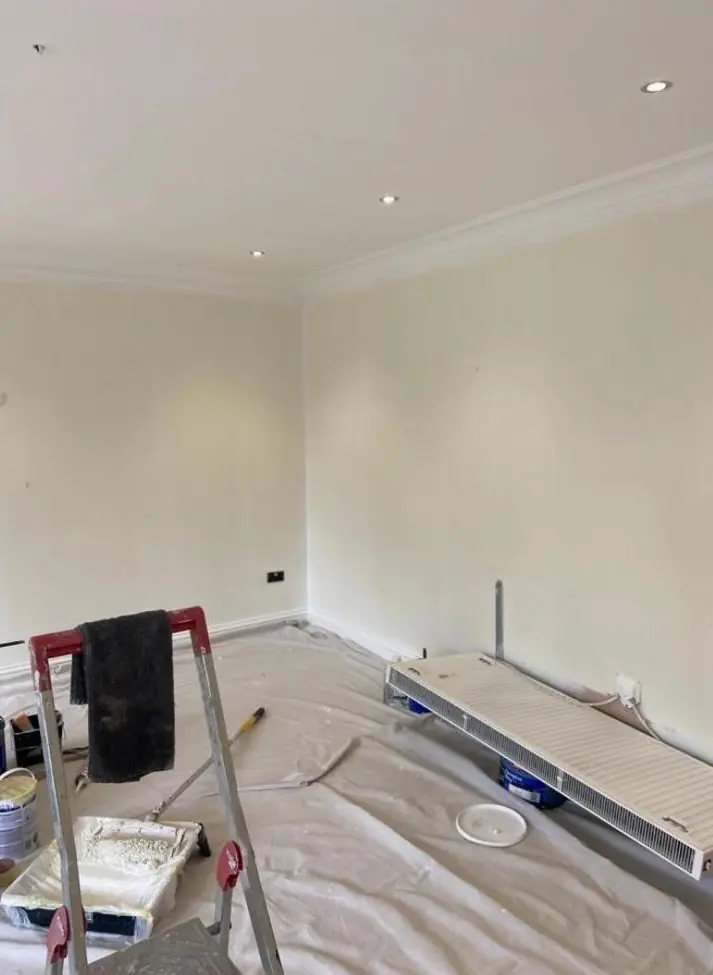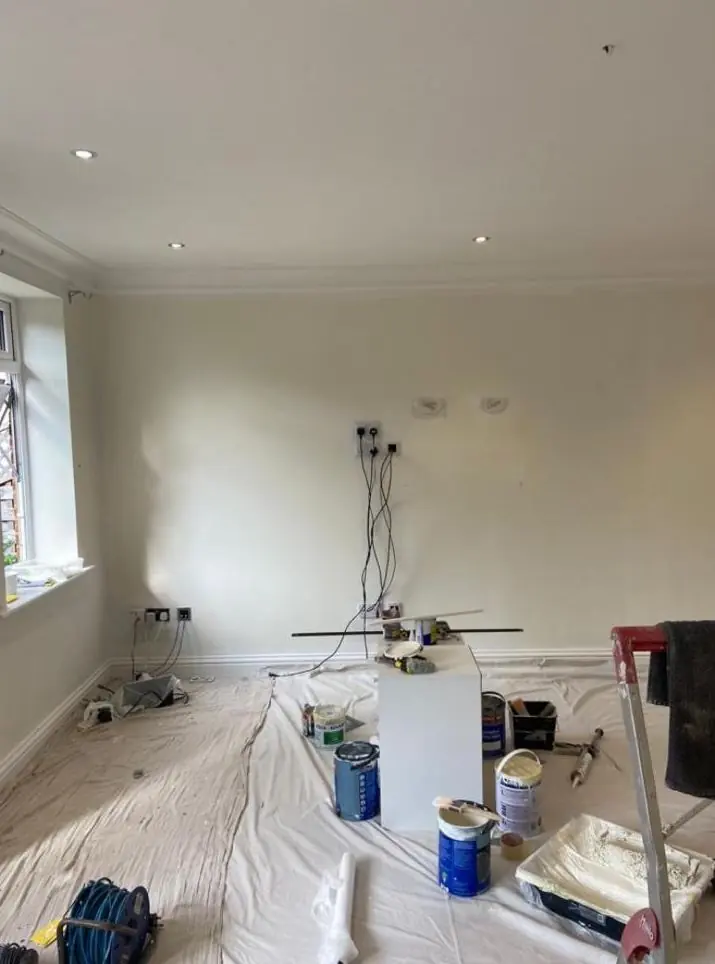
DH Painter & Decorator covers Rectory Farm from our Northampton base, about 4.2 miles north-east of the town centre in postcode NN3. Dean, with over 30 years in the trade, decorates the estate's 1970s terraces and flats, its 1980s detached and semi-detached houses, rented homes and the small Olden Road local centre.
Where Rectory Farm is
Rectory Farm is a residential estate on the outer north-eastern edge of Northampton, in the NN3 5 postcode sector and the Blackthorn & Rectory Farm ward of West Northamptonshire Council. Blackthorn lies to the south-west, with its own Bridge Court centre and older mid-1970s terraces. Ecton Brook and Billing parish are to the south, and the newer Overstone Lodge streets, such as Viscount Road, are to the north. Rectory Farm Road is the 30 mph spine road, Olden Road runs past the school and shops at 20 mph, and Great Billing Way and Wellingborough Road run to the south.
Northampton was designated a New Town in 1968, and the eastern estates were built largely under that expansion; the Northampton Development Corporation was wound up in March 1985. The Town and Country Planning Association describes those estates as separate units, each with its own identity, laid out to keep pedestrians and cars apart. Rectory Farm follows that pattern, with cul-de-sac closes and courts off the main roads and a network of footpaths named after Northamptonshire villages, such as Cransley Walk, Dingley Walk, Glapthorne Walk and Boddington Walk.
The northern half: 1970s terraces and flats
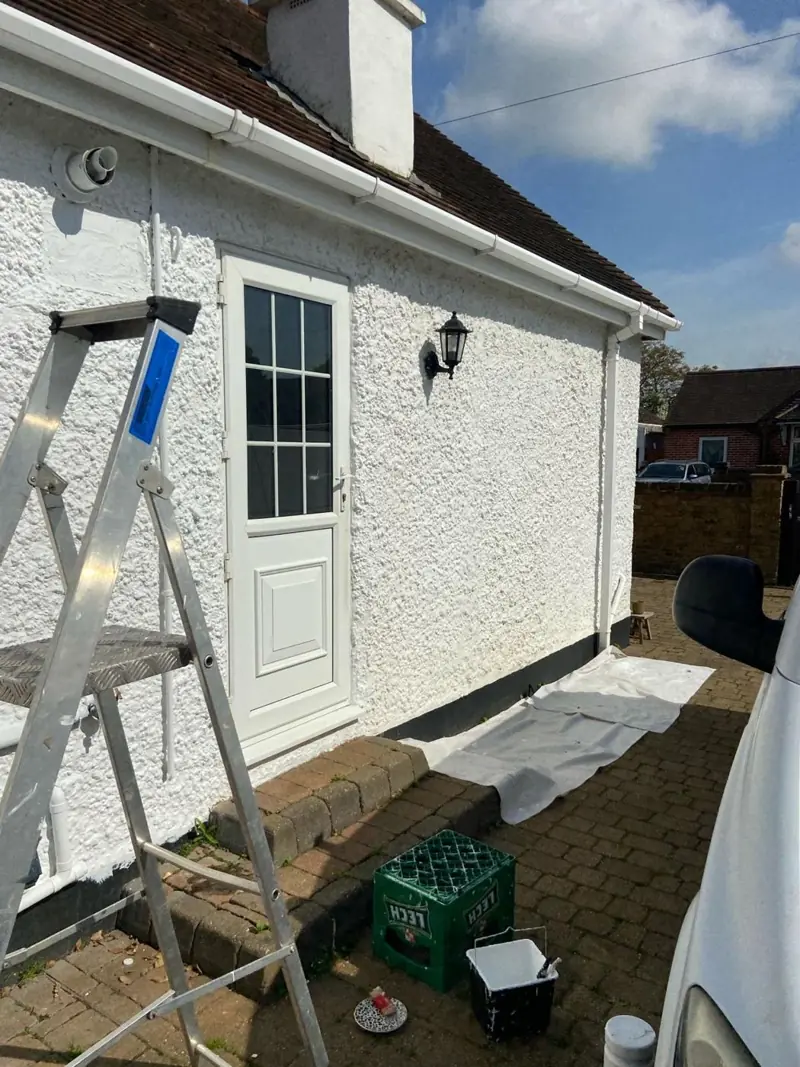
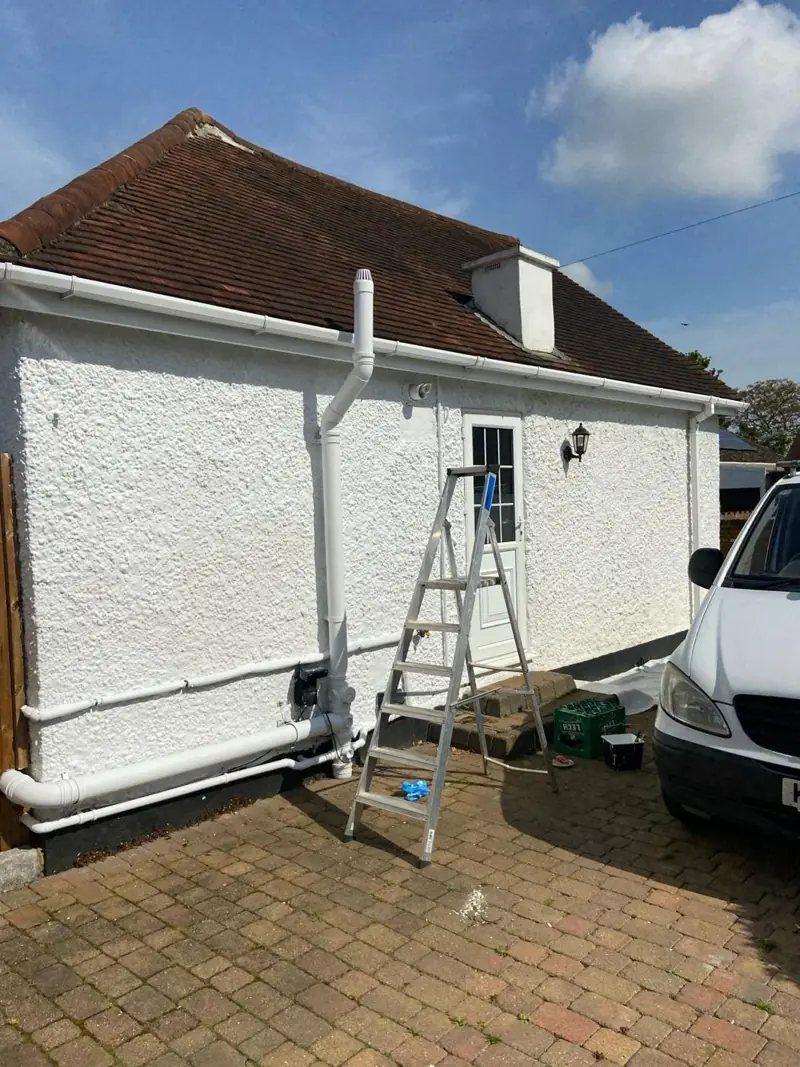
Around Olden Road, Crowthorp Road, Collyweston Road, Ermine Road, Mortar Pit Road and Pilton Close, Valuation Office figures date about 570 of 790 homes to 1973-1982. Just over half (53.1%) are terraced houses, with semis at 29.8% and purpose-built flats at 11.5%, according to Census 2021. Energy certificates for these streets describe mostly end-terrace houses with cavity walls and pitched roofs, and there is a flat above the Rectory Farm Supermarket on Olden Road.
Two features of these houses matter most to a decorator. First, energy certificates for a number of homes on Mortar Pit Road and Collyweston Road describe the cavities as unfilled or only partly filled. Cold outer walls attract condensation, so bathrooms, bedroom corners and the gable walls of end-terraces often need mould treatment and stain-blocking before any paint goes on. Second, these are small homes with narrow halls and boxed-in staircases, so stairs need a platform for safe access, and repainting every room is not a huge undertaking, usually worked through room by room around the family.
The south-east: 1980s detached and semi-detached closes
The south-eastern streets take their names from old motor marques: Morgan, Riley, Alvis, Bentley, Healey, Daimler and Allard Closes, together with Deansway, Deacons Court and Winnington Close. Most were completed from 1983 to 1992. Census 2021 records 80.6% of homes here as detached and 17.1% as semi-detached. Energy certificates show detached houses on Bentley Close, Healey Close, Deacons Court and Allard Close, and semis on Morgan Close, Riley Close and Alvis Court. A semi on Morgan Close is listed at just 66 m² on its energy certificate, which gives a sense of the scale.
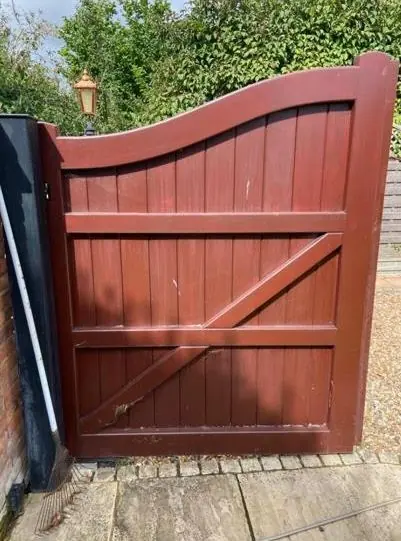
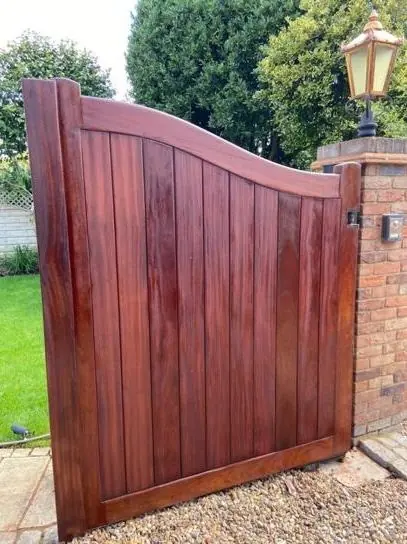
Nearly nine in ten of these homes were owner-occupied in 2021, so interior work tends to be full-house refreshes, colour schemes, wallpaper and feature walls rather than quick turnarounds. Outside, the houses are now 33 to 43 years old. Wherever the original softwood fascias, bargeboards, porch canopies and garage doors have not been replaced with uPVC, they are at the age when paint flakes and soft timber needs cutting out and repairing. Many of these houses also have garages, timber side gates and boundary fences that need staining every few years.
Newer homes and infill
The estate is not all of one age. Around Lowlands Close and the east end of Collyweston Road there is a mix of 1970s and 1980s homes and a cluster of about 130 dwellings dated 2019-2021. A group of about 140 homes dated 2009 shares a statistical area with the northern streets and probably covers the Overstone Lodge and Bridleways edge. Smaller infill includes detached bungalows at Fellmead Court and detached houses at Cluniac Court. New houses usually need their first redecoration once settlement cracks have appeared, and any new plaster, in a recent extension or garage conversion, needs a proper mist coat before colour.
Rented homes, shared owners and the local centre
Tenure changes sharply from one half of the estate to the other. Across the northern streets the 2021 Census found 35.5% social renting, 9.7% shared ownership and 15.2% private renting, leaving 39.6% owner-occupied. Around Lowlands Close, private renting reached 24.9%. That makes void decorating for councils, housing associations and private landlords a real need here, using durable neutral finishes that can be turned round quickly between tenants. Shared owners and housing association tenants should check their lease before any exterior colour change, because consent may be needed even though the estate has no conservation area or Article 4 direction.
Commercial premises are few. The Olden Road local centre has a Co-op Food and the Rectory Farm Supermarket, beside Rectory Farm Primary School, Daisy Chain Pre-School and the community centre. Any work on those buildings is small-scale and has to fit outside trading or school hours. There is no high street or business park on the estate.
Getting ladders and materials to the door
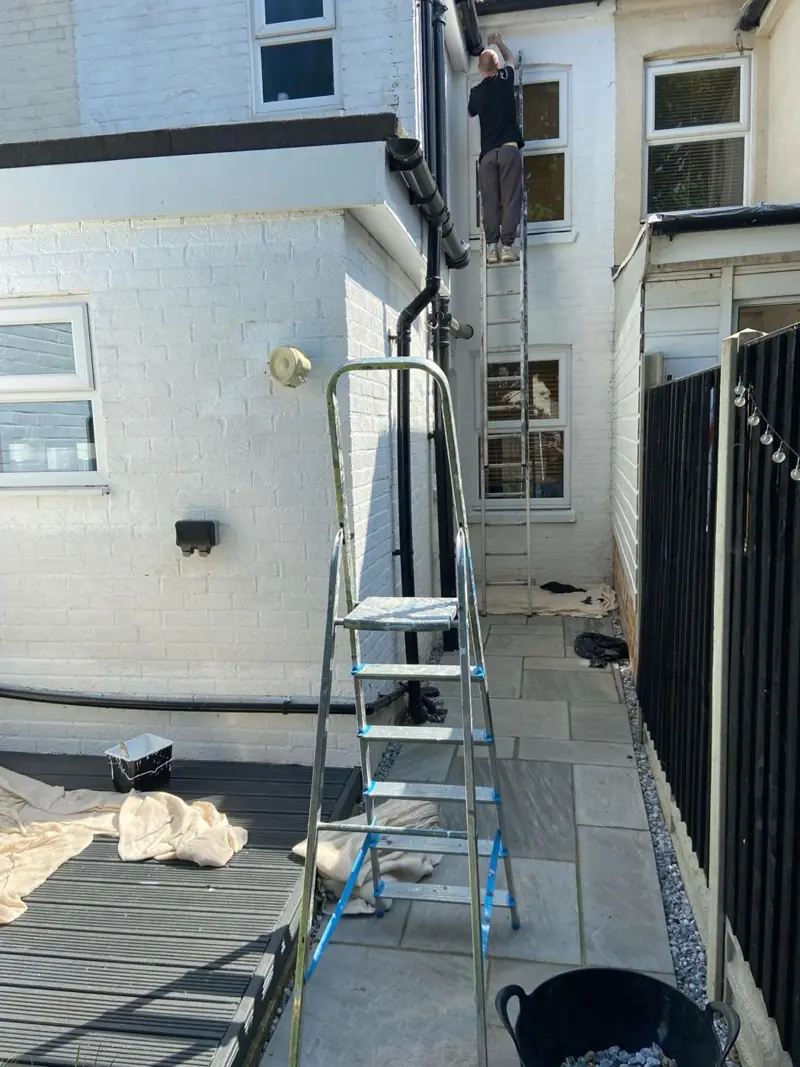
Because many front doors open onto footpaths rather than roads, ladders, towers, dust sheets and paint may have to be carried some distance from a shared parking area, and we allow for that when planning the job. In mid-terraces with no side access, anything going to the back garden comes through the house, so the hall and stairs are sheeted first. The detached closes are easier, with their own drives. School traffic on Olden Road at the start and end of the day is worth planning around too. Postcode checks for Morgan Close and Olden Road report no or very low flood risk, and the Rectory Farm Linear Park and open pitches run through the estate, so fences backing onto open ground take more wind than those tucked between houses.
Where to start
For most homes in the northern streets, interior painting and landlord decorating cover the main needs. In the 1980s closes, fascia and soffit painting and fence and gate staining are the outside jobs most likely to be due, while wallpaper hanging suits owners staying put. Dean is fully insured and will visit, look at the surfaces and give a written quote. For guide figures beforehand, see our guide to decorating costs.
Last updated by Dean, DH Painter & Decorator.