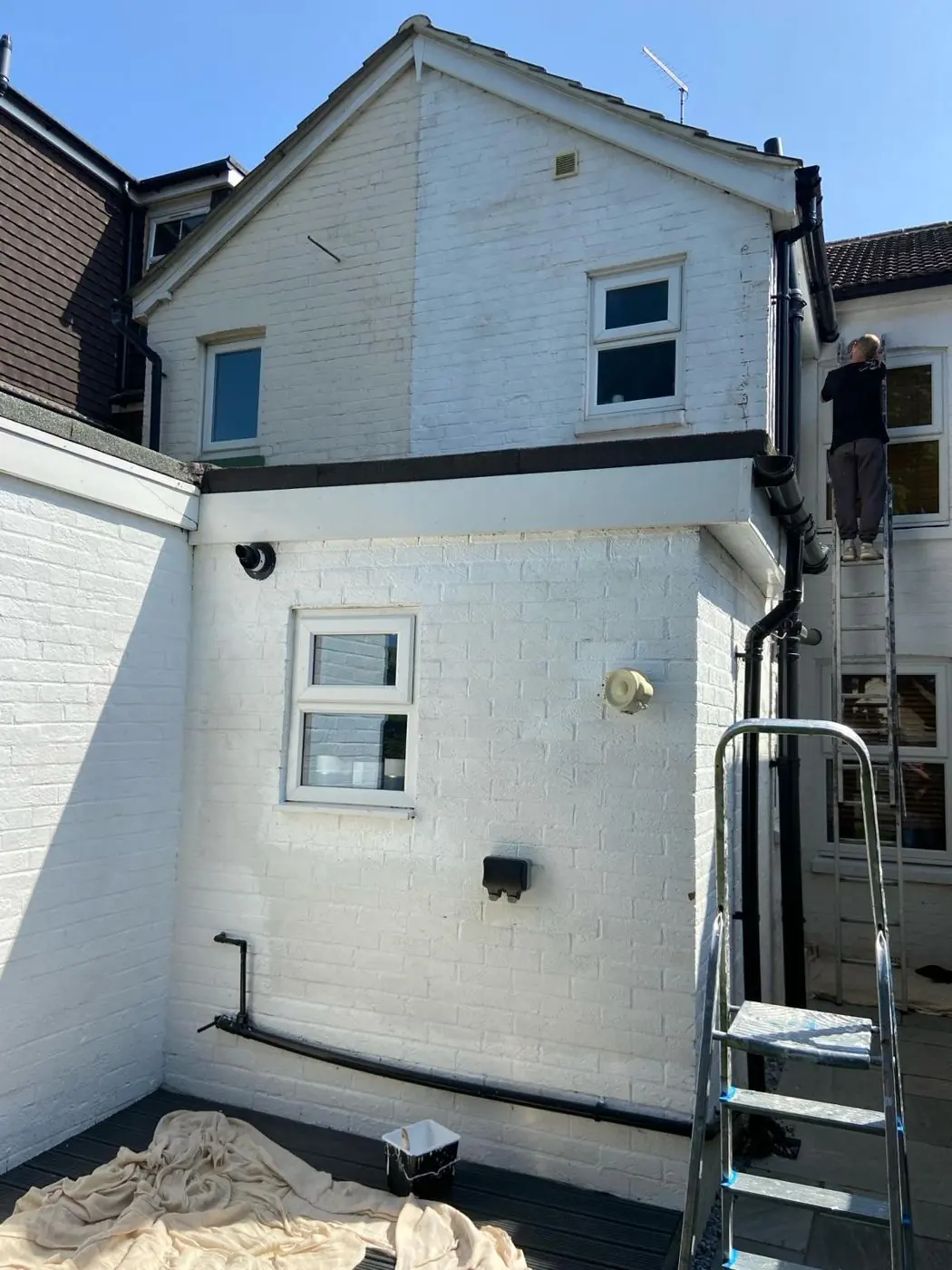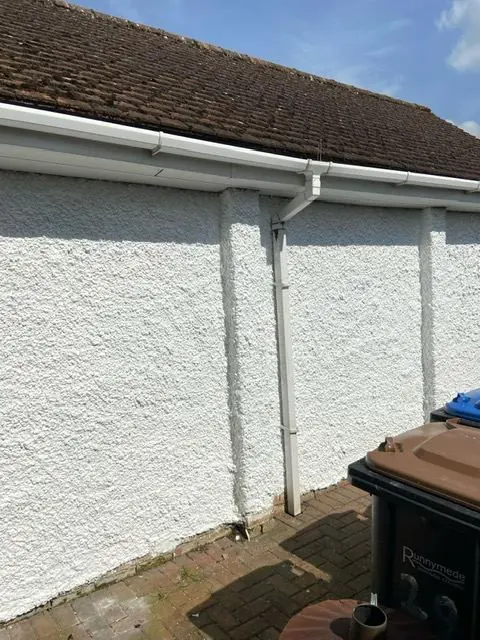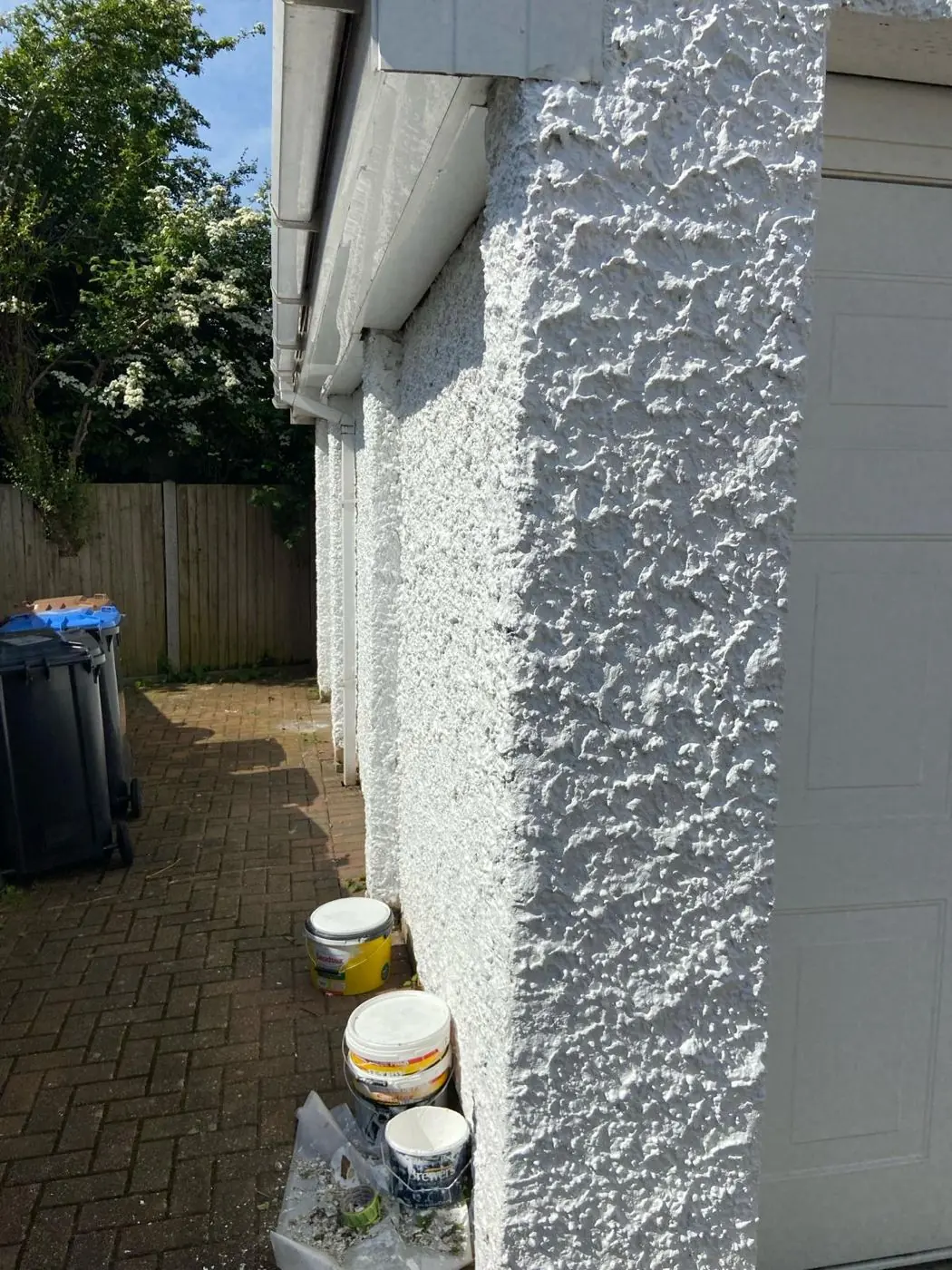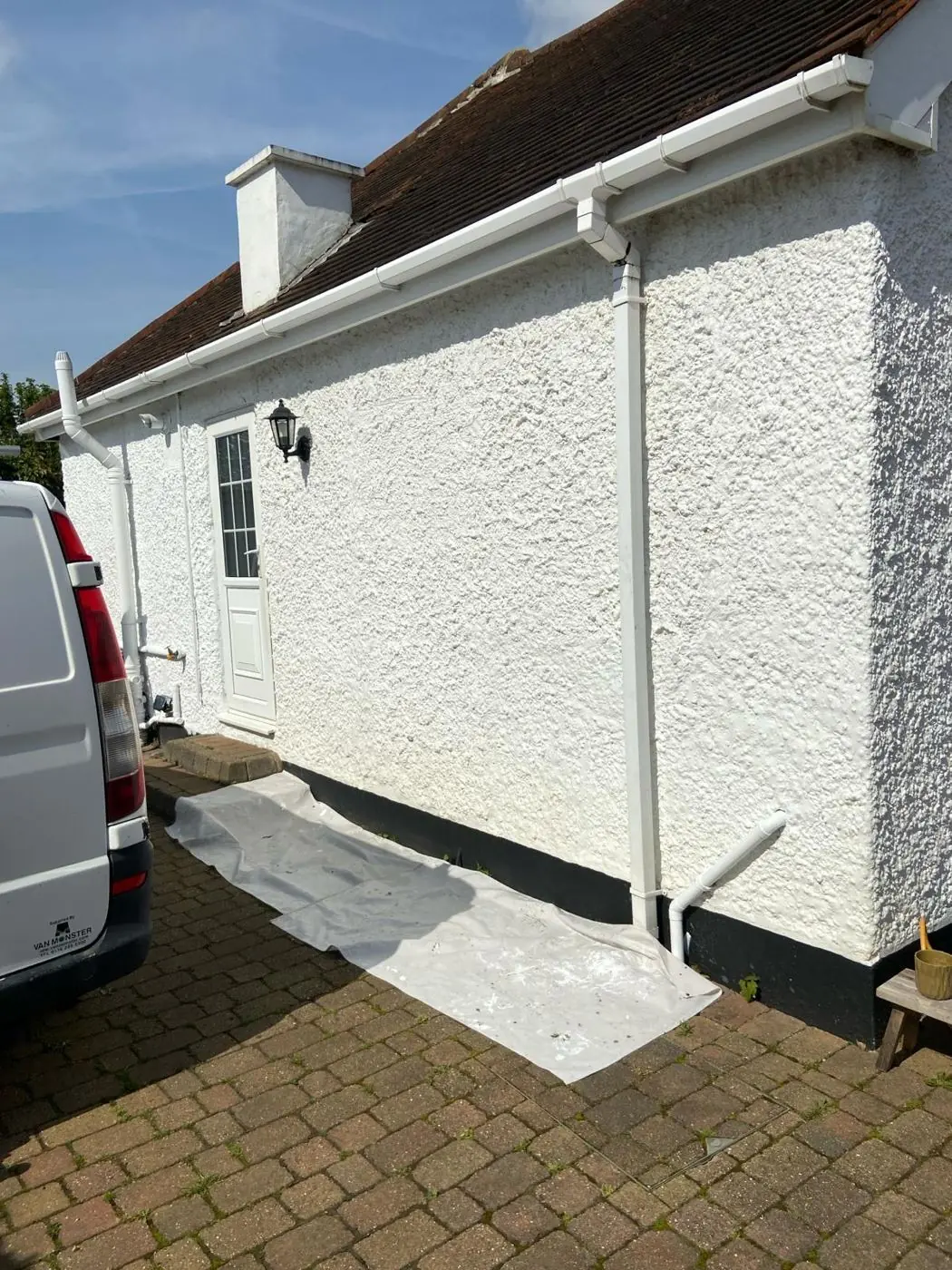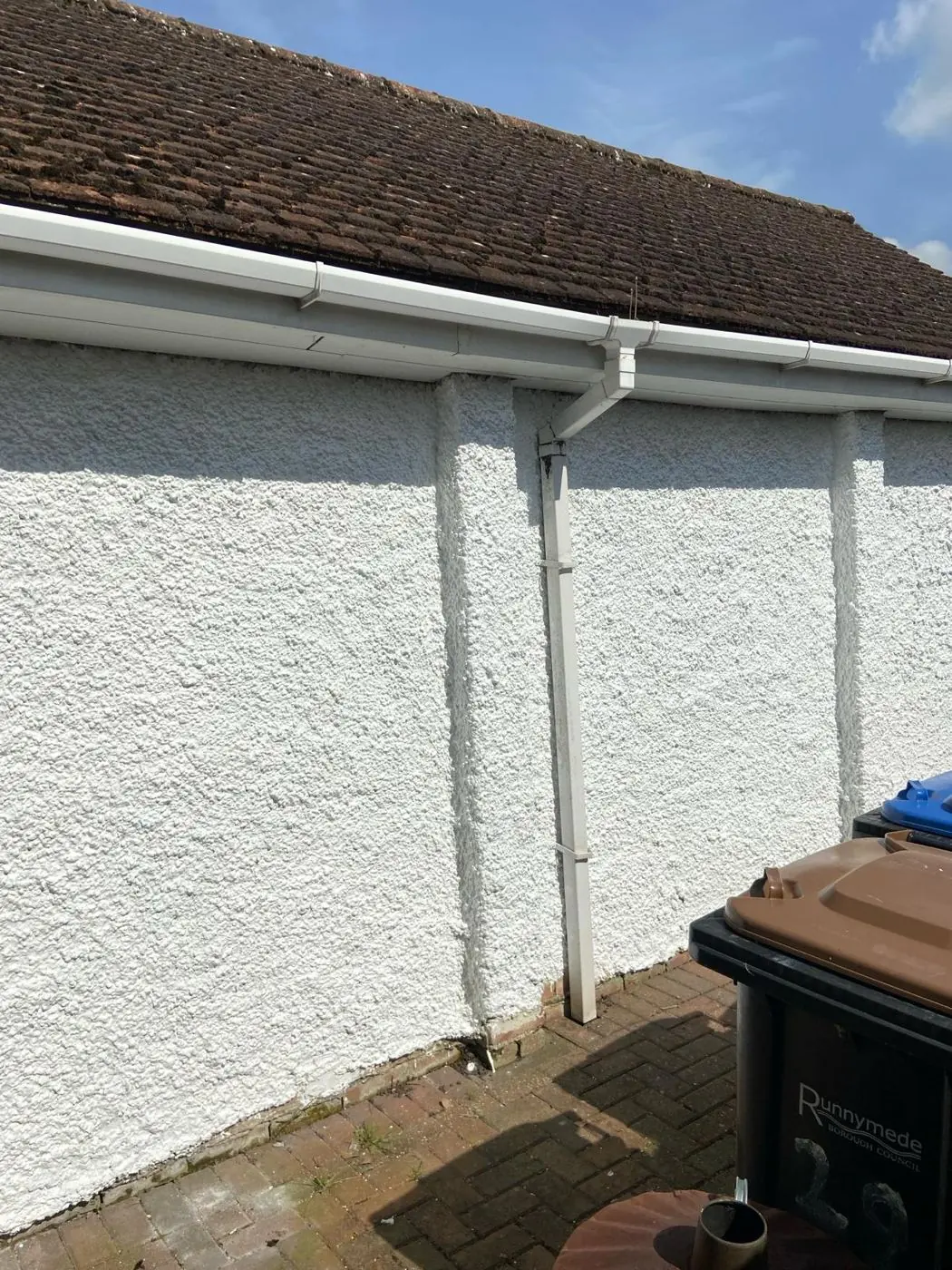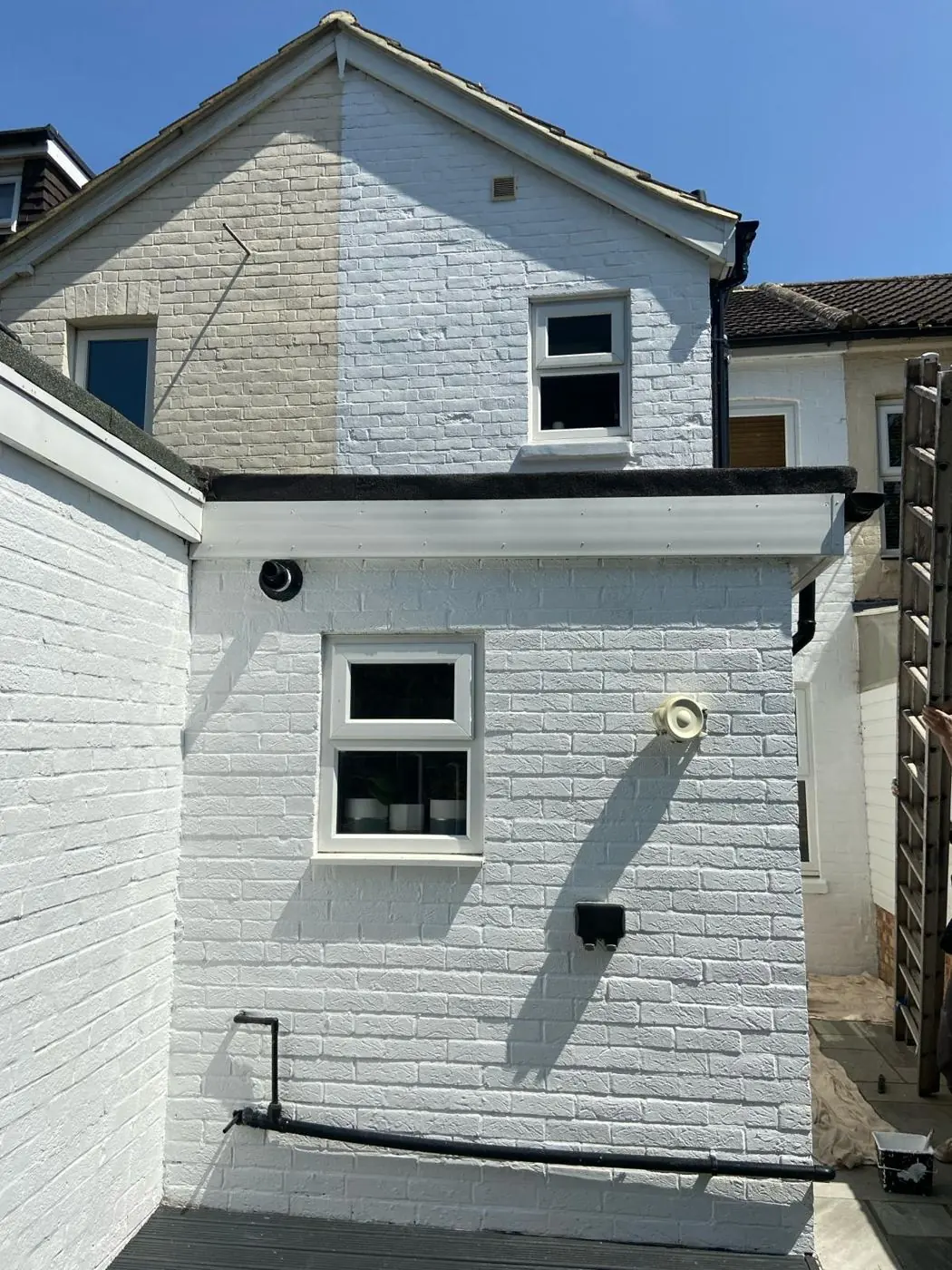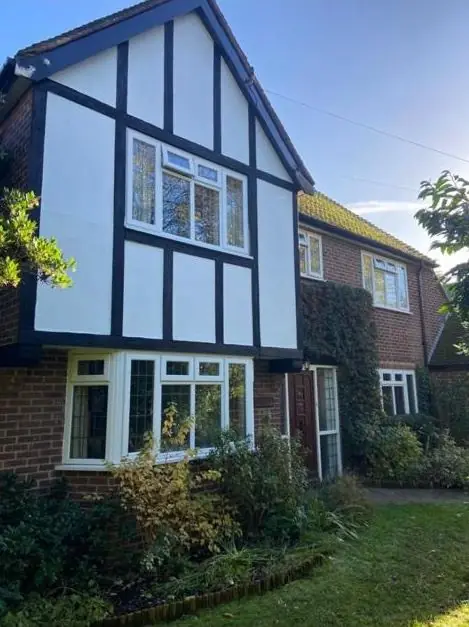
Towcester sits just over eight miles south-west of Northampton, and we paint fascias, soffits, bargeboards and rainwater goods across the NN12 town. Most of the work is on the Victorian terraces west of the centre and the estate homes to the south and west, as many historic buildings on Watling Street finish in stone eaves or parapets.
Not every Towcester roofline has boards to paint
It is worth looking up before booking. Plenty of the older buildings in the centre of Towcester finish at the top with stone eaves or a parapet wall rather than a timber fascia. On those, the painted roofline work is usually limited to gutters, hoppers and downpipes, and sometimes a painted cornice. On the Victorian terraces and the modern estates it is a different picture, with timber or painted fascias, soffits and bargeboards that need looking after. Tell us roughly where the house is and Dean can say from a quick look what the job involves.
Bargeboards on the Victorian streets
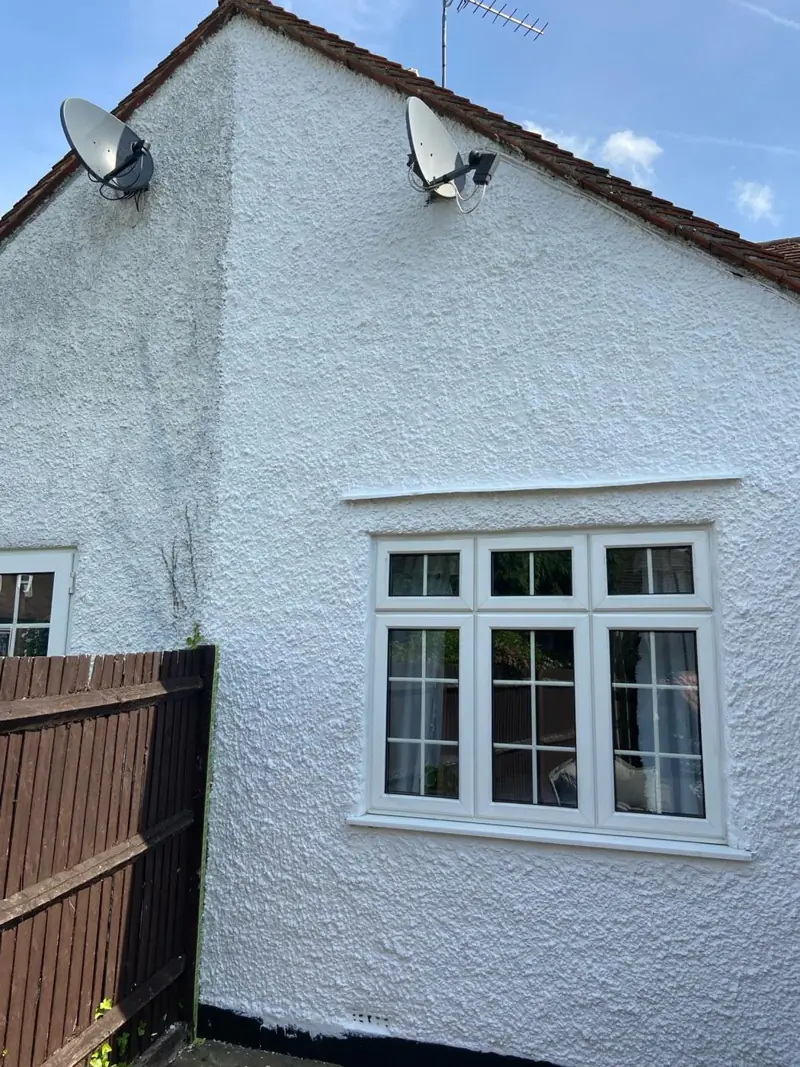
The terraces built as Towcester spread west in the Victorian period, on Richmond Road, Queens Road, Pomfret Road, Brackley Road and short rows like Queens Terrace and Pomfret Row, are red brick with timber at the eaves and gables. A lot of these houses have lost their sash windows to uPVC over the years, but the bargeboards and fascias are often still timber, and they are frequently the most weathered painted surface on the house. Gable bargeboards catch rain from both the roof and the wind, and the joints at the apex and the feet are where rot usually starts.
Before painting, Dean probes those joints and the board ends, cuts out and repairs small soft areas, and primes any bare timber before undercoat and gloss. Where a board has rotted through, we will say so rather than paint over it. Because these roads have been inside the conservation area since 2012, keeping timber boards in good order is generally the safer route than swapping them for plastic, which the appraisal discourages along with uPVC windows.
Estate homes to the south and west
Most of Towcester’s twentieth-century and newer housing lies south and west of the old town, and with the town set to grow by around 3,300 more homes, there will be more of it. These houses usually have plain timber fascias and soffits, sometimes with vented soffit boards, or uPVC that is left as it is. Timber versions on older estate houses tend to fail on the south and west faces first. Most of these homes are outside the conservation area, so colour is your call, and a repaint is straightforward once failing paint is scraped back and edges are sanded flush.
Working at height in the centre
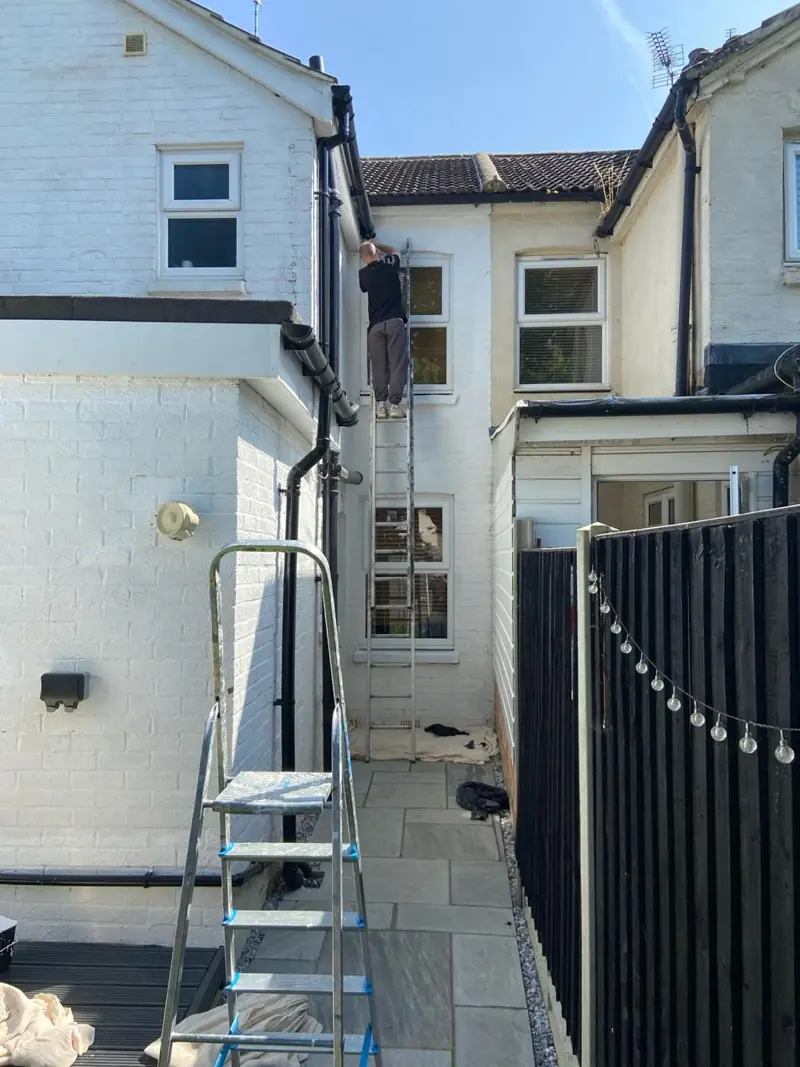
Where a town-centre building does have painted timber at the eaves, the access is the hard part. Buildings on Watling Street and Park Street stand right at the pavement with traffic alongside, and some are three storeys. Fascia work there means a tower or long ladders on the footway, protection for passers-by and parked cars, and a tight daily finish. At the rear, burgage plots reached down alleys like Meeting Lane can make it easier to work on back elevations and extensions, though everything has to be carried in.
Dirt matters too. Gutters and fascias facing the A5 pick up traffic grime, so we wash them down before any sanding so the dirt is not ground into the new paint.
The step-by-step method is on our main fascia and soffit painting page. For an idea of what affects the cost of roofline work, see the painter and decorator cost guide, and for the rest of the town, our Towcester area page.
Last updated by Dean, DH Painter & Decorator.