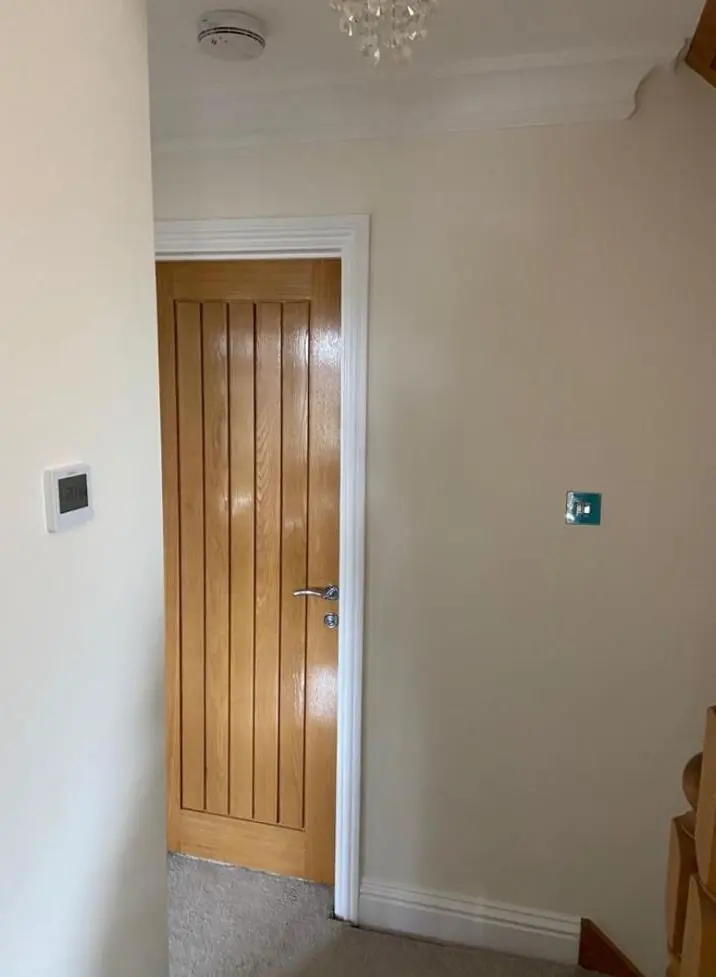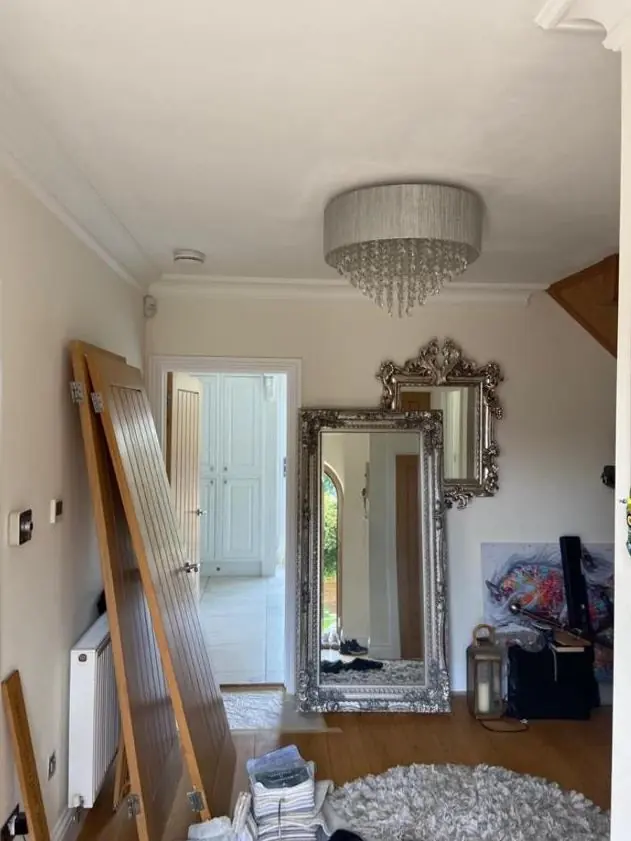
We decorate hallways, stairs and landings in Walgrave, about 7.9 miles north-east of Northampton. Dean plans the access for each type of staircase in the village, from narrow cottage stairs in the old shoe-industry rows to the standard straight flights on the 1929 to 1975 streets.
Three kinds of staircase in one village
The age of a Walgrave house tells you a lot about its stairs before you step inside. Part of Walgrave Hall in the north of the village has a staircase dated to about 1630, a reminder that some interiors here go back nearly four centuries. Few homes are that old, but the village splits into three broad groups, and each needs different equipment and a different plan.
- Stone farmhouses and village houses of the 17th to early 19th century, with lime plaster, uneven walls and stairs that may turn or be boxed in.
- Late 19th-century workers’ cottages built for the boot and shoe trade at Walkers Works: Klondyke Cottages, New Row, Spion Kop and Crispin Cottages.
- 20th-century streets from Jubilee Drive (about 1929) through Townsend and Springfield Roads (about 1949) to Amber Drive (about 1975), mostly with straight flights and a landing at the top.
Narrow, steep stairs in the shoe-workers’ rows
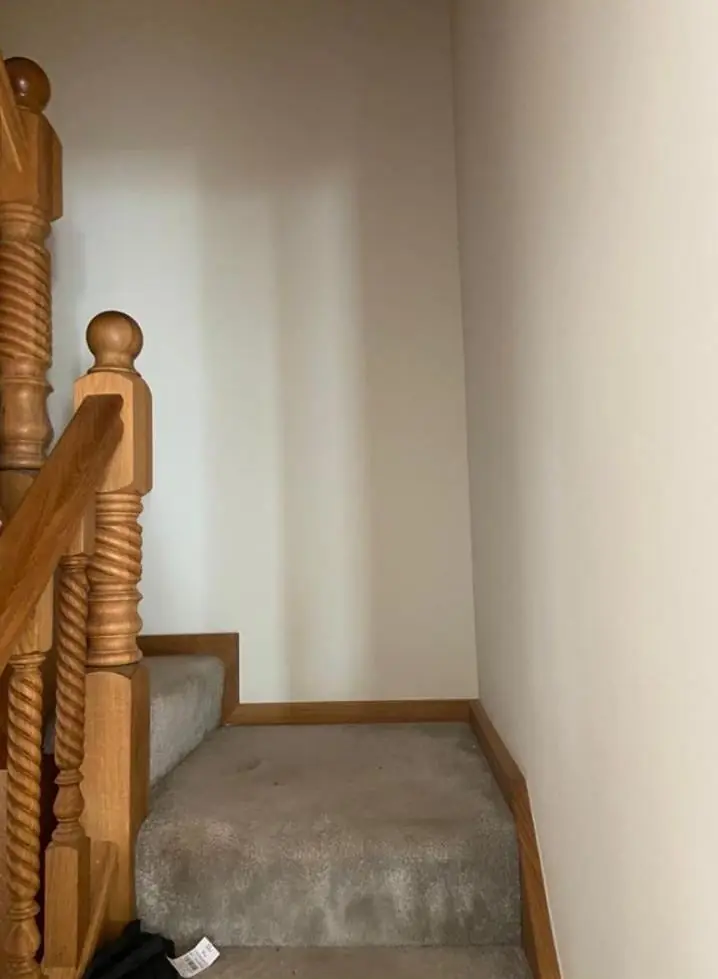
Stairs in these cottages are narrow and steep, and where a flight runs between two walls there is little room either side. The usual stair platform will not always fit, so we work from a combination ladder with independently adjustable legs, set on dust sheets that are taped down so nothing slides on a steep tread. Where the stair turns, short staging boards bridge the gap safely. There is rarely room to work two at a time, so the job is sequenced: ceiling and top walls first, then down the flight, with the treads kept clear at the end of each day so you can still get up to bed.
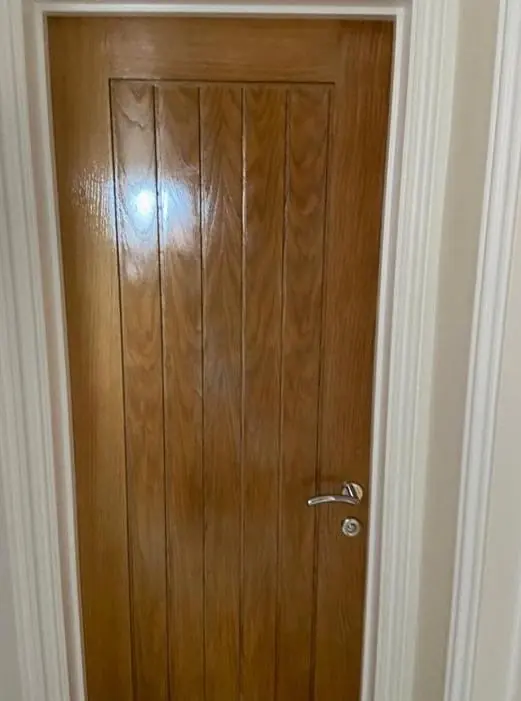
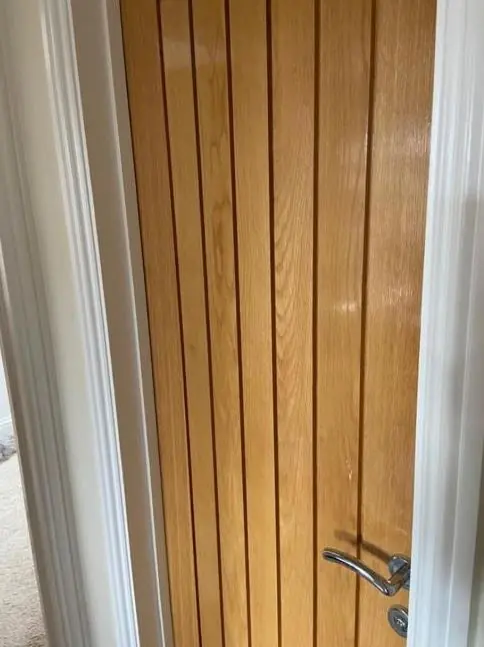
In these small hallways the woodwork takes up a large share of the surface. A front door, a couple of internal doors, the stair string, spindles and handrail can easily take longer than the walls. We price that honestly rather than treat a cottage hall as a quick job.
Lime plaster and uneven walls in the older houses
In the lias houses on Holcot Road, Gold Street and the High Street, any original lime plaster around the stair needs a breathable emulsion. A modern vinyl paint seals the surface and can push damp into the stonework, which shows up later as blistering on the stairwell wall. Old plaster in these houses also follows the stone behind it, so we fill and feather cracks without trying to make a wall look machine-flat. On panelled or boarded stairs, older paint layers are treated as possibly lead-based and prepared wet.
If your house is listed, keep in mind that historic features such as balusters and panelling are part of the listing. Repainting them is usually maintenance, but stripping or altering them is not something to do without advice.
Straight flights from Jubilee Drive to Amber Drive
The inter-war and post-war houses usually have a single straight flight with a tall wall over the stairs, which is exactly where most people get stuck. We use a stair platform or a tower across the stairwell to reach the full height safely. On Jubilee Drive and the 1949 roads, picture rails and older plaster are common; a lining paper can hide crazed plaster in a hallway that has been painted many times. On Amber Drive and the 1970s to 1990s closes, the job is usually walls, ceiling and spindles in a wipeable finish that stands up to bags, bikes and dogs.
Living out in a rural village, you also bring more mud and grit through the hall from farm tracks and gardens, which is a good reason to choose a scrubbable matt or eggshell lower down. Our main hallway, stairs and landing page covers the access equipment and finishes in more detail, and our decorating cost guide explains what affects the price of a stairwell. There is more on the village itself on our Walgrave page.
Last updated by Dean, DH Painter & Decorator.