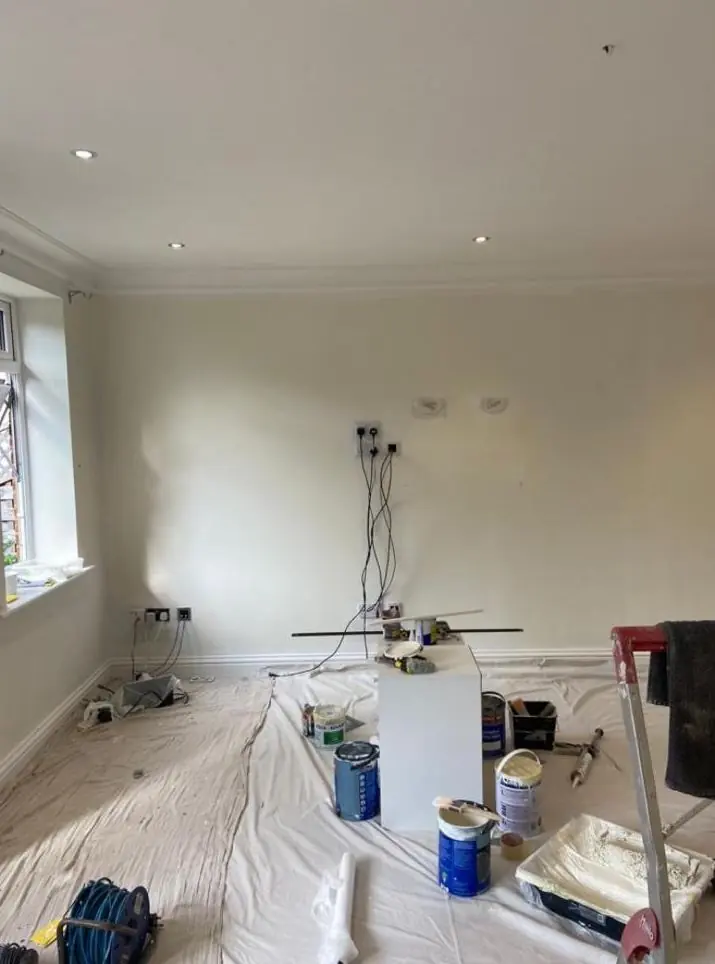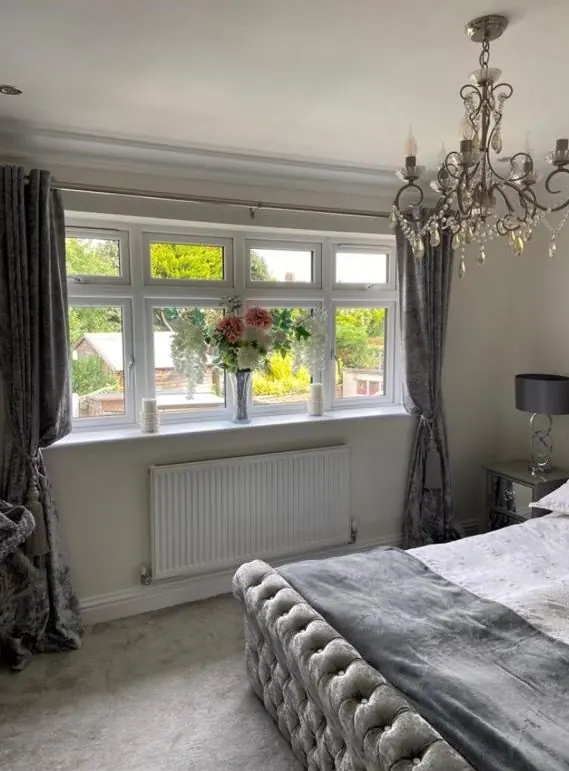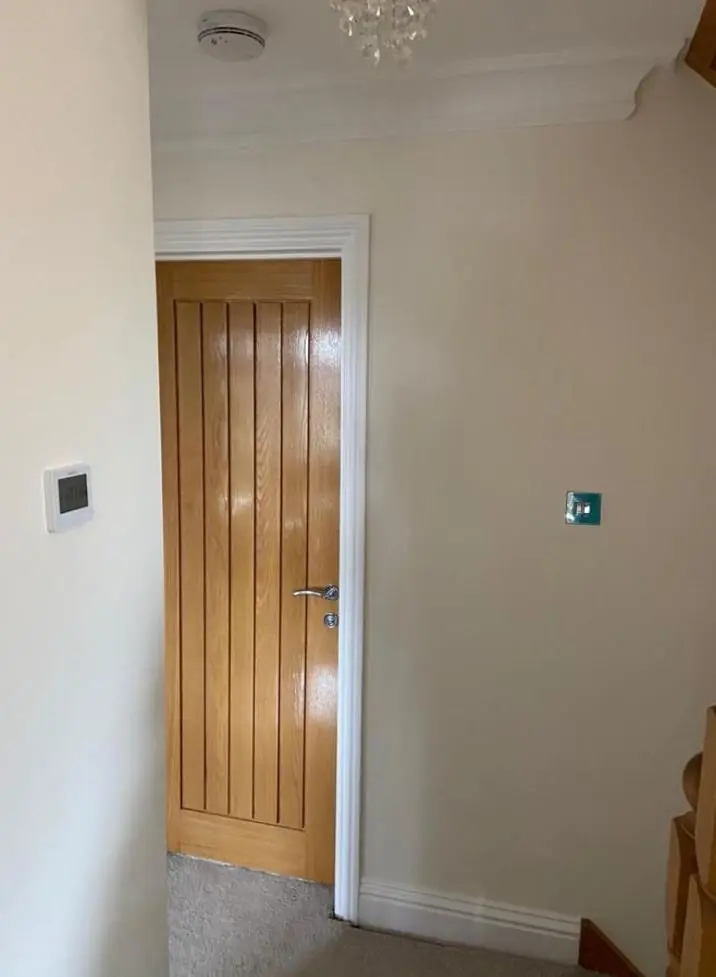
Dean hangs wallpaper and lining paper across Walgrave, NN6, about 7.9 miles north-east of Northampton. Older stone cottages and farmhouses need lining and careful setting out first, while the village's later estate homes usually take paper straight onto prepared walls.
Old stone walls are the reason to line first
Much of Walgrave’s historic housing is squared, coursed lias, put up between the mid 17th and early 19th centuries along Holcot Road, the High Street, Gold Street and Hannington Road. Inside, walls in houses of this age wander. Corners lean, window reveals are deep and tapered, and lime plaster has a soft, slightly undulating face that shows through thin papers. Hanging a printed paper straight onto that surface highlights every hollow.
So in the older houses we usually hang a lining paper first, cross-lined so its joints never sit on top of the finish paper’s joints. Lining evens out the surface, gives the paste a consistent base, and helps a heavier paper hold on a wall that would otherwise grab some areas and starve others. Where lime plaster is in good order, we choose an adhesive and lining suited to it rather than sealing the wall in heavy coats. If the room is listed and still has historic decoration or lining under later layers, check with West Northamptonshire Council before anything is stripped.
Setting out a pattern when nothing is plumb
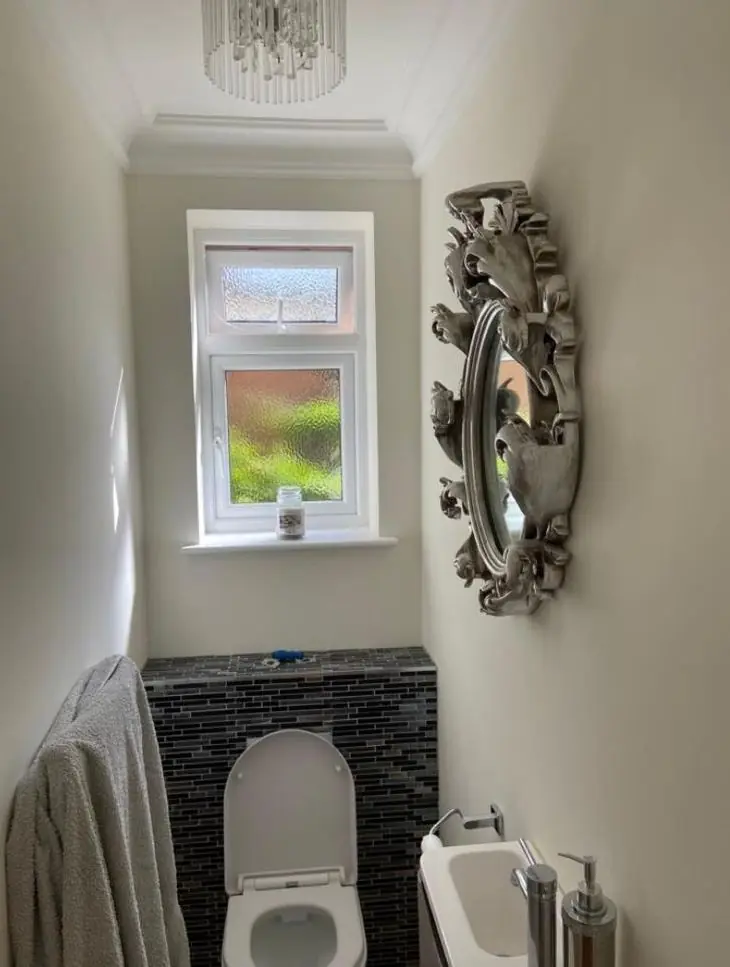
Pattern matching is where an old Walgrave cottage tests a paperhanger. A ceiling line that drops by an inch across a room will pull a large repeat visibly off level if you follow it. Follow the plumb line instead and the pattern drifts against the ceiling. Neither is right on its own, so we decide where the eye will rest, usually the chimney breast or the wall facing the door, and set the pattern level there. Any compromise goes into the least visible corner.
- Large repeats need more planning and more paper on crooked walls, so we measure for waste before you order.
- Small, busy prints and textured designs hide movement in the wall and suit the smaller rooms in the shoe-workers’ rows such as New Row and Crispin Cottages.
- Stripes show every lean. In a room with a noticeably sloping ceiling we usually suggest avoiding them or keeping them to one straight wall.
Simpler walls on the later streets
From the 1920s Walgrave spread out from its stone core, first along Jubilee Drive, then Townsend and Springfield Roads after the war, and later Amber Drive and the infill closes up to the 1990s. Walls in the later houses are usually plasterboard or modern skim and far closer to square, so most papers go straight up after sizing, without lining.
The catch with these homes is what is already on the walls. Older vinyl paper is often painted over and stuck fast, and stripping it can tear the paper facing of plasterboard. We score and steam carefully, then seal any damaged board before new paper goes up so it doesn’t bubble. In the 1929 and 1949 houses, original plaster under several layers of old paper may need patching once it is bare.
Planning the day out from Northampton
Walgrave has no decorators’ merchants, so batch numbers matter. We check that every roll carries the same batch code before the first length is cut and allow spare rolls for crooked rooms, because sourcing a matching roll mid-job means a lost day. Paste table, steamer, lining and sundries all come with us, and we plan the room order so you are never without a bedroom overnight.
See our wallpaper hanging service for the full stripping-to-trimming process, and our Walgrave page for the other decorating work we cover in the village.
Last updated by Dean, DH Painter & Decorator.