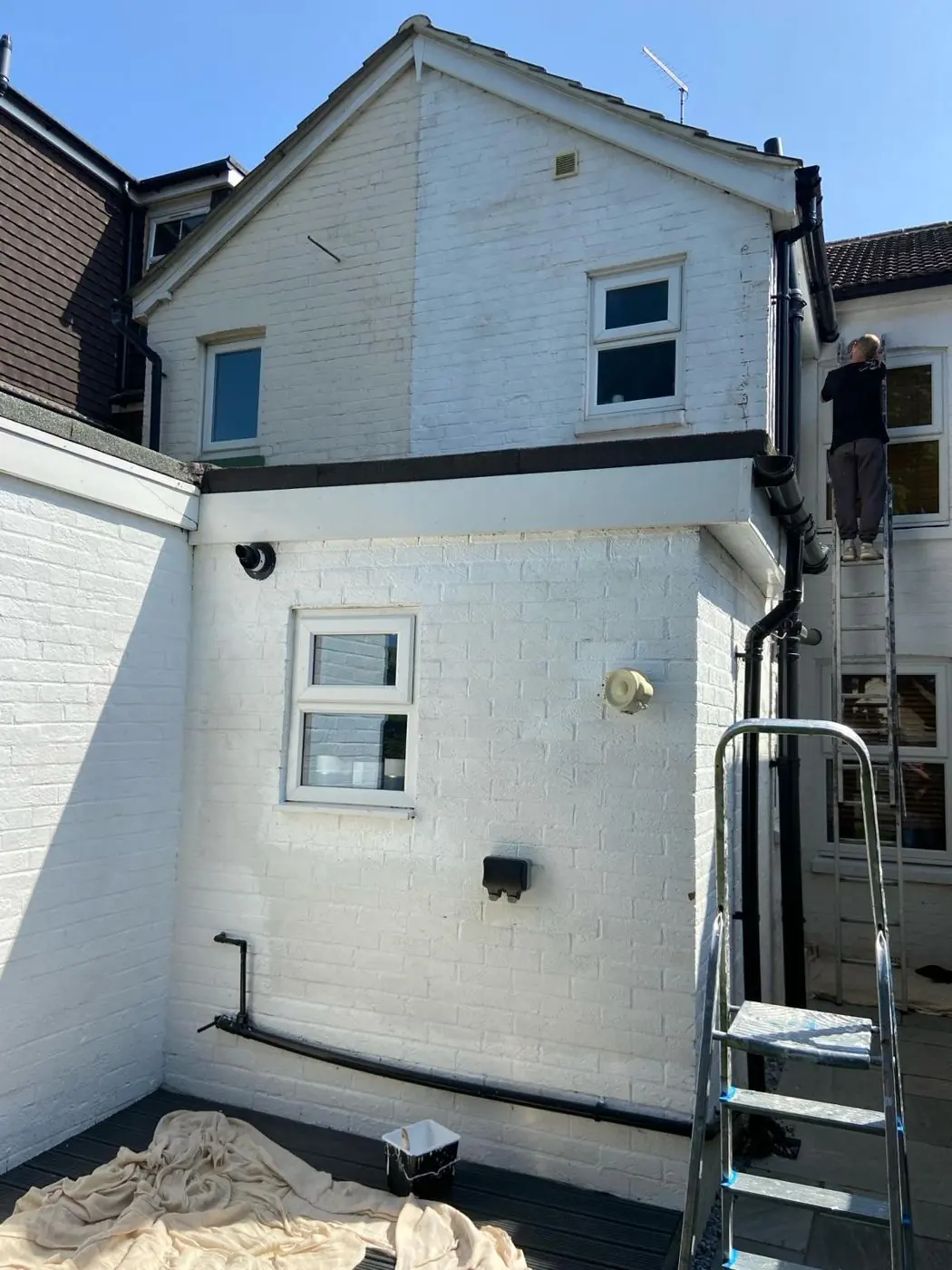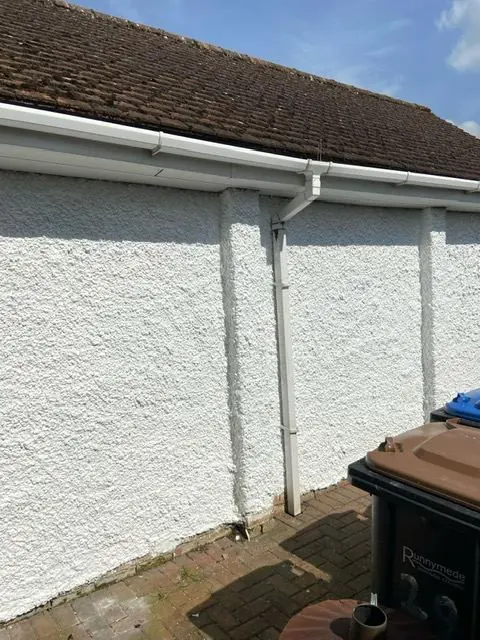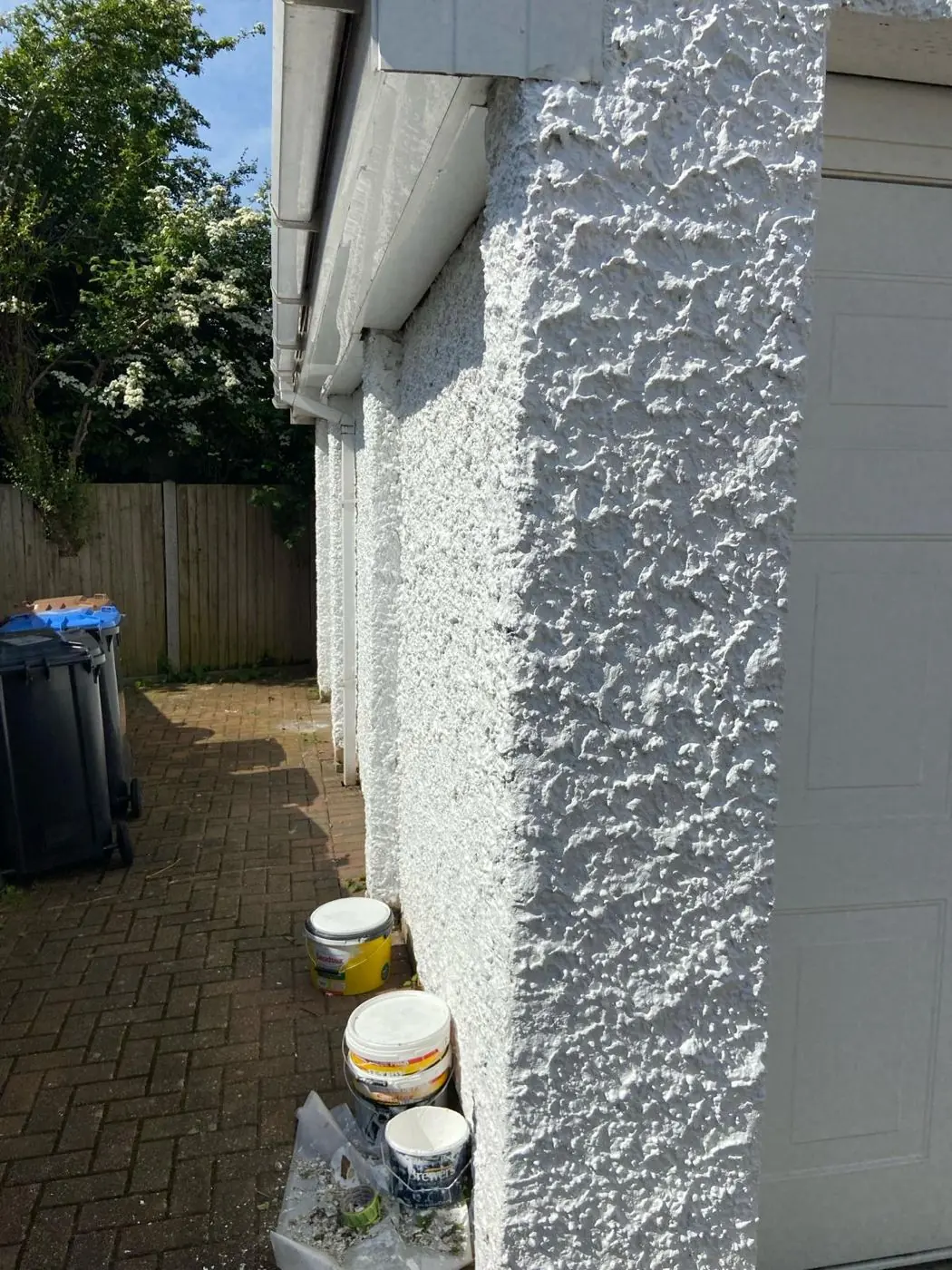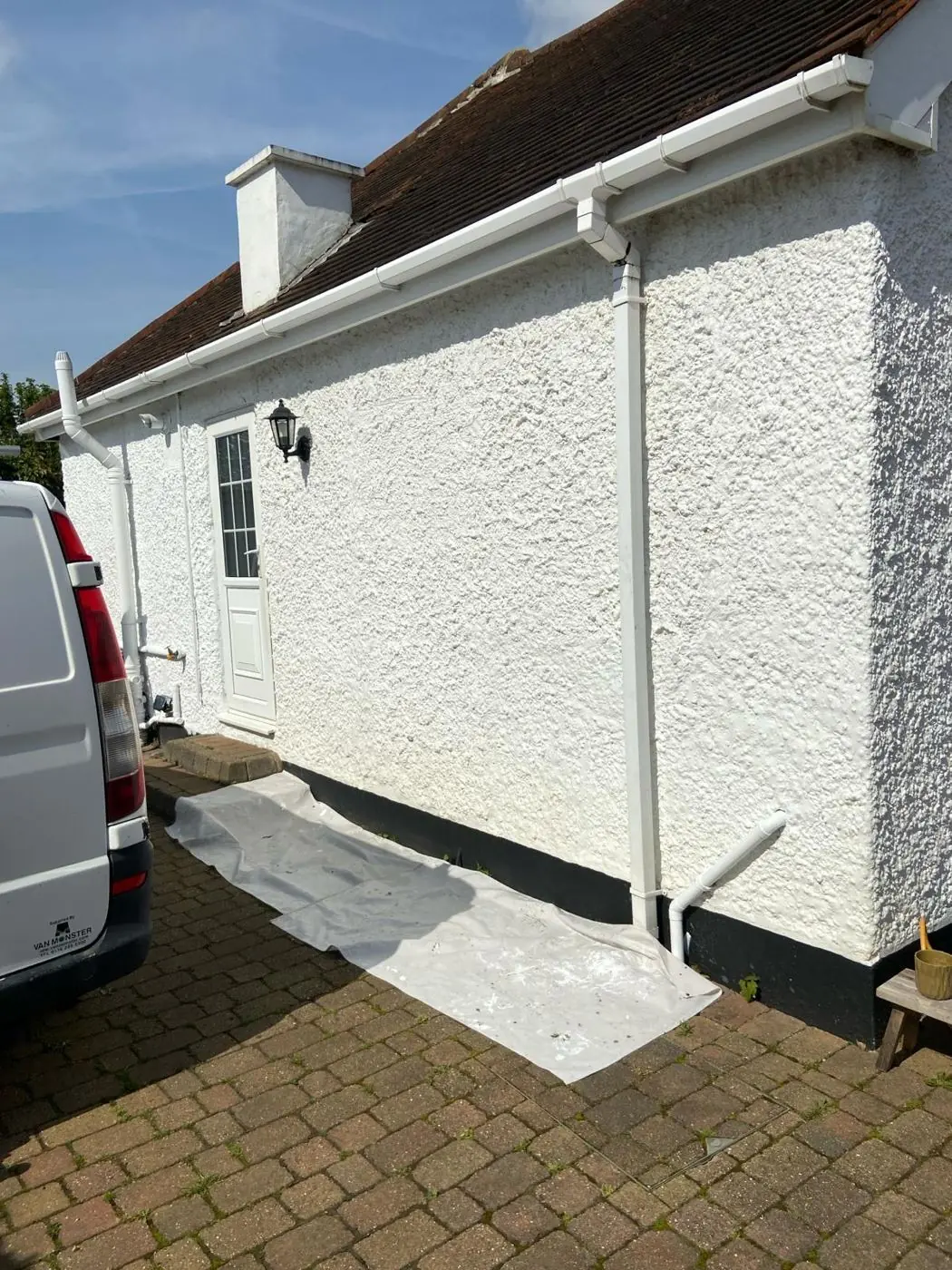
DH Painter & Decorator covers Walgrave, a rural NN6 village about 7.9 miles north-east of Northampton town centre, from our Northampton base. Dean paints interiors and exteriors across the village's housing, from 17th-century coursed lias farmhouses to the estates built from 1929 onward.
A village built in layers
Walgrave is a rural village and civil parish in West Northamptonshire, recorded in Domesday Book as Waldgrave, with a population of 868 at the 2011 census. Its parish history notes that the village centre moved to higher, drier ground around the church after the medieval plagues, and the medieval stone core around St Peter’s Church and Gold Street is still the heart of the place. Around it, the village grew in clear stages, and each stage brings its own decorating needs.
- Mid 17th to early 19th century: two-storey farmhouses, village houses, a former rectory, a chapel and a school, built of squared, coursed lias with some limestone ashlar banding and mostly slate roofs.
- Late 18th to 19th century: brick houses with sash windows, such as The Hollies on Holcot Road.
- Late 19th century: rows built for workers at Walkers Works, the boot and shoe factory of 1899, including Klondyke Cottages, New Row, Spion Kop and Crispin Cottages.
- 1929 and 1949: Jubilee Drive, then Townsend Road and Springfield Road.
- 1970s to 1990s: Amber Drive around 1975 and infill closes including Walker’s Acre, Church View and Manor Farm Close.
We cover Walgrave from our Northampton base, about 7.9 miles away, with Brixworth, Pitsford, Sywell, Moulton and Overstone all nearby.
Listed lias houses: what paint can and can’t do
The parish has 18 listing entries. Alongside St Peter’s Church (Grade I), with its 13th-century west tower and sandstone spire, they include Walgrave Hall Farmhouse on Hannington Road, Walgrave House on the High Street, the Baptist Chapel and The Old School on Gold Street, and Cross Farmhouse, The Old House and The Hollies on Holcot Road. No conservation area covering Walgrave appears in West Northamptonshire Council’s lists, so the controls here come from the listings themselves. Painting stone that has never been painted, or noticeably changing a listed building’s finishes, can need listed building consent from West Northamptonshire Council.
Most of the old stone houses are bare lias and should stay that way. Lias holds and releases moisture, and acrylic masonry paint traps that moisture behind a skin that later blisters and peels. Where stone has already been limewashed or painted, breathable limewash or mineral finishes are the right follow-up. Outside, most work on these houses is joinery, gates and ironwork rather than walls:
- Leaded-light timber casements under wood lintels, as at Cross Farmhouse and The Old House, need careful cutting in and a microporous joinery paint rather than heavy gloss.
- Timber lintels in the lias walls are exposed and get checked for rot and sealed whenever the windows are painted.
- Sash windows like those at The Hollies need preparation that keeps boxes and beads free, so the sashes still run.
- Cast-iron windows, such as the arch-headed ones at The Old School, need rust treatment and a metal primer before topcoats.
- Gates on listed stone piers, as at Walgrave Hall Farmhouse, are painted in traditional colours without marking the stonework.
Inside the older houses
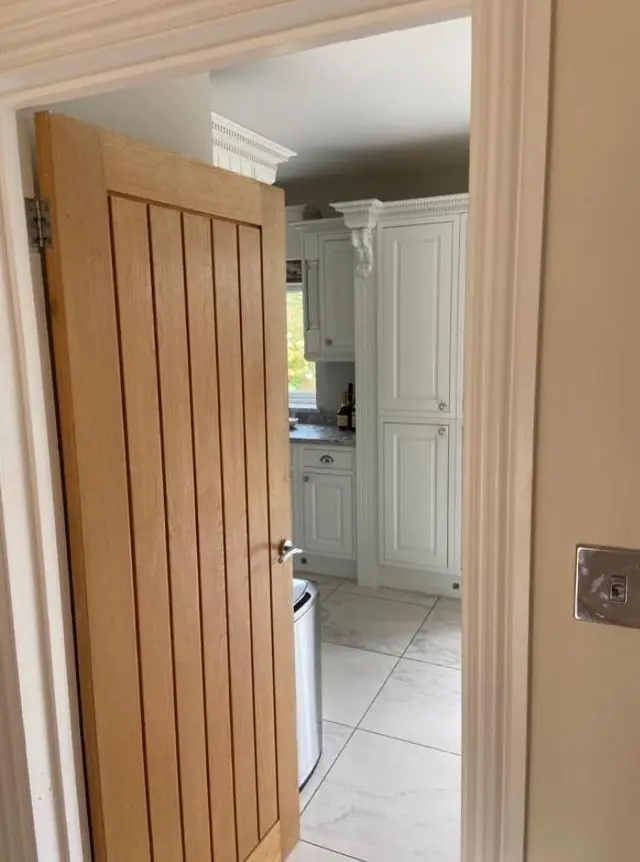
Interiors in the stone houses often have uneven lime plaster, plank and panelled doors and deep skirtings. Lime plaster needs breathable paint, and old joinery may carry lead-based layers that must be tested before sanding. Rooms in the shoe-workers’ rows are small with steep, narrow stairs, which suits careful small-room decorating and traditional hallway work. Our interior painting service covers the preparation in detail, and the hallway, stairs and landing page explains how we work safely over tight stairwells.
Houses from around 1929 and 1949 on Jubilee Drive, Townsend Road and Springfield Road often keep older plaster, picture rails and original doors. Those details are worth keeping. A picture rail gives a natural line for two-tone walls, and an original panelled door repainted properly usually looks better than a replacement.
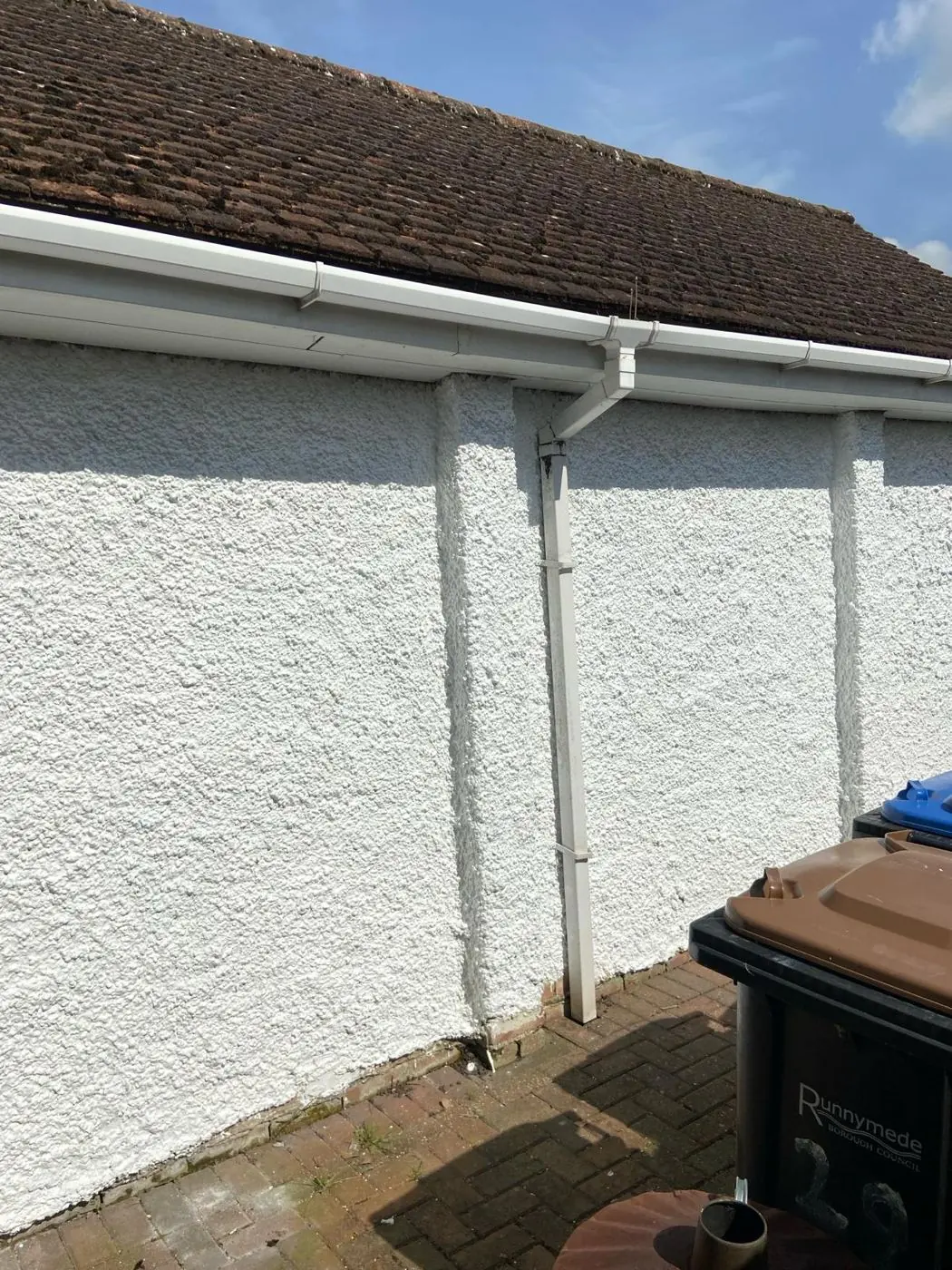
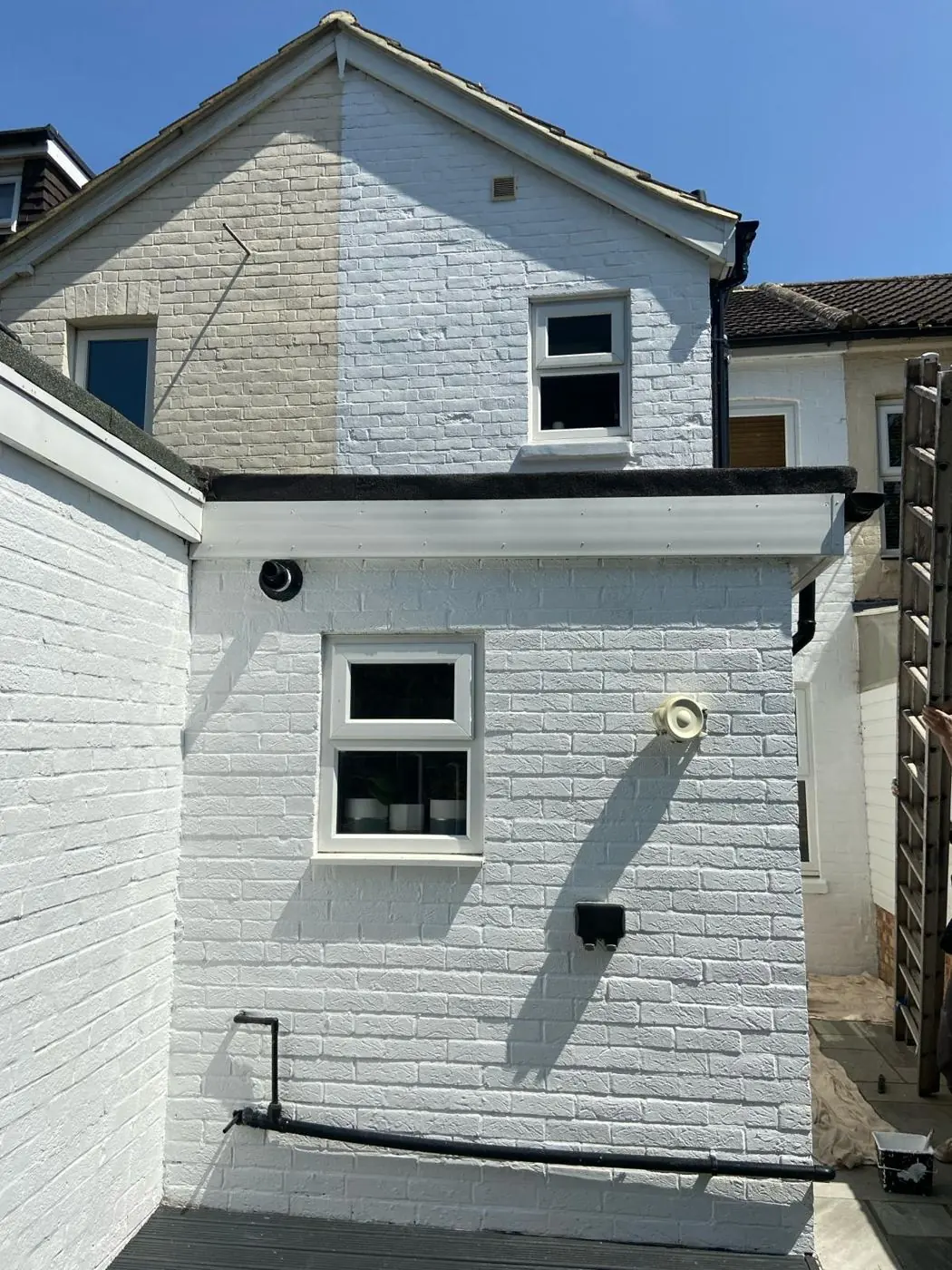
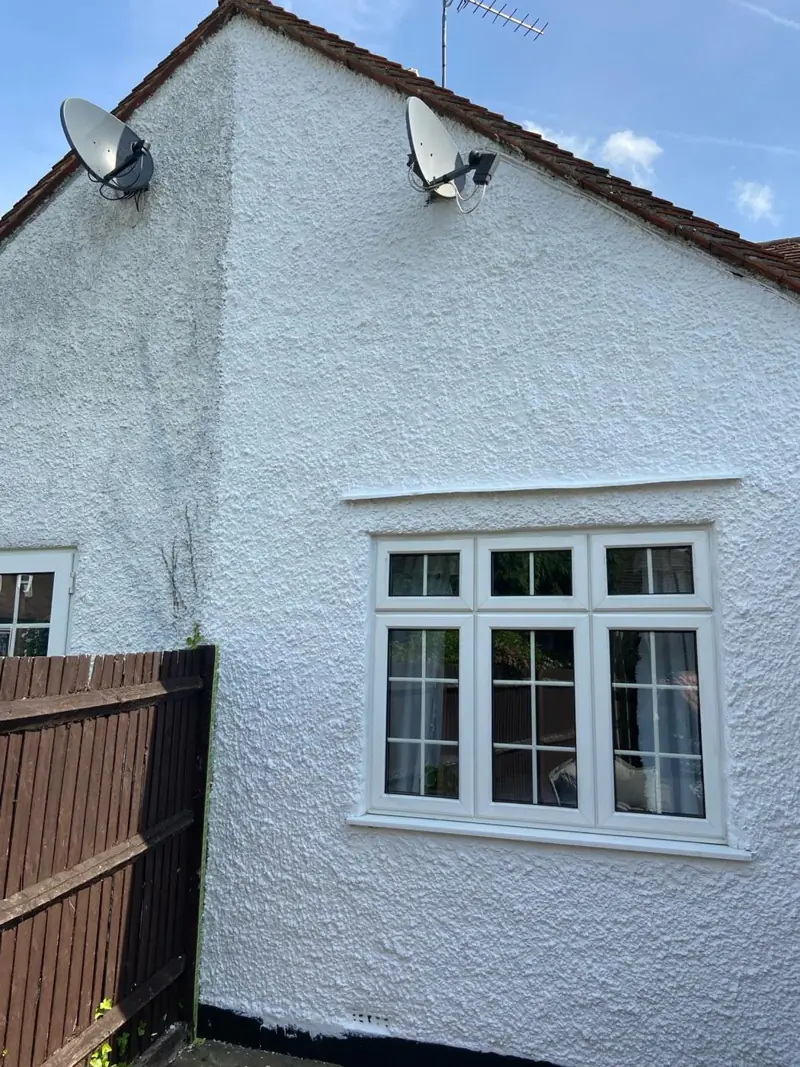
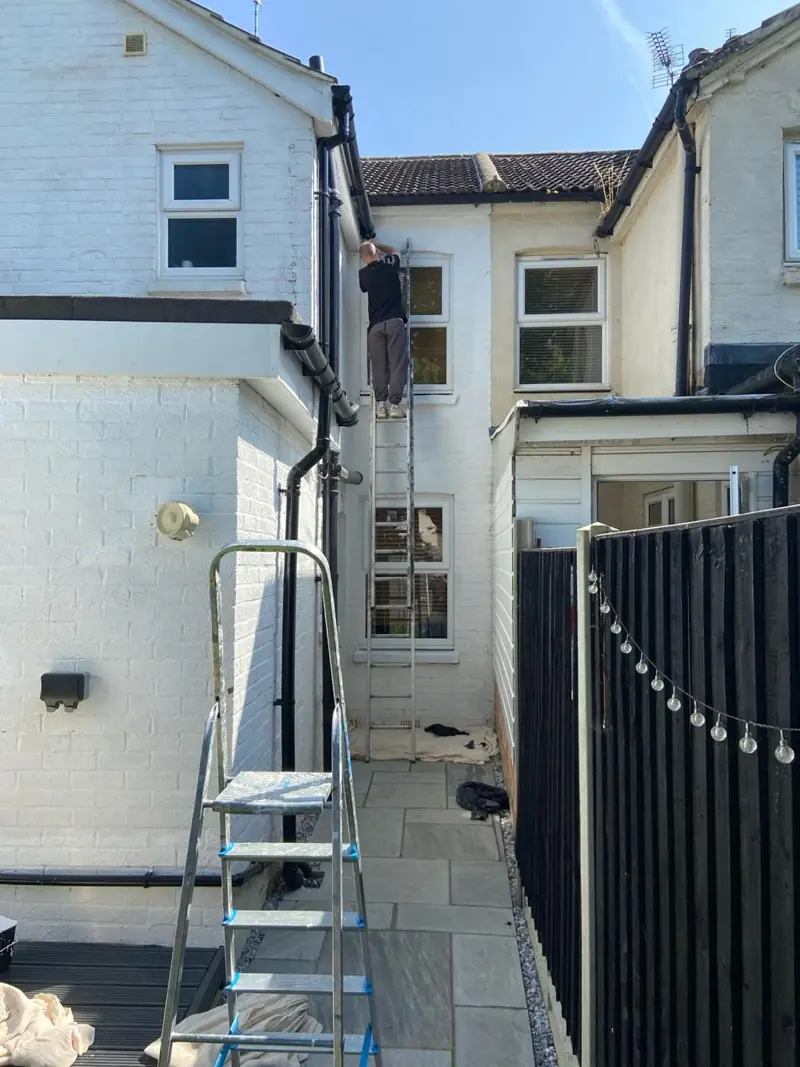
Outside, these mid-century houses are where full exterior repaints come in, rather than the joinery-only work typical on the stone houses. Rendered or previously painted walls, front doors, window frames and porches can all be prepared and repainted in one planned visit. If a wall has been painted before, we check how well the existing coating is holding, scrape back anything loose and use a masonry paint suited to the surface underneath.
The later streets: woodwork reaching maintenance age
Amber Drive and the 1970s to 1990s closes are where exterior timber does most of the work. Fascias, soffits, bargeboards and garden fences on those houses are now old enough to need regular attention, especially on fences shaded by trees. Walgrave sits among farmland with mature trees, including the Home Field Oak, so leaf debris, pollen and insects land on wet paint. Exterior work is timed for dry, calm spells, and our exterior painting service sets out how we prepare and protect timber.
Extensions, new plaster and where old meets new
Walgrave has extensions on both old stone houses and post-war homes, and each kind meets new plaster differently. New plaster needs a diluted mist coat before any full-strength emulsion, or the paint will peel away from the thirsty surface. Where a new extension joins an old lias house, the new gypsum plaster and the old lime plaster sit side by side and behave differently. We keep breathable paint on the old walls and finish the new work to match in colour and sheen, so the join doesn’t show as a change in finish across the room.
Wallpaper raises similar questions. Older cottages and farmhouses usually need lining paper and careful pattern matching on out-of-true walls, while the straighter walls of Springfield Road or Amber Drive take paper far more simply. Colours are another split: on the listed houses, heritage shades that suit the brown lias are the safe route, while the later streets leave the choice open.
Small commercial premises
Commercial premises in Walgrave are few: Skittles Community Shop, the Royal Oak pub and community buildings such as the village hall. Work on any of them is small-scale and arranged around opening hours and bookings, with doors, windows and signage done in short, planned sessions.
How we plan a Walgrave job
There are no trade suppliers in the village, so each job is planned as full-day visits, with materials and access equipment loaded in Northampton before we set off. Dean visits first, looks at the surfaces, asks whether the house is listed, and gives a written quote. For an idea of what affects the cost, see our painter and decorator cost guide. We are fully insured, and you can call Dean on 07539 779 036 to arrange a visit.
Last updated by Dean, DH Painter & Decorator.