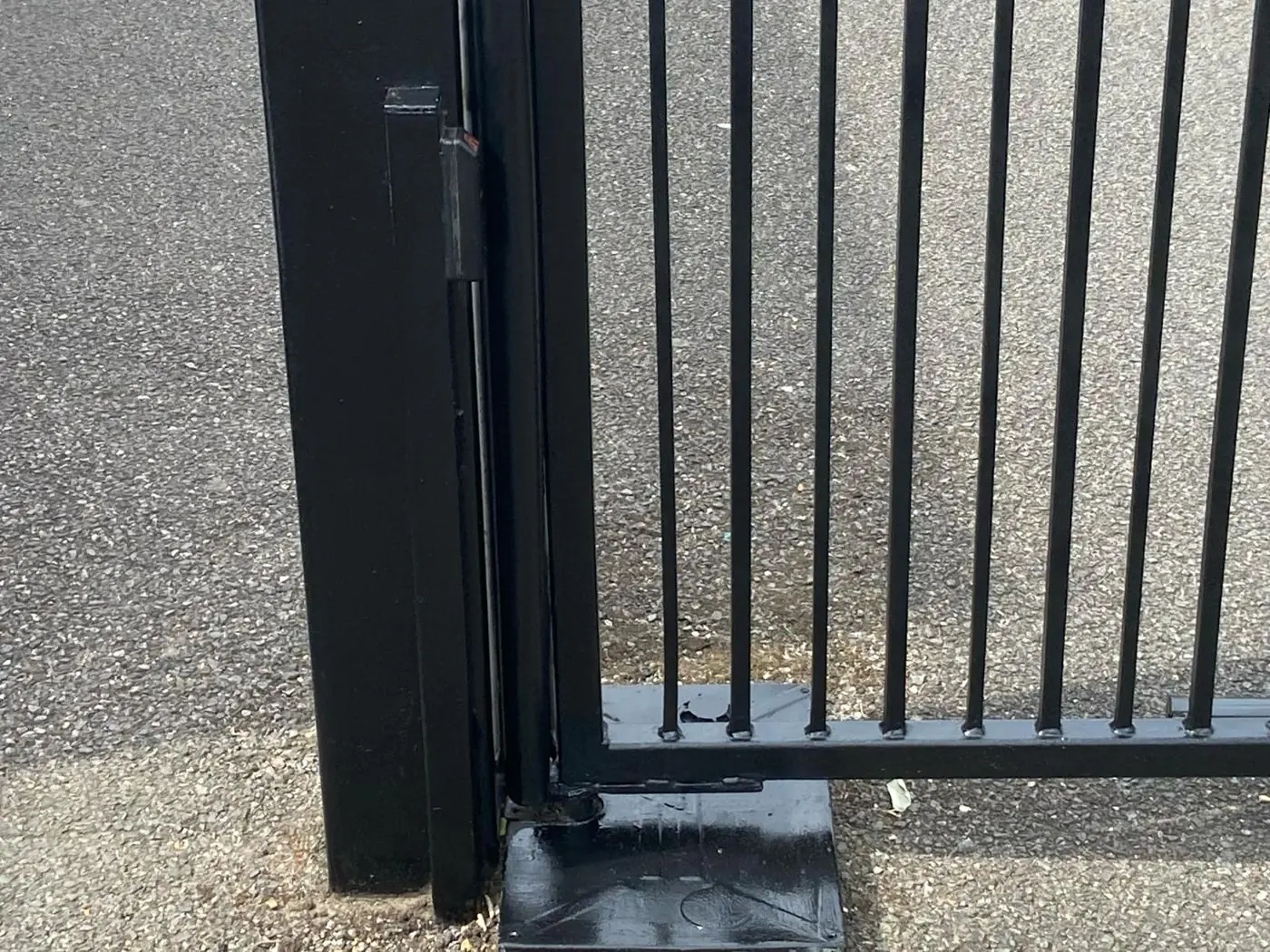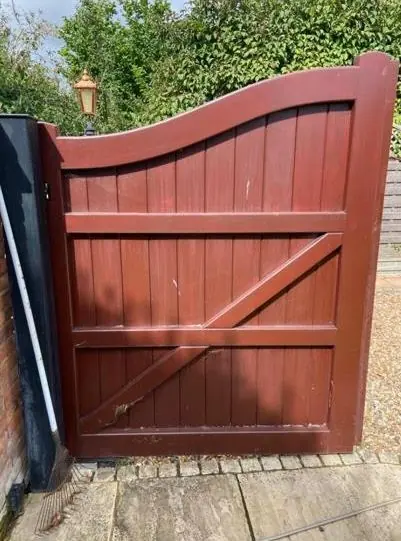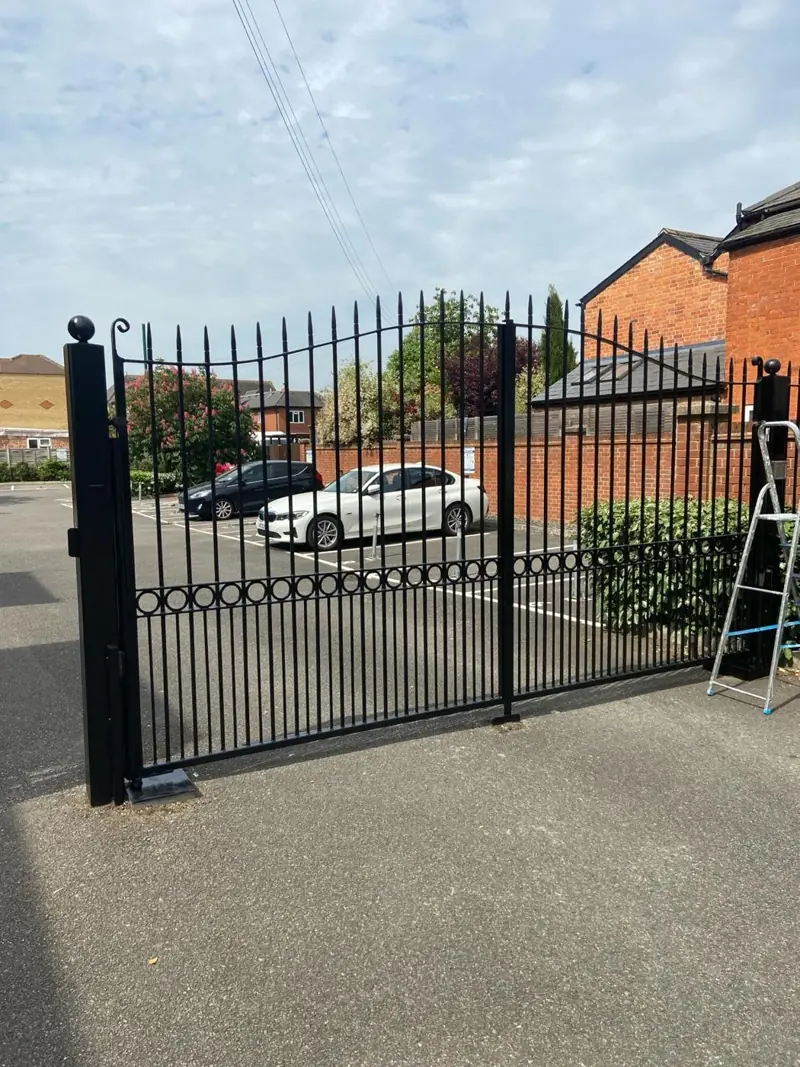
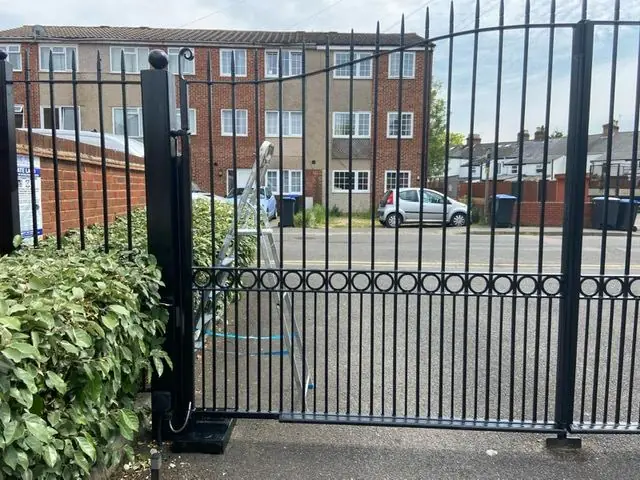
DH Painter & Decorator paints metal gates, railings and other ironwork in Walgrave, about 7.9 miles north-east of Northampton town centre. Much of the village's ironwork meets old lias or limestone, so rust treatment comes with care for the stone it is fixed into. Quotes are free.
Iron that meets old stone
In Walgrave some of the most significant ironwork is attached to, set into or hung from historic stone, from listed gate piers to the cast-iron windows of The Old School, and that changes the order of work. Rust expands as it forms. Where an iron bar or hinge pin is leaded or mortared into lias, the swelling can crack the stone around it. So before anything is painted we check the point where metal enters masonry, and we tell you if there is spalling or a split that needs a stonemason rather than a painter.
At Walgrave Hall Farmhouse on Hannington Road, the gate piers and wall are listed in their own right, separately from the house. Any gate on piers like those should go back in a traditional colour, typically black or a dark heritage shade, and the stone must not be stained by rust run-off or stray paint. Changing a long-established colour on a listed site can need consent, which is worth asking the council about first.
Cast-iron windows on Gold Street
The Old School and The Old School House on Gold Street, dated 1828, are recorded as having 19th-century cast-iron arch-headed windows set in brick dressings. Cast-iron casements are a specialist piece of decorating. Old paint is taken back where it has lifted, rust is wire-brushed or abraded to a firm surface, and a rust-inhibiting metal primer goes on bare metal straight away, because cast iron starts to flash-rust within hours. Glazing putty is checked and made good before topcoats, and the opening lights are kept working. Lead-based paint is a real possibility on ironwork this old, so dry power-sanding is avoided.
Railings around the church and chapel
Churchyard and chapel boundaries are a typical place for old iron railings in a village like Walgrave, and St Peter’s Church is Grade I with a Grade II churchyard cross. Work on railings at a church or chapel is arranged with whoever looks after the building, and colours stay as they are. We sheet the ground below, protect headstones, paths and planting nearby, and work outside service times.
Our sequence for ironwork
| Step | What it involves |
|---|---|
| Inspect | Check bars, joints, hinges and every fixing point in stone for rust jacking and cracks |
| Prepare | Scrape, wire-brush and abrade to sound metal; wet methods where old paint may contain lead |
| Prime | Rust-inhibiting metal primer on bare iron the same day |
| Finish | Two topcoats of metal paint in the agreed traditional colour, with hinges and latches left free |
The main metal gate and railing painting page explains the paints and finishes in more depth.
Modern gates on newer drives
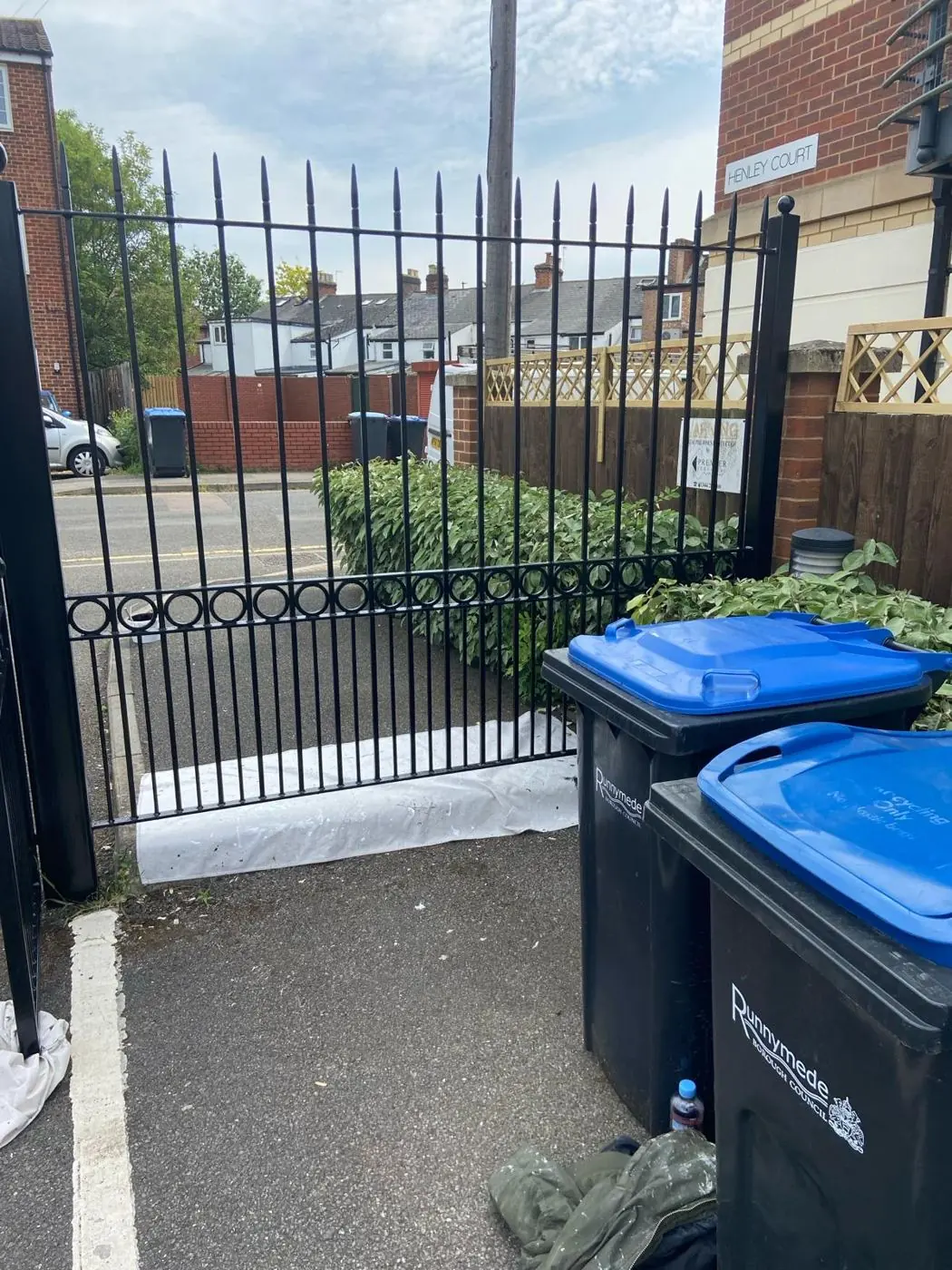
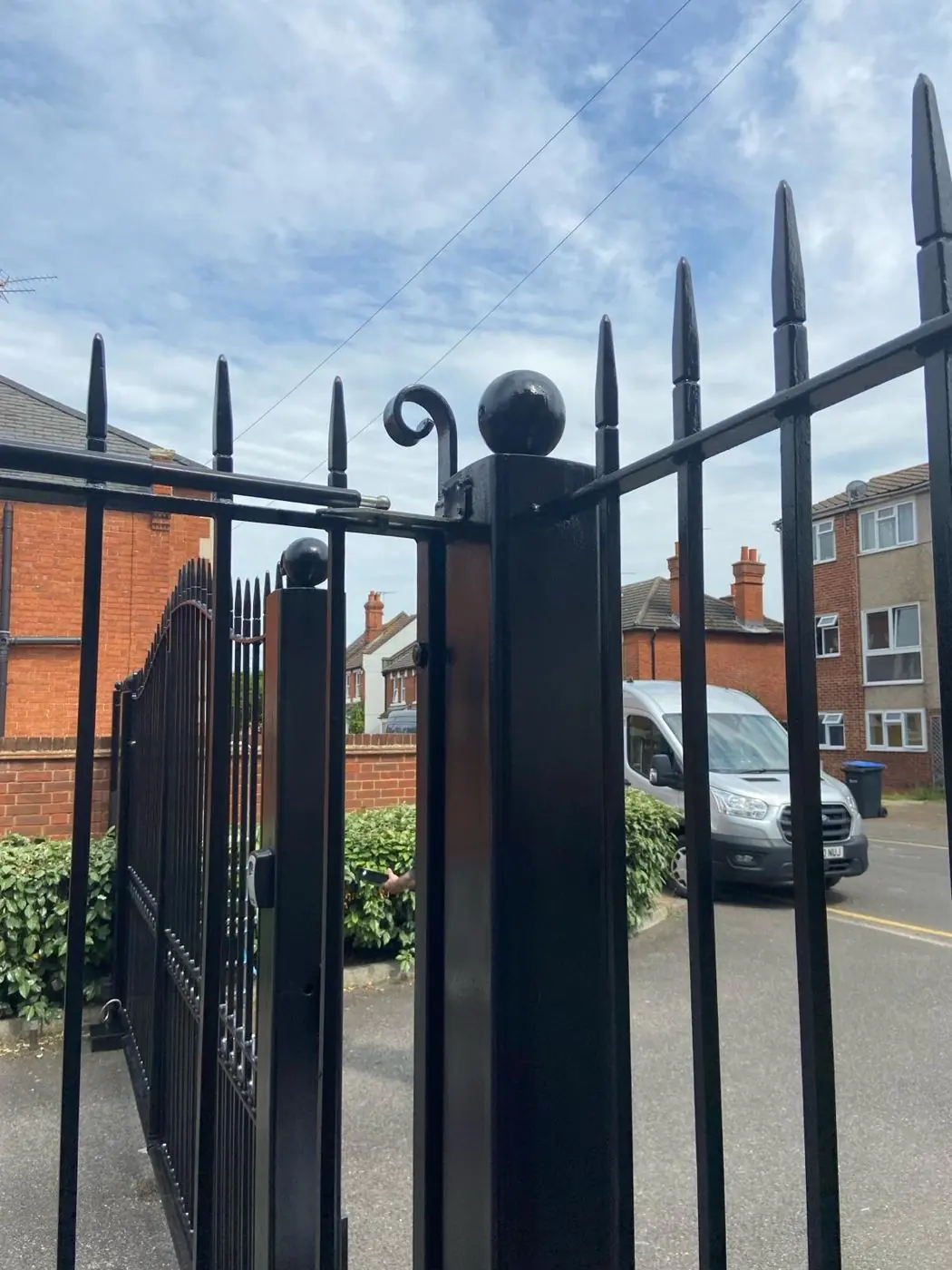
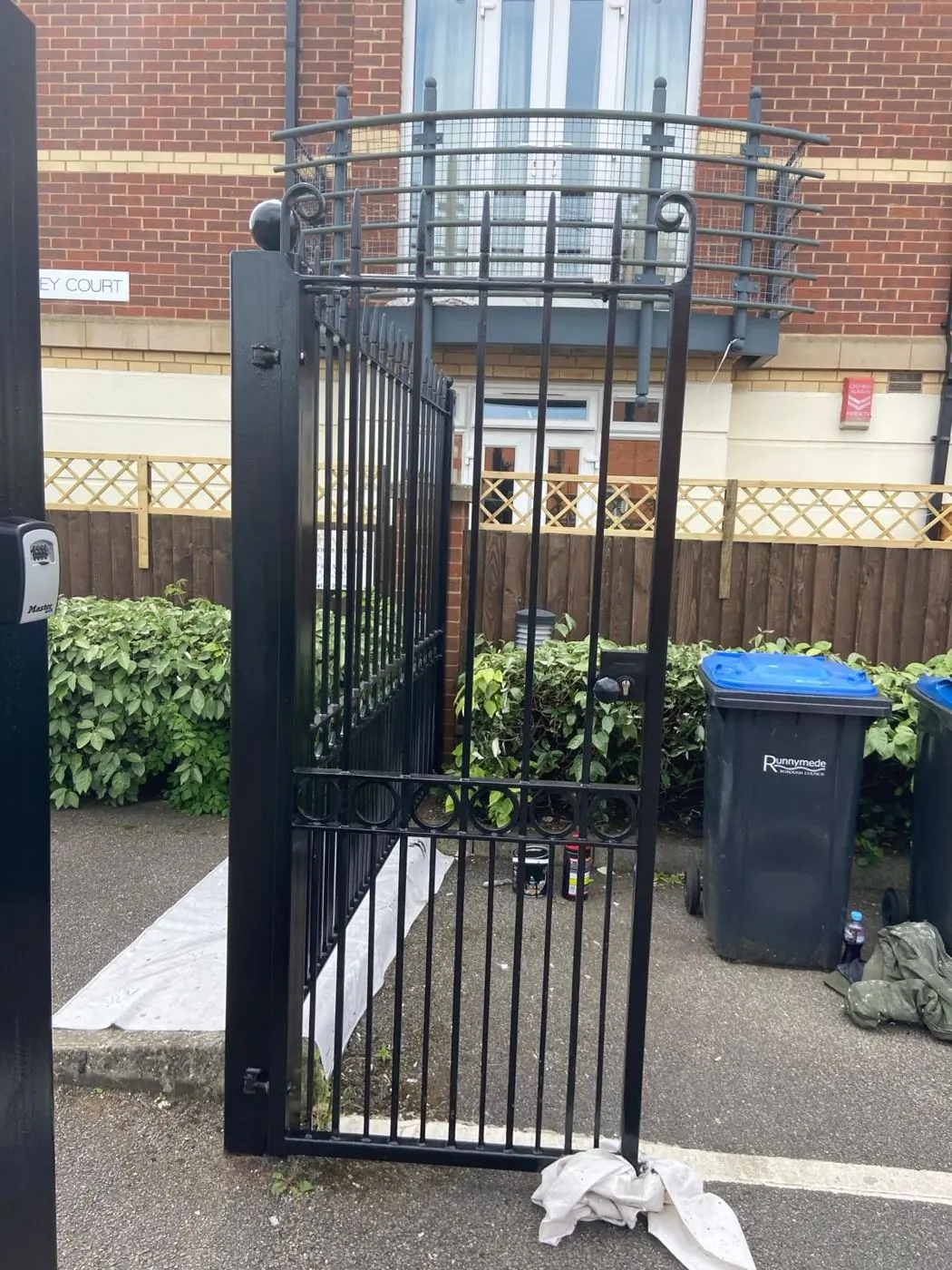
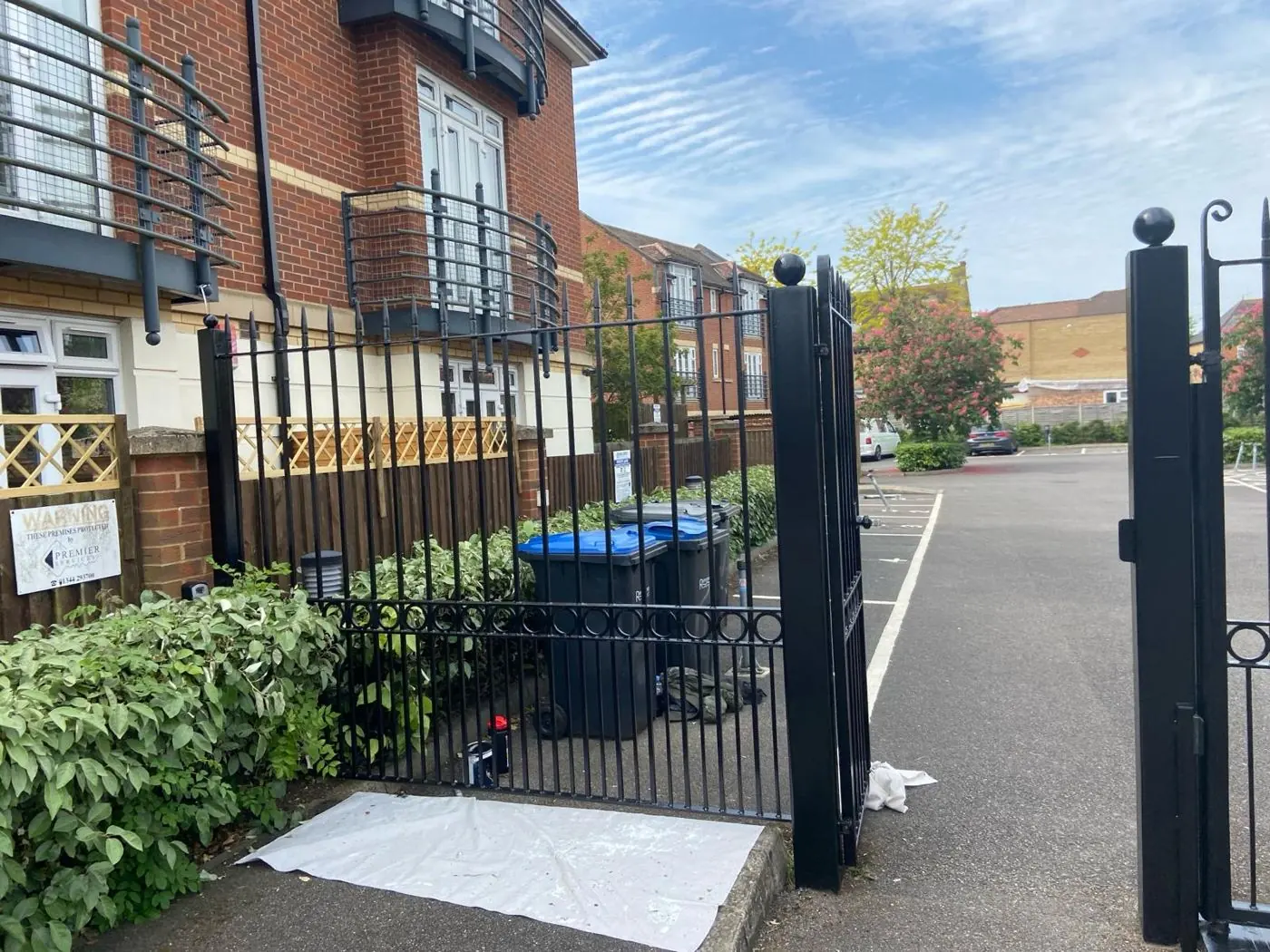
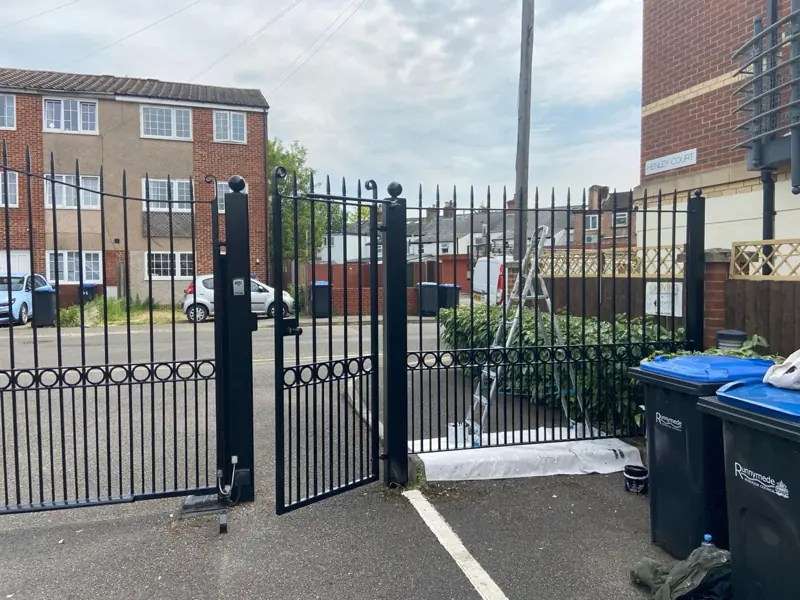
Not all of it is heritage work. Houses on Jubilee Drive, Springfield Road, Amber Drive and the later closes may have steel side gates, driveway gates or simple handrails. These are prepared and painted to the same system, with more freedom over colour. Galvanised steel is the one to watch: shiny new galvanising needs weathering or a dedicated primer before paint will hold, otherwise the topcoat peels off in sheets within a season or two. Hinges and drop bolts on driveway gates get worked free and lightly greased after painting, so the gate still swings and latches properly once the paint has hardened. Because the village is around eight miles from Northampton, we usually suggest grouping gates, railings and any exterior joinery into one booked visit. The Walgrave area page shows the other work we cover here.
Last updated by Dean, DH Painter & Decorator.