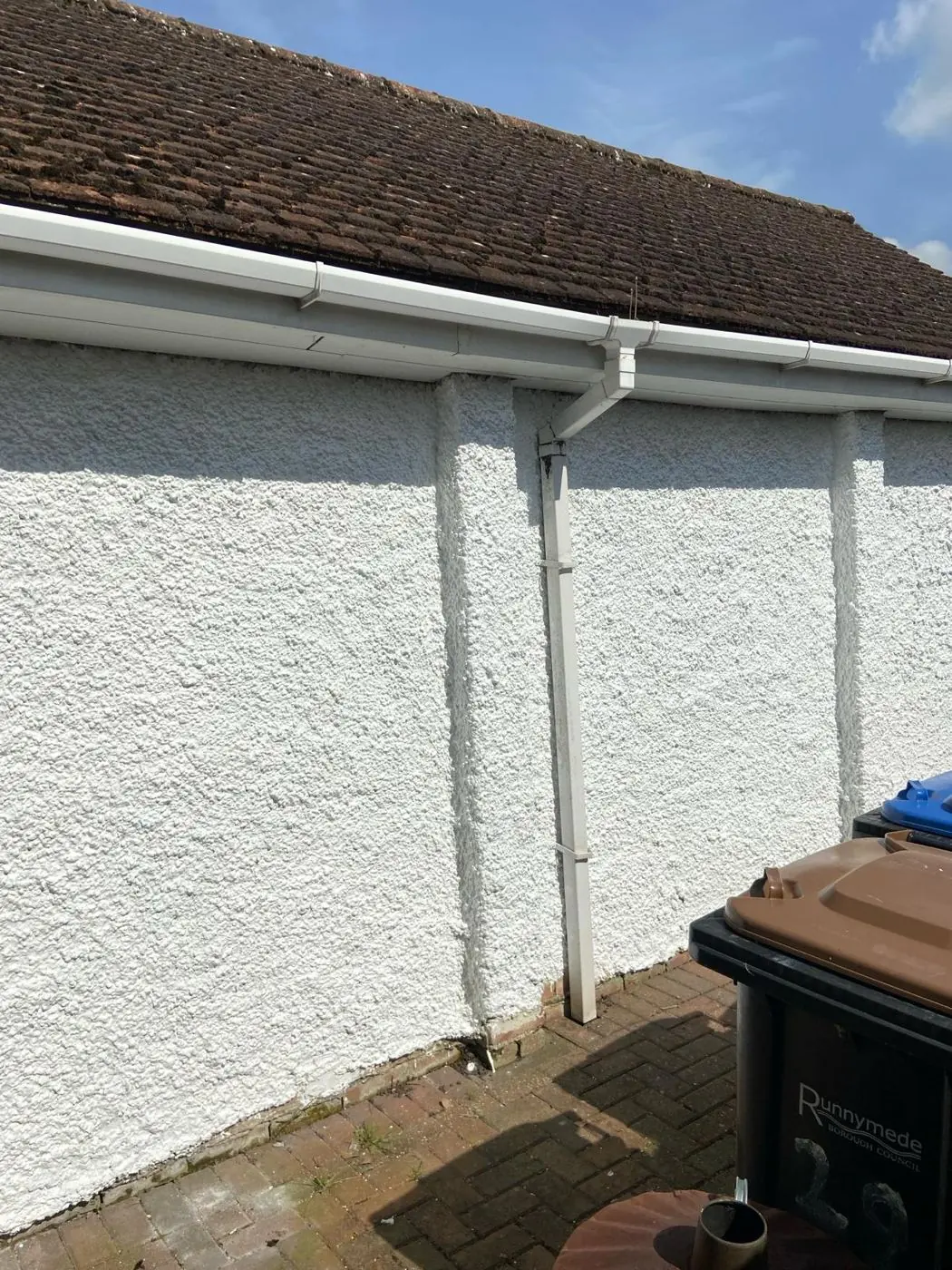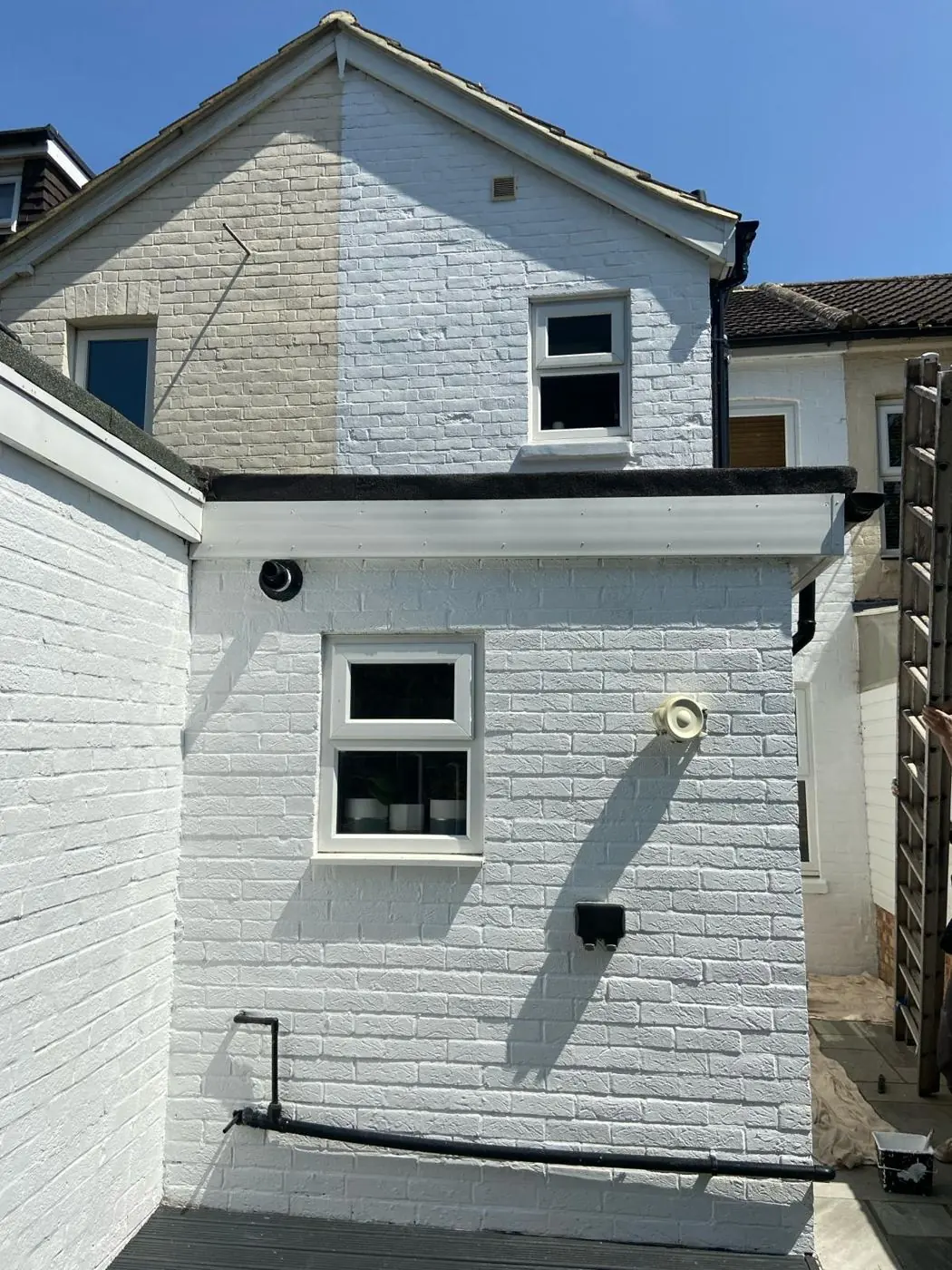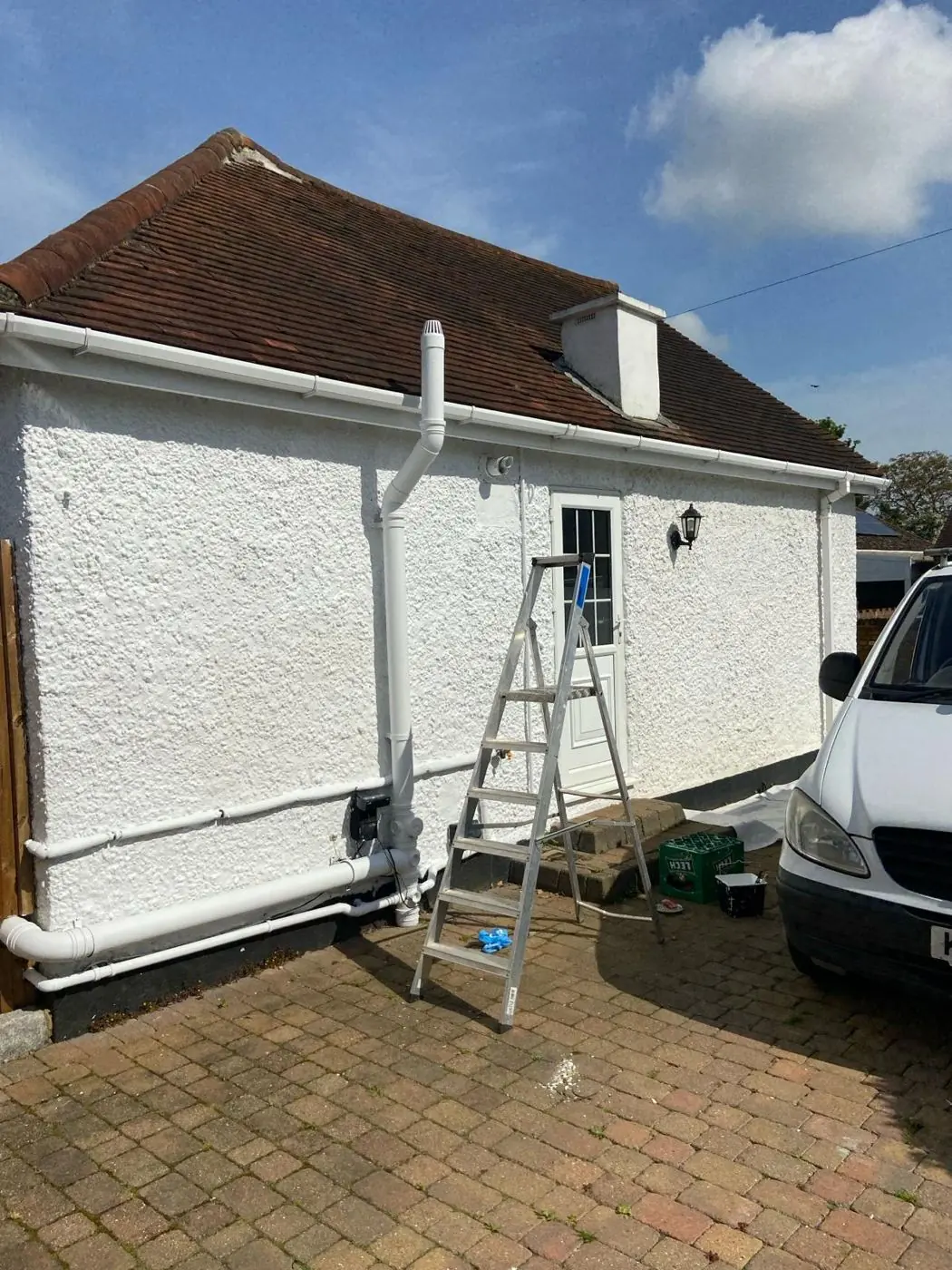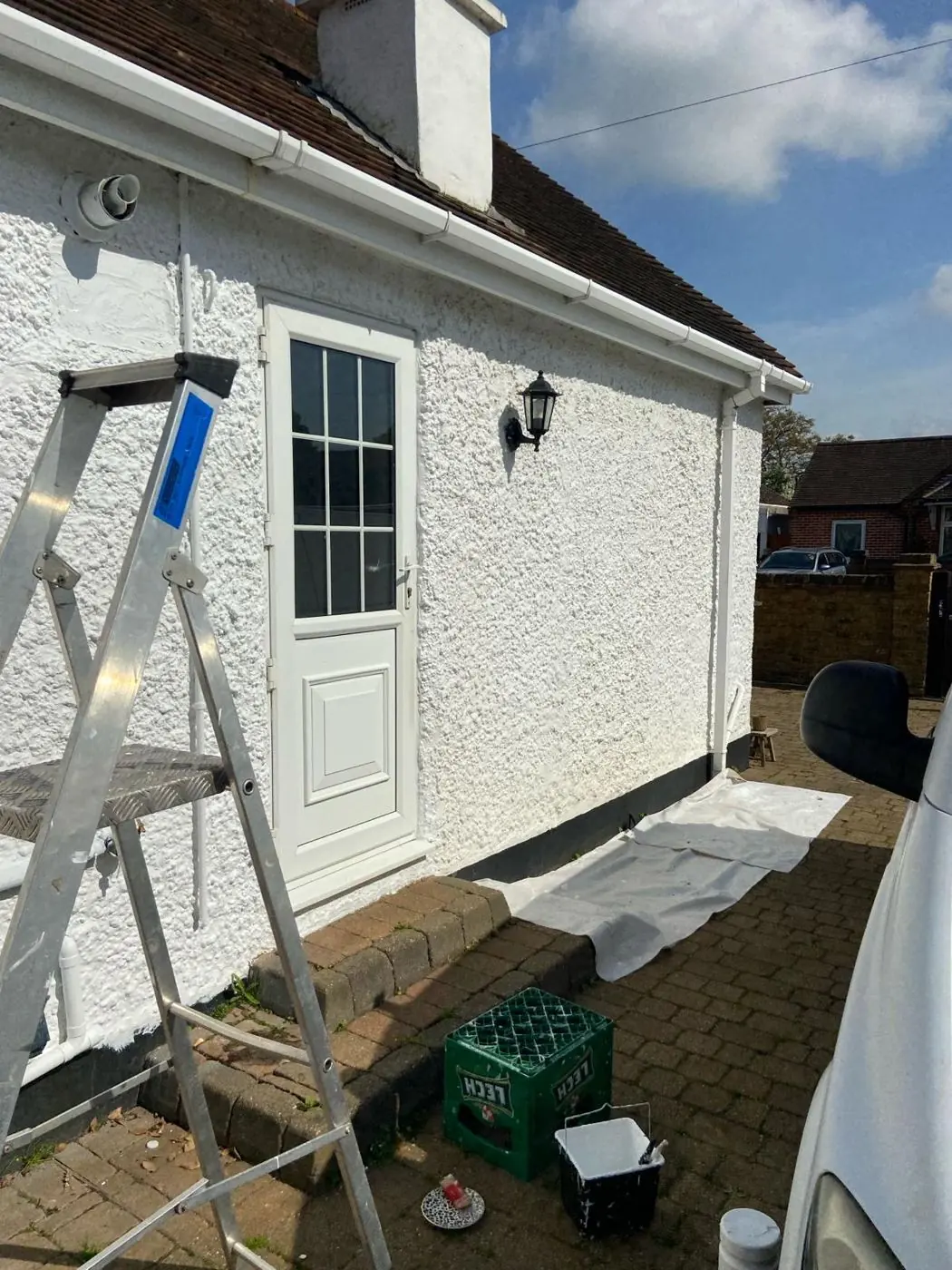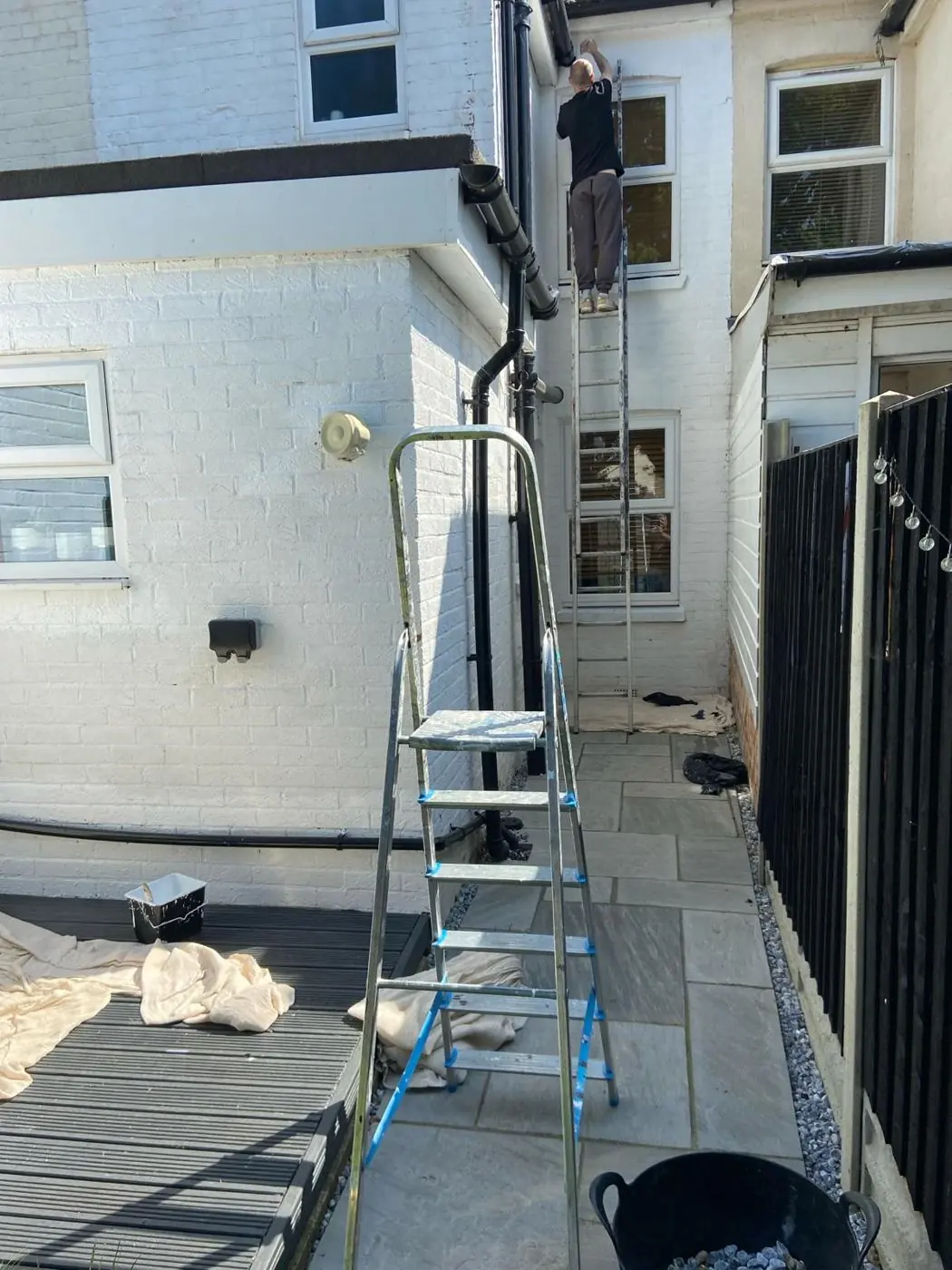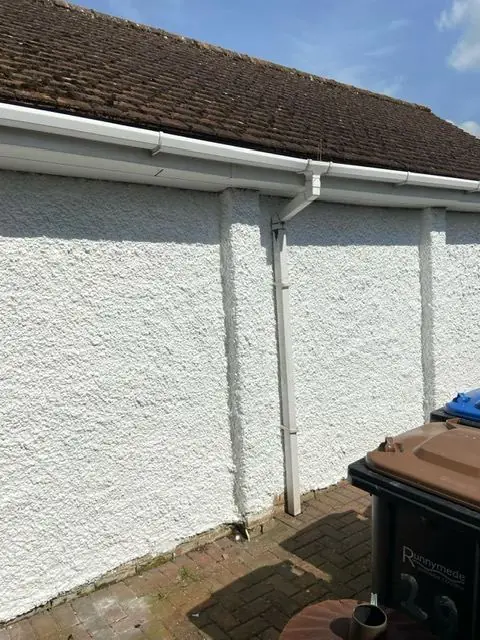
DH Painter & Decorator carries out exterior painting in Walgrave, a village about 7.9 miles north-east of Northampton town centre. On the old lias houses the work is mostly windows, doors and lintels, while on the 20th-century streets it is usually a complete outside repaint. Dean quotes for free after looking at the house.
Bare stone fronts mean the brush goes on the timber
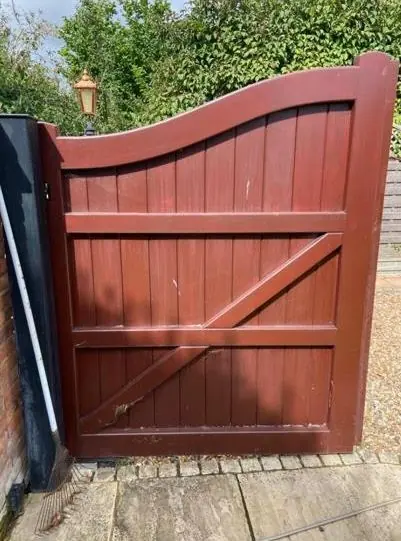
Walk up Gold Street, Holcot Road or the High Street and most of the older houses show their walls as plain coursed lias, the brown local limestone, sometimes banded with paler ashlar as at Walgrave House. Those walls were never meant to carry a coat of paint, and on a listed building painting stone that has always been bare would need consent from West Northamptonshire Council. So an exterior job on one of these houses is a joinery job: casements, doors and frames, bargeboards where there are any, gates, and the odd bit of ironwork.
That shifts where the time goes. Instead of rolling large wall areas, most of the day is spent cutting in, filling and spot-priming small sections of timber set into rough stone, keeping paint off the lias around each opening.
Leaded lights, wooden lintels and one brick house with sashes
Listing descriptions for Cross Farmhouse and The Old House on Holcot Road record timber casements with leaded lights set under wood lintels. Houses of that kind need three things done properly:
- Cutting in to the lead cames. Paint is kept to the timber and off the lead strips, by hand, because masking tape can lift old putty and pull at the cames.
- A microporous joinery paint. A thick, film-forming gloss traps damp in timber that sits in a solid stone wall, so we use a coating that lets the wood breathe.
- Checking the lintel. A wooden lintel over a window in a lias wall is exposed structural timber. We probe it for soft spots while the window is being prepared and seal the end grain; real decay is reported to you before we paint over it.
The Hollies, also on Holcot Road, is the exception to the stone rule: brick, with sash windows and glazing bars under flat arches. Sashes like those are prepared and painted with the boxes and staff beads kept free, so the windows still slide afterwards.
Because the parish has 18 listed entries, we ask early on whether your house is one of them. If it is, colours and materials stay like for like and any change of finish is a question for the council before it is a question for us.
Whole-house repaints on the 20th-century streets
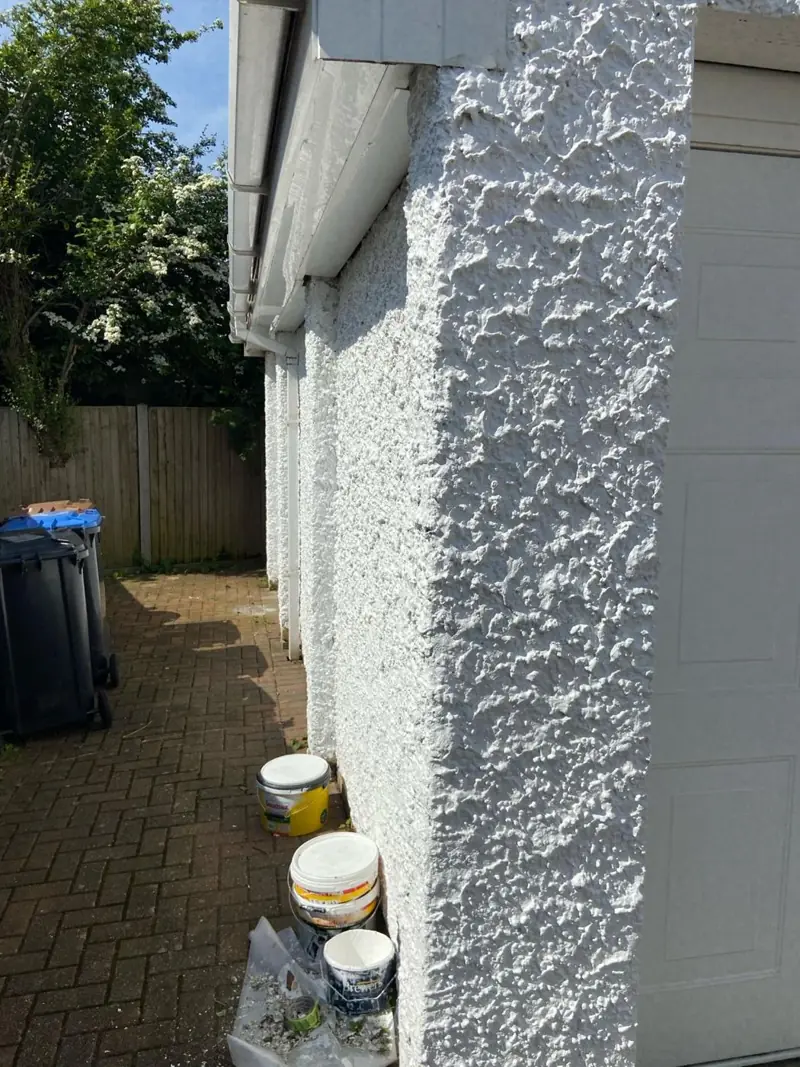
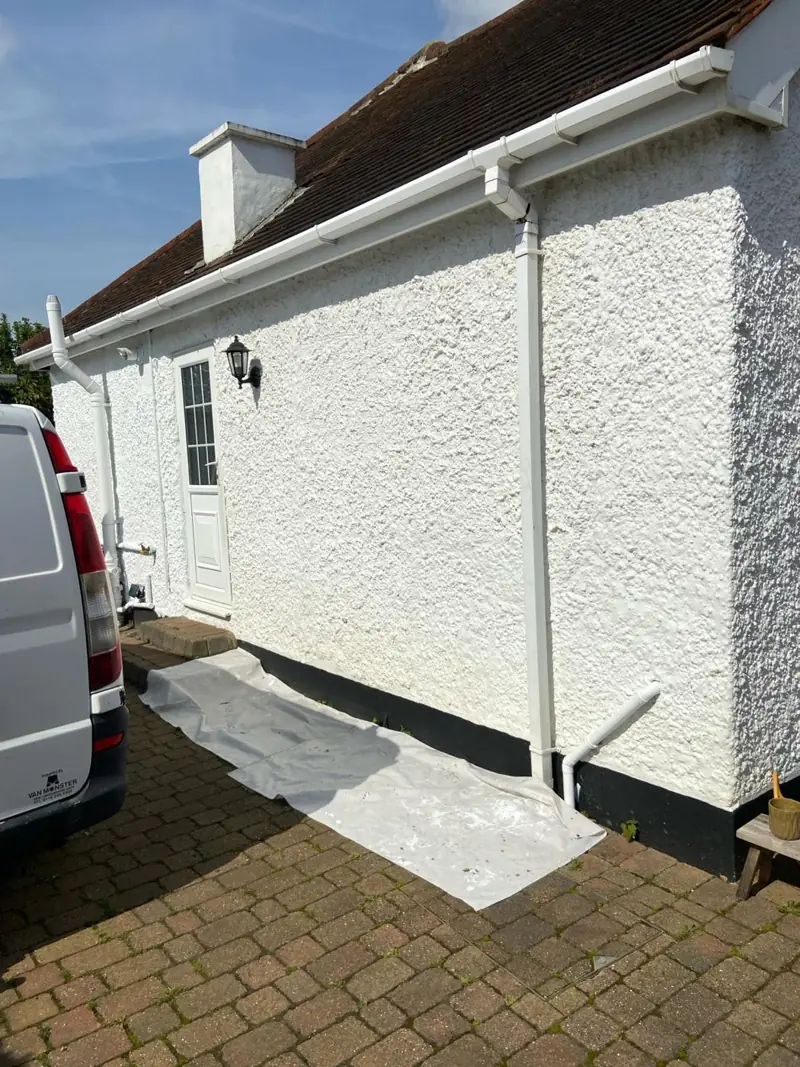
Walgrave grew in clear stages: Jubilee Drive around 1929, Townsend Road and Springfield Road around 1949, Amber Drive around 1975, then infill such as Walker’s Acre, Church View and Manor Farm Close through to the 1990s. On these streets the outside job looks very different. It is normally everything at once: fascias, soffits, windows, doors, garage doors and any painted or rendered wall surfaces, done in a single programme so the house weathers evenly from then on.
The 1970s to 1990s houses are now at the age where original timber at the eaves and on fences is due for proper maintenance rather than another quick coat. For the wall side of that work, see our render and masonry painting service.
Trees, farmland and a full day out from Northampton
Walgrave sits among open farmland, the historic core is up on higher ground around St Peter’s Church, and there are mature trees through the village, including the Home Field Oak. Wet paint picks up pollen, seed and insects, so we watch the forecast for calm, dry days and keep topcoats for the stillest part of the day. Our guide on the right season for outside painting explains the season in more detail.
There are no trade suppliers in the village, so each visit is planned as a full day with every tin, ladder and sheet loaded in Northampton before we set off. You can read about our method in general on the exterior painting page, or see what else we do locally on the Walgrave area page.
Last updated by Dean, DH Painter & Decorator.