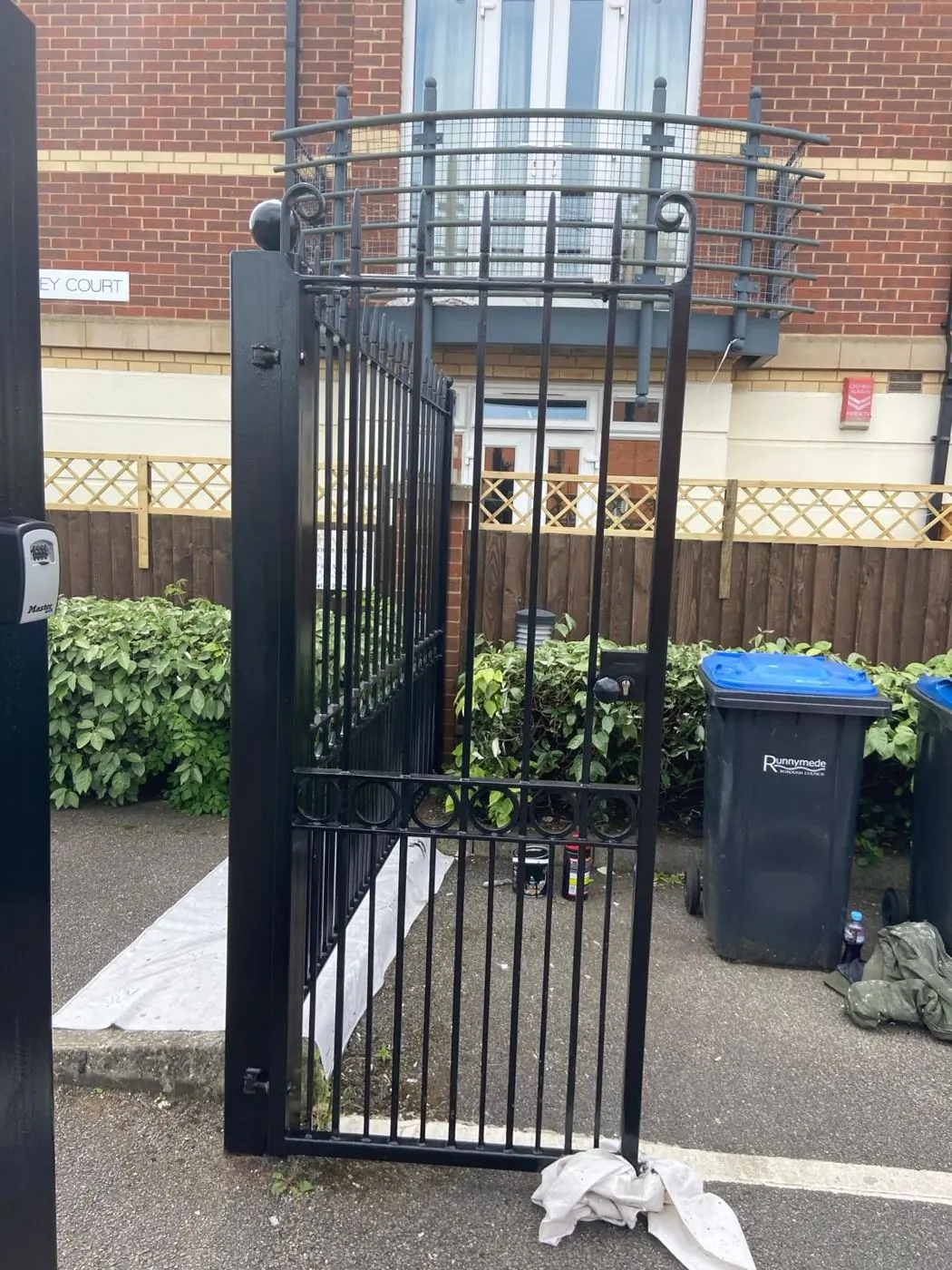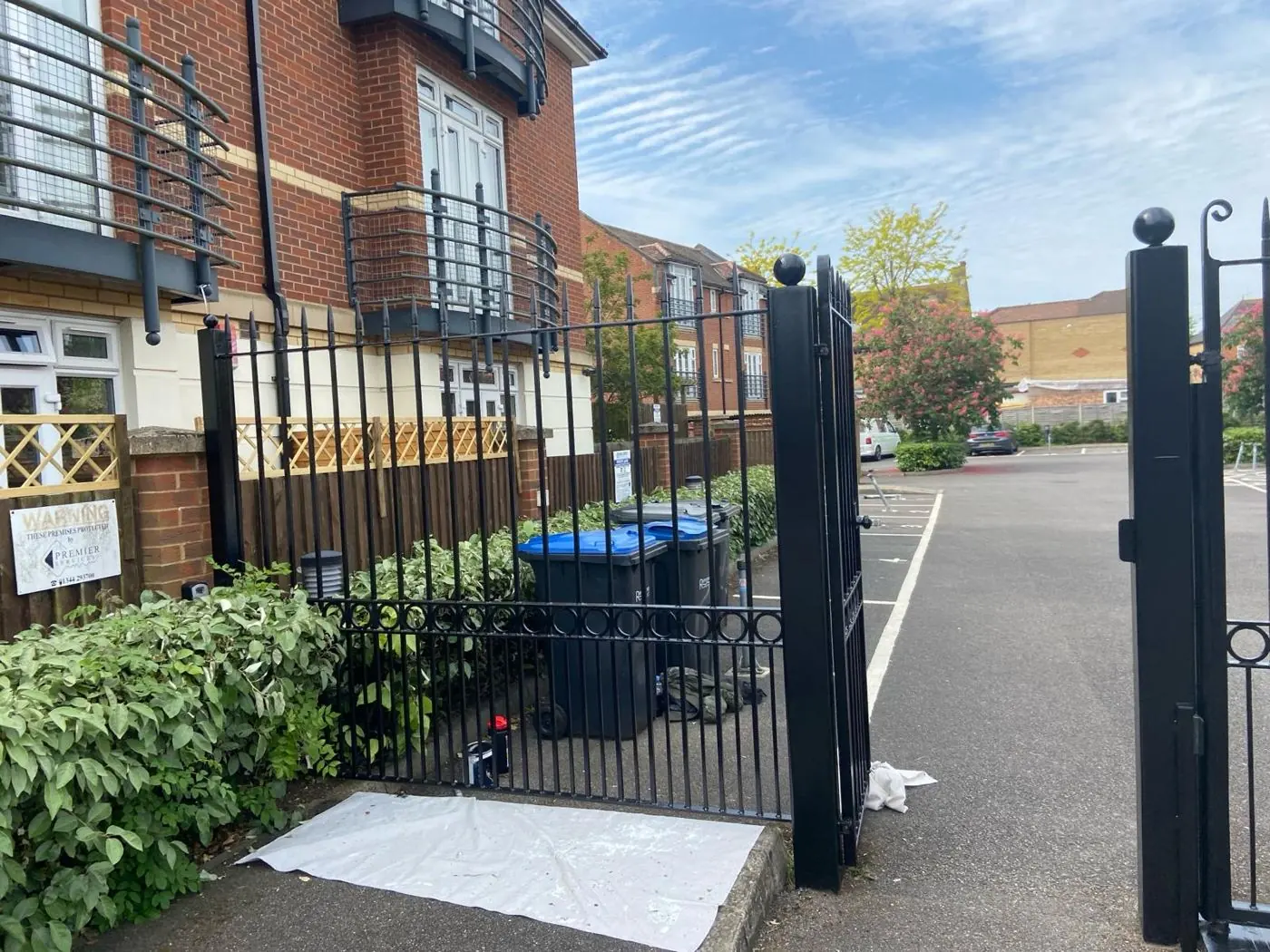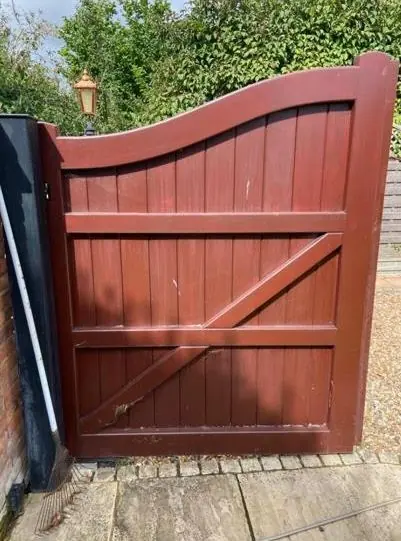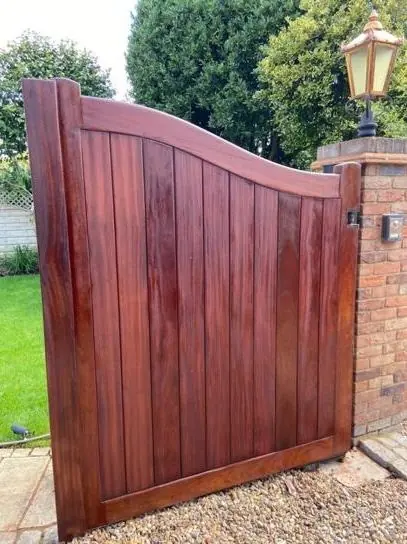
We stain and treat timber fences, garden gates and sheds in Walgrave, roughly 7.9 miles north-east of Northampton. Most of the fencing sits on the later estate roads and infill closes, where rural exposure and tree debris wear finishes down quickly. Dean visits to look before giving a free quote.
Gardens on the edge of open farmland
Walgrave is a farming parish, with outlying farmsteads and fields running up to the edge of the village. Where a garden backs onto open ground, its fence takes wind and rain with little to break it. The other side of the village story is shade: mature trees, including the Home Field Oak and the yews at the Baptist chapel gate, keep parts of some gardens damp and drop leaves, needles and seed onto fence tops and rails for much of the year.
Those two conditions wear stain in different ways. Exposed panels fade and grey on their weather side first. Shaded runs stay wet, grow green algae and moss at the base and along the top rail, and soften where soil and leaf litter bank up against the boards.
Fencing on the estates and closes
The fences we expect to see most in Walgrave are on the 20th-century streets and the 1970s to 1990s infill: Amber Drive, Walker’s Acre, Church View, Manor Farm Close and their neighbours. Fencing from that period has often been replaced once already, so a single garden can have three or four different ages of panel side by side. Before quoting we look at:
- Which panels are still firm and which have split or gone soft at the base
- Whether posts are sound, since staining a fence on a rotten post is wasted effort
- What was used before, because a water-based stain will not take over a heavy oil-based or spirit-based treatment without preparation
- Whether you want an even colour across mixed old and new timber, which usually means an extra coat on the old
Preparing timber that sits under trees
Stain only lasts if it goes onto clean, dry wood. Under Walgrave’s trees, that means brushing the fence down, clearing leaf litter from the base, and treating algae with a fungicidal wash a few days before staining so it has time to work. Leaves and seed landing on wet stain leave marks, so we choose a calm, dry spell and work the shaded sections at the warmest part of the day. Plants and climbers against the fence are tied back or sheeted, and we keep stain off neighbouring paving and gravel.
For the products and the general process, from sprayed panels to brushed featheredge, see the main fence and gate staining page.
Wooden gates near listed stonework
Not every gate in Walgrave is a simple garden gate. Some timber gates on older properties are hung on stone piers, and at Walgrave Hall Farmhouse on Hannington Road the gate piers, wall and barn are listed in their own right. On a gate like that, the stain or paint colour should be traditional, and nothing should run onto the stone. We take the gate off its hinges where that is practical, finish it away from the pier, and rehang it, rather than work in place and risk marking listed masonry. If you are unsure about colour on a listed site, we suggest checking with West Northamptonshire Council first.
Getting the timing right from Northampton
Because Walgrave is around eight miles out, a fence job is booked as a full day or a run of days with stain, brushes and sheeting brought in from Northampton. Stain should go on between late spring and early autumn when the timber is dry right through. If you would like to see what else we cover locally, our Walgrave area page lists the other services.
Last updated by Dean, DH Painter & Decorator.