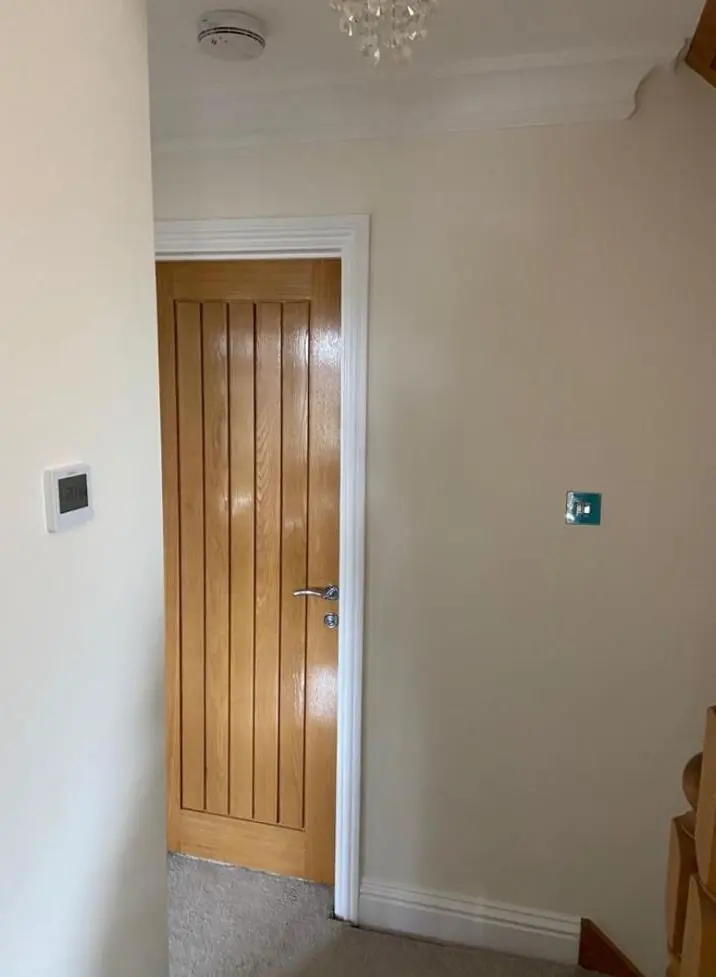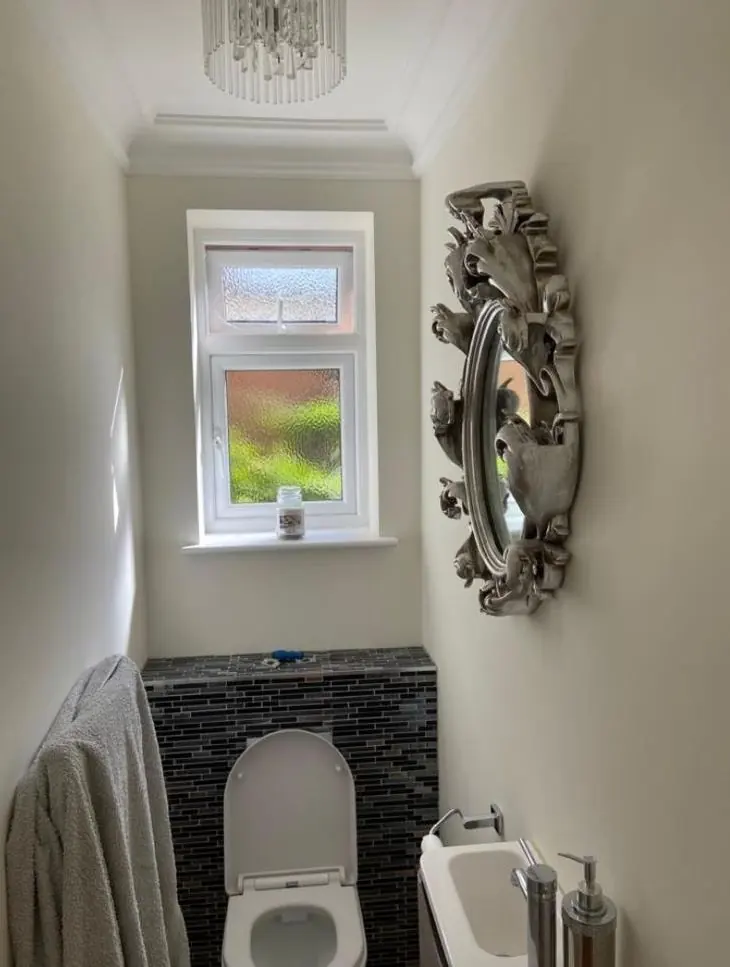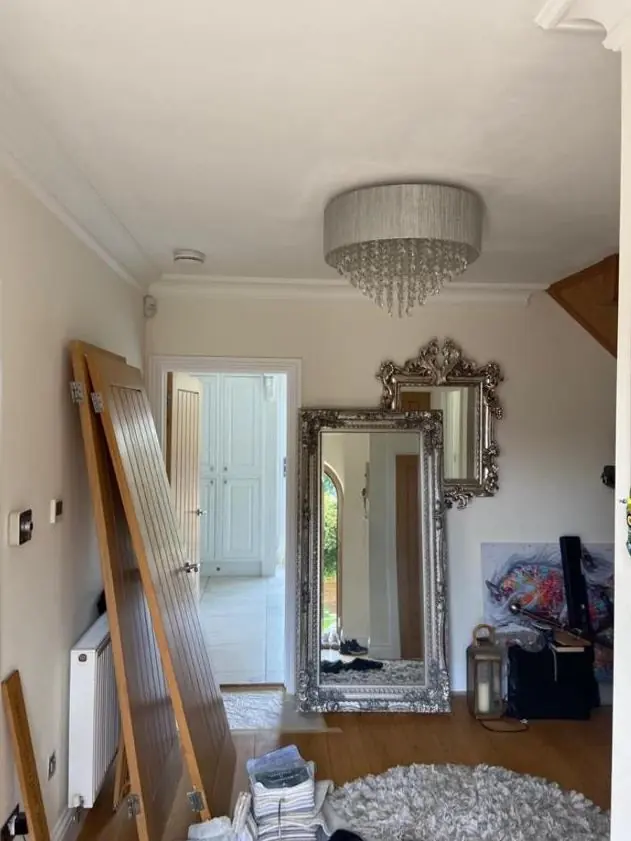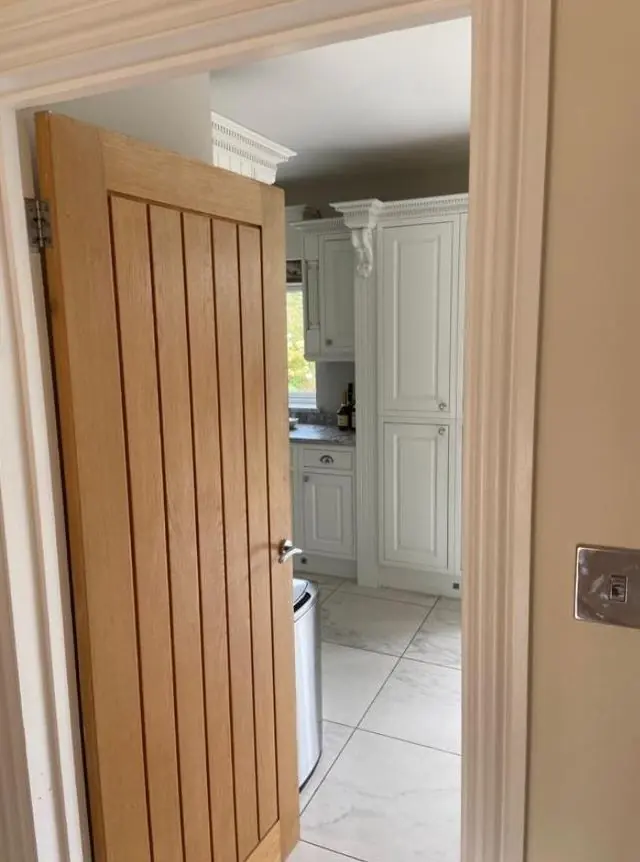
DH Painter & Decorator paints interiors in Walgrave, the NN6 village about 7.9 miles north-east of Northampton town centre. Dean handles everything from uneven lime-plastered rooms in 17th-century lias houses to the straighter walls of Jubilee Drive, Springfield Road and Amber Drive.
Inside the old lias houses: walls that need to breathe
Walgrave’s oldest homes were built from squared, coursed lias, the local limestone, between the mid 17th and early 19th centuries. The Old House on Holcot Road is probably mid 17th century, Cross Farmhouse on the same road has regular coursed lias and leaded casements, and Walgrave House on the High Street, the former rectory, is reputedly c.1687. Walgrave Hall in the north of the village still holds a staircase of about 1630. Houses of that age have solid stone walls with no cavity, and where the original lime plaster survives inside, it relies on moisture passing through it.
That changes the paint choice. A modern vinyl emulsion forms a skin over lime plaster, and in a solid-walled room the damp that used to escape through the wall gets trapped behind it, which shows up later as flaking and blown patches. In these rooms we use breathable emulsions or clay and mineral paints, and we check what is already on the walls before anything new goes over it. Walls in a house this old are rarely flat and rarely square, so we fill and sand for a sound surface while keeping the gentle undulation that belongs to the building.
Many of these houses are listed, which matters if you want to alter plaster, panelling or joinery. Straightforward redecoration in like-for-like materials is normally fine, but if you plan anything more, ask West Northamptonshire Council before work is booked.
Shoe-workers’ rows and the 1929 to 1949 streets
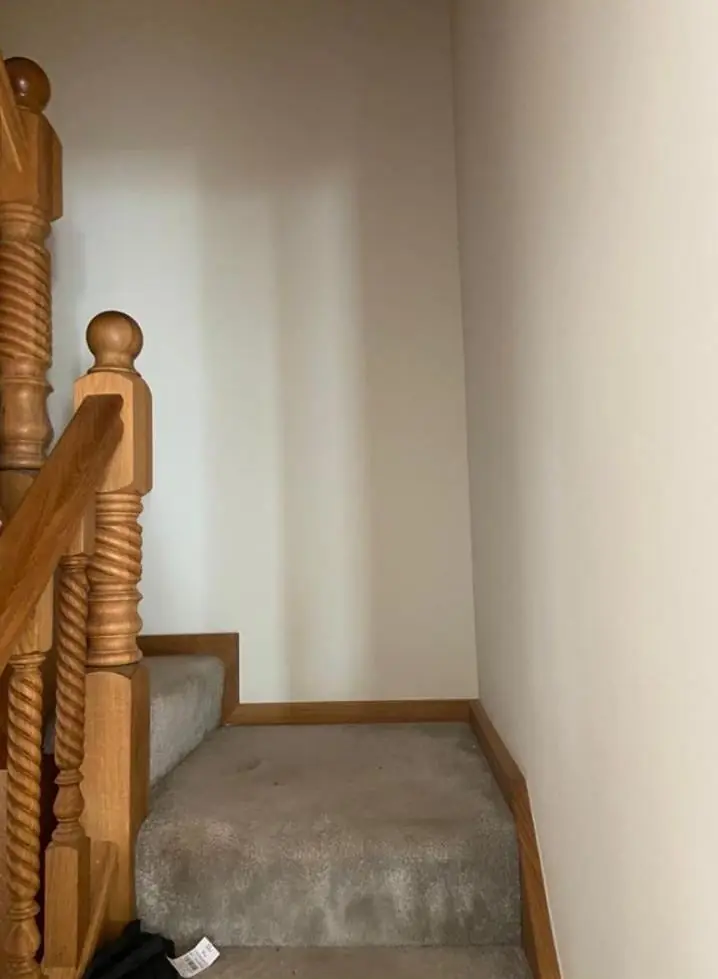
Walkers Works opened in 1899 as the village boot and shoe factory, and its workers lived in rows such as Klondyke Cottages, New Row, Spion Kop and Crispin Cottages. Rooms in these cottages tend to be small, with tight landings and steep stairs. Small rooms show every rough edge, so cutting in matters more than usual, and we bring compact access gear so we can work over a narrow stairwell without blocking the only way through the house.
Jubilee Drive dates from around 1929, with Townsend Road and Springfield Road following around 1949. Houses from those years often keep their original plaster, picture rails and panelled or early flush doors. Old plaster there can be hairline-cracked or patched in several generations of filler, so we rake out and fill properly rather than painting over it. Picture rails give a natural break line if you want a different ceiling-band colour, and original doors can be rubbed down and repainted rather than replaced. Paint layers on older doors can contain lead, so we test them before any sanding.
Amber Drive and the 1970s to 1990s closes
Amber Drive went up around 1975, followed by infill schemes such as Walker’s Acre, Church View and Manor Farm Close. Interiors here are likely to be the most forgiving in the village, typically with plasterboard or modern skim and straight stair flights, though we check each house rather than assume. Work here is mostly repainting tired magnolia, covering stains left by old water leaks, and freshening woodwork that has yellowed under decades of solvent gloss. We swap that for water-based satin or eggshell where you want woodwork that stays white.
How a Walgrave job is organised
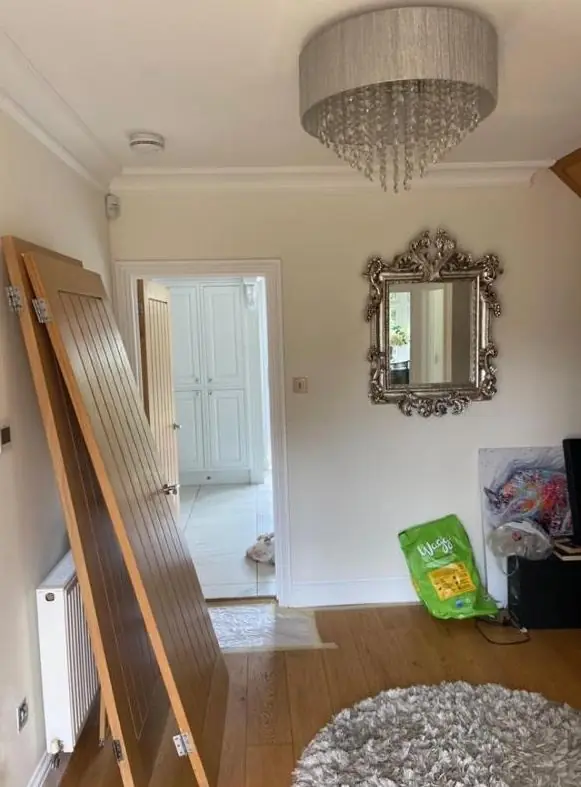
There are no trade suppliers in Walgrave, so every visit is planned as a full day, with paint, filler, dust sheets and access equipment loaded before we leave Northampton. Rooms are cleared and sheeted at the start of the day, furniture is moved to the middle rather than out of the house, and you get a clear sequence so the rooms you need stay usable.
| House type in Walgrave | Typical interior issue | What we do about it |
|---|---|---|
| 17th to 19th-century lias houses | Lime plaster, solid walls, uneven surfaces | Breathable paints, gentle filling, consent check if listed |
| Late 19th-century shoe-workers’ rows | Small rooms, steep narrow stairs | Careful cutting in, compact access gear |
| c.1929 and c.1949 streets | Old plaster, picture rails, original doors | Proper crack repair, lead check before sanding |
| c.1975 onward estates and closes | Tired emulsion, yellowed gloss | Stain blocking, water-based woodwork paints |
For a full picture of how we prepare and paint rooms, see our interior painting service. For more on the village itself, see our Walgrave area page, and the decorating cost guide explains what drives the price of a room.
Last updated by Dean, DH Painter & Decorator.