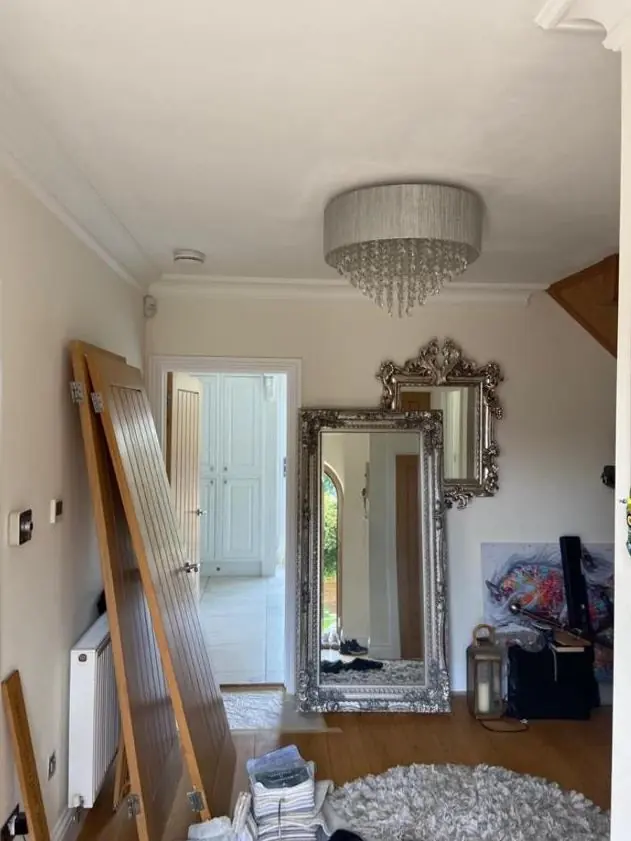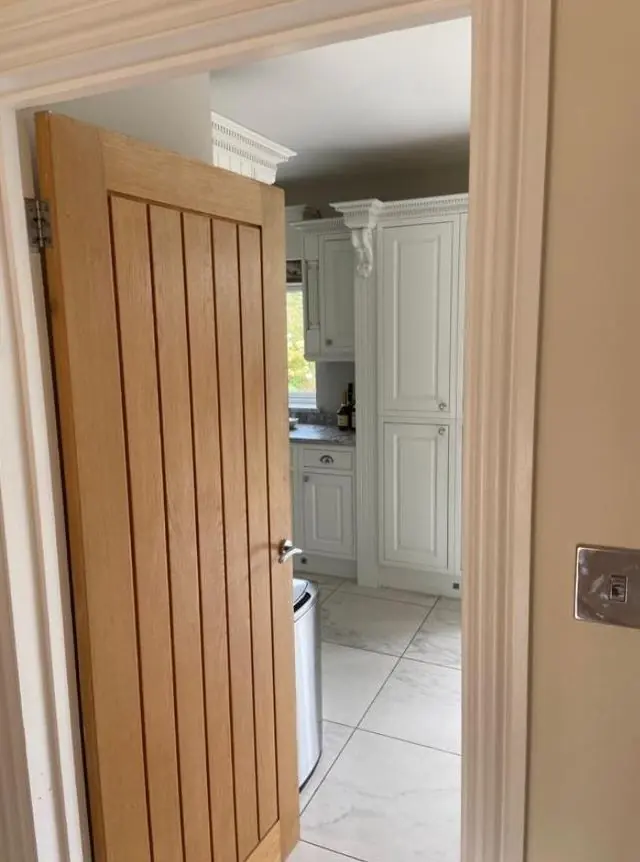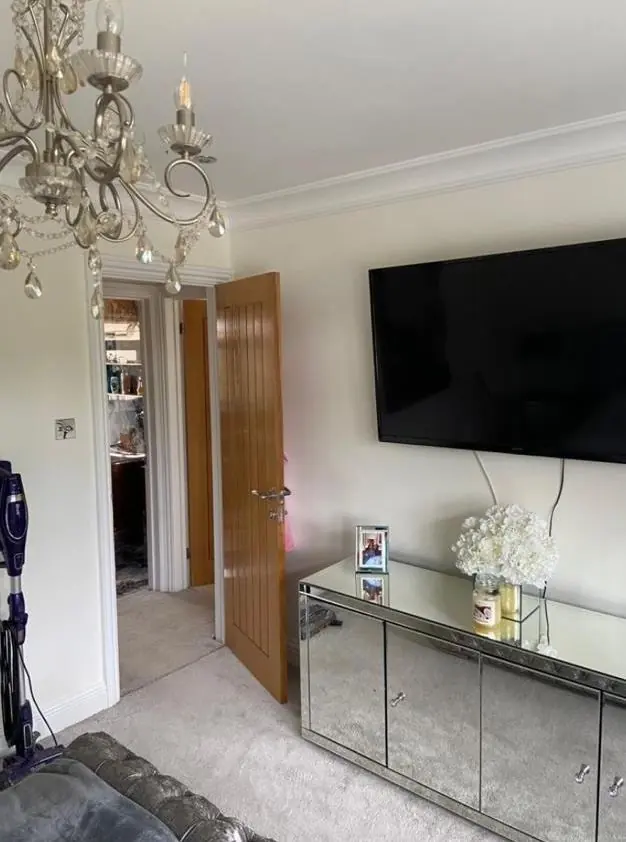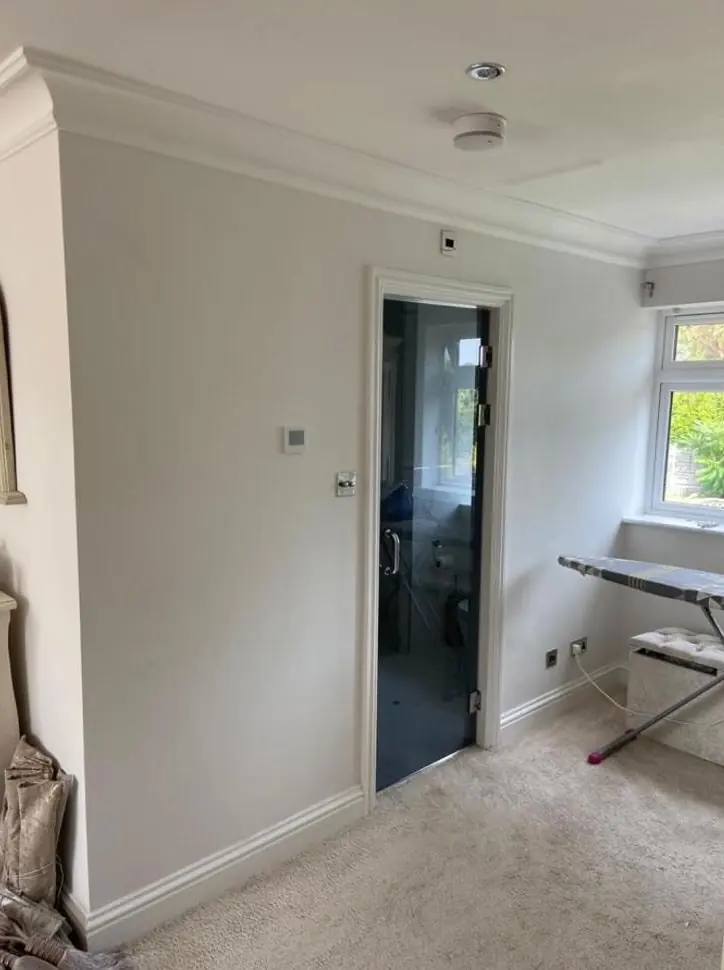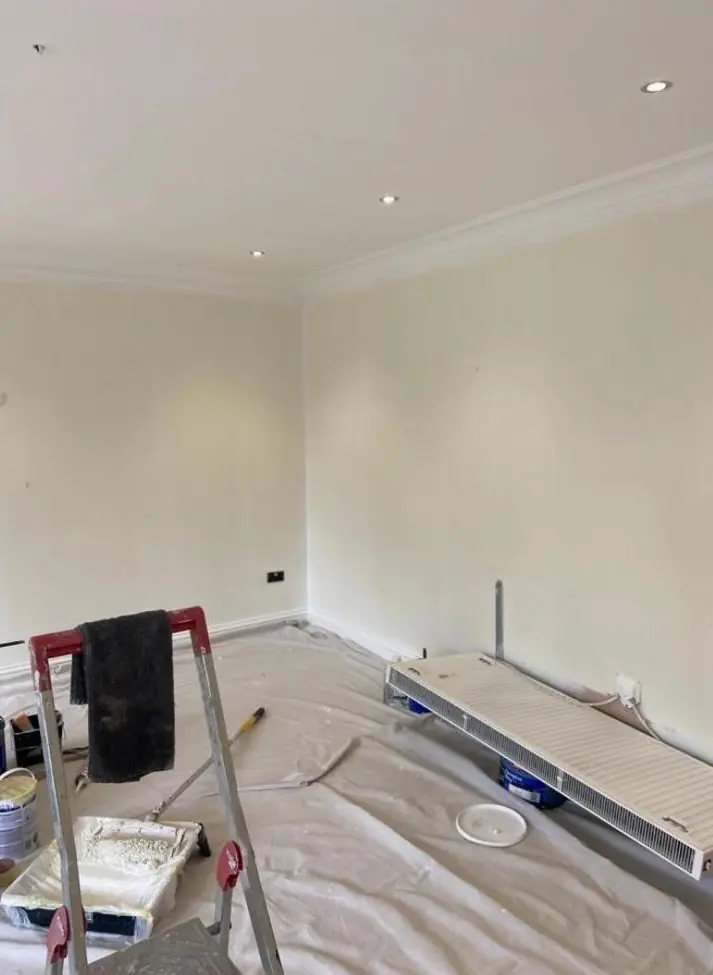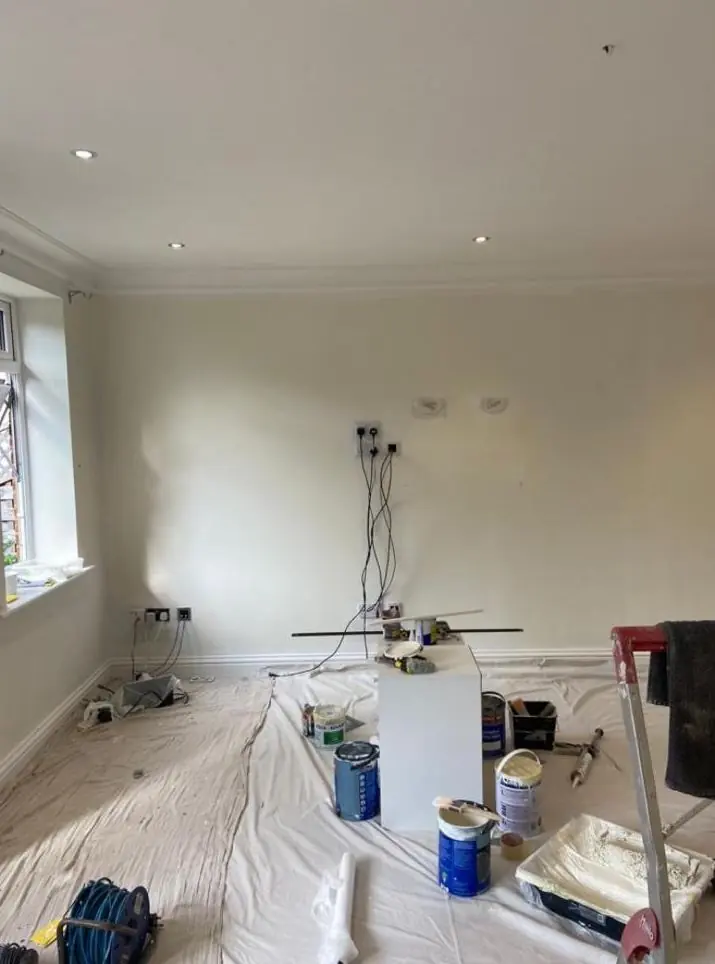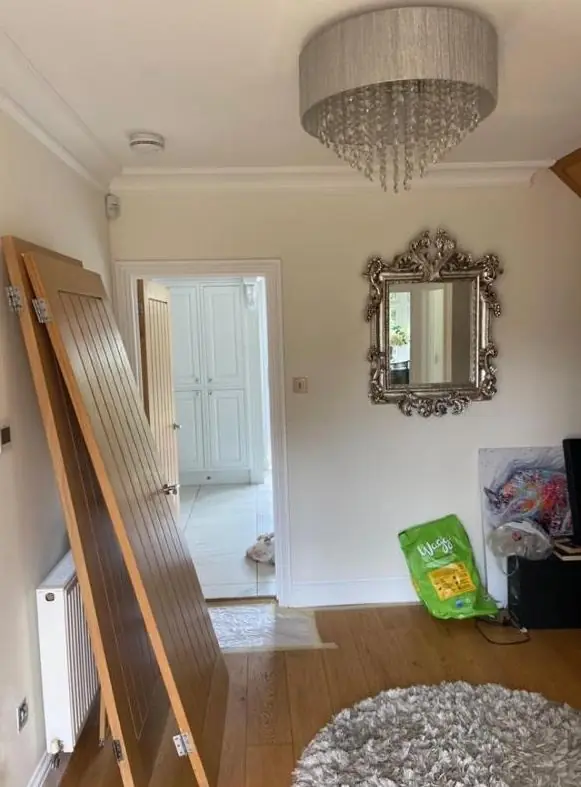
We hang wallpaper and lining paper in Wollaston, about 9.6 miles east of Northampton town centre in NN29. Dean strips, repairs, lines and hangs, with extra care in the village's 18th-century cottages, where few walls are straight and pattern matching takes planning.
Old cottage walls are rarely true
The historic core of Wollaston, along the High Street and around Duck End, Hickmire and Bell End, is made up of coursed limestone cottages from the late 17th and 18th centuries. Their walls are thick, solid and almost never plumb. Corners drift, chimney breasts lean, and ceilings slope towards the outside walls. Paper shows all of that more clearly than paint does.
The answer in most of these rooms is lining paper. It evens out the small hollows and fine cracks in old plaster and gives the finish paper a consistent surface to grip. On a really rough wall we sometimes use a heavier grade, or hang two layers, the first one horizontally. Lining paper also helps on old lime plaster, which can be dusty and soft. We seal the wall first so the paste doesn’t soak straight in and leave the paper with nothing to hold on to.
Some walls in these cottages are damp because of how they were built, not because something has gone wrong. A vinyl paper sealed across a solid stone wall can trap that moisture, and the paper will bubble or lift at the seams. In those rooms we suggest a breathable paper, or paint, and say so before any money is spent on rolls.
Hanging a pattern when nothing is square
A large repeating pattern is the hardest paper to hang in an old cottage. If you hang it to a true plumb line, the pattern runs off against a sloping ceiling. If you follow the ceiling, the verticals lean. We usually find a compromise: centre the design on the chimney breast or the wall you see first, hang from a plumb line there, and let any mismatch land in the corner behind the door.
Small, busy patterns and textured papers are far more forgiving on uneven walls. If you haven’t chosen yet, that is worth knowing before you order.
| Wollaston home | What we look at first |
|---|---|
| 18th-century limestone cottage | Plaster condition, damp, whether lining paper is needed, where pattern mismatch can be hidden |
| Early 19th-century terrace, e.g. London Road | Tall walls, old paper layers to strip, cornice line for the top cut |
| Later family home, e.g. The Pyghtles or York Road | Feature wall position, flat plasterboard or skim, paper type |
| New build east of Hookhams Path | Whether the plaster is dry and sealed, settlement cracks |
Feature walls in Wollaston family houses
Nearly three in four Wollaston homes have at least three bedrooms, and plenty are on the later roads around St Mary’s Road and The Pyghtles. These houses tend to have flatter walls, so a bold print or a dark, heavy paper on a single wall works well. Common choices are the wall behind a bed, a chimney breast or alcove in the living room, or the long wall of a dining area. A full room in a strong pattern can feel heavy, but a single wall usually doesn’t.
In the new homes off Hookhams Path, hold off on papering until the plaster has dried out and any settlement cracks have appeared and been filled. If you paper too early, the cracks can open behind the paper and split it along the seams.
Stripping, repairs and booking
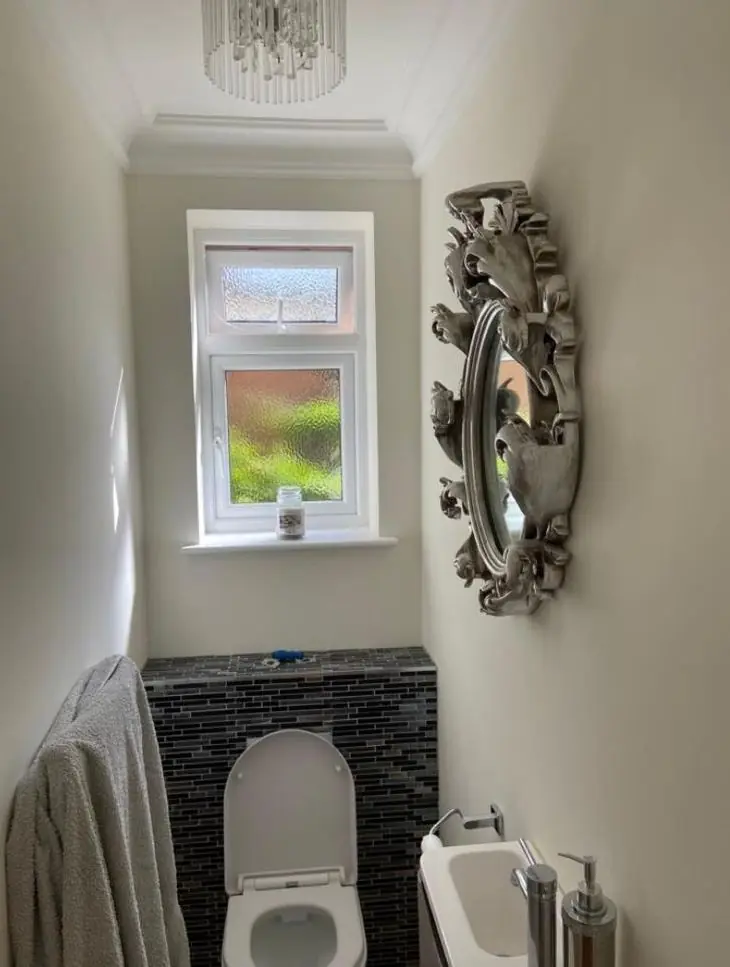
In older houses we often find several layers of paper, sometimes painted over. Steam and patience get them off, but the plaster underneath may come away in places and need repair before anything new goes up. We price that honestly at the quote stage and don’t treat it as a surprise extra.
More about paper types, pasting and lining is on our main wallpaper hanging page. For the other jobs we cover in the village, see our Wollaston page.
Last updated by Dean, DH Painter & Decorator.