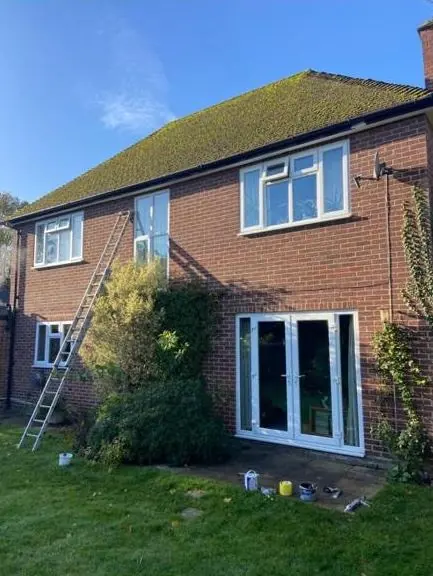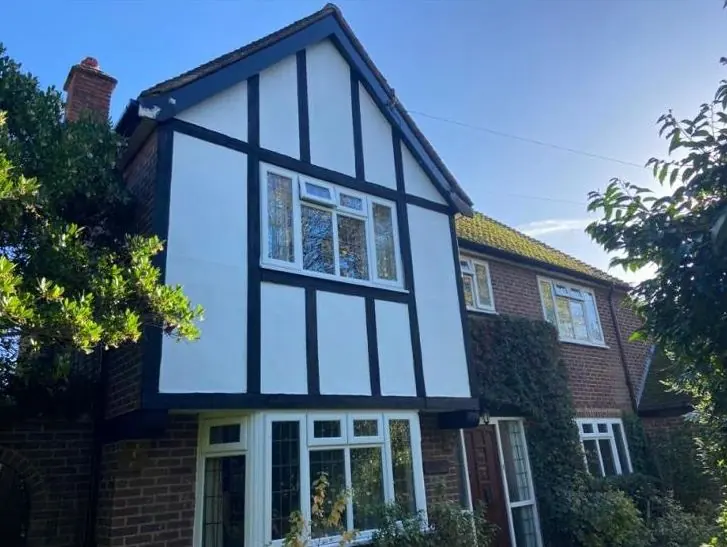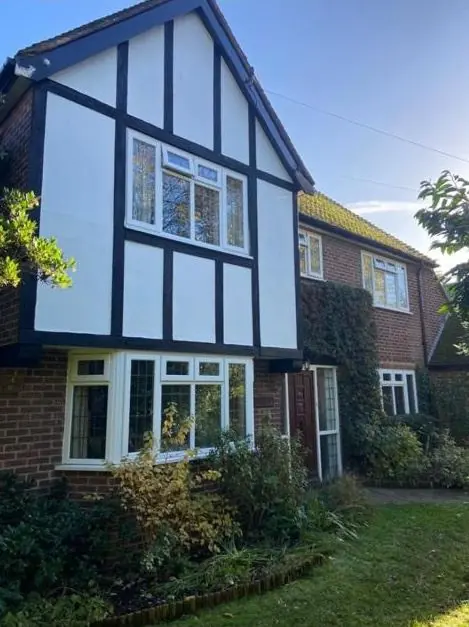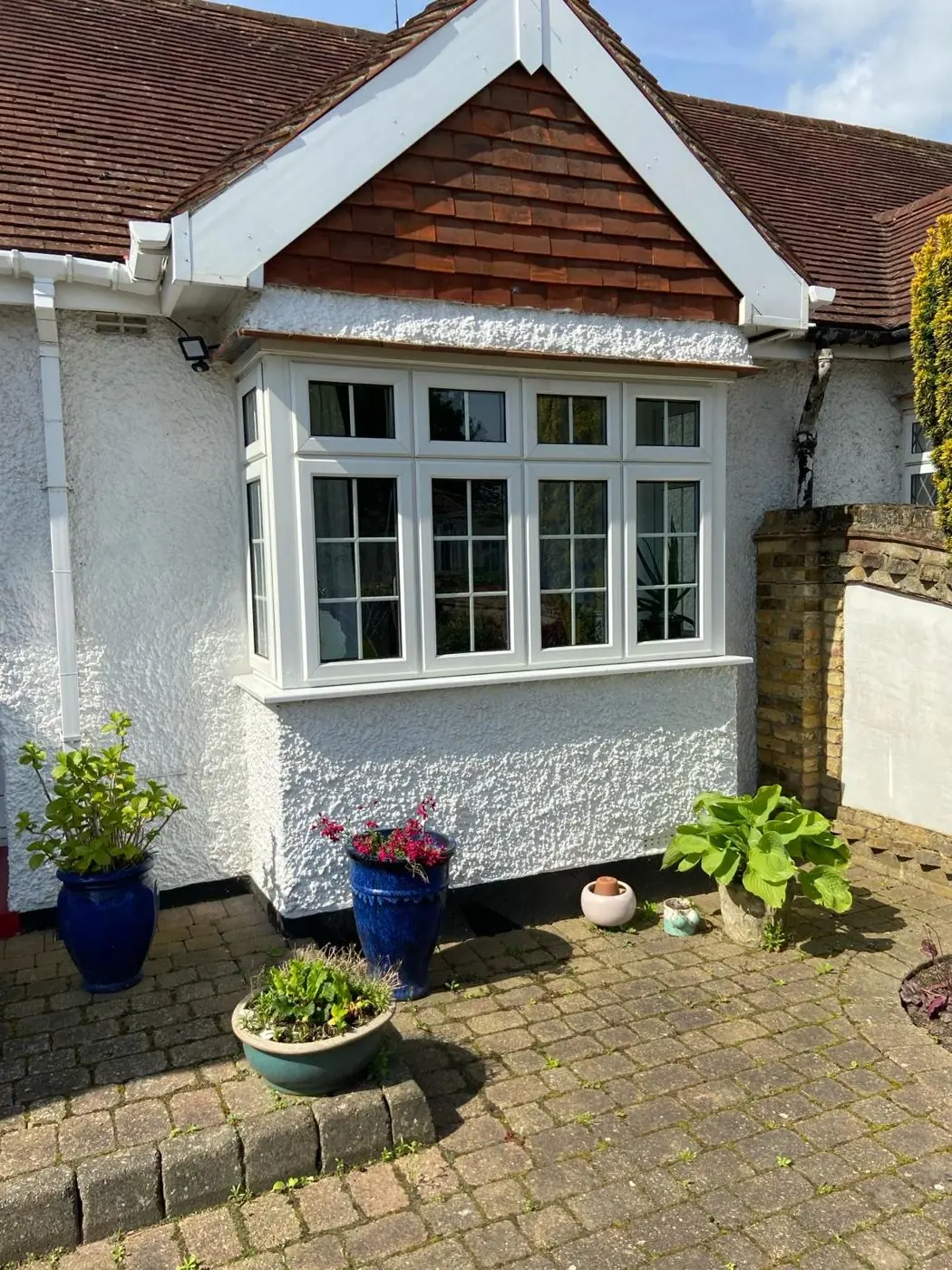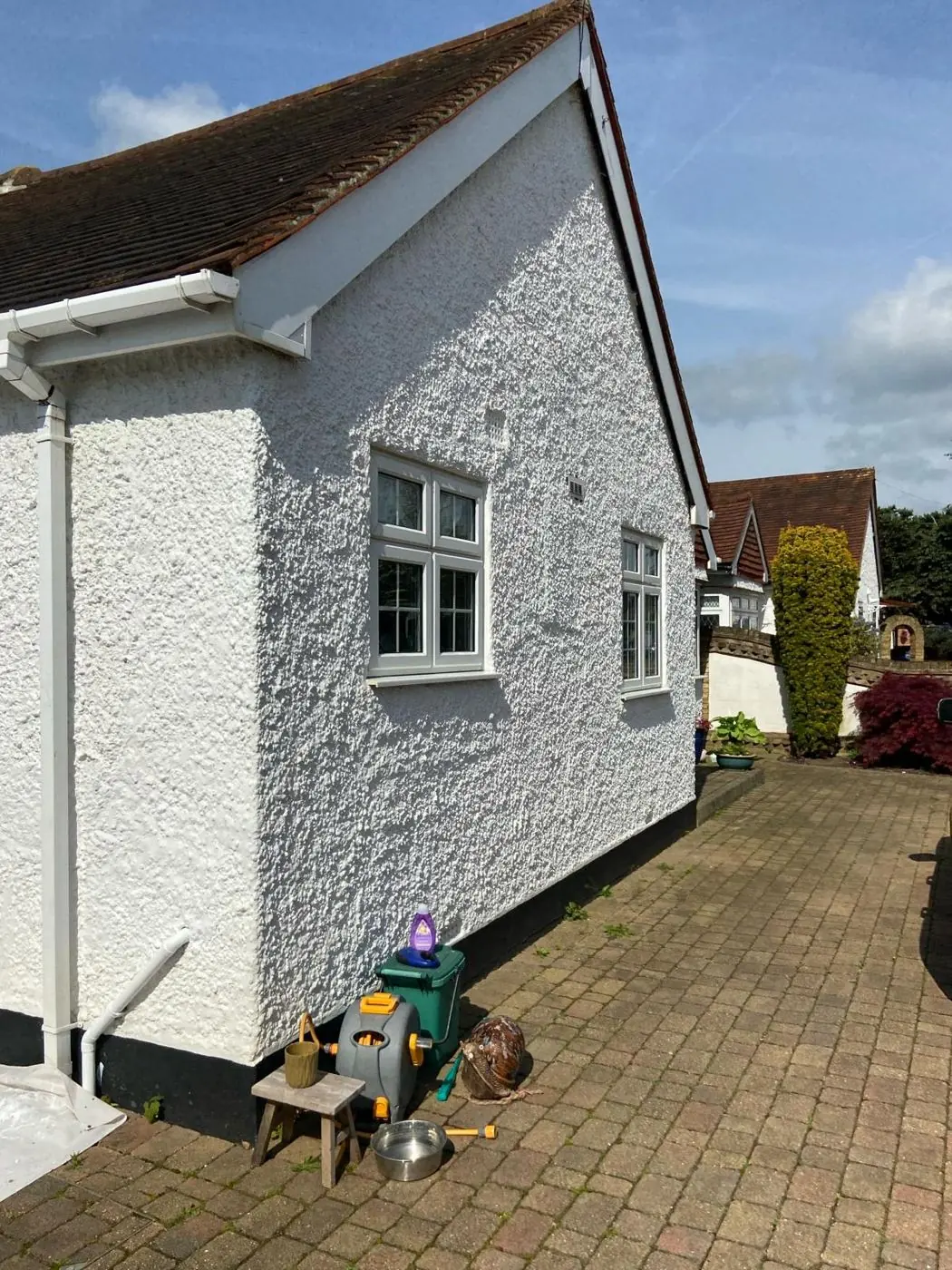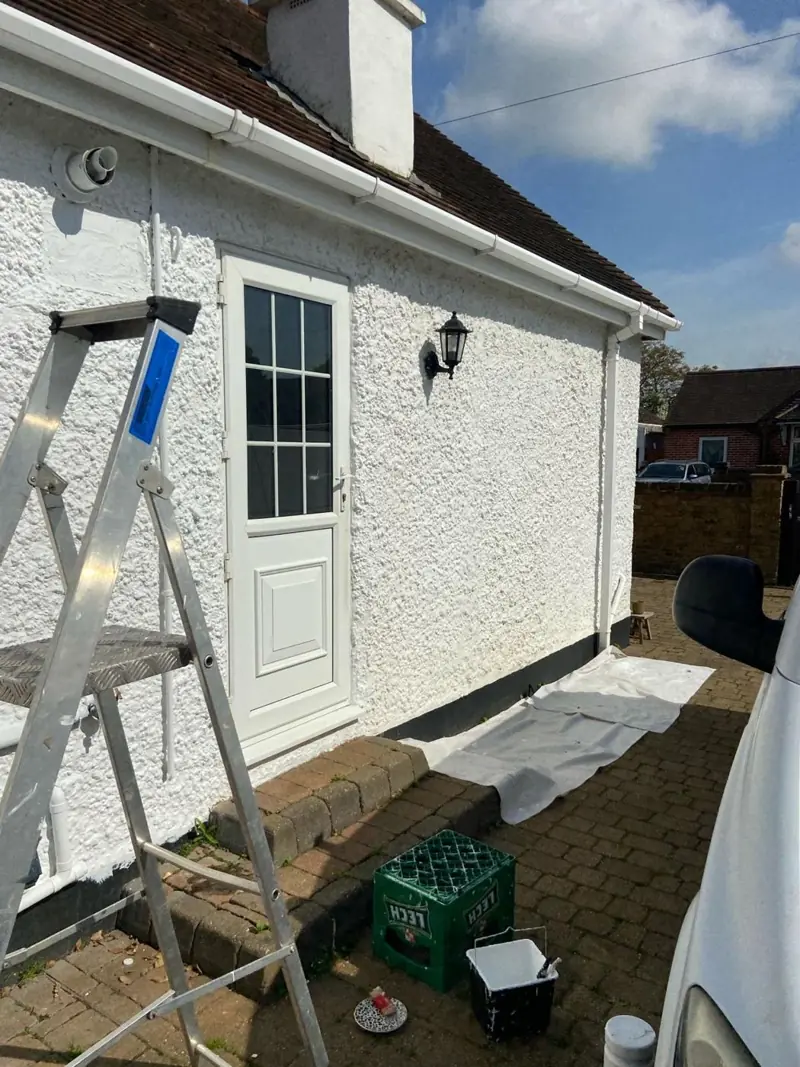
We paint render and masonry in Wollaston, the North Northamptonshire village about 9.6 miles east of our Northampton base. Dean matches the coating to the wall, from breathable systems on old limestone and lias to standard masonry paint on later render.
What the walls in Wollaston are actually made of
Wollaston’s listed houses are mainly coursed limestone or lias, and its larger houses add stripes of ironstone to the limestone. Over the centuries a fair number have been painted or partly rendered. 84 High Street is coursed limestone with part of it rendered. Wollaston Hall, now Scott Bader’s headquarters, is limestone ashlar at the front with rendered rear elevations. 16 Duck End and The Boot pub are both stone that has since been painted.
That mix is the reason a masonry job here starts with a survey rather than a colour card. Old stone walls built with lime mortar move moisture in and out. A coating that stops that movement holds water behind it, and in frost the face of the stone or render can break away. The general method for render, from fungicidal wash to second coat, is set out on our main render and masonry painting page. This page covers what changes in Wollaston.
Already painted? Find out with what
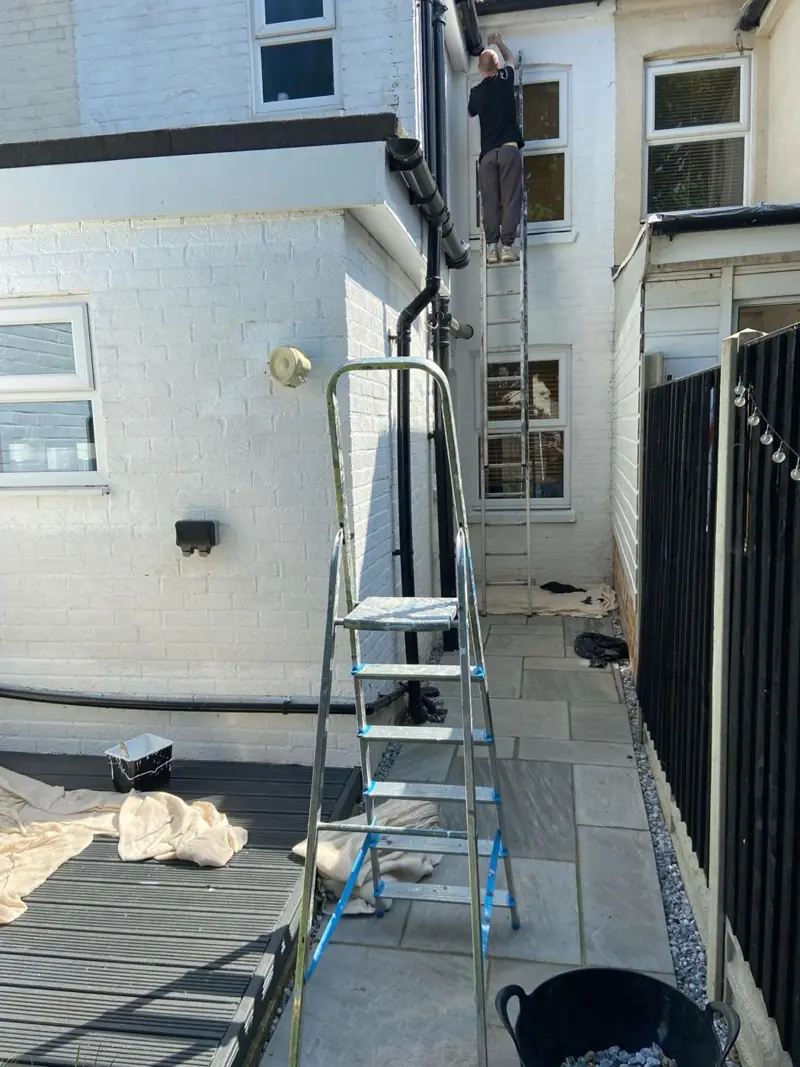
When limestone or lias has been painted before, the next coat has to suit what is already there. Over many decades a wall may have had limewash, then a mineral paint, then a modern acrylic masonry paint on top. Each behaves differently. Before quoting a recoat on a painted stone cottage we look at:
- whether the existing film is flaking in sheets, which often means a non-breathable layer is trapping damp
- whether it rubs off as powder, which suggests limewash or a chalking older coating
- how the wall behaves at its base and under sills, where water collects
- whether a small test area accepts the proposed coating without lifting
Sometimes the honest answer is that a section of the old plastic coating needs to come off before a breathable system goes back on. Sometimes the existing finish is sound and a compatible recoat is all that is needed.
Cracks, render and the exposed side of the hill
Wollaston sits on clay soil on rising ground 50 to 80 metres above sea level, east of the Nene valley. Render on the west side takes the weather, and fine cracks there let water in behind the coating. Part-rendered walls also have joins where render meets stone, and those edges open up. We tap the render for hollow patches, rake out and fill cracks with a filler that suits the wall, and treat any green growth before painting. Where render is blown over a large area, that is a job for a plasterer first, and we will tell you so rather than paint over it.
Timing matters on an exposed hill. Masonry paint needs dry walls and steady temperatures to cure, so we plan these jobs for settled spells. Our guide to painting render and roughcast goes into textures and coverage in more depth.
Later estates and the homes east of Hookhams Path
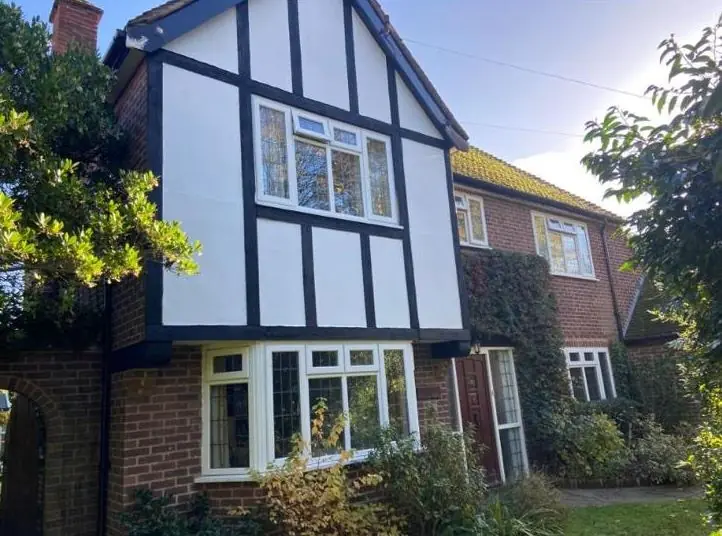
Not every Wollaston wall needs the conservation approach. Streets such as The Pyghtles, Briarwood Way and Neale Close carry 20th-century houses and bungalows, and the Neighbourhood Plan allocated about 80 new homes on Land East of Hookhams Path. Sand and cement render on those homes takes a good-quality smooth or textured masonry paint in the normal way. New render should be left to cure fully before its first coat, following the manufacturer’s guidance.
Listed walls and colour choice
Over 40 parish buildings are listed, and a different colour on a listed wall can be an alteration that needs approval. Check with North Northamptonshire Council before moving away from the existing colour. Soft, stone-sympathetic tones usually sit more comfortably beside neighbouring coursed limestone. More on the village’s homes is on our Wollaston page.
Last updated by Dean, DH Painter & Decorator.