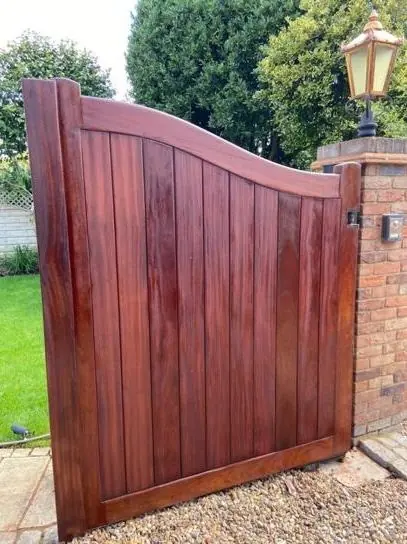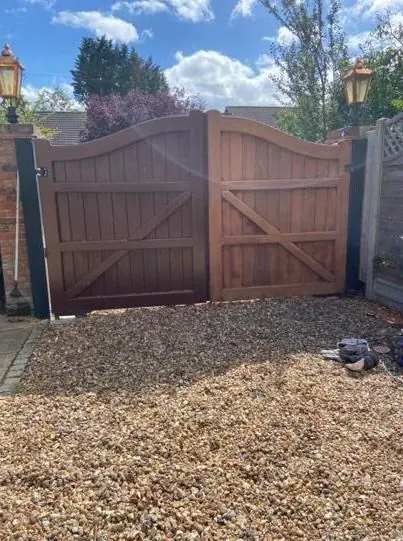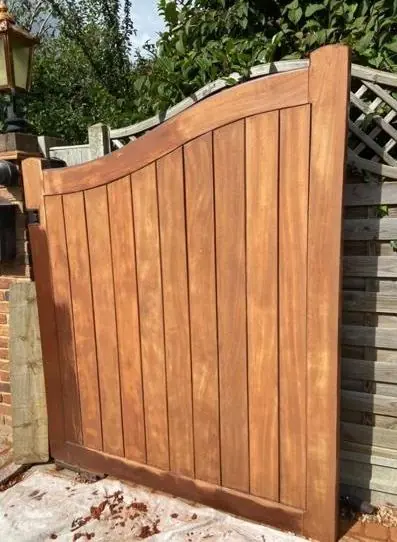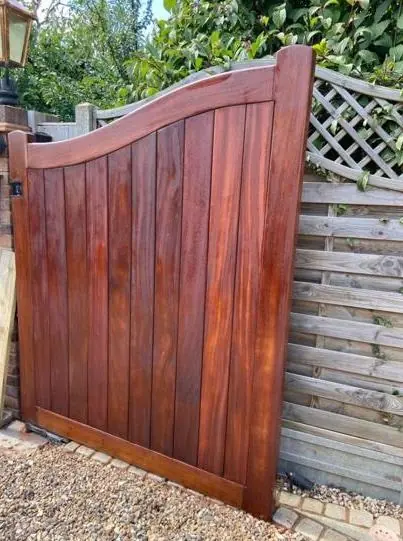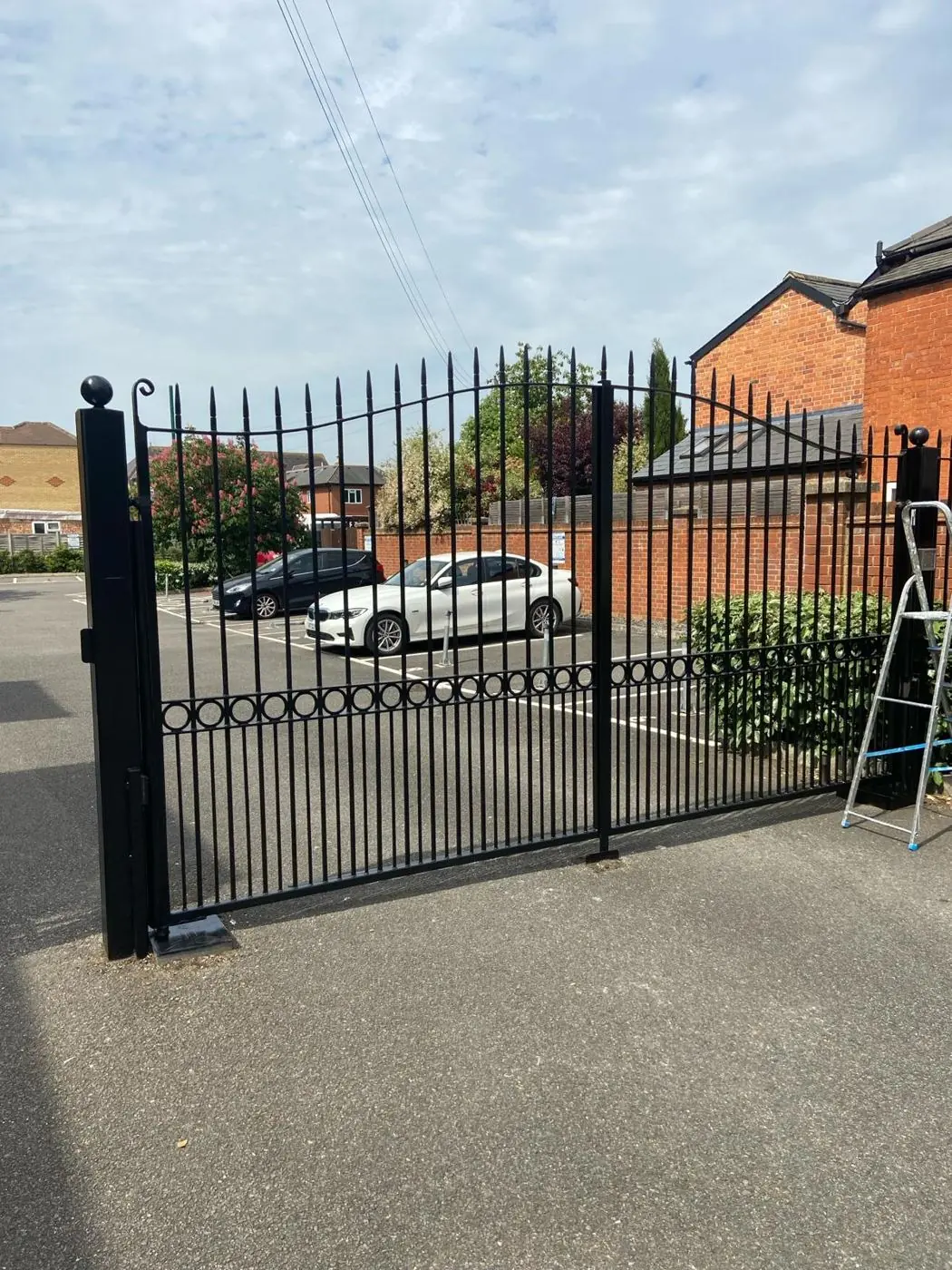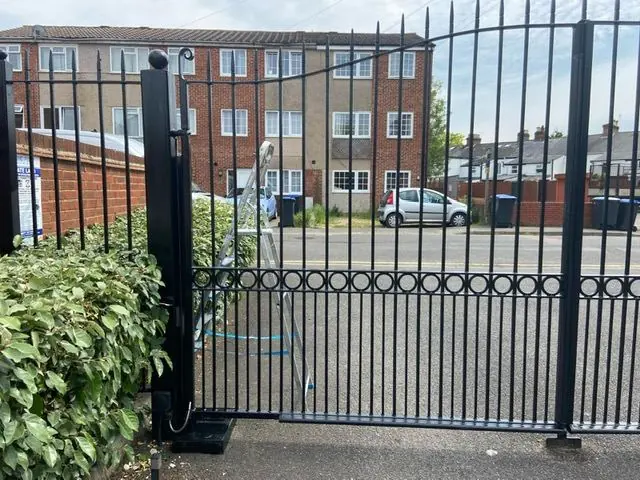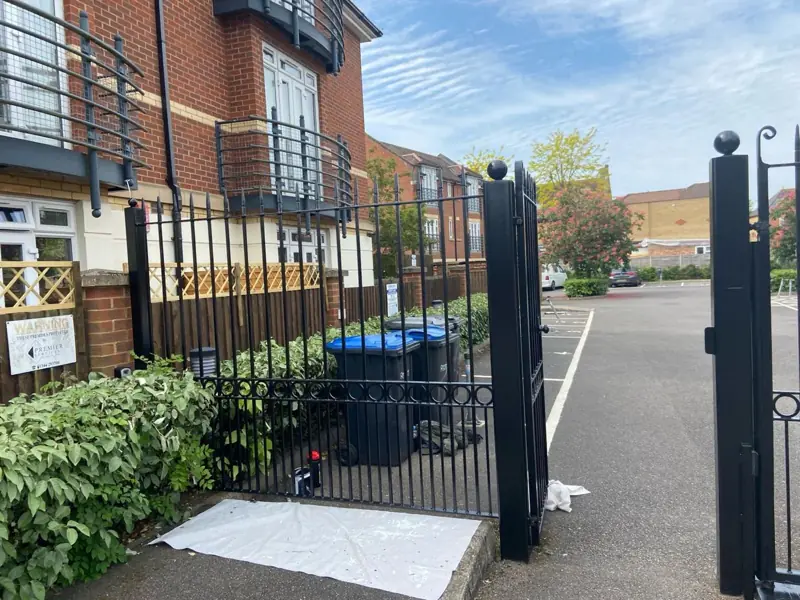
We stain and paint timber fences, posts and gates in Wollaston, the hilltop village 9.6 miles east of Northampton. Dean picks a stain or fence paint to suit how exposed the boundary is and how weathered the wood has become.
Boundaries at the edge of open country
Wollaston’s eastern side gives way to the East Northamptonshire Claylands, an open landscape with sparse woodland, and the western side of the parish drops to the Nene floodplain with its flooded gravel pits. Gardens on the edge of the village, including the plots along Hinwick Road heading out into the countryside, often have a fence line with nothing beyond it but field. A boundary like that takes wind and rain straight on, and in summer it gets full sun with no shade. Timber dries out, the grain opens and the old finish wears unevenly, with the field side often looking ten years older than the garden side.
For those exposed runs we tend to favour a penetrating stain that soaks into the wood and wears back gradually. A film-forming fence paint gives stronger colour but needs more upkeep once it starts to crack in an open position. We will look at the fence and give you the choice with the reasons. The general method, from cleaning to the final coat, is on our main fence and gate staining page.
What a fence job in Wollaston usually involves
| Situation | What we look at first |
|---|---|
| Weathered panels facing open fields | Grey, fibrous surface timber that needs a stiff brush and a cleaner before stain will take |
| New fences on recent builds | Pressure-treated timber still wet from treatment, which should dry before it is coated |
| Older gardens in the village centre | Mixed boundaries where timber meets stone or brick, and posts rotting at ground level on clay soil |
| Side and driveway gates | Sagging frames, loose hinges and end grain that drinks finish faster than the boards |
New panels on the post-2011 housing
The Wollaston Neighbourhood Plan allocated 160 new homes to 2031, including about 80 on Land East of Hookhams Path. New estates usually come with fresh pressure-treated fences, and owners often want them coloured straight away. Freshly treated timber holds a lot of moisture, so staining it too soon gives a patchy result that peels. In most cases the panels should be left to weather for a period first, following the product guidance, and we are happy to tell you if yours are ready.
Clay soil adds a problem of its own. The village sits on clay, which holds water against posts and gravel boards. The bottom few inches of a fence are therefore where the finish fails and where rot starts. We pay attention to the base: clearing soil and debris back from the boards, letting the lowest timbers dry, and working stain well into end grain. Gravel boards made of concrete are left unpainted unless you ask otherwise.
Gates in the older part of the village
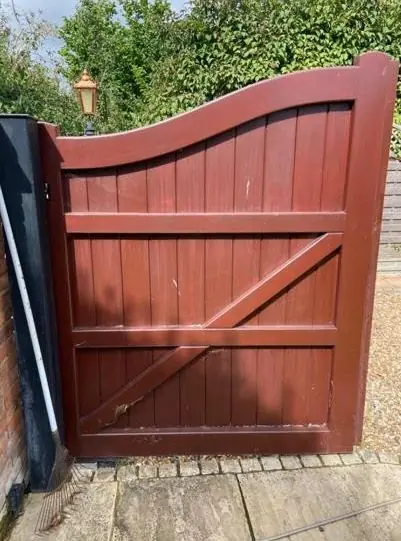
Timber gates set into old walls along the High Street, Duck End or Hickmire are a different job from estate fencing. The gate may be painted rather than stained, it may sit within the conservation area, and its frame often meets limestone. We protect the stone from drips and keep the colour sympathetic. If the house is listed and you want a new colour, check consent with North Northamptonshire Council first. Iron and steel gates are covered on our metal gate and railing page, and our Wollaston page describes the village’s housing in more detail.
Booking a fence for the right weather
Stain needs dry timber to soak into, and on a hilltop the wind dries panels quickly after rain but also brings the next shower in fast. We aim for a run of dry days so the wood has dried right through before the first coat and the second coat has time to cure. Late spring and early autumn are often kinder than midsummer, when stain on a south-facing run in full sun can flash off before it has soaked in. If the forecast turns, we would rather move the date than stain damp boards.
Last updated by Dean, DH Painter & Decorator.