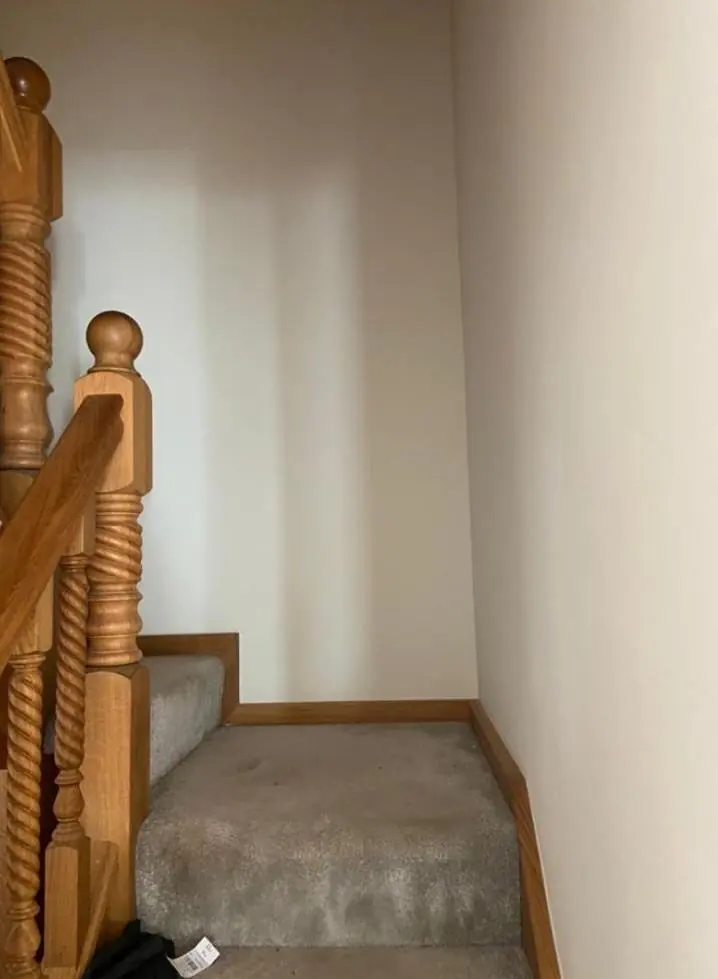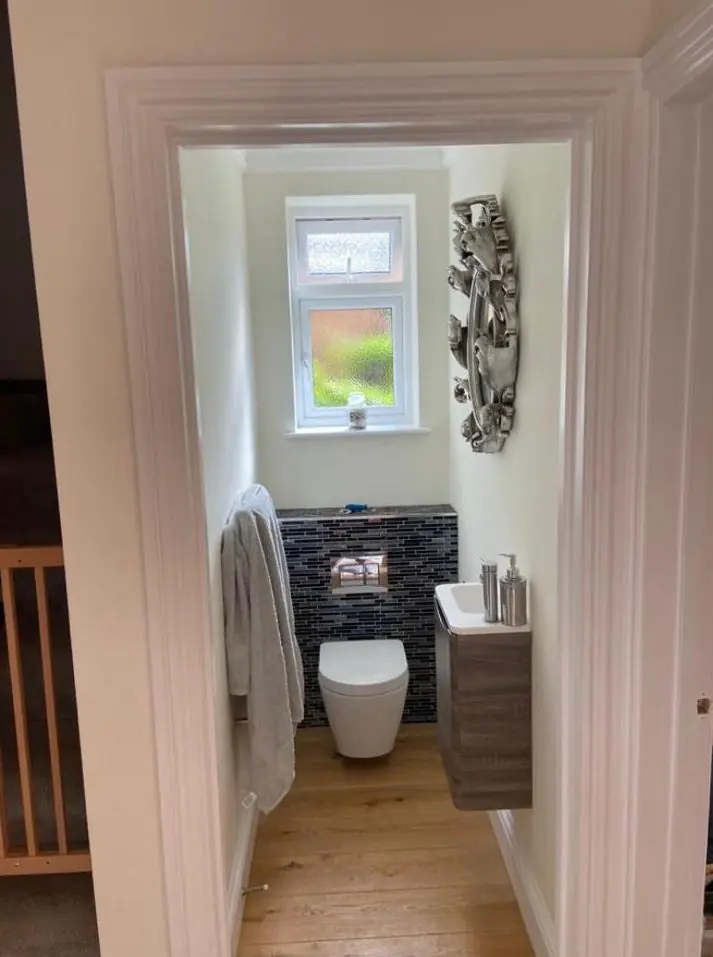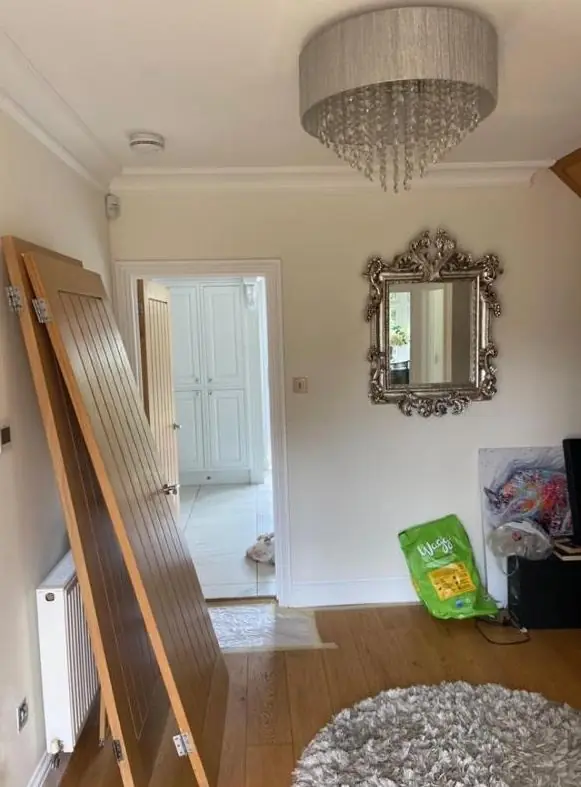
Dean paints doors, skirtings, frames and other joinery in Wollaston, the hilltop village 9.6 miles east of Northampton town centre in the NN29 postcode. Work ranges from moulded and reeded door surrounds on the older High Street houses to straightforward woodwork refreshes in newer homes.
Joinery that dates the village
Wollaston’s woodwork tells you roughly when each house went up. Cottages from the late 1600s and 1700s, on the High Street and around Hickmire, Bell End and Duck End, mostly have small leaded or glazing-bar windows sitting beneath timber lintels. In the early 19th century the terrace of five at Nos. 28-38 London Road was built with sash windows topped by flat stone arches. Some High Street fronts have panelled doors in moulded or reeded wooden surrounds, and the listing for the former Lloyds Bank and No. 50 records a six-panel door with a reeded surround. Further out, on later streets like Briarwood Way and Neale Close, the doors and skirtings are ordinary modern joinery.
These need different handling, so we ask what era of house we are working in before we price anything.
Reeded surrounds and six-panel doors
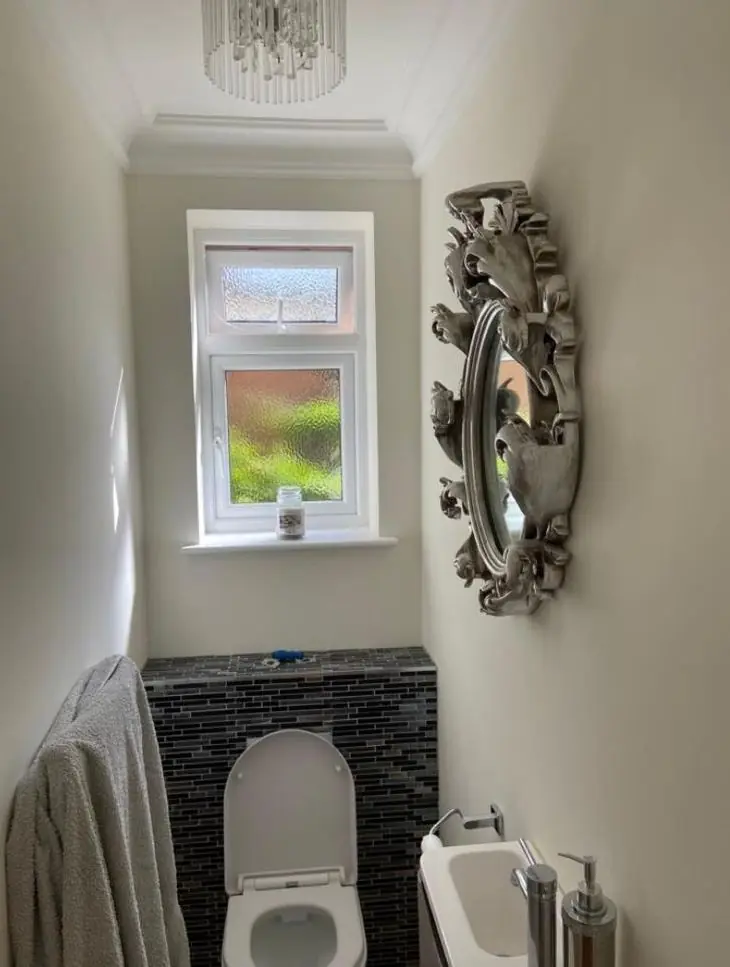
On a reeded surround the paint has to sit in the grooves without filling them. Every time someone paints over an old surround with a heavy coat, the reeds get a little shallower. Before repainting, Dean checks how much old paint has built up. Where the detail has gone soft, the hollows are carefully cleaned back by hand. A heat gun is not used, because thatched houses such as No. 84 stand on the same High Street and nobody wants hot air or flame near a thatched eave. Then come thin coats of oil-based eggshell or a quality satin, laid off along the line of the moulding so the detail stays crisp.
A panelled door is painted in a set order: mouldings first, then the panels, then the muntins and rails, with the stiles last. That way the wet edges never cross over and the brush marks run with the grain.
Leaded casements, wooden lintels and sashes
On an 18th-century cottage the outside joinery gets the hardest life. Because the village stands 50-80 m above sea level, joinery on the weather side takes driven rain, and the wooden lintels above the casements take a lot of it. The narrow glazing bars of a leaded casement have to be cut in by hand, and the paint lapped just onto the glass to seal the joint. Any soft lintel timber is found and dealt with before primer goes on. On the London Road and High Street sashes, the parting beads and the edges of the sashes get thin coats, so the windows still slide when the job is done.
Many of these houses are listed and sit in the Wollaston Conservation Area. If you are thinking of a new colour for the front door or windows, ask the council’s conservation officer before buying paint: on a listed house, altering the colour or finish of joinery may require consent. Like-for-like repainting is normally the simpler route.
Skirtings in cottages and in newer homes
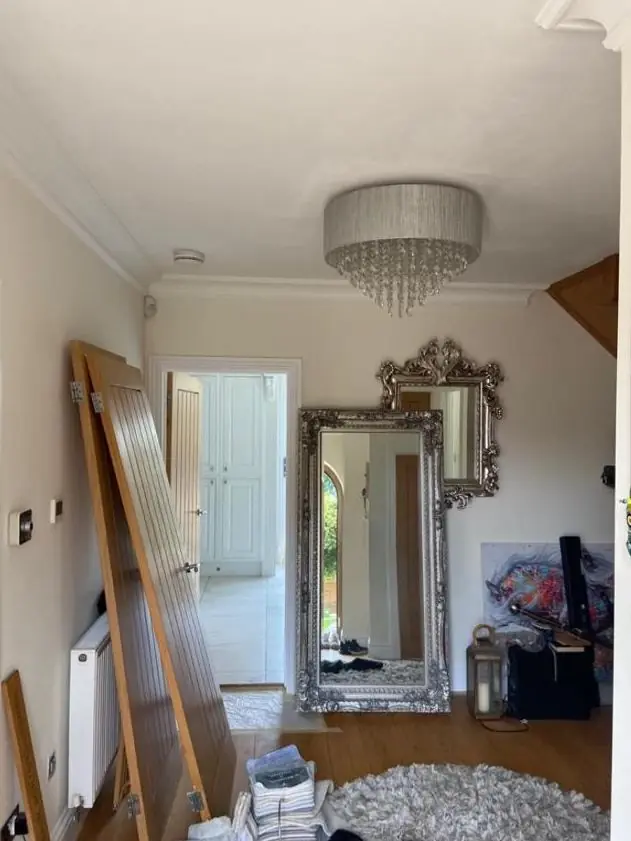
Inside the older limestone cottages, the floors and walls are seldom level. A skirting can follow a dip in the floor, and its top edge can sit against old plaster that moves. In those rooms we use flexible fillers where the board meets the wall, and paint lines that follow the board rather than a spirit level. A painted line forced dead straight on a wavy wall looks wrong.
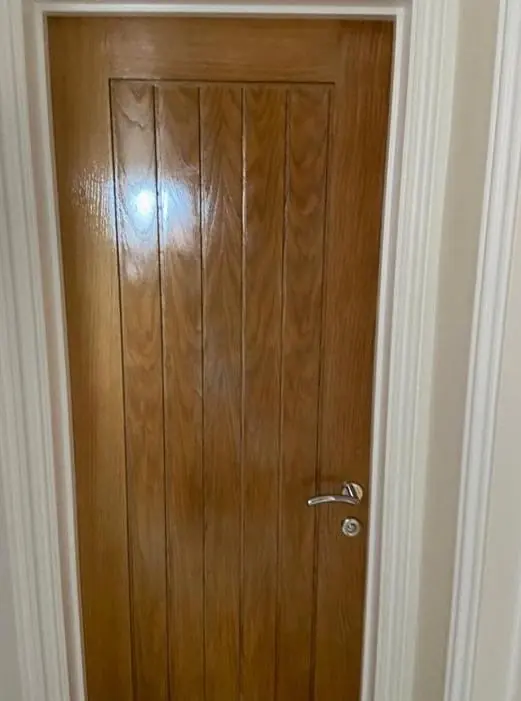
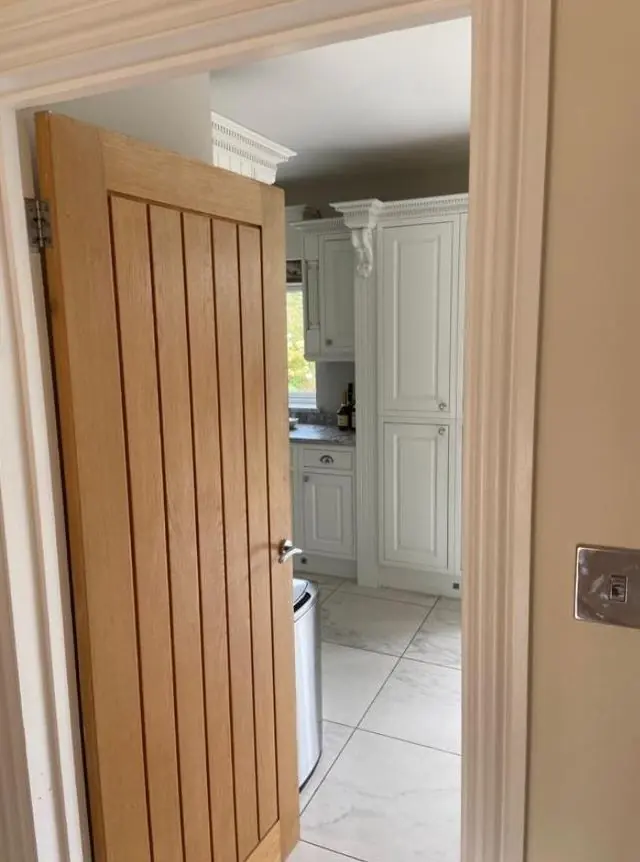
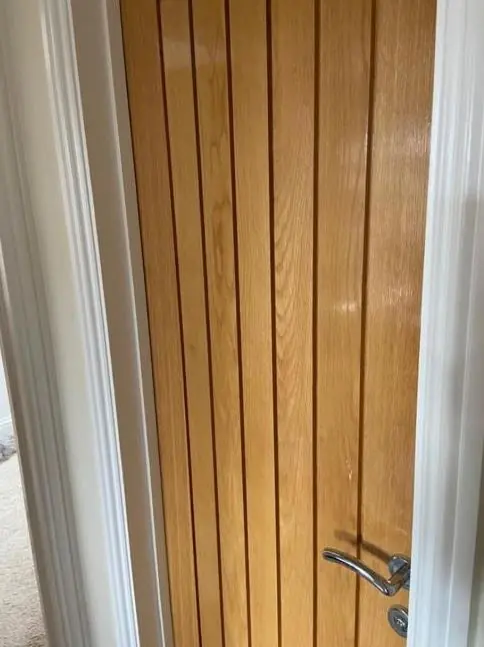
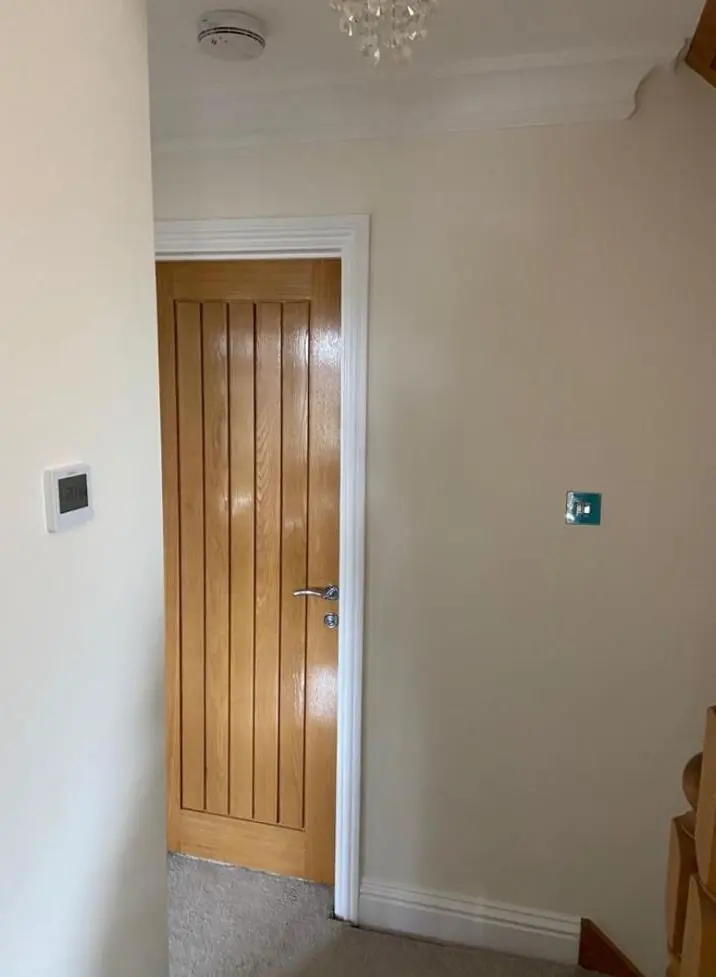
The later estates and the post-2011 homes have different needs. MDF or softwood skirtings, architraves and flush or moulded doors usually just need a clean, a key, filling of the dents, and two coats of a hard-wearing satin or eggshell. For family homes where most of the woodwork is being refreshed in one go, Dean can sequence it room by room so you always have a usable hallway and bathroom.
The main woodwork painting page covers the step-by-step preparation. Other work we cover in the village is on the painter and decorator in Wollaston page.
Last updated by Dean, DH Painter & Decorator.