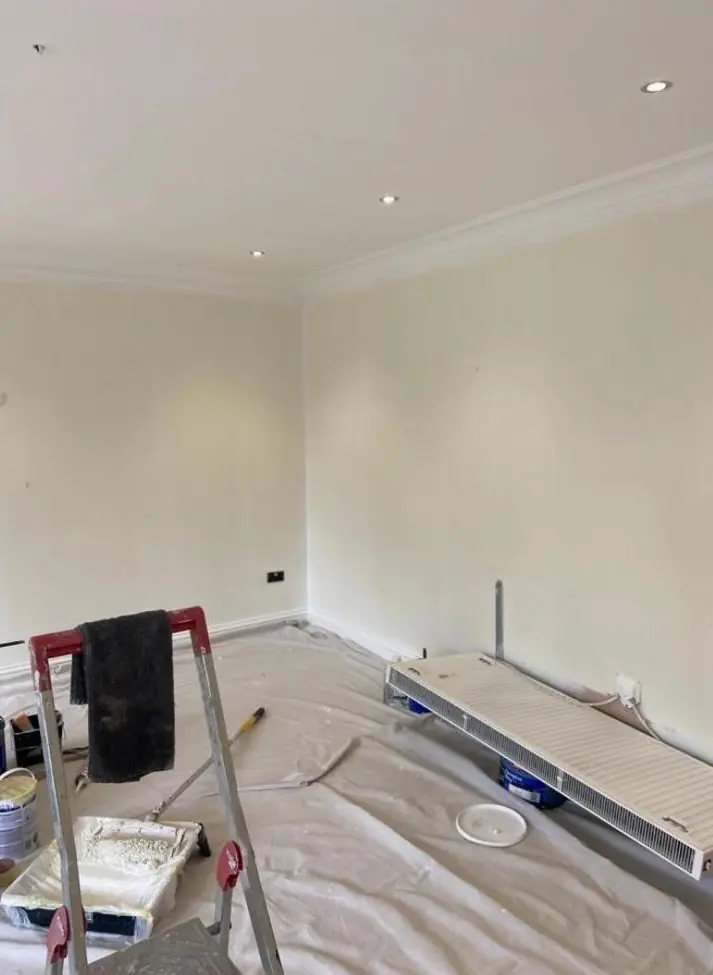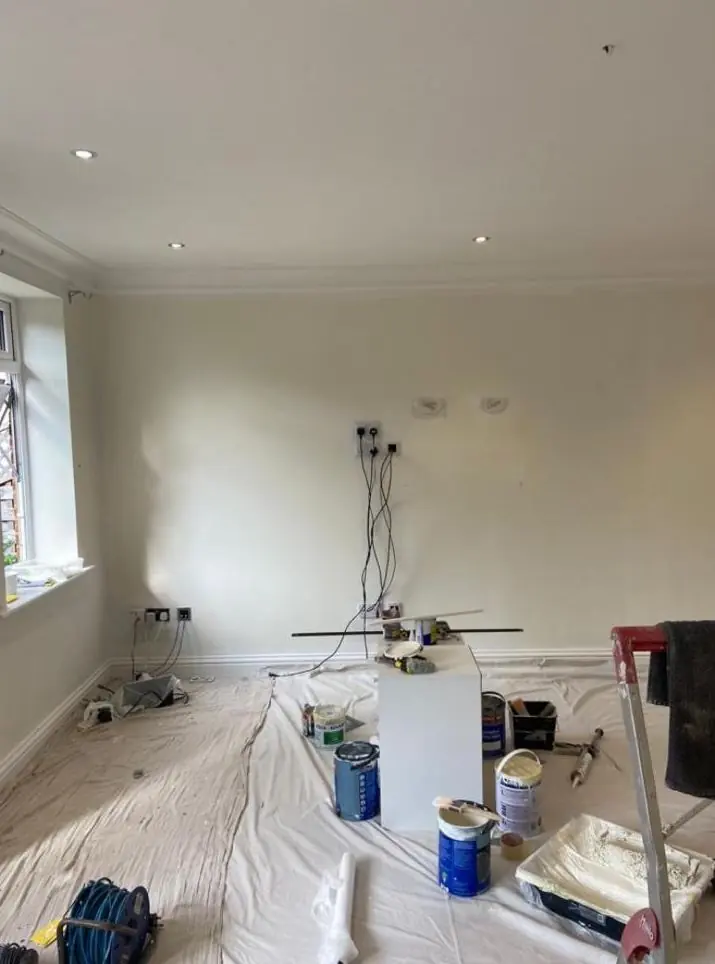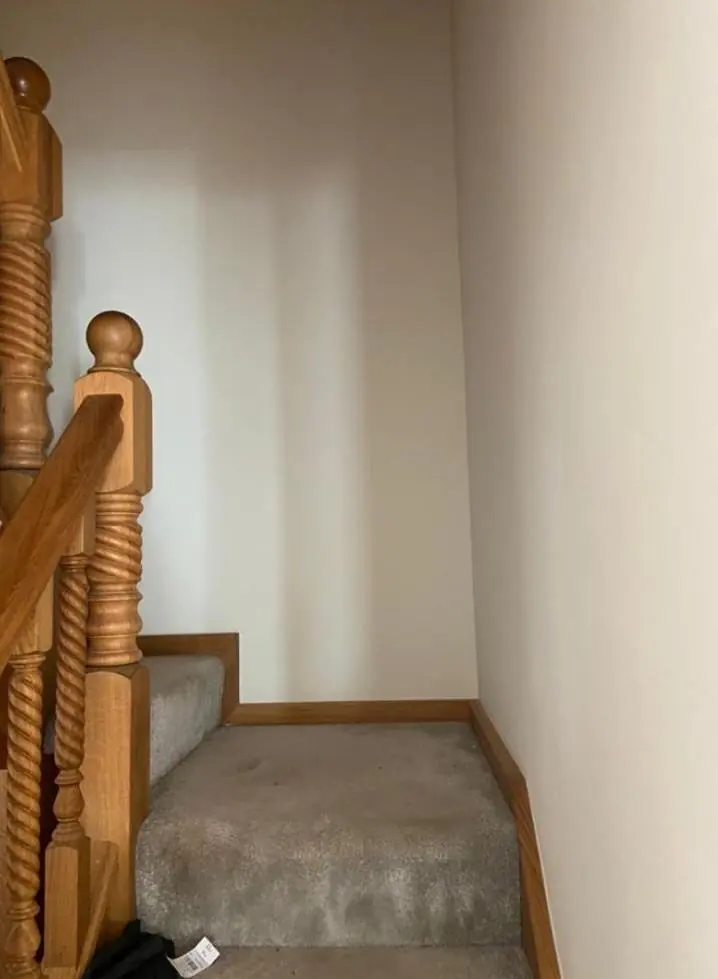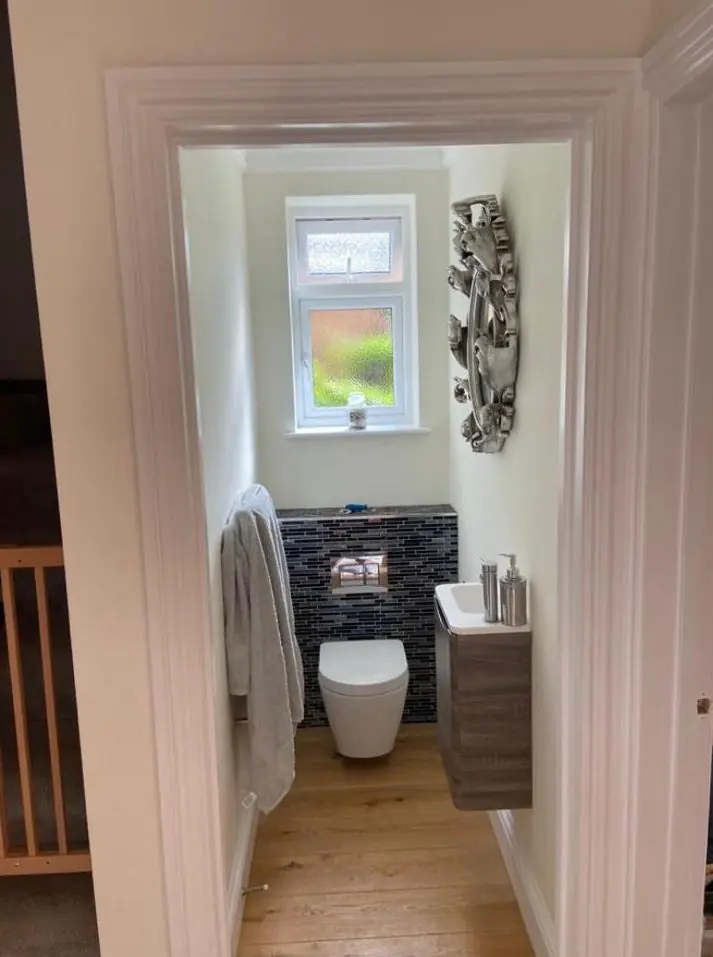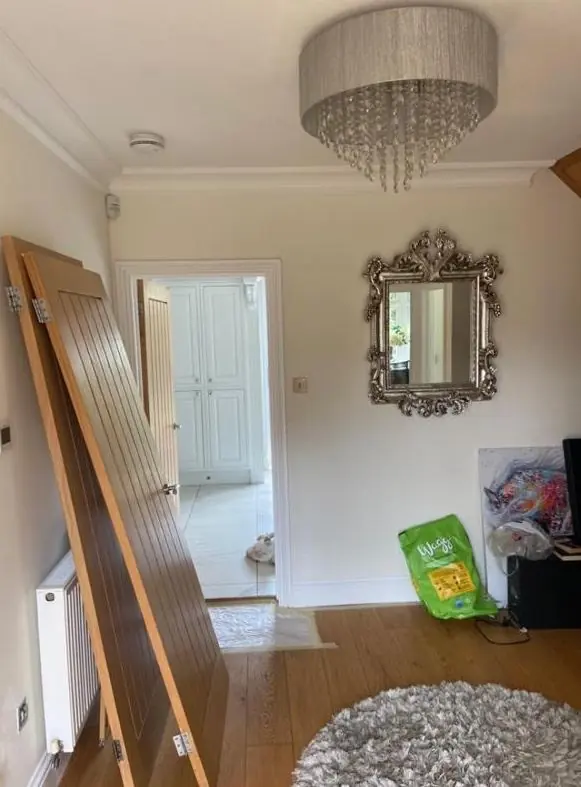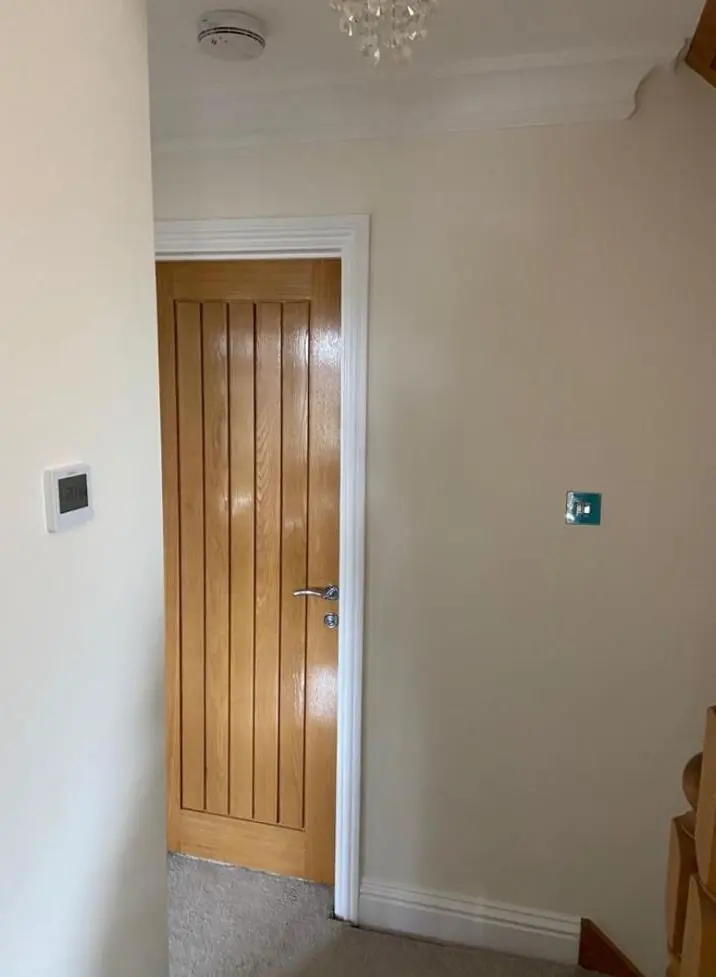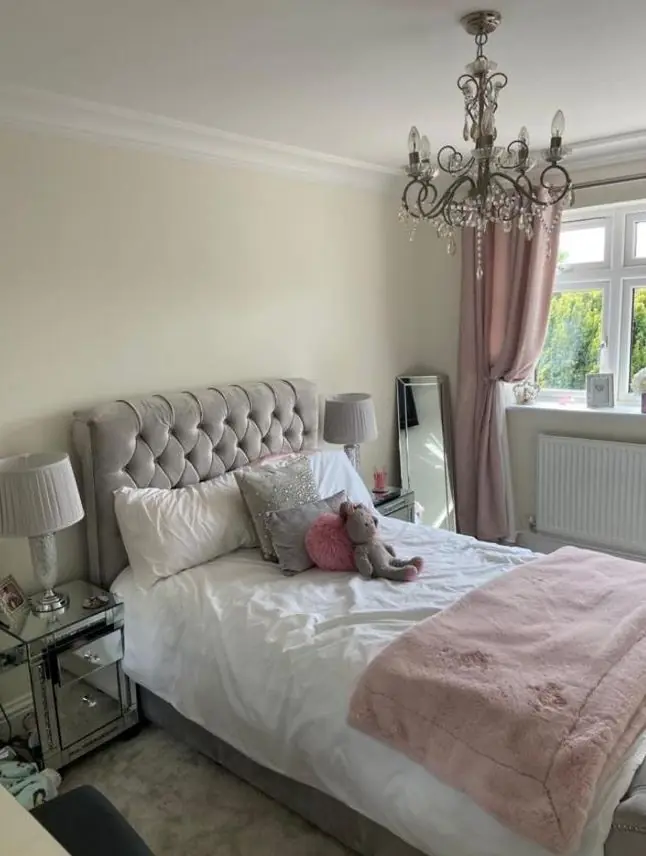
We paint walls, ceilings and woodwork inside homes in Wollaston, the NN29 village about 9.6 miles east of Northampton town centre. Dean handles single rooms and whole houses, adjusting the preparation to the age of the building, whether that is old plaster in a limestone cottage or fresh walls in a recent build.
Inside the old limestone cottages
The oldest homes in Wollaston date from the late 17th and 18th centuries and are built of regular coursed limestone, some of it lias. Many began as two- or three-unit cottages, and a few, such as the thatched house at 84 High Street, were once several cottages knocked into one. Inside, that history shows up as walls that wander out of plumb, plaster laid straight onto stone, and ceilings that dip and slope.
Those surfaces need a gentle hand. Old plaster on solid stone walls, often lime-based, has to breathe, so we check what is already on it before choosing a paint. A heavy vinyl emulsion rolled over old lime work can trap damp and start to flake within a season or two. Where the existing finish allows it, a breathable emulsion or a clay-based paint is usually the safer choice. Cracks are raked out and filled with a compatible filler rather than a hard modern one that will pull away.
We also don’t try to make an 18th-century wall look like plasterboard. Sanding a cottage wall dead flat removes the character that people buy these houses for. The aim is a clean, even colour that follows the line of the wall.
Three bedrooms and up: planning a whole-house repaint
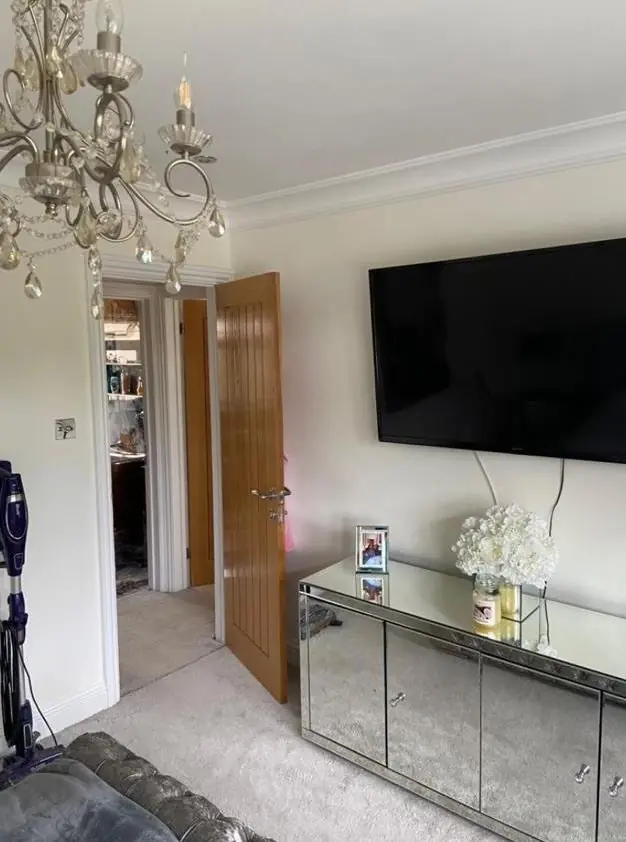
According to the 2011 census, 72.3% of homes in Wollaston have three or more bedrooms, and three in four are owner-occupied. In practice that means a lot of interior work here is a whole floor or a whole house rather than one tired bedroom. Briarwood Way, The Pyghtles and the other post-war roads hold much of that family housing.
On a bigger job the order of rooms matters. We usually start with bedrooms nobody needs during the day, keep the kitchen usable for as long as possible, and leave the hallway, stairs and landing until last, since everything else gets carried through them. Ceilings are painted before walls, and walls before woodwork, so that each coat is cut in against a finished edge. You get a written quote that sets out the rooms, the surfaces and the number of coats.
Our interior painting service page explains how we prepare surfaces and which finishes we use, so we won’t repeat it here.
New homes east of Hookhams Path
Under Policy HA1 of the village’s plan, around 80 homes were allocated to Land East of Hookhams Path, with a couple of low-density plots on Hinwick Road as well. New-build interiors bring their own issues. Fresh plaster needs to dry out fully, and in a new house that can take months. The contract matt left by most builders is fine for a first year, but it marks easily and doesn’t wash well.
When the plaster has settled and the first hairline cracks have shown up around door frames and ceiling joints, it is a good time to repaint. We fill and caulk those settlement cracks first, then apply a durable washable finish over the builder’s coat. If a room was never sealed properly, we start with a mist coat, as explained in our guide to painting new plaster.
Parking, school runs and getting in and out
The Neighbourhood Plan names parking as a problem in the village, and for a decorator the school day is what matters: the roads near the secondary school off Hookhams Path and the South Street primary jam up at drop-off and home time. For interior work this mostly affects loading. We plan to unload dust sheets, steps and boards outside the school-run hours and keep the van where it isn’t blocking neighbours.
Wollaston is outside Northampton, in North Northamptonshire, with Wellingborough as its post town. We cover it from our Northampton base, and you can see the other work we do in the village on our Wollaston area page.
Last updated by Dean, DH Painter & Decorator.