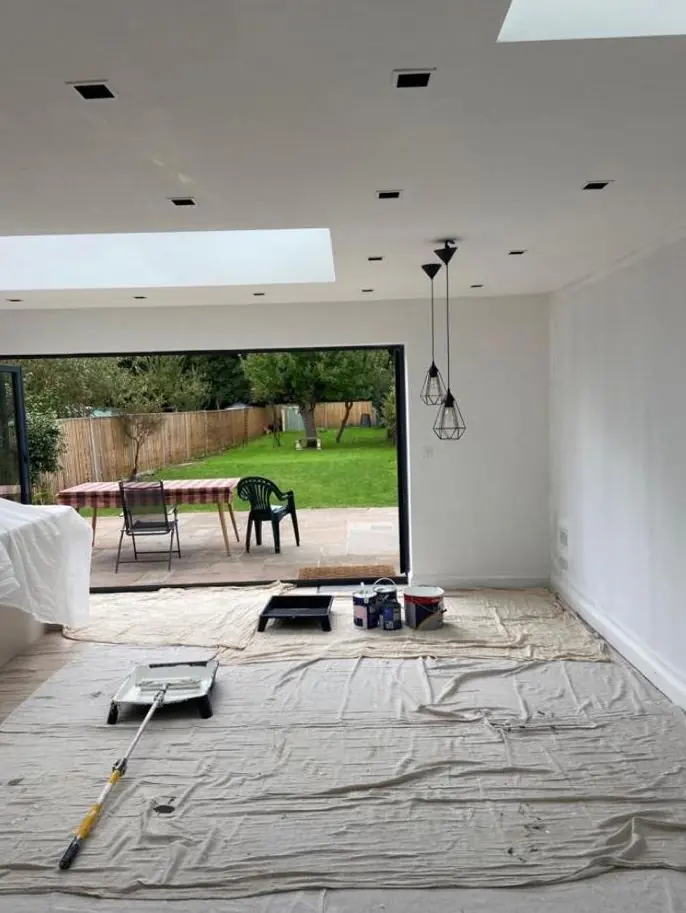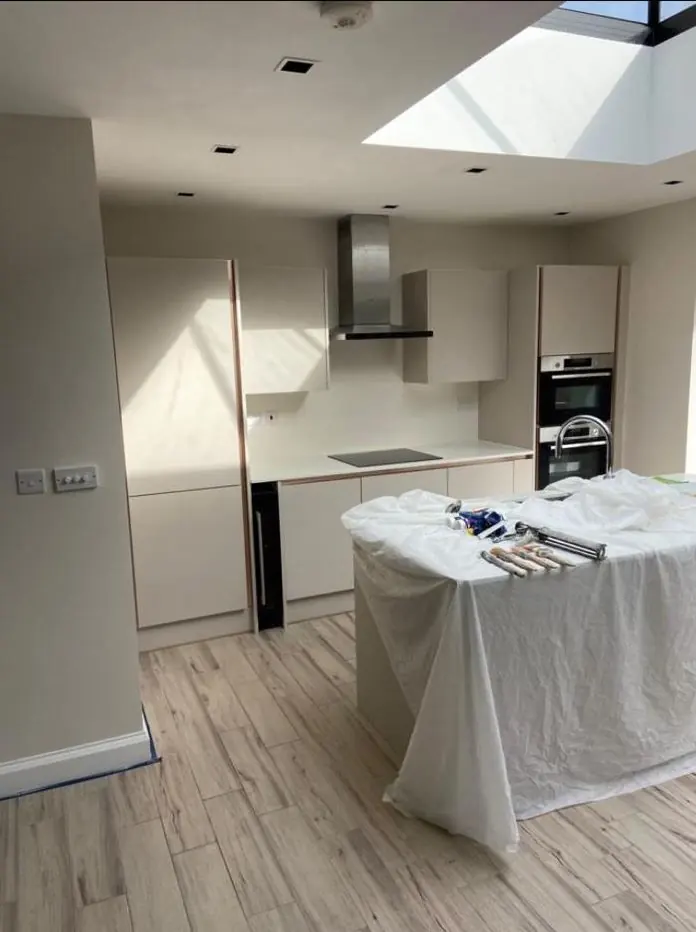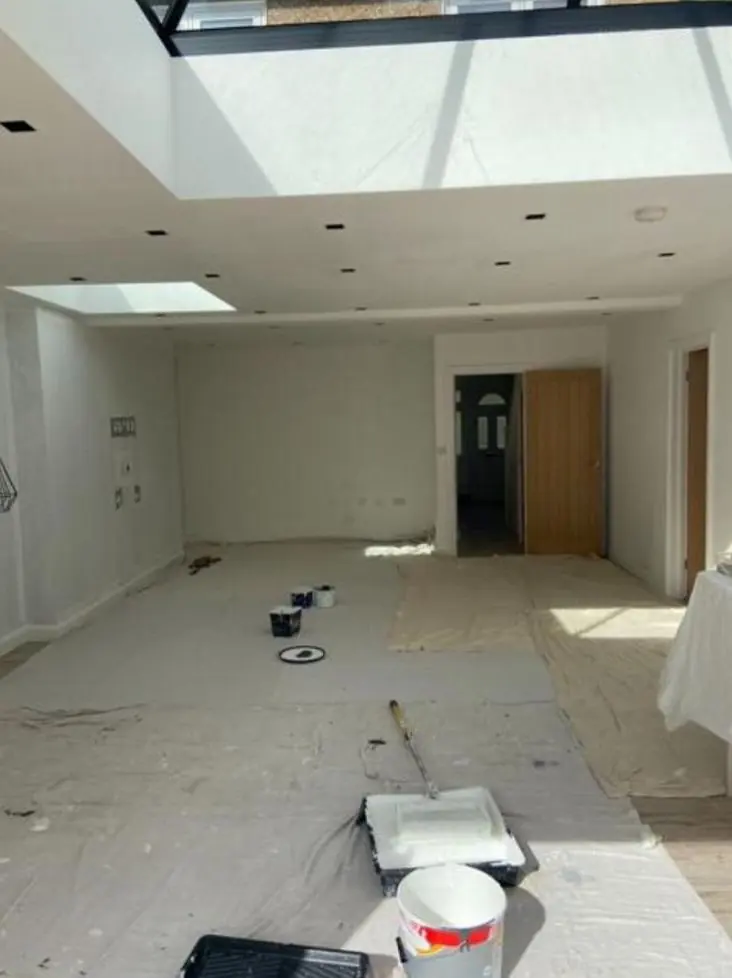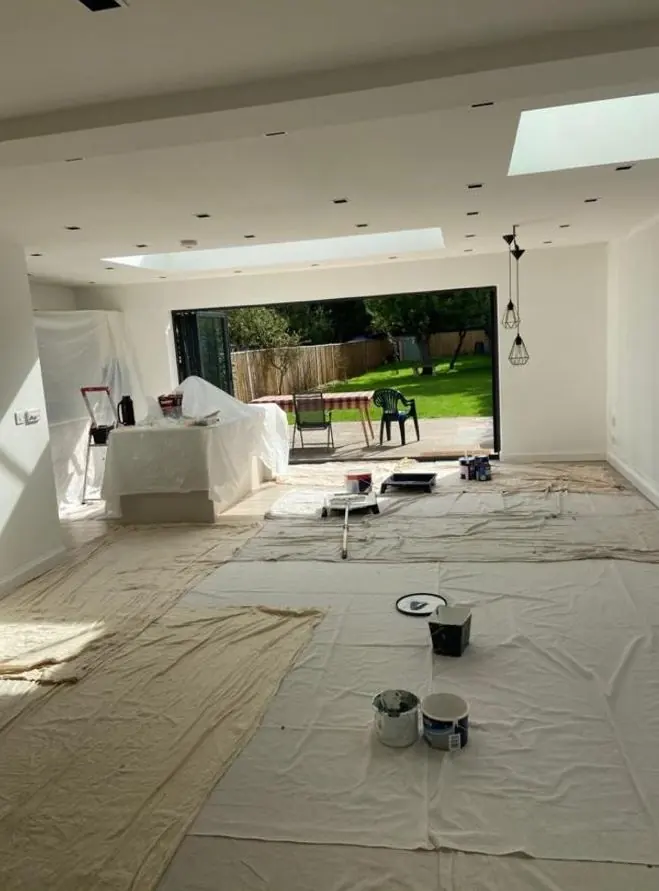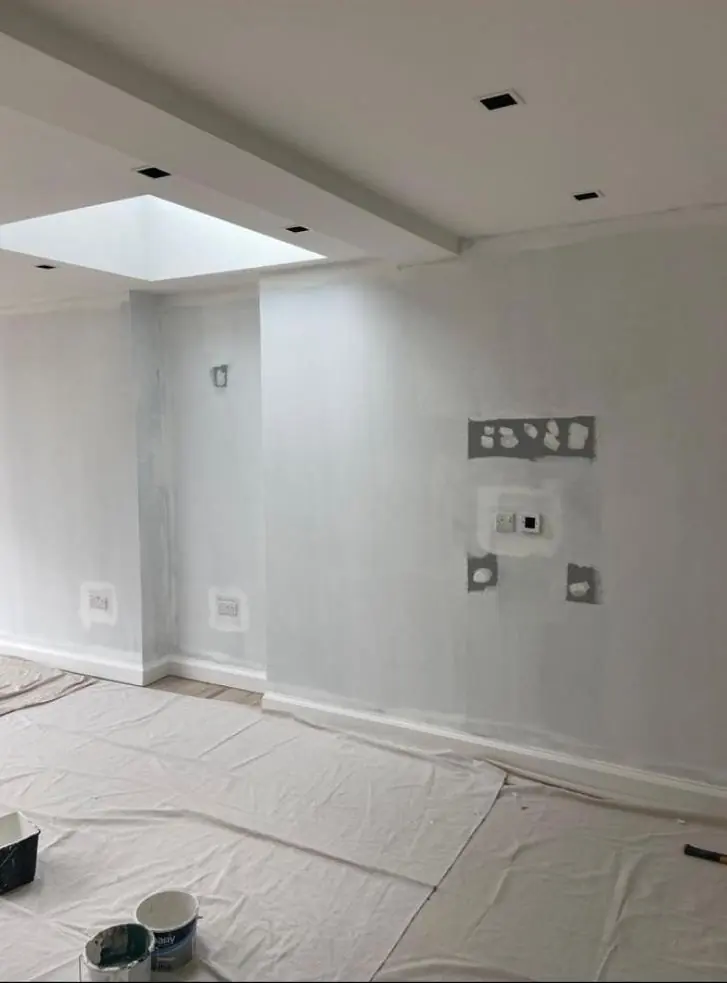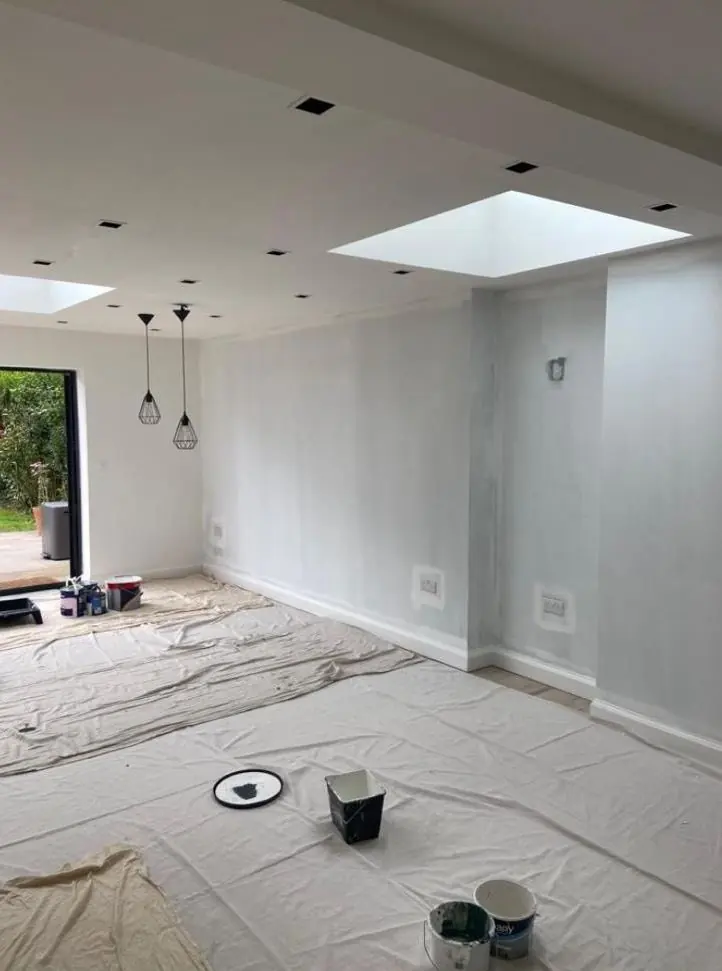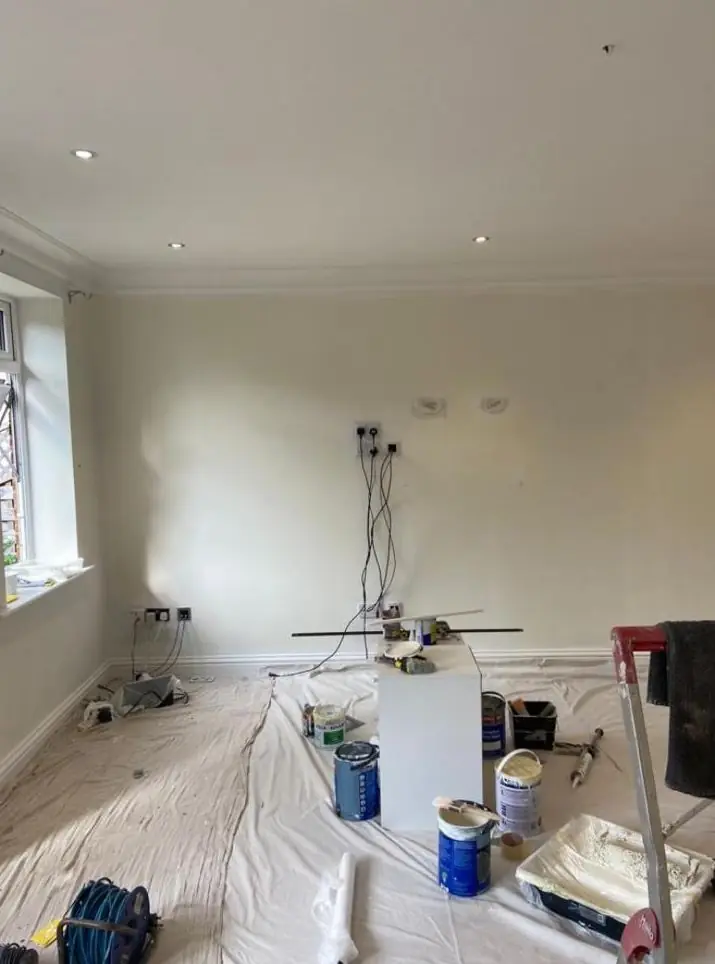
Dean decorates new plaster in Wollaston, from re-skimmed rooms and extensions to newly built homes, working from Northampton about 9.6 miles to the west. Each job starts with a drying check and a breathable mist coat before any colour goes on.
Where the new plaster is in Wollaston
The Wollaston Neighbourhood Plan 2011-2031 planned for 160 new homes. The biggest allocation, under Policy HA1, is about 80 homes on Land East of Hookhams Path. There are also small, low-density plots at 190 and 196 Hinwick Road. Homes like these come with fresh plaster on every wall and ceiling. It often goes through a first season of drying and settling, which shows up as hairline cracks at corners and where ceilings meet walls.
The other source of new plaster is the existing stock. With three-quarters of homes owner-occupied and most of them three bedrooms or more, some owners extend or re-skim rather than move. In the old village, that can mean a new room built against a cottage that has stood since the 1700s.
When a new extension meets an old limestone wall
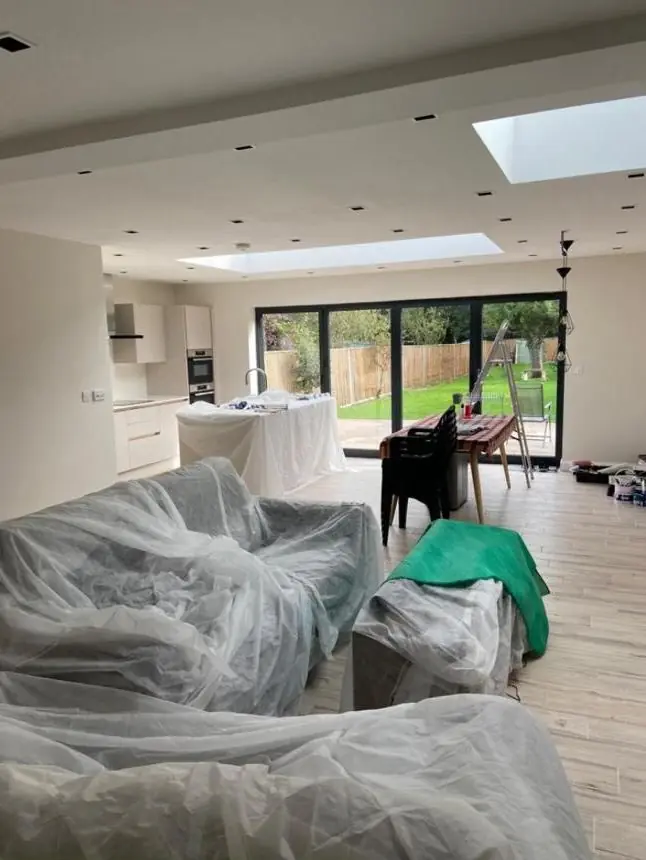
Many of Wollaston’s older houses are regular coursed limestone or lias, with lime-based plaster inside. A modern extension is usually block or stud with gypsum plaster. The two behave differently. Old solid walls need to let moisture out, while a new gypsum skim simply needs to dry and then be sealed.
Where the old and new meet, Dean pays attention to three things:
- The joint. The line where new plaster butts the original wall is where cracks appear first. It is filled and flexibly sealed after the mist coat, not before.
- The paint on the old side. If the original wall is lime plaster, it should keep a breathable paint rather than the vinyl emulsion used on the new skim. One continuous colour can still be achieved across both.
- Damp readings. A patch on an old wall that is still darker a few weeks on may be the old wall, not the new plaster, and it needs a different answer.
Drying, mist coat, snagging, finish
| Stage | What it involves on a Wollaston job |
|---|---|
| Drying check | Every wall checked for an even, pale colour. North-facing rooms and rooms against old solid walls may lag behind. |
| Mist coat | Watered-down breathable matt to seal and key the plaster. Specialist contract matts are used where the builder needs a quicker turnaround. |
| Snagging | Cracks, trowel marks and dings that the mist coat shows up are filled, sanded and caulked. |
| Finish coats | Two coats on walls and ceilings, plus primer and top coats on new MDF skirtings, architraves and doors. |
On a new home near Hookhams Path, the first winter of heating can open small cracks even after a careful job. If you are moving in, it is often worth living with a contract matt for a year and then decorating properly once the house has settled.
Ceilings deserve a mention. Where an extension has a vaulted roof or roof lantern, a new plastered upstand around a lantern needs a tower or podium rather than a stepladder. That is priced into the visit, not added later.
Fitting in with builders and site access
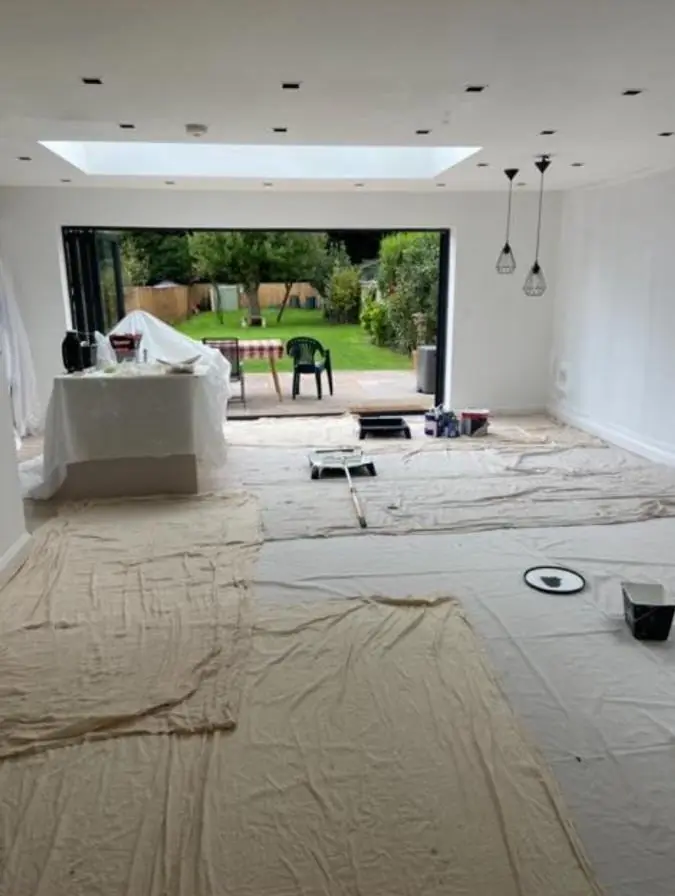
We can follow straight on from a plasterer or builder, so dates matter. Dean will ask when the plaster was finished and what the heating is doing, and he will not mist coat a wall that is still dark. Lorries for the industrial estate share Hookhams Path with the school run, so deliveries and parking on a new-build plot need planning, especially at school times.
For the full method, see our new plaster and extension painting page and the mist coat guide. Other services in the village are listed on our Wollaston page.
Last updated by Dean, DH Painter & Decorator.