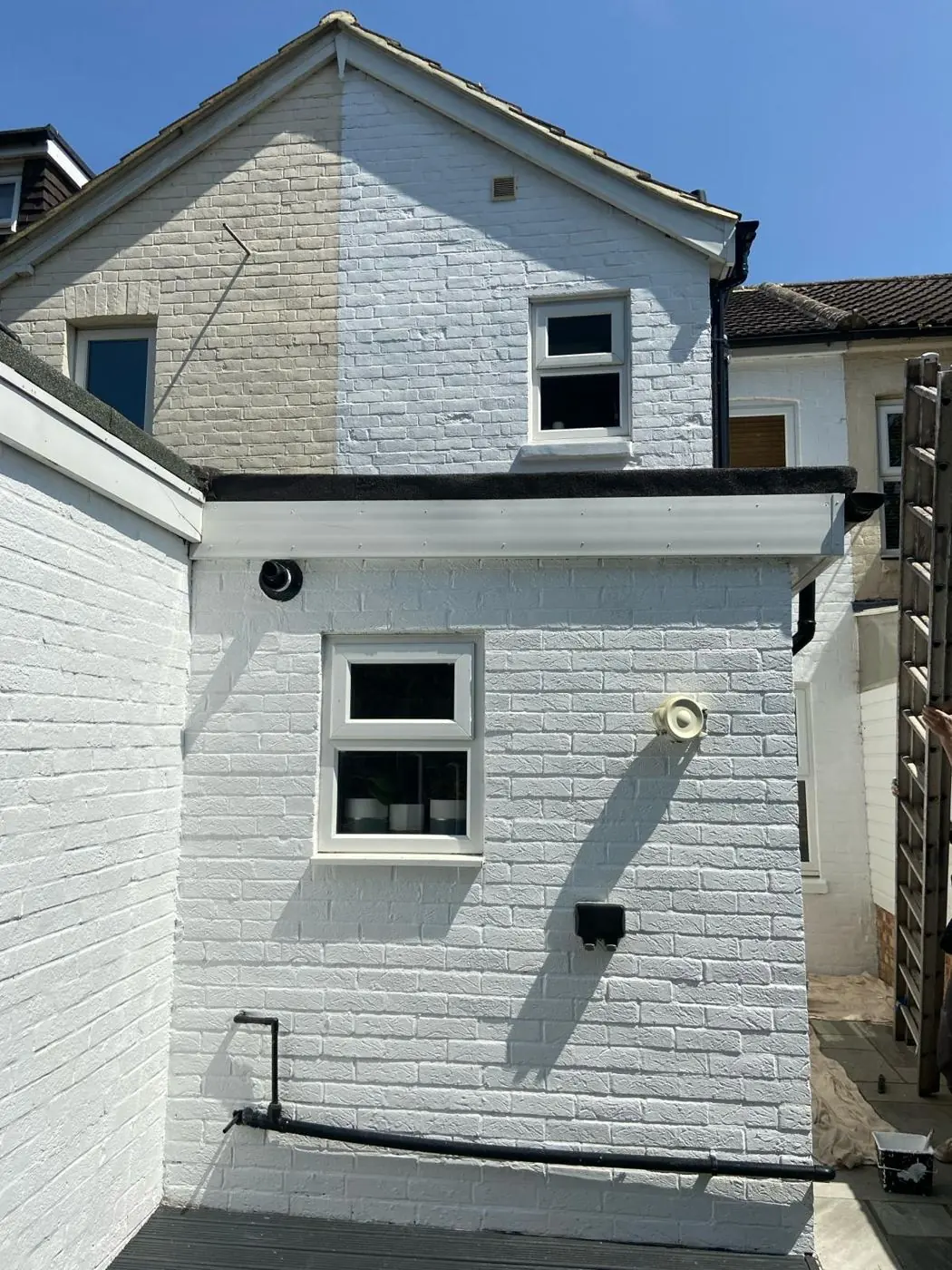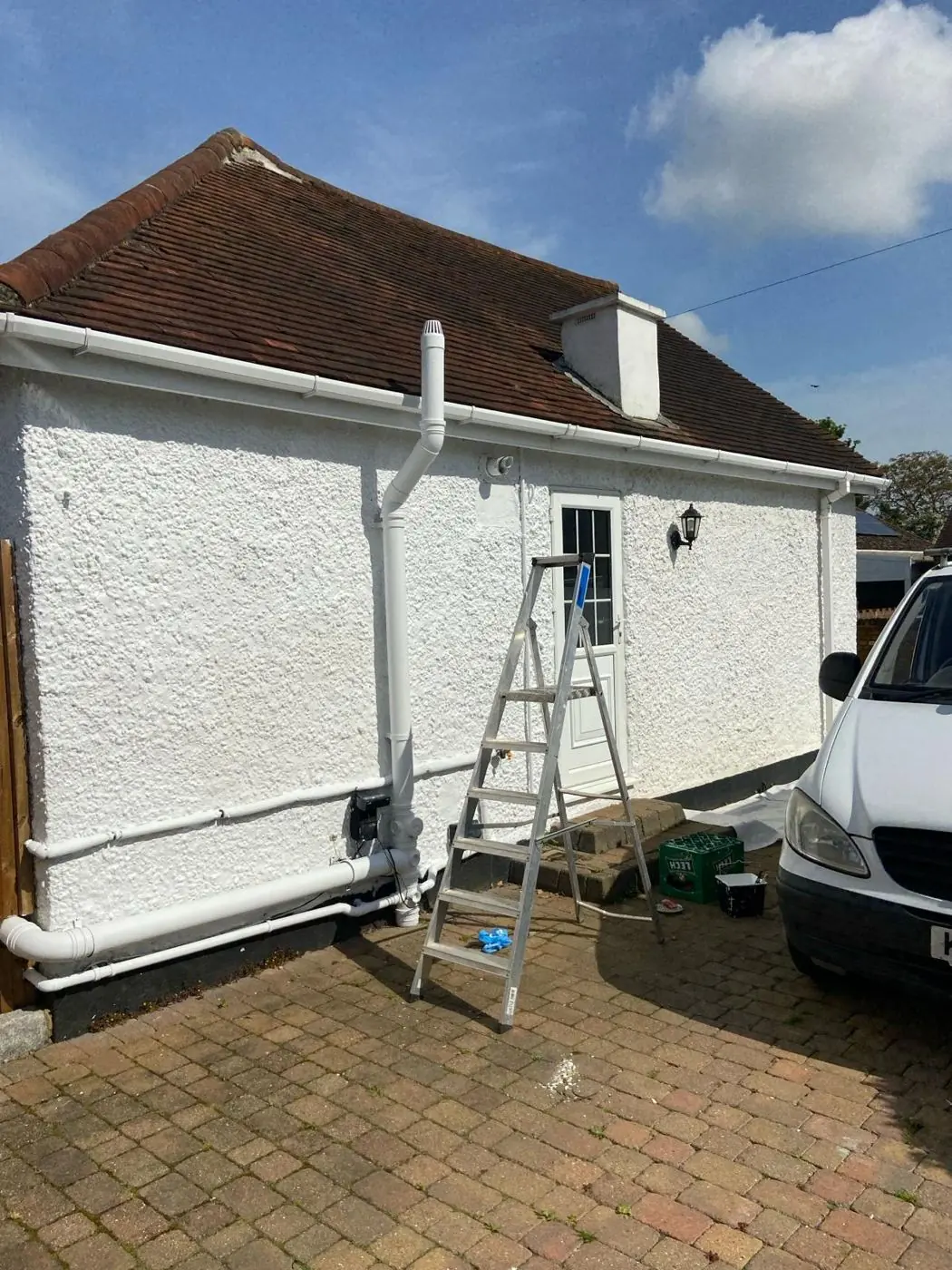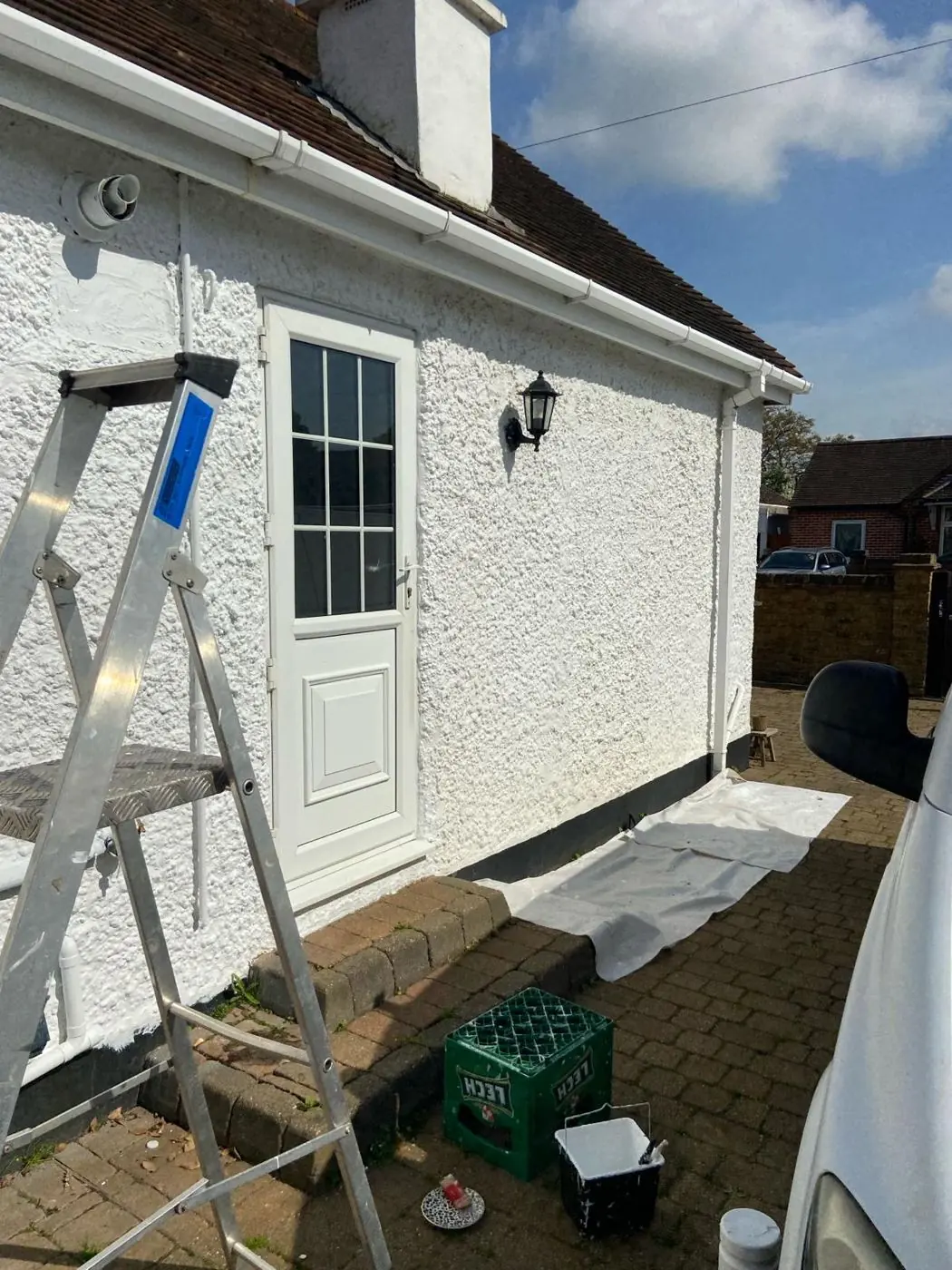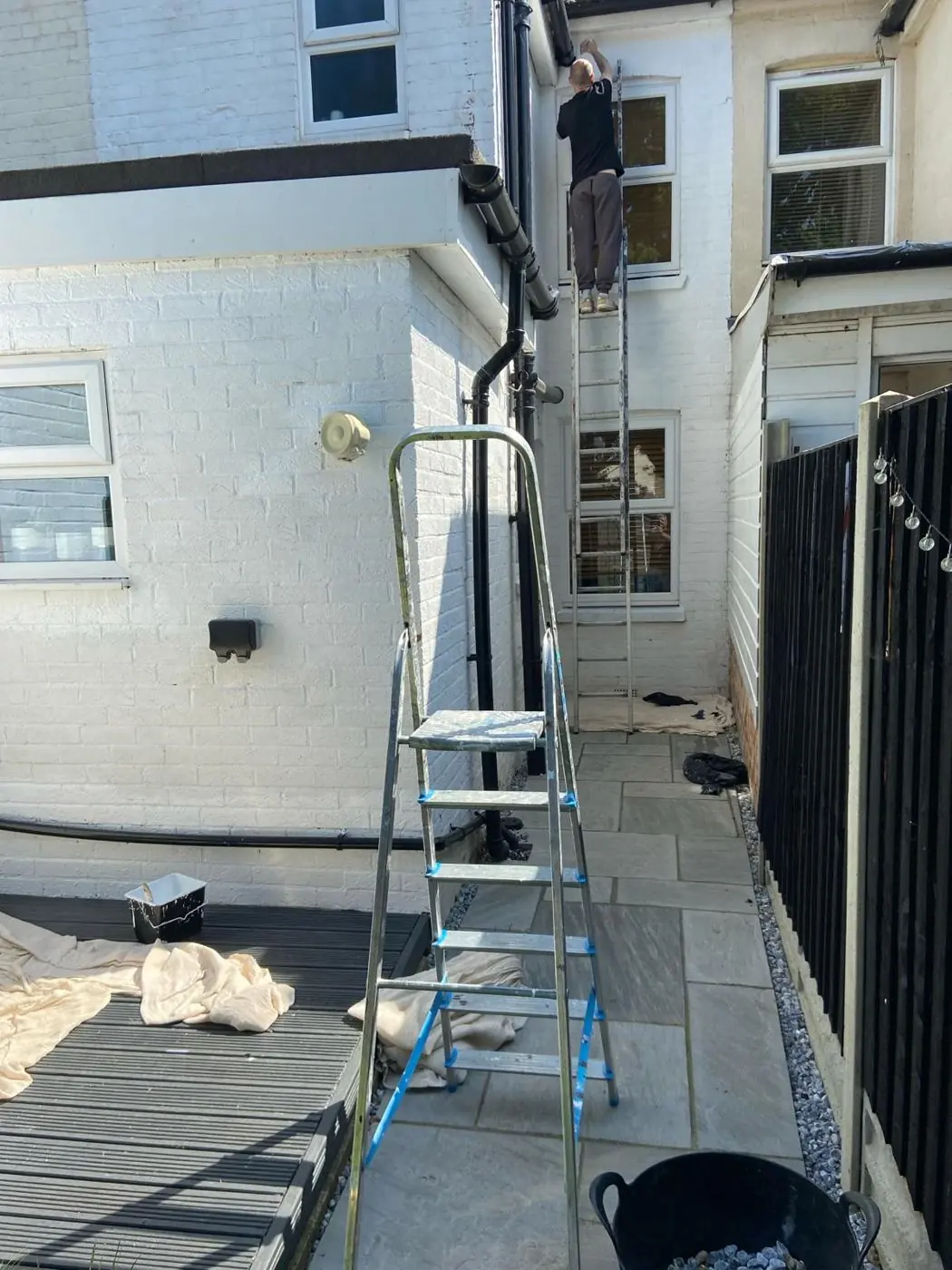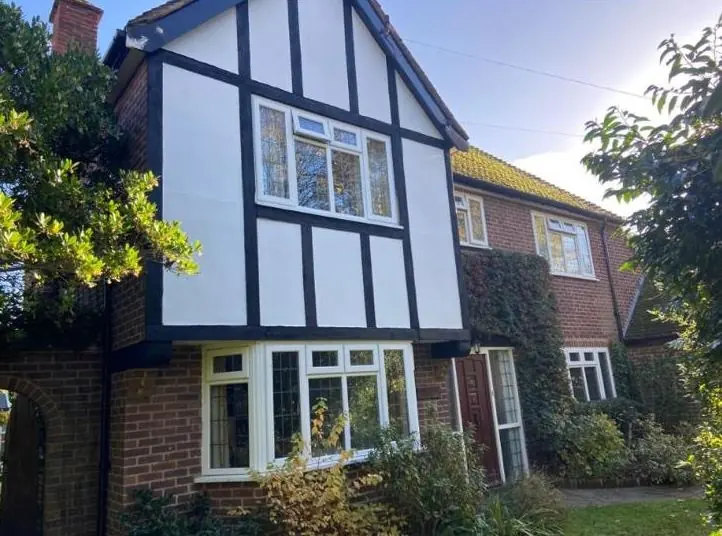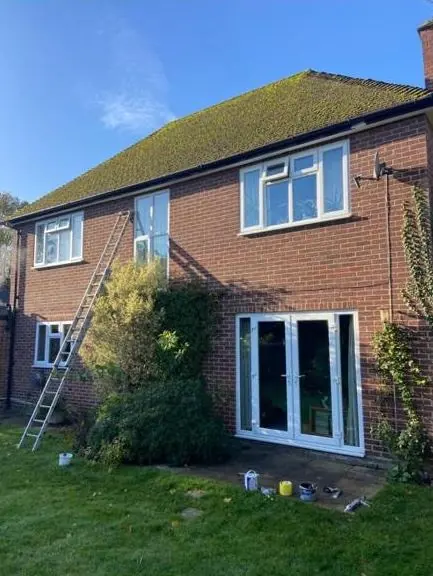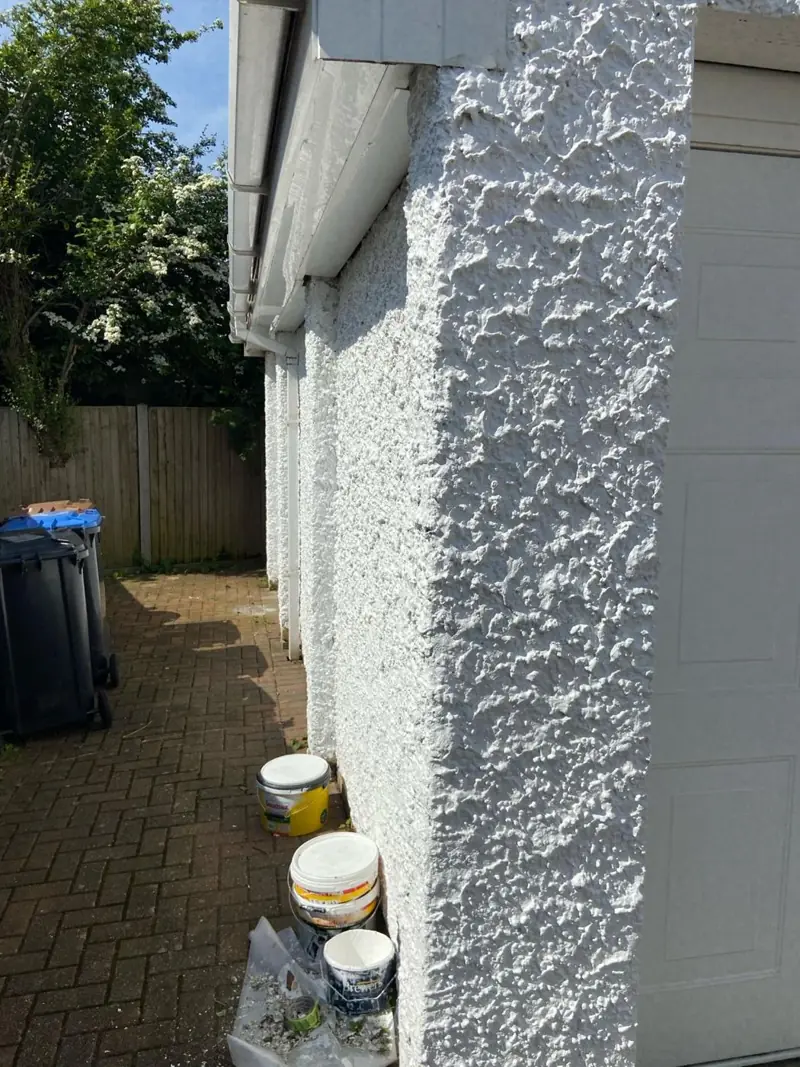
DH Painter & Decorator paints timber fascias, soffits, gutters and downpipes in Wollaston, NN29. Dean covers the village from Northampton, a 9.6-mile run east, and checks every board for rot before quoting a repaint.
Why rooflines in Wollaston weather quickly
Wollaston’s houses stand 50-80 m up, the village looking west over the Nene valley with the open East Northamptonshire Claylands on the other side. There is little to break the wind on either flank. Fascia boards are the first thing rain hits after it leaves the roof, and on a hilltop that rain often arrives sideways. On houses facing west across the valley, the boards, the soffit edges and the gutter brackets tend to show cracked paint and grey timber sooner than the rest of the house.
The fix is not complicated, but the order matters. Soft timber is found and dealt with before any paint goes on, then the boards are scraped, primed where bare, undercoated and finished. The full step-by-step is on our main fascia and soffit painting page.
Estate houses, bungalows and the newer closes
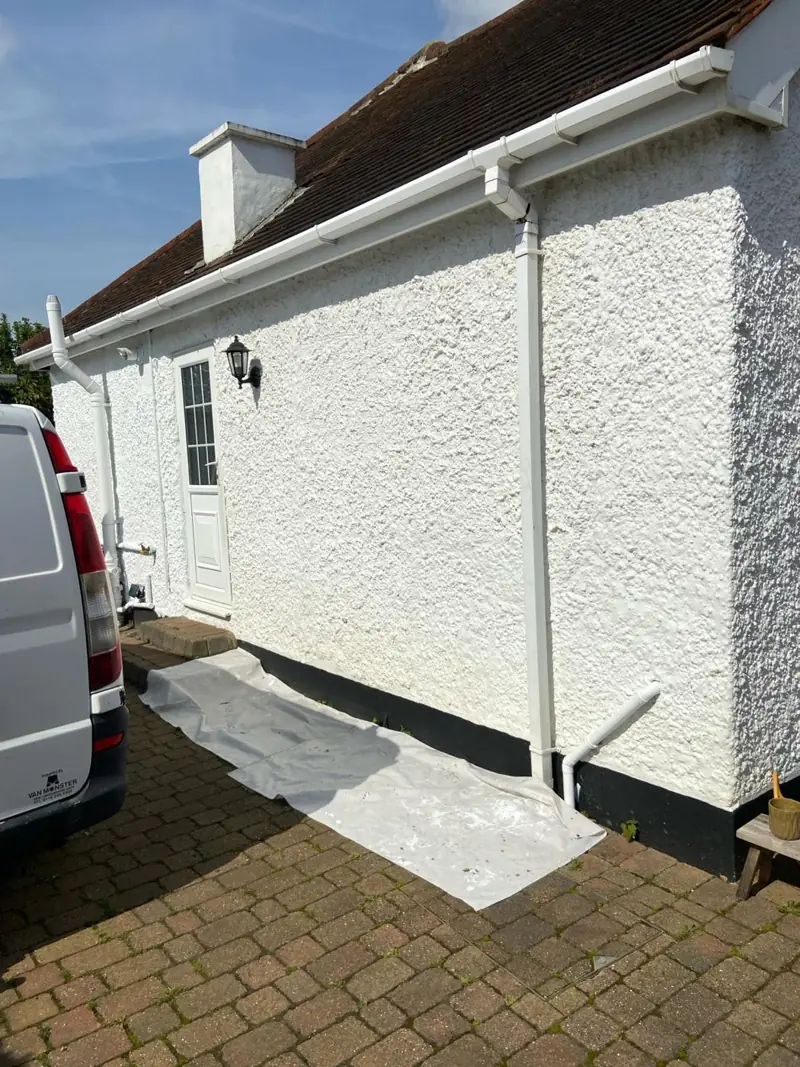
A good share of the painted fascias in the village belong to its 20th-century housing, where The Pyghtles and York Road sit alongside other closes that mix bungalows with two-storey houses. Painted timber on these homes usually means a familiar pattern of failure:
- paint split along the bottom edge of the fascia where gutter water has dripped behind it
- soffit boards blistering near the corners where ventilation is poor
- bare timber at board joints where old filler has dropped out
- rust bleeding from gutter brackets onto the face of the board
Bungalows can often be done from ladders alone, which keeps the job short. Two-storey gable ends on the exposed side may need a tower, and we will say which at the quote.
Older cottages: brick eaves, thatch and no fascia at all
Many of Wollaston’s 18th-century cottages were never built with a fascia board in the modern sense. 10 Hickmire, for instance, has a raised roof finished with brick eaves, and thatched homes such as 84 High Street and Stony Thatch on Church Lane have no painted roofline to speak of. Where an older house has had timber added at the eaves during later repairs, that timber is often tucked under brick or stone and hard to inspect. We check it for rot carefully, because a board that looks sound on its face can be soft where it meets the wall.
On thatched properties, any painting near the eaves is done by hand with scrapers and sandpaper, with no heat guns. Many of these cottages are listed, so a change in colour on visible timber may need listed building consent. Like-for-like repainting avoids that question.
uPVC boards, gutters and downpipes
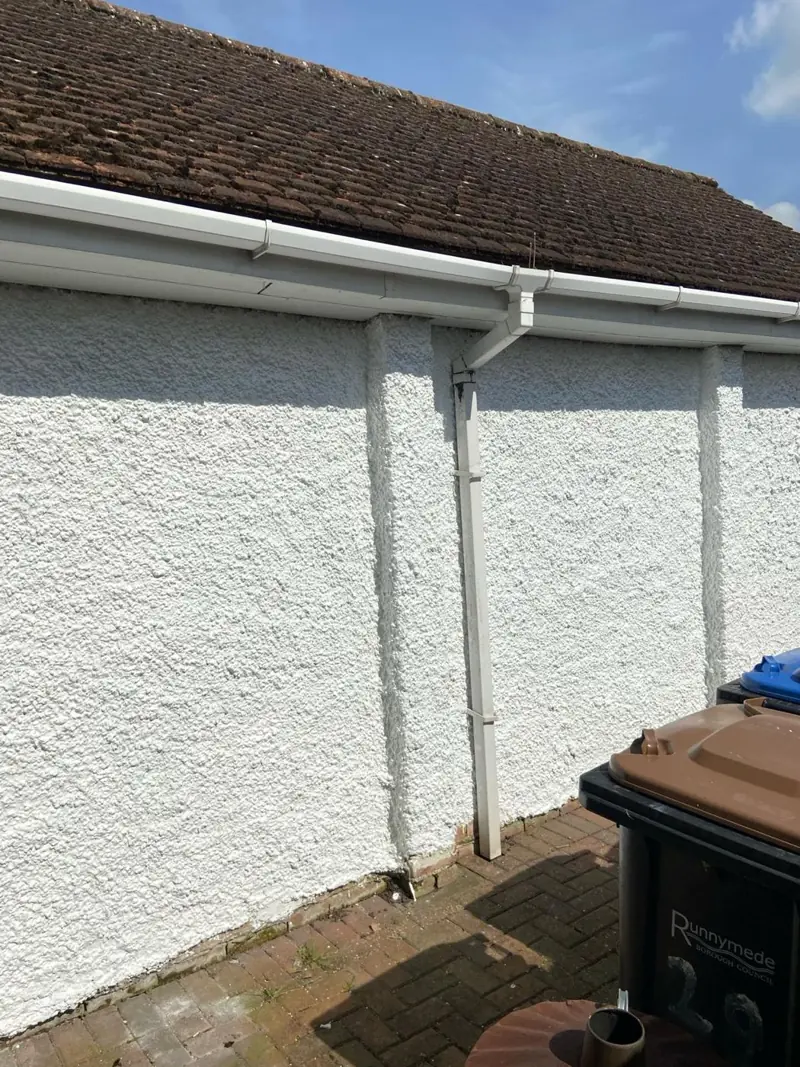
Some later homes have uPVC fascias and soffits. They can be cleaned and painted with a suitable primer system if they have discoloured, though it is a different job from timber and we will explain the trade-offs. Gutters and downpipes are usually painted at the same time, so the roofline is one colour from eaves to ground.
Getting ladders up on narrow streets
Roofline work needs ladder footings close to the house. In the terraced streets the Neighbourhood Plan identifies as short of off-street parking, that can mean working off the pavement, and near the schools the roads fill twice a day. We plan the access so ladders are not standing on a footway at drop-off or pick-up. Read more about the village on our Wollaston area page, or see the painter and decorator cost guide for what affects the price of roofline work.
Last updated by Dean, DH Painter & Decorator.