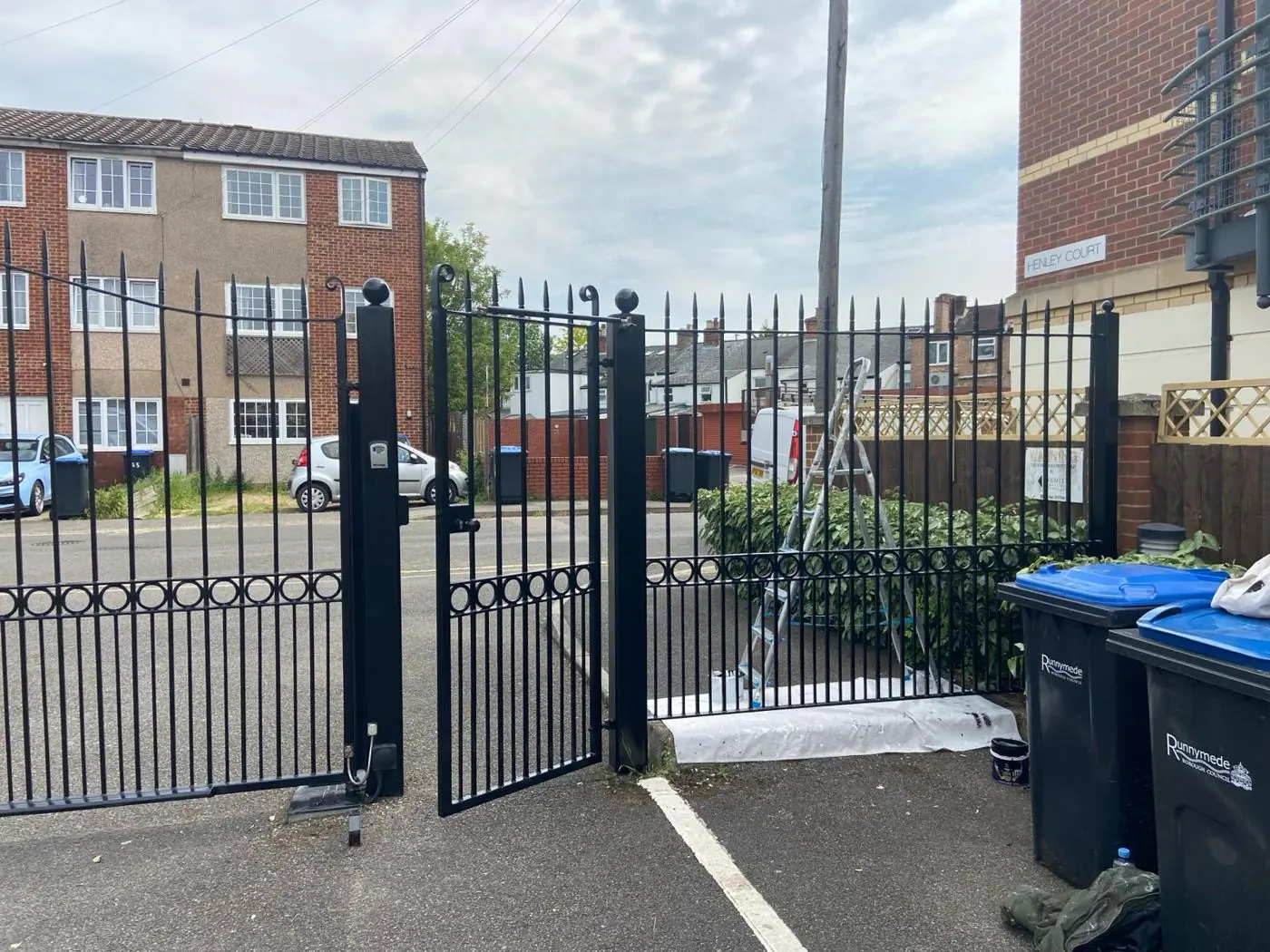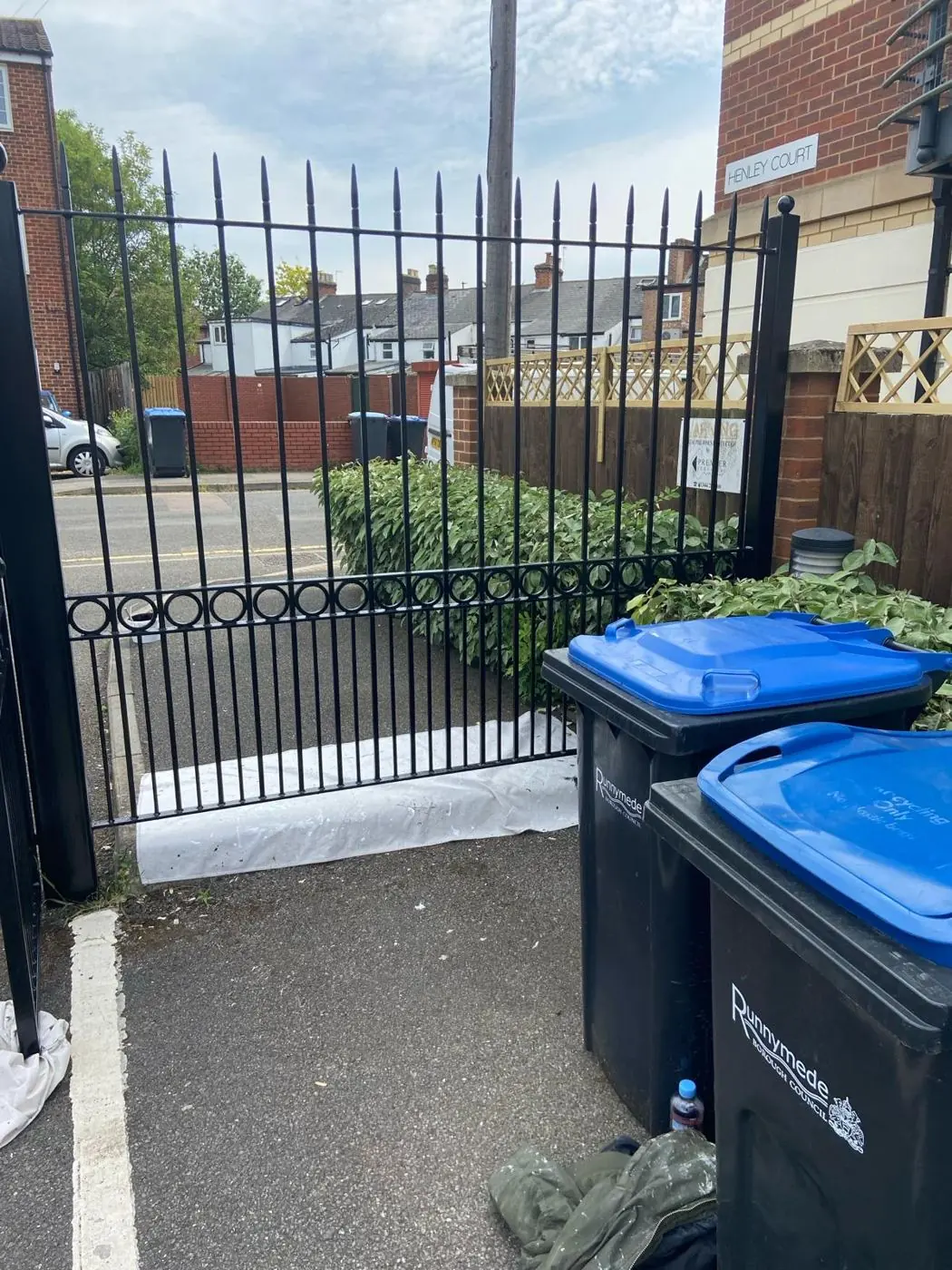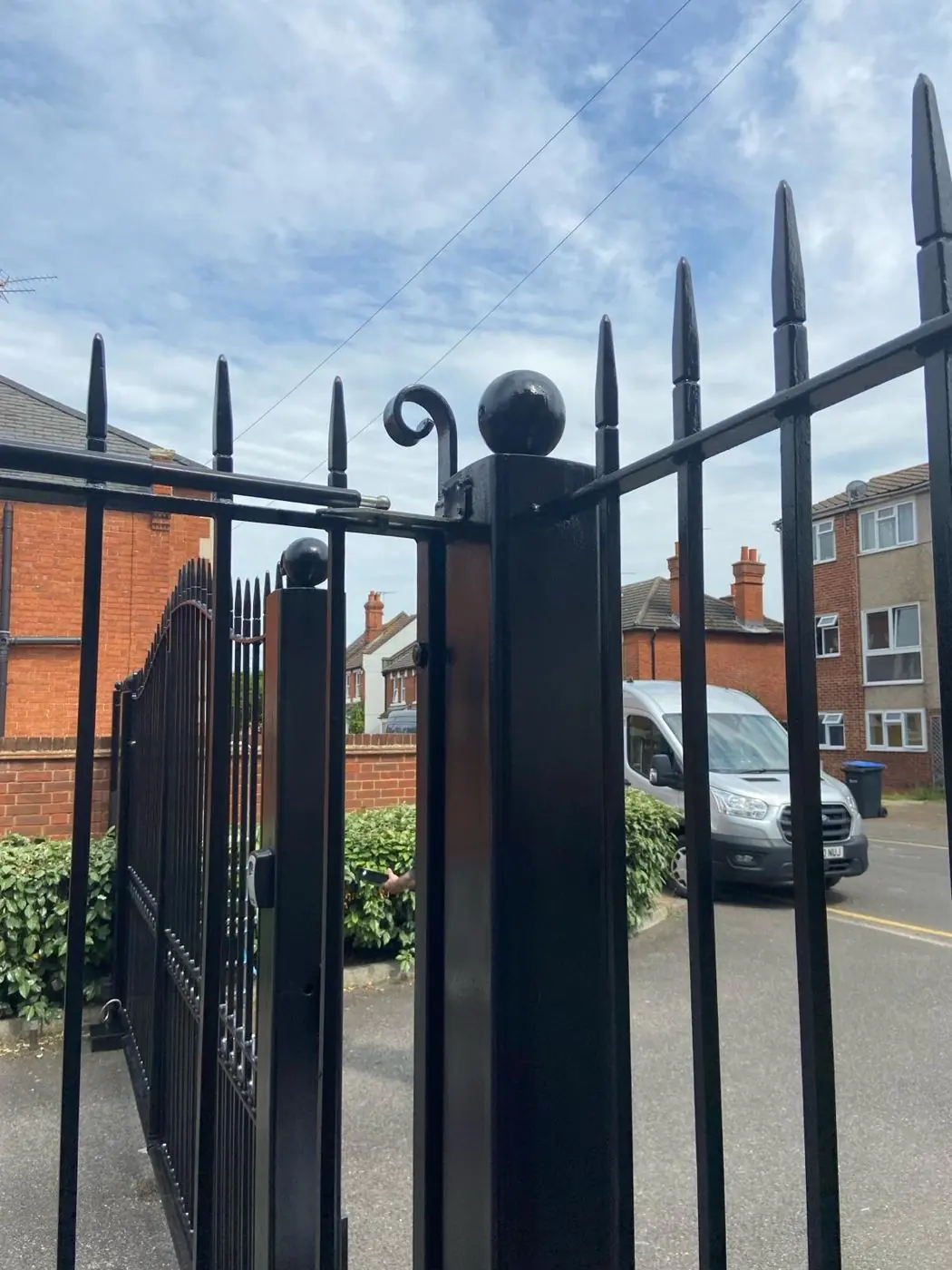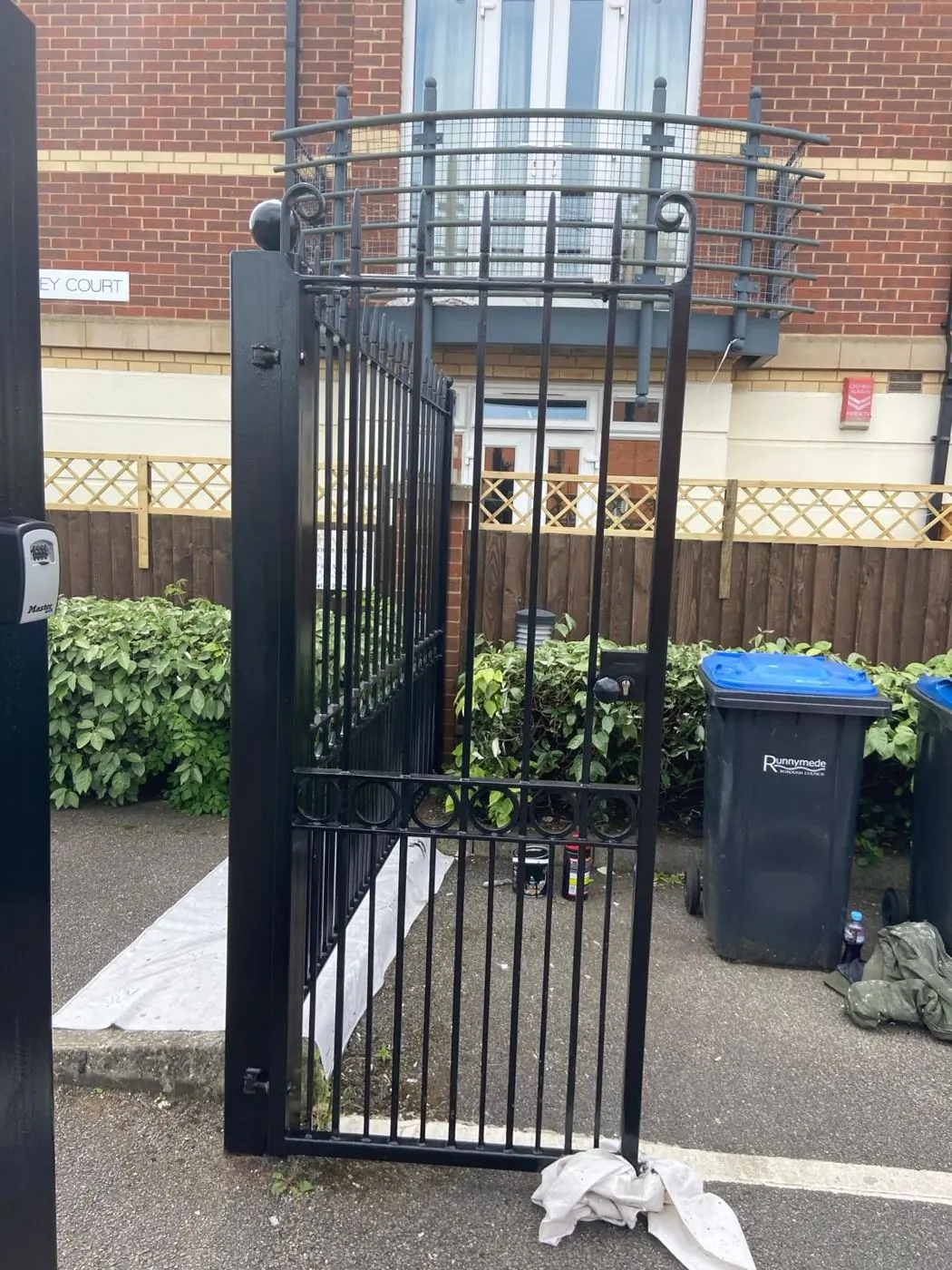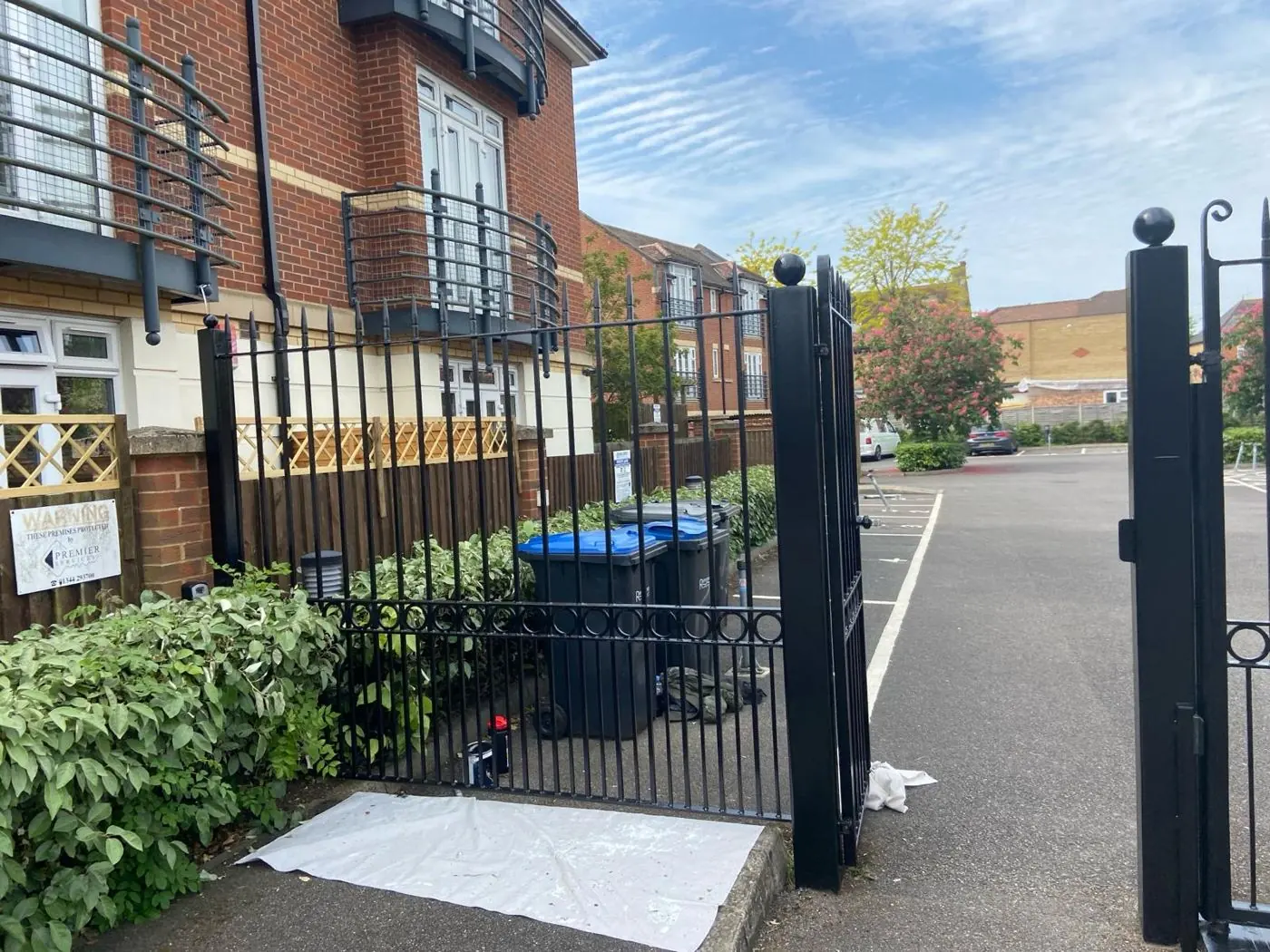
DH Painter & Decorator repaints metal gates, railings and ironwork in Wollaston, NN29, around 9.6 miles east of our Northampton base. Dean identifies the metal, takes rust back to sound surface and uses primers suited to it.
Ironwork in a village of stone
Wollaston’s oldest streets are built of coursed limestone and lias, and where there is ironwork it is often set straight into that stone. Churchyard walls and older properties carry railings and gates, and the village’s grandest building, Wollaston Hall, has a cast-iron verandah listed as part of its Grade II description. These are good examples of how iron and stone meet in the village. When iron rusts, it expands, and where a bar is leaded or mortared into a stone coping, that swelling can crack the stone around it. Keeping the paint intact at the base of each upright is the simplest way to protect the wall as well as the metal.
The general process of wire brushing, rust conversion, priming and finishing is set out on our main metal gate and railing painting page. Here are the things that change in Wollaston.
Cast iron, wrought iron or mild steel?
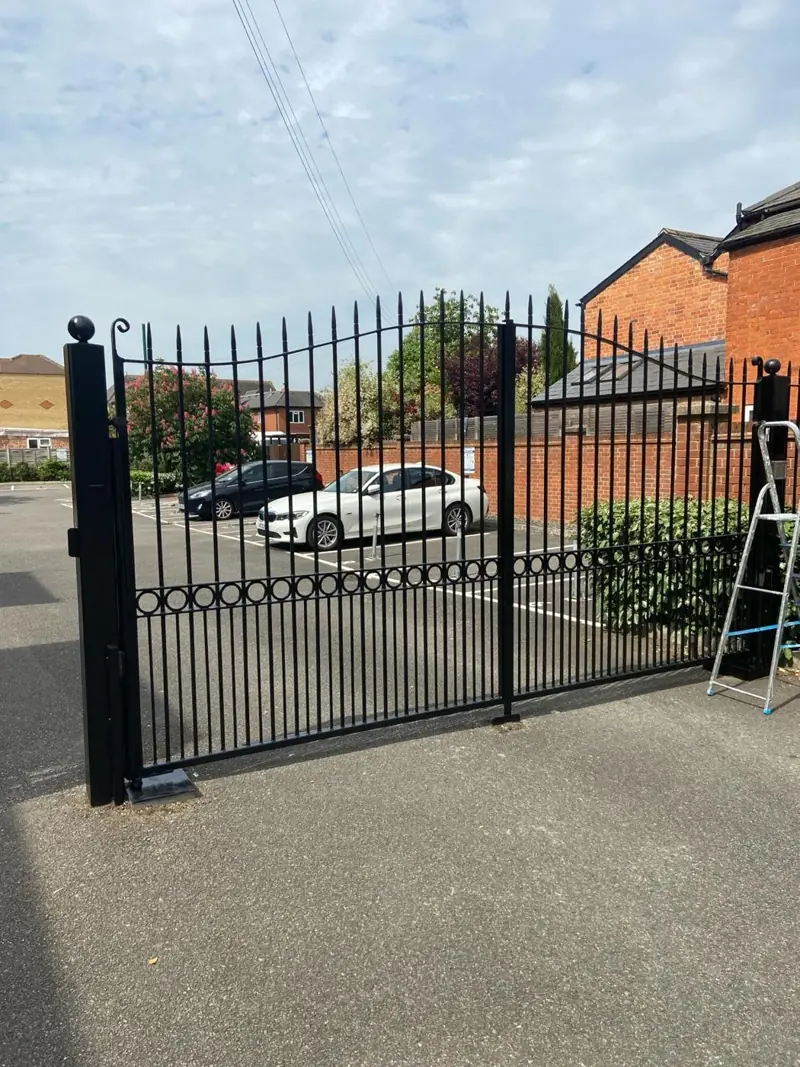
Older ironwork in the conservation area may be cast iron, which is brittle, or wrought iron, which is softer and fibrous. Both have often had decades of paint layered on them. Cast components such as finials and decorative panels can crack under heavy impact, so we clean them with hand tools and abrasive pads rather than hammering at rust. Old layers on pre-1960s ironwork may contain lead, so we keep dust down by working wet where we can and collecting debris rather than letting it fall onto paths or into soil.
Newer gates on the 20th-century streets and recent builds are usually mild steel, sometimes galvanised. Galvanised steel needs a dedicated primer, because ordinary paint does not grip zinc and will peel off in sheets.
Exposure plays its part as well. At 50 to 80 metres up on clay soil, Wollaston’s ironwork sits in wind and rain, and the bases of railings stay damp where they meet the ground or a wall top. Rust usually starts at:
- the foot of each bar where water sits in the fixing
- hinge pins and latches that have been knocked bare by use
- the top rail, where water pools on a flat surface
- welds and joints on steel gates
We plan painting for dry, settled spells, because metal primers and top coats need a clean, dry surface well above the dew point.
Factories, the industrial estate and Hinwick Road
Wollaston is not only cottages. The Hinwick Road industrial estate, the Scott Bader complex and the Dr Martens factory on Cobbs Lane, along with businesses at Cringle Farm and off Doddington Road, have perimeter fencing, gates and handrails that need maintaining. Work on business premises is planned around working hours. On Cobbs Lane and Hookhams Path, which carry HGV traffic, we agree safe working positions and keep gateways clear. Larger commercial jobs are covered on our commercial painting page.
Colours near listed buildings
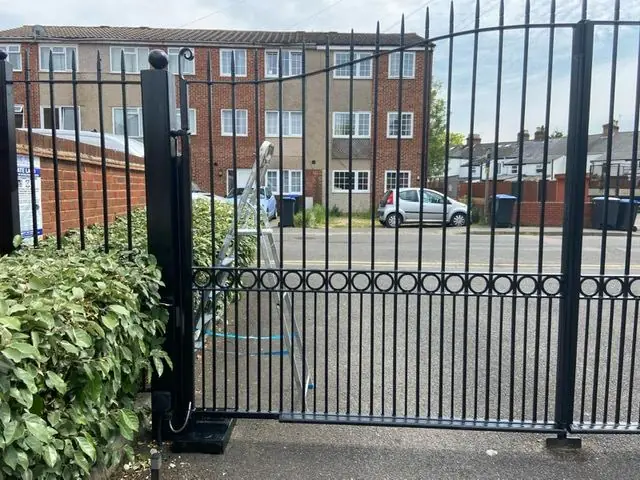
Black is the usual colour for village railings, and it suits the limestone. If the ironwork belongs to a listed building, ask the council’s conservation officer before choosing something different, as altering it may need consent. Deep greens and dark greys are traditional alternatives on some older properties, and a satin or eggshell metal finish often looks more in keeping on old ironwork than high gloss.
Moving parts and everyday use
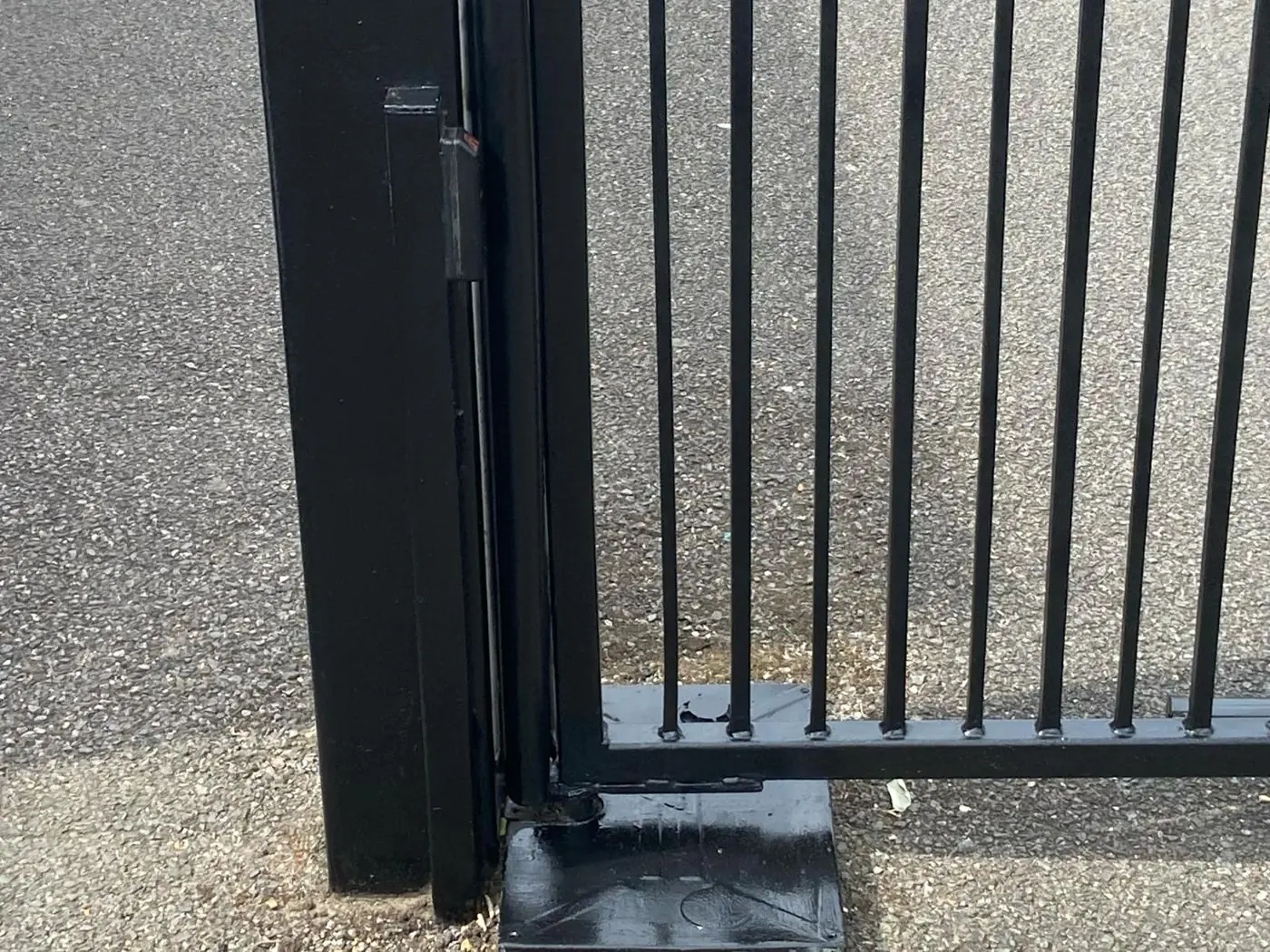
A gate that is opened every day wears its paint at the latch, the hinge knuckles and the closing edge of the frame. Before repainting we free off stiff hinges, check that the gate swings clear of the ground, and make sure latches close without metal-on-metal scraping, because a gate that grinds will strip new paint within weeks. Hinge pins are kept free of thick paint so they still turn. If a gate has dropped or a post has rusted through at ground level, that is a job for a fabricator before any painting. Read about the wider village on our Wollaston area page.
Last updated by Dean, DH Painter & Decorator.