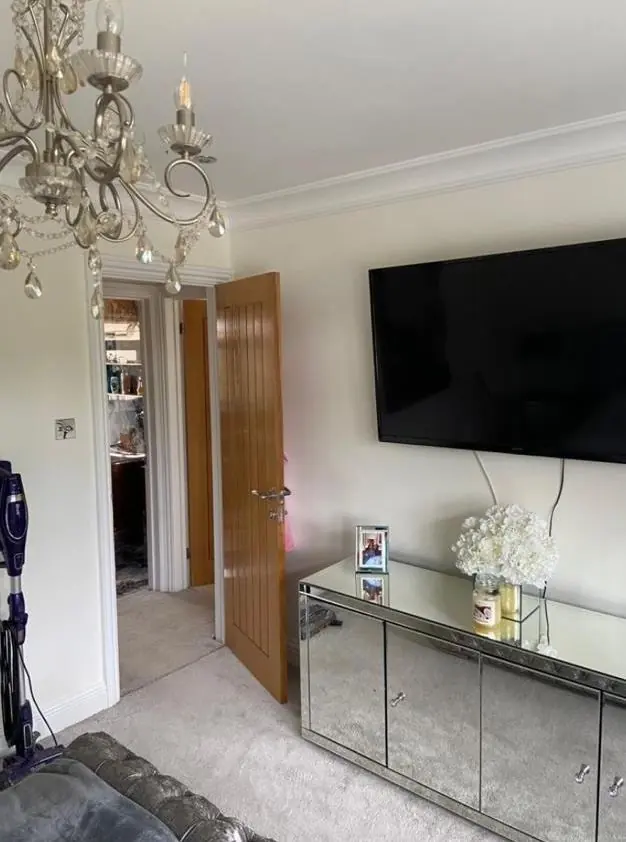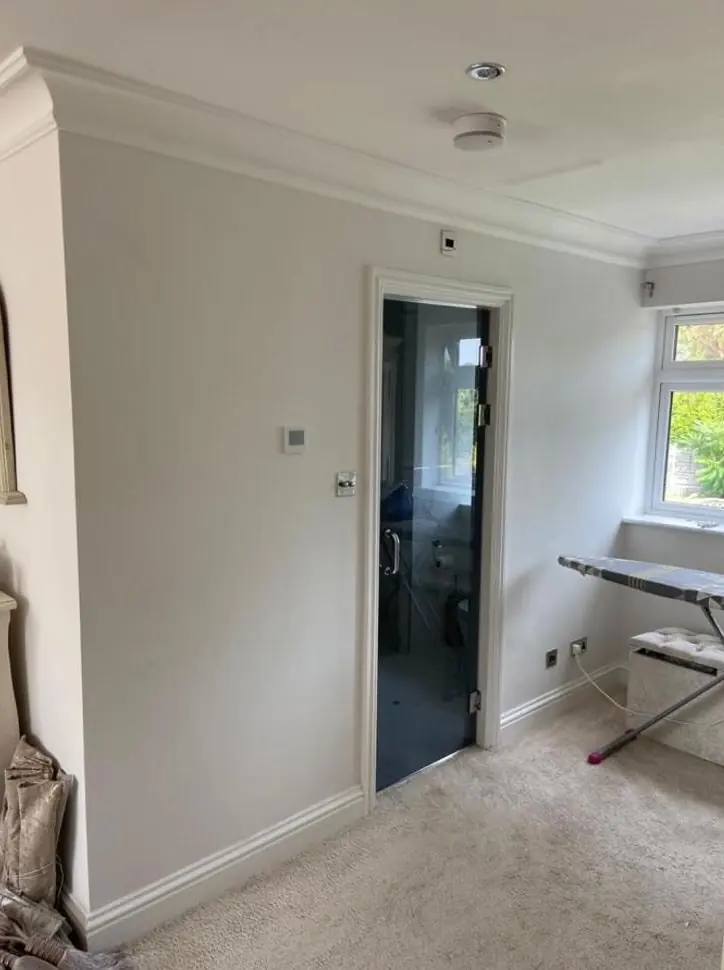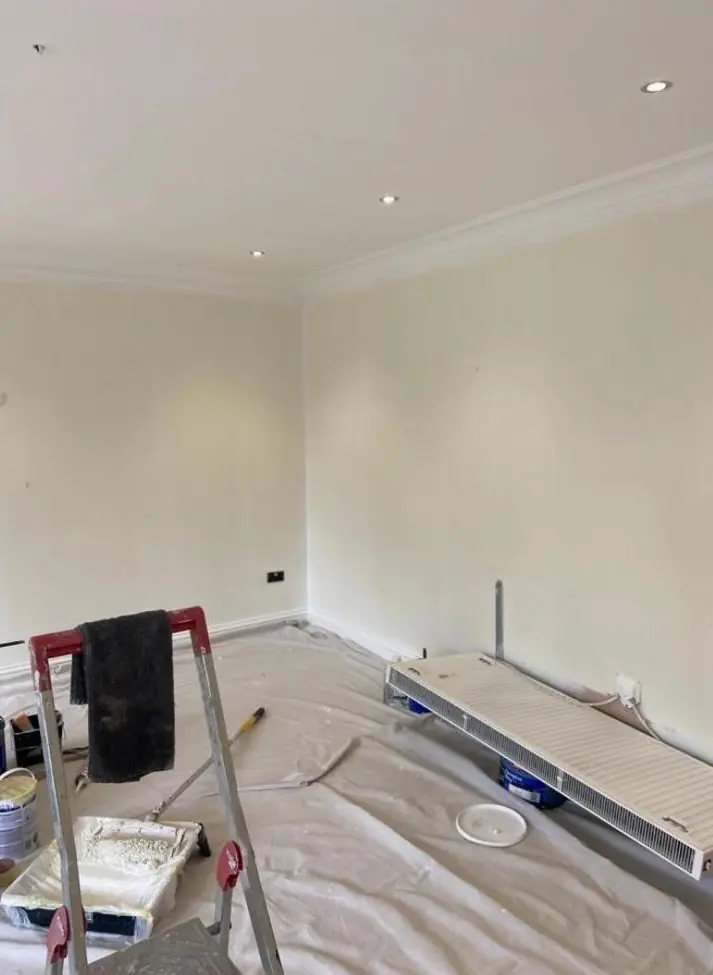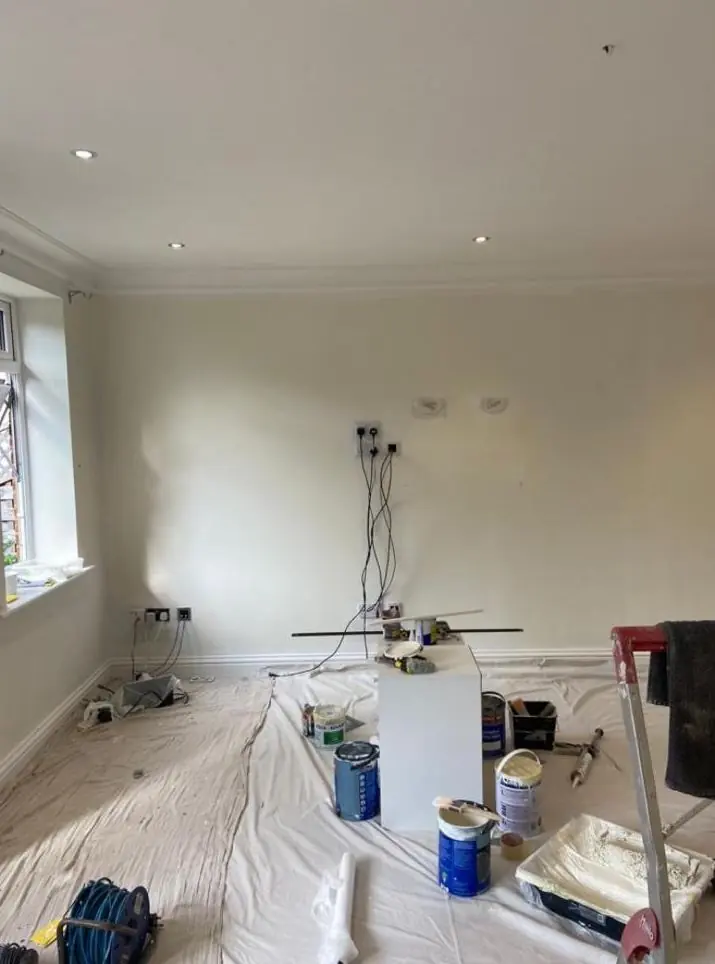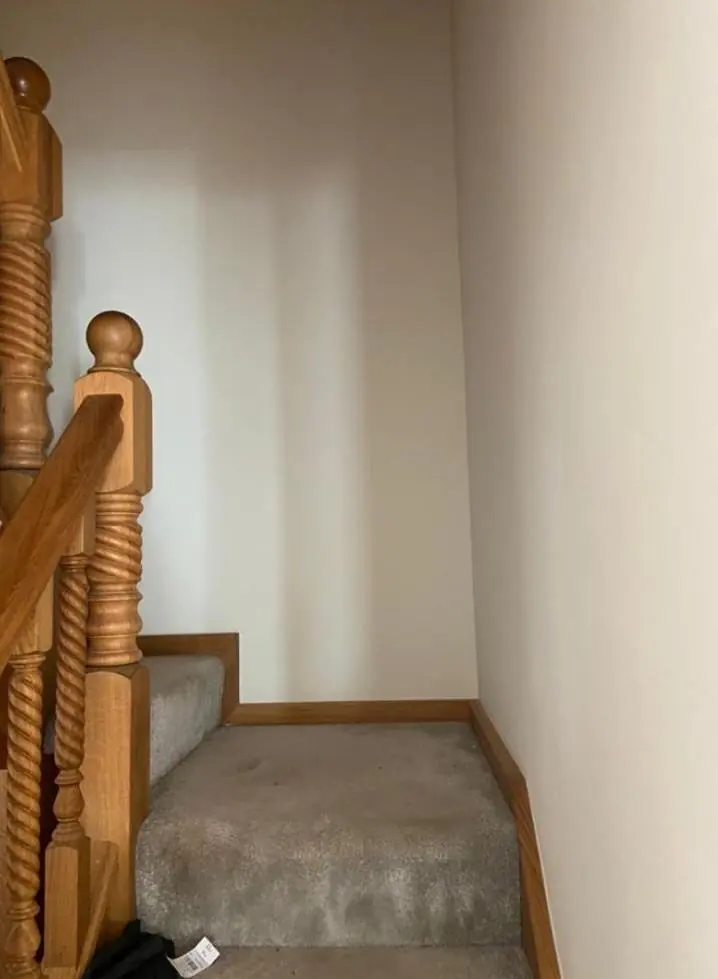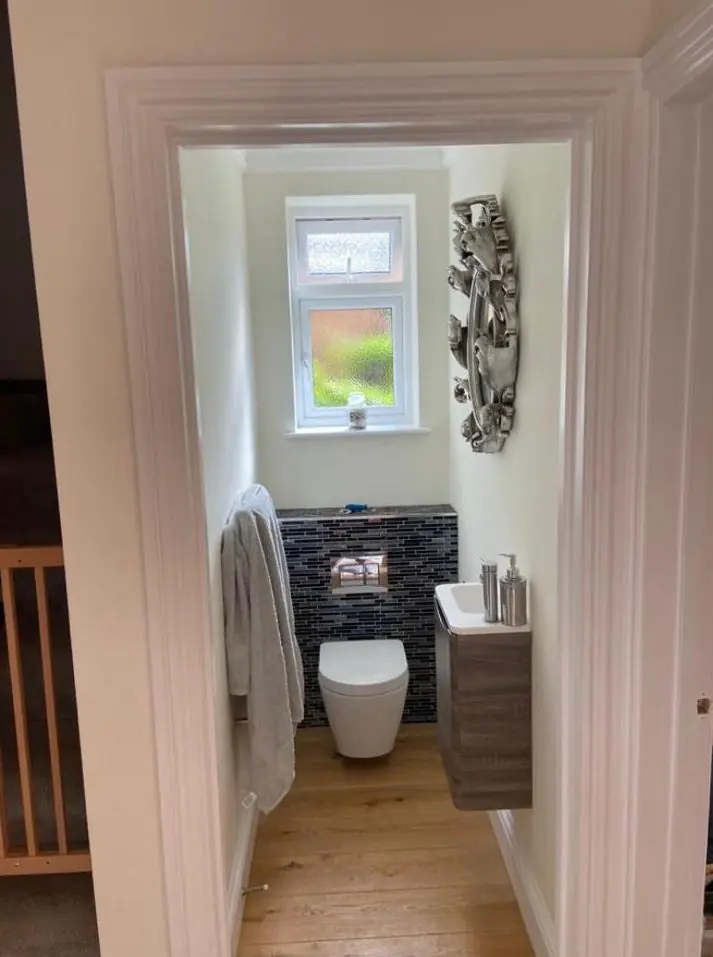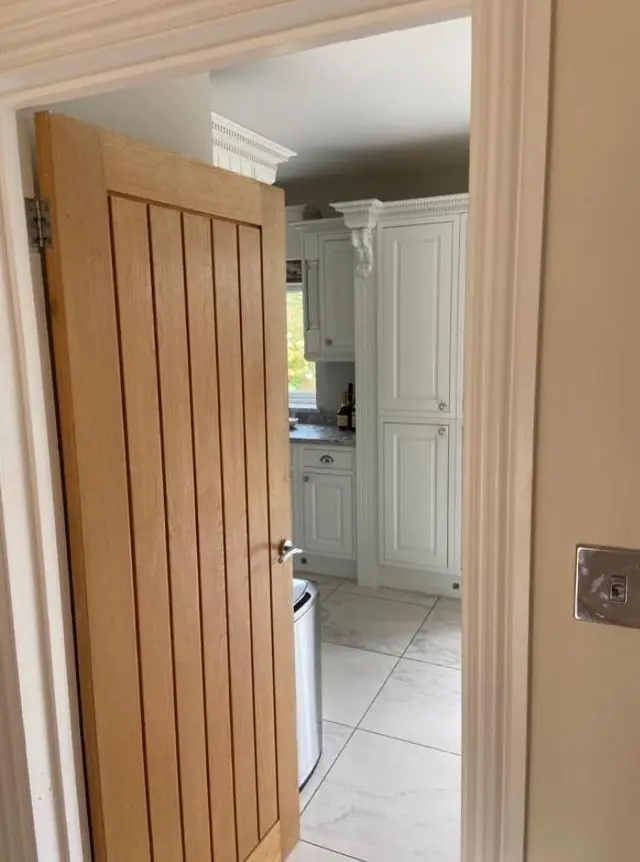
We carry out decorative paint finishes in Wollaston, a village in NN29 about 9.6 miles east of Northampton town centre. Dean picks out mouldings, finishes panelled doors and surrounds in traditional sheens, and paints feature walls and colour splits in newer homes.
Mouldings, cornices and staircases in the older houses
Wollaston’s larger historic buildings give a sense of the decorative detail found in the older parts of the village. Wollaston Hall, now the head office of Scott Bader, has an 18th-century staircase and plaster ceilings, and its outside has moulded stone architraves and cornices. Smaller houses rarely have anything as grand, but early 19th-century homes on the High Street and London Road may still have cornices, ceiling roses, picture rails or panelled doors.
Picking those features out is slow, careful work. A cornice clogged with decades of distemper and emulsion loses its sharp lines, so the first step is often to clean out the worst build-up before repainting. We then cut the moulding in by hand with a fine brush, sometimes in a slightly different tone from the ceiling so the profile shows. On an old ceiling, the paint has to suit what is already there. Distemper won’t take most modern emulsions without lifting, so we test before we commit.
Panelled doors and reeded surrounds
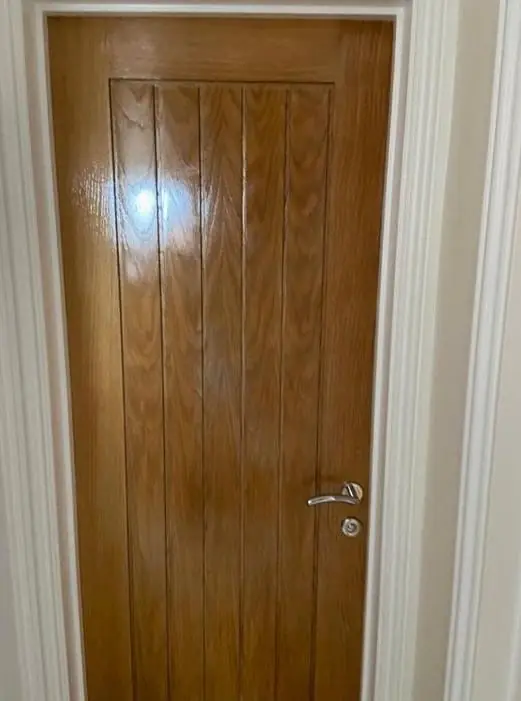
Listing descriptions for the High Street mention a reeded surround framing a six-panel door at the former Lloyds Bank and No. 50, and moulded or reeded wooden surrounds on other early 19th-century houses. Inside, period homes often have four- or six-panel doors with moulded edges.
These doors suit a traditional oil-based or high-quality satin finish laid off with a brush in the right order: mouldings first, then panels, then the muntins and rails, and stiles last. Done this way, brush marks run with the grain of each piece and the edges stay crisp. On reeded surrounds, the paint has to be thin enough not to fill the reeds, so it often takes three light coats rather than two heavy ones. Our page on doors, skirtings and woodwork covers everyday woodwork in more detail.
Does a paint effect suit a cottage?
The late 17th and 18th-century limestone cottages around Duck End, Hickmire and Church Lane tend to be plain inside, with small casement windows and walls that follow the stone. Heavy faux finishes such as marbling or a glossy lacquered look tend to sit badly in rooms like that. What can suit them is softer:
- a limewash-style broken colour on a chimney breast, where the slightly uneven texture fits an old wall
- a low painted dado band in a deeper colour, which also hides scuffs in a narrow cottage hallway
- boarded doors or other plain joinery painted in a traditional colour
On solid stone walls, any effect has to be done in breathable materials, for the same reason as plain paint: moisture needs to escape. If you live in a listed cottage, be cautious about changing historic surfaces, and check with the council if the work goes beyond redecoration.
Feature walls and colour splits in later homes
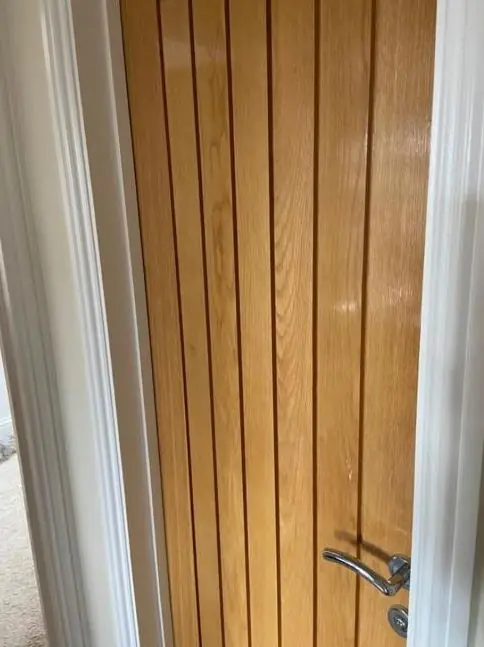
The 20th-century streets such as The Pyghtles, Neale Close and York Road, and the new homes east of Hookhams Path, have flat modern walls that suit a different kind of decorative work. Popular options include:
- two-tone walls split at dado height with a crisp painted line
- painted arches or blocks of colour behind a bed or desk
- applied MDF panelling painted in one colour with the wall, for a hall or dining room
- a colour-drenched room where walls, woodwork and ceiling share one shade
Each depends on sharp lines and good preparation underneath. You can see more examples on our main decorative finishes page, and the rest of our Wollaston services on the Wollaston area page.
Last updated by Dean, DH Painter & Decorator.