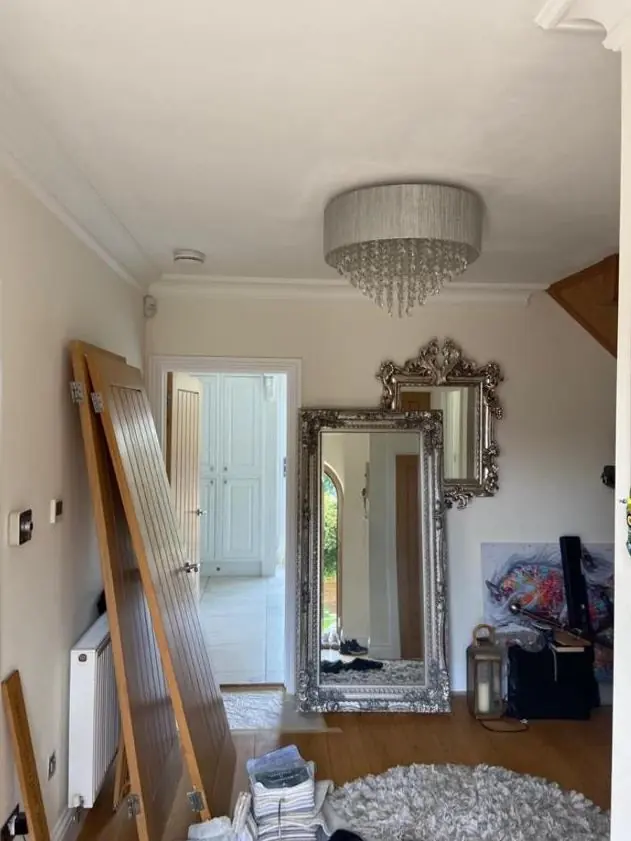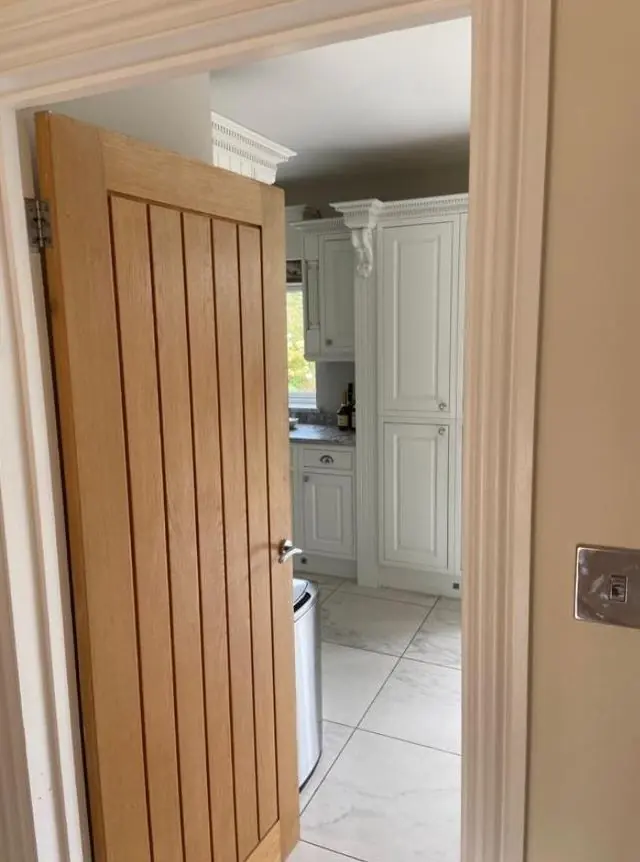
We decorate hallways, staircases and landings in Yardley Hastings, a village 7.3 miles east of our Northampton base. Dean brings access equipment small enough for tight cottage stairs and picks paints that suit solid limestone walls as well as the brick houses on the Leys and Highfield Way.
Front doors that open straight off the street
In the old part of Yardley Hastings, front doors often open directly onto the street, with the Square and narrow, enclosed Little Street as clear examples. Inside the terraced estate cottages there is often no porch or front garden at all, so the hall is the first thing the weather, the mud and the shopping bags meet. That shapes the finish. On the bottom metre of a narrow hall we would usually suggest a tougher, wipeable paint, or a dado line with something harder-wearing below it, so knocks from bikes and pushchairs can be cleaned off rather than touched up every few months.
Stairs that climb into the roof
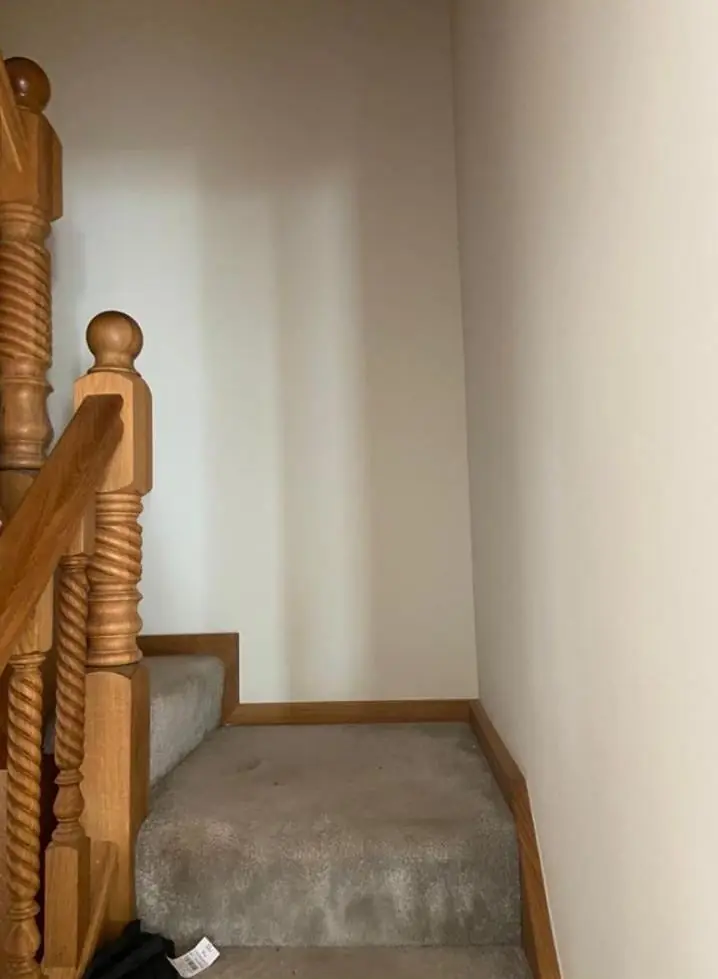
Several cottages along High Street and Little Lane have been extended into the attic, lit by gable windows or roof lights. The staircases serving those rooms tend to be steep and tight, sometimes with a turn near the top, and the stairwell wall can be higher than it looks from the hall. A standard ladder will not stand safely on a winder. We use a compact adjustable stair platform and short boards that can be set up inside a small cottage without wedging anything against the walls, and we protect each tread and the newel before work starts.
Where the stairs are boxed in with old timber or have a simple stick balustrade, we include sanding and repainting it in the quote, so the woodwork and walls are finished at the same time.
Walls of stone and lime
The older cottages are built from coursed limestone rubble, with solid walls and lime plaster inside. In a stairwell that brings two problems: the walls can hold some moisture, and they are seldom flat. Plastic-based paints can trap that moisture and blister, so we use breathable emulsions on lime plaster. If you want wallpaper on the stairs, the walls will almost always need lining paper first to hide the undulations. On sections of lime that have cracked or come loose, we tell you before painting rather than covering it over.
Vans, verges and carrying kit in
Drives are rare among the older cottages, so residents’ cars fill the kerbside. Footways are missing along parts of some roads, and a few High Street homes are only reached by crossing the brook on their own little footbridge. Before a hallway job we agree with you where the van can sit and how boards and dust sheets will come through the front door, so we are not blocking the road or the path. On Castle Ashby Road, where terraced cottages sit at different levels, we check the step-up at the door too.
Leys and Highfield Way houses
The 1935 houses on the Leys and the later homes on Highfield Way usually have conventional straight stairs, plastered walls and painted spindles, so access is simpler and the work moves faster. The 1962 bungalows have no stairs at all, but their halls and inner corridors still take heavy wear and are included under this service. In a two-storey Leys house a typical job covers hall, stairs and landing walls, the ceiling over the stairwell, the balustrade and every door that opens off the landing, all in one visit so the colours run through. The priority there is a durable finish on spindles, handrail and skirtings, which take the most wear in any home. You can read how we handle stairwell access and finishes in more detail on the main hallway, stairs and landing decorating page. For other services we cover in the village, go to the Yardley Hastings page, and for budgets see our decorating cost guide.
Last updated by Dean, DH Painter & Decorator.