We paint shop and pub frontages in Yardley Hastings, the conservation-area village about 7.3 miles east of Northampton on the A428. The 2015 appraisal records a small speciality bakery and two pubs, including the Red Lion, and Dean plans each job around trading hours and the village's tighter controls on signs.
A handful of frontages, each one visible
Yardley Hastings is not a shopping village. Trade here comes down to a small speciality bakery and two pubs, the Red Lion among them, according to the council’s 2015 appraisal of the conservation area. It lists no parade of shops and no business units.
That makes the few trading frontages more prominent, not less. Each sits among limestone cottages in the conservation area, and a tired pub front or a peeling bakery window frame stands out in a street where the rest of the joinery is white casements and traditional painted doors.
Fitting around trading hours
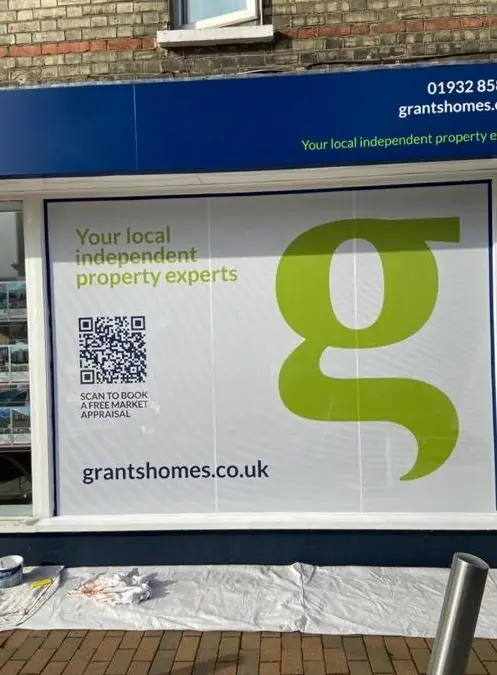
A bakery and a pub keep very different hours, and the painting plan follows the business rather than the other way round. A bakery’s busiest time tends to be the morning, so preparation can start once it shuts for the day. A pub is quieter in the morning and early afternoon, before the lunch and evening trade. In both cases we agree:
- which door customers use while the frontage is wet
- when deliveries arrive and where the delivery vehicle stops
- whether low-odour, water-based coatings are needed near food, an extract or an open door
- where our van parks, given that cars already line the streets and off-street parking is scarce
Several frontages come straight off the carriageway, and on some stretches only one side of the street has a footway, so a frontage job needs a tight footprint, a cordoned work area and nothing left standing on the pavement overnight. Overhead cables along several streets are checked before ladders or a podium go up.
Signboards and advertisement controls
Pub and shop signboards in the conservation area fall under tighter advertisement controls than they would on an ordinary high street. Repainting an existing board like for like is a maintenance job; changing its design, colour scheme or size, or adding new lettering or lighting, may need consent. We will paint the board and its frame and bracket, and we would ask the business to clear it with planning officers at West Northamptonshire Council ahead of any change to the sign itself.
Where a frontage has hanging-sign brackets or lantern fixings, they are prepared and painted at the same time as the joinery, so rust from the ironwork does not run down a freshly painted fascia. Where the building is one of the Castle Ashby estate’s, expect the estate to have a say in colour.
Old timber, damp mornings
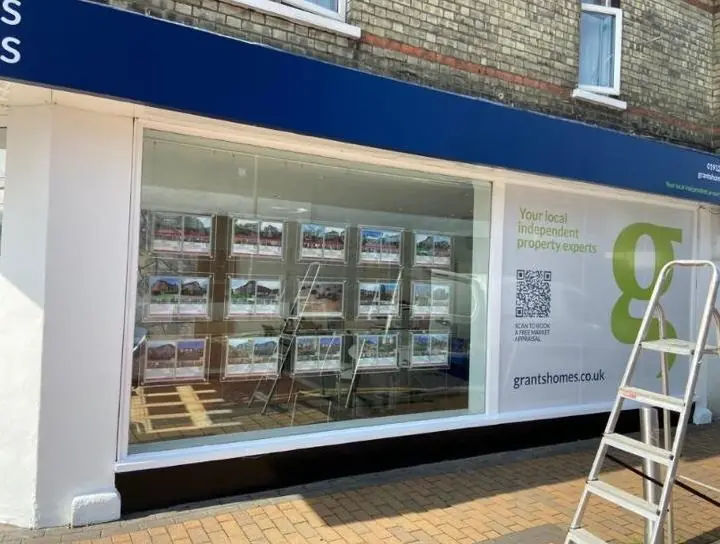
Older pub and shop fronts are usually softwood joinery that has been painted many times. Thick layers crack across the grain, and the bottom rails of doors and window frames are where rot starts. We cut back failed paint to a firm edge, repair soft timber with resin filler or a spliced section, and prime bare wood the same day. Mature trees and the Grendon brook keep parts of High Street damp into the morning, so top coats go on once the surface has dried, not first thing.
Colours that sit with the village
The council’s appraisal asks for traditional paint colours rather than dark brown stain on older buildings, and that advice is worth following on a commercial front too. Deep greens, dark blues, off-whites and muted heritage reds read well against pale limestone and red Castle Ashby tile. Bright corporate colours can work on a small panel or the lettering without taking over a whole front.
The limestone around a frontage should stay unpainted; we paint the timber, the sign and the ironwork, and mask the stone. Our main shopfront painting page covers working around signage and brand colours in more detail. If the job also involves interiors, see our commercial painting service, and for everything else we cover locally, start at painting and decorating in Yardley Hastings.
Last updated by Dean, DH Painter & Decorator.