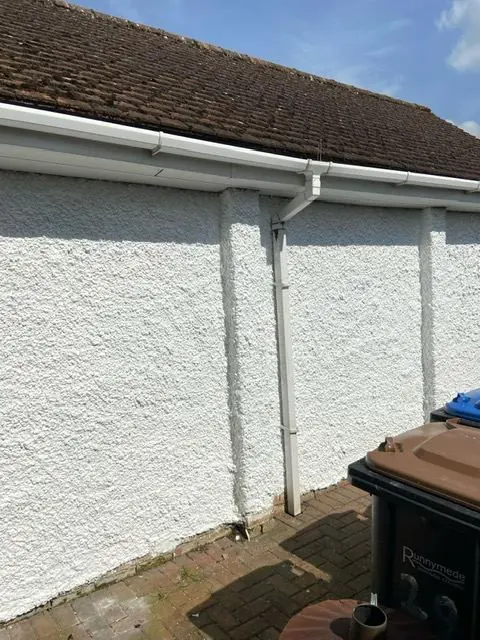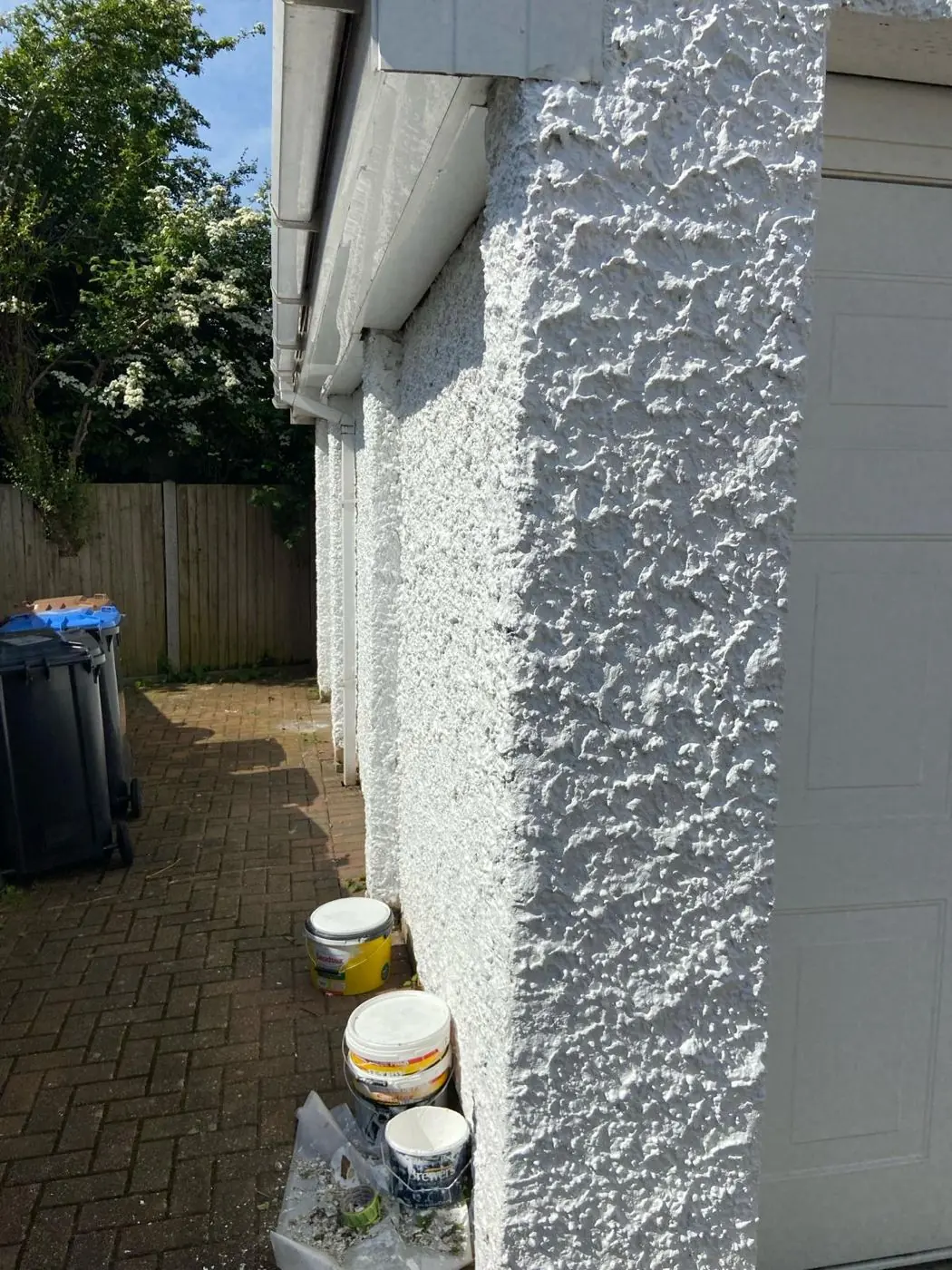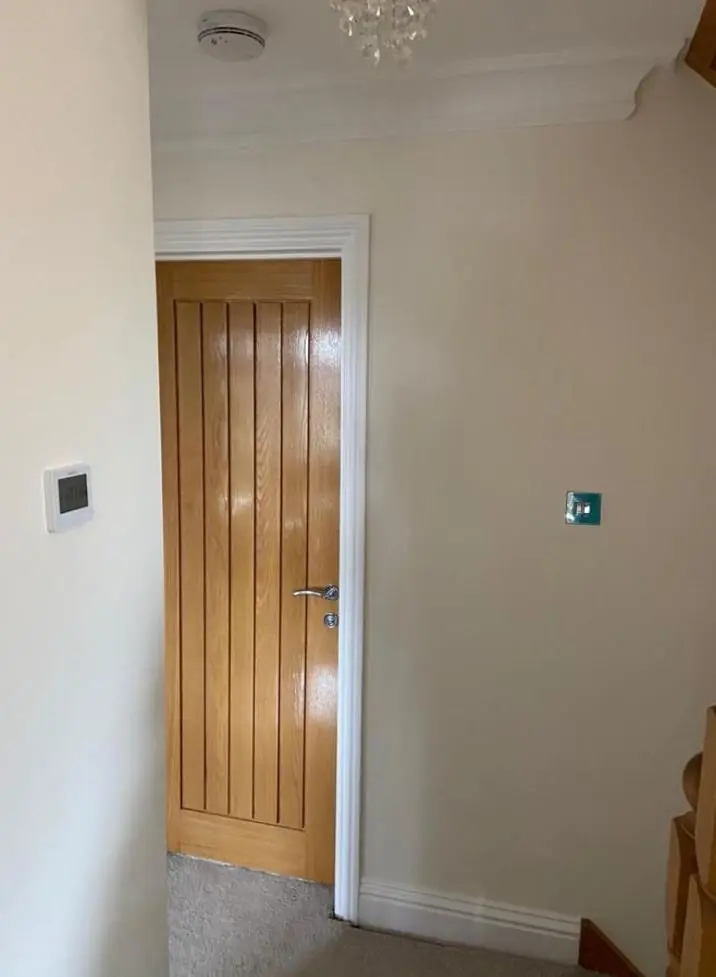
DH Painter & Decorator covers Blackthorn from our Northampton base, about 3.8 miles north-east of the town centre in postcode NN3. Dean, with over 30 years in the trade, decorates the estate's 1970s terraced and semi-detached houses, purpose-built flats, rented homes and the small premises around Blackthorn Bridge Court.
Where Blackthorn sits and how it was built
Blackthorn is one of the estates of Northampton’s eastern expansion. It lies in the Blackthorn & Rectory Farm ward, with Lings and Lings Wood to the west, Rectory Farm to the north-east and the old village of Great Billing to the south. Blackthorn Road runs through it, and Great Billing Way and Wellingborough Road are the main roads to the south. Most addresses are in the NN3 8 postcode sector.
Northampton was designated a New Town on 14 February 1968 to take overspill population from London, and the Northampton Development Corporation built the eastern estates over the following years until it was wound up in 1985. Before building started here, the Corporation’s archaeology unit excavated a late Iron Age farmstead on the site in 1972 and 1973. Records from September 1974 describe topsoil being scraped “prior to terracing for houses” on the Blackthorn 1 phase, which dates the first homes to the mid-1970s. Most of the estate is therefore around fifty years old, and that age drives much of what a decorator finds here.
The houses: terraces, semis and a few flats
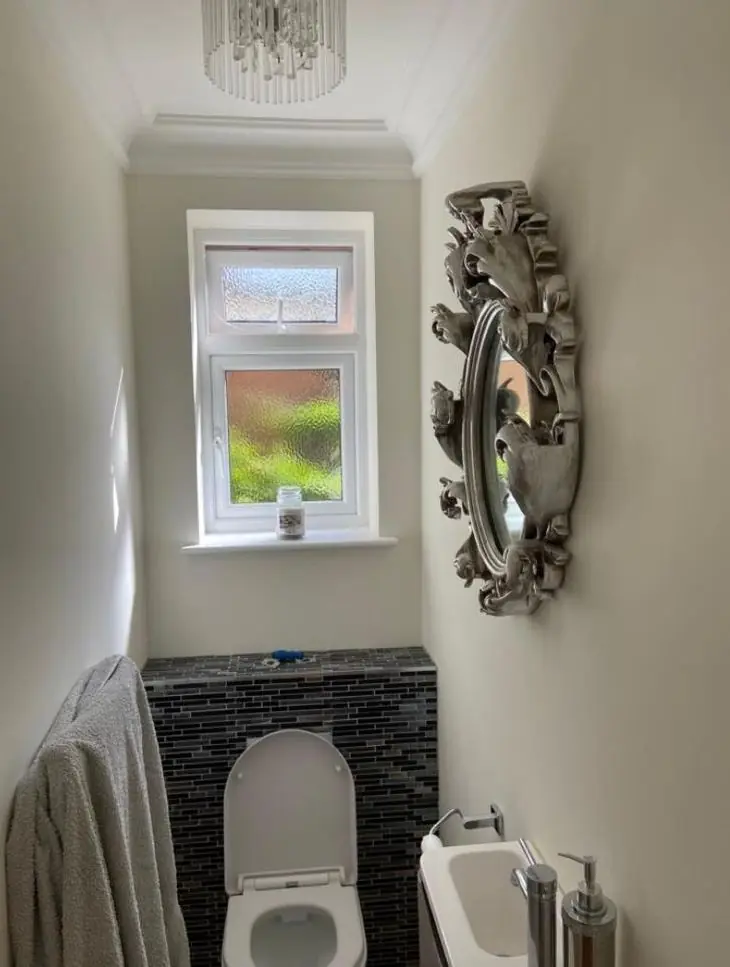
Census 2021 figures show how much of Blackthorn is terraced. Around the Bridge Court local centre, 44.9% of homes were terraced. In the neighbouring part of the ward the figure was 64.1%. Semi-detached homes made up roughly a quarter, detached houses between 6% and 16%, and purpose-built flats 5% to 11%. Building materials are not set out in the records we have read, so Dean checks each house for brick, render or cladding before specifying anything for the outside.
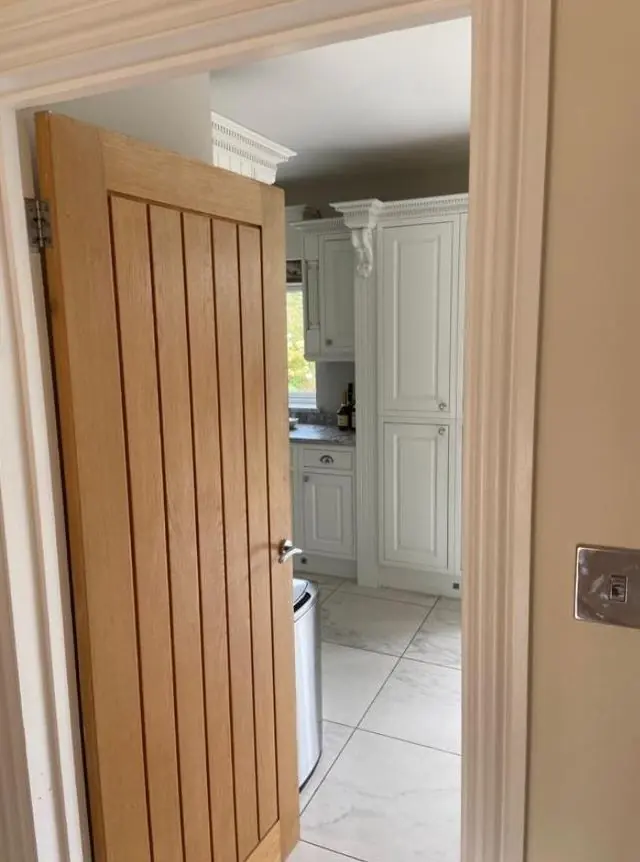
Inside, these are compact houses with modest halls, stairs and landings, flush or moulded internal doors and softwood skirtings. Living rooms often lack a chimney breast, so the long flat party wall becomes the natural focal point. Over fifty years many have collected layers of DIY paint, filled holes that were never sanded and gloss built up on the woodwork. The TCPA’s 2021 review of Northampton flags parts of the eastern estates as due for significant renewal, so decorating here usually starts with repair: raking out cracks, patching plaster and sanding back old coats.
Courts, walkways and getting the van close
Blackthorn was laid out on Radburn principles, which separate pedestrians from vehicles. Homes cluster on cul-de-sacs such as Longmead, Collmead, Pikemead, Croftmeadow and Hopmeadow Court, and pedestrian routes like Blackthorn Walk, Spinneyside Walk and Birds Hill Walk link them. Many front doors face a footpath rather than a road, so the van parks in a court or bay and everything is carried to the house.
This affects how a job is planned:
- Parking near the house is limited, so we bring materials in at the start of the day rather than coming and going.
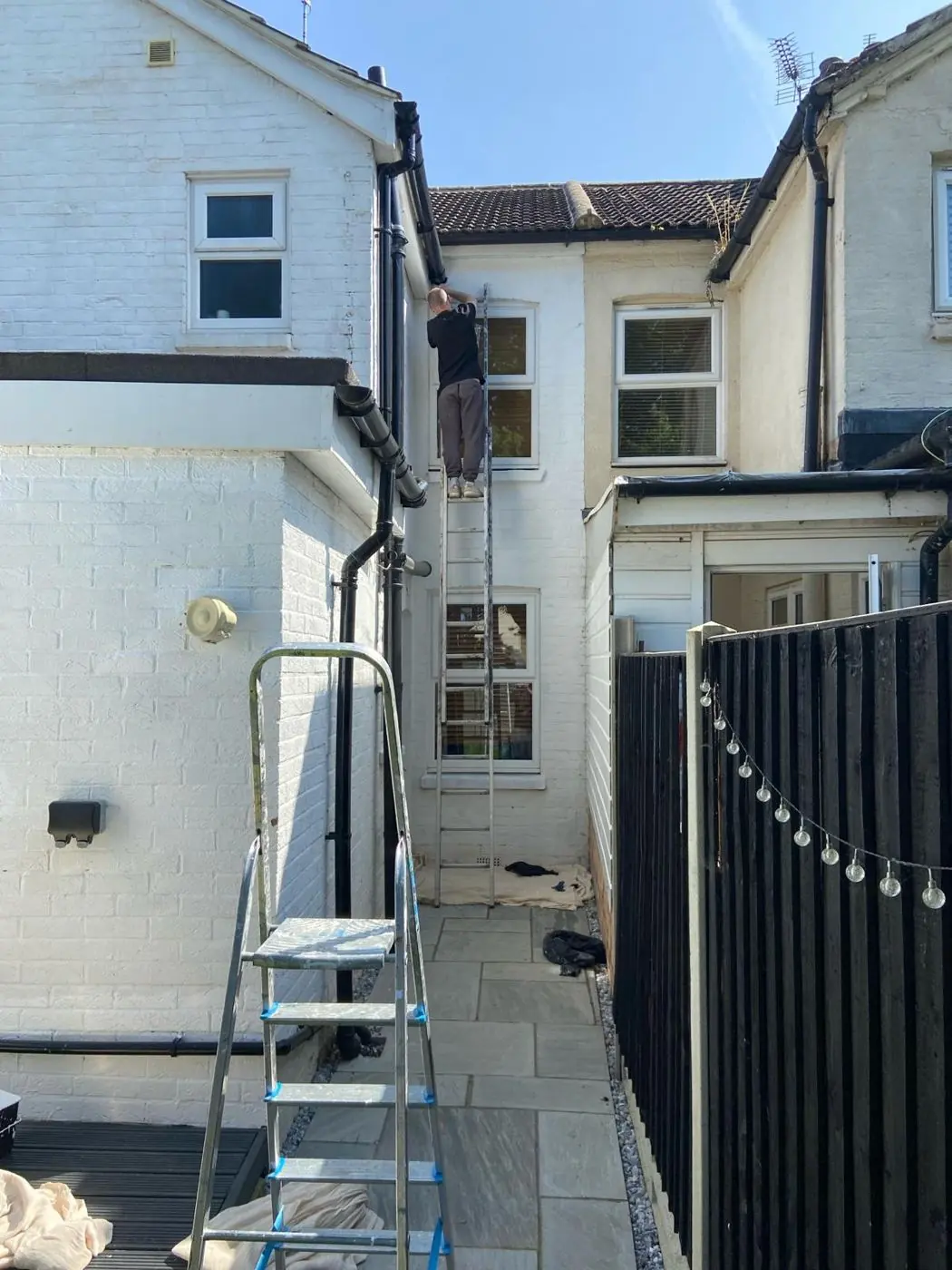
- Mid-terrace houses have no side access. Ladders for the back of the house come through the hall or along a shared path, so floors are protected first.
- Ladders and dust sheets on a footpath are planned so neighbours can still get past, and nothing is left on a walkway overnight.
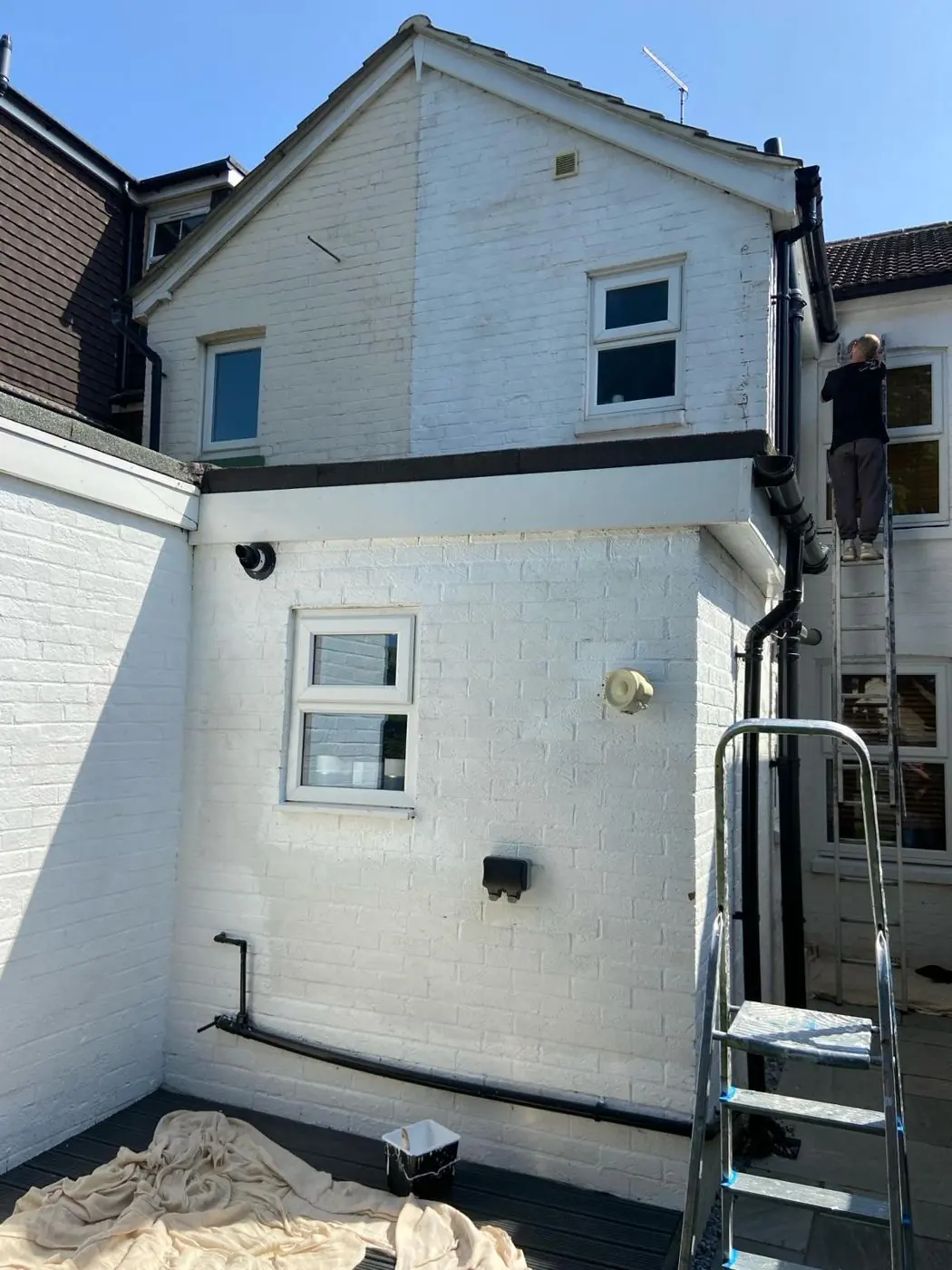
- On a terrace, fascias and gutters often run on into the next house, so the dividing line is agreed with you before exterior painting starts.
Outside: timber, shade and the edge of Lings Wood
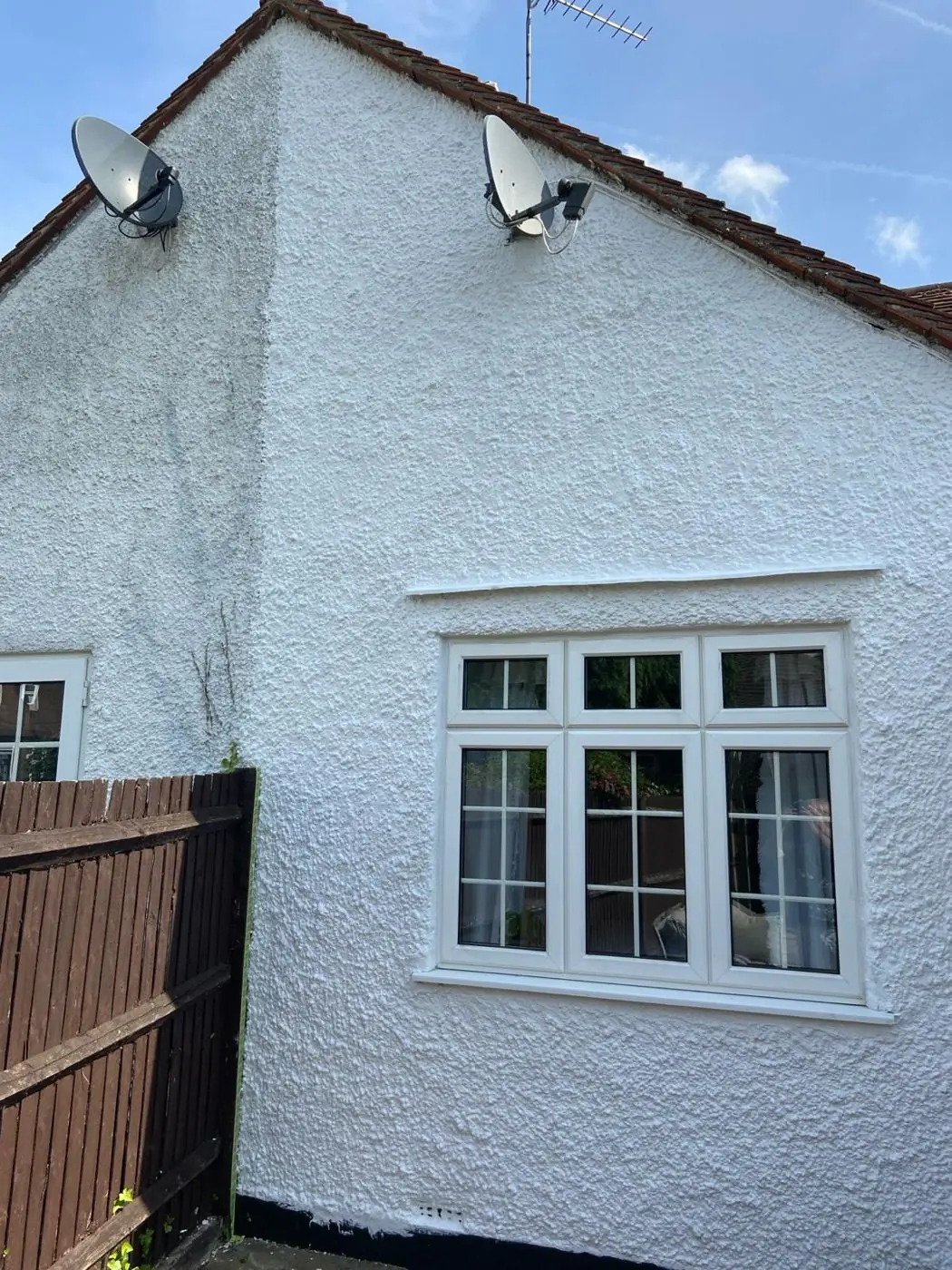
Original timber from the 1970s, where it has not been replaced with uPVC, has had decades of repaints. Fascias, soffits, doors and any timber cladding usually need flaking layers scraped back and bare wood spot-primed before new coats will hold. Right-to-buy houses often have replacement doors and windows that do not match their neighbours, so exterior work is commonly a matter of repainting the remaining timber and refreshing walls rather than a full facade. For timber eaves, our fascia and soffit painting page explains the process, and wall work is covered under exterior painting.
Lings Wood forms the estate’s western edge, and houses beside it have mature trees overhead. That brings shade, leaf litter and damp, which encourage algae and mould on north-facing walls, fences and sheds. These surfaces get a biocide wash and time to dry before any coating. With court parking tight, exterior jobs are booked for settled weather and kept to as few visits as possible; our guide to timing exterior painting explains why the season matters. Late spring to early autumn usually gives the dry spells and overnight temperatures that exterior coatings need, and shaded walls by the wood take longer to dry out after rain, so they are left until last in the day.
Owners, council tenants and landlords
Blackthorn’s tenure is mixed. In the Census area around the local centre, 49.6% of homes were owned, 30.2% social rented and 18.4% privately rented. In the neighbouring area, 53.1% were social rented, most of it from the council, and 17% privately rented. Where the council still owns a house, the outside is painted on the council’s programme, which leaves owner-occupiers and right-to-buy buyers as the people who book their own exterior work.
The private rented share means steady demand for void work between tenancies. Ex-council buy-to-lets need quick turnarounds with finishes that survive the next tenancy: scrubbable matt or eggshell on walls and satinwood on woodwork. Our landlord and letting agent decorating service is set up for that.
Bridge Court and the estate’s other premises
Commercial painting in Blackthorn means a small number of buildings. Blackthorn Bridge Court is the estate’s only local centre, with a One Stop, the post office, a pharmacy, a takeaway and a nursery. Blackthorn Community Centre is on Longmead Court and there is a community hub on Arlbury Road. These are small premises that need to keep open, so work is phased in sections and agreed around their trading and opening times in advance.
How we cover Blackthorn
We work across Blackthorn from our Northampton base, along with nearby Lings, Rectory Farm, Great Billing, Ecton Brook and Thorplands. Dean visits, looks at the rooms or elevations with you, and gives a written quote that separates preparation from painting so you can see where the time goes. We are fully insured. For what affects the cost of a job, see the decorating cost guide, or call 07539 779 036 to arrange a visit.
Last updated by Dean, DH Painter & Decorator.