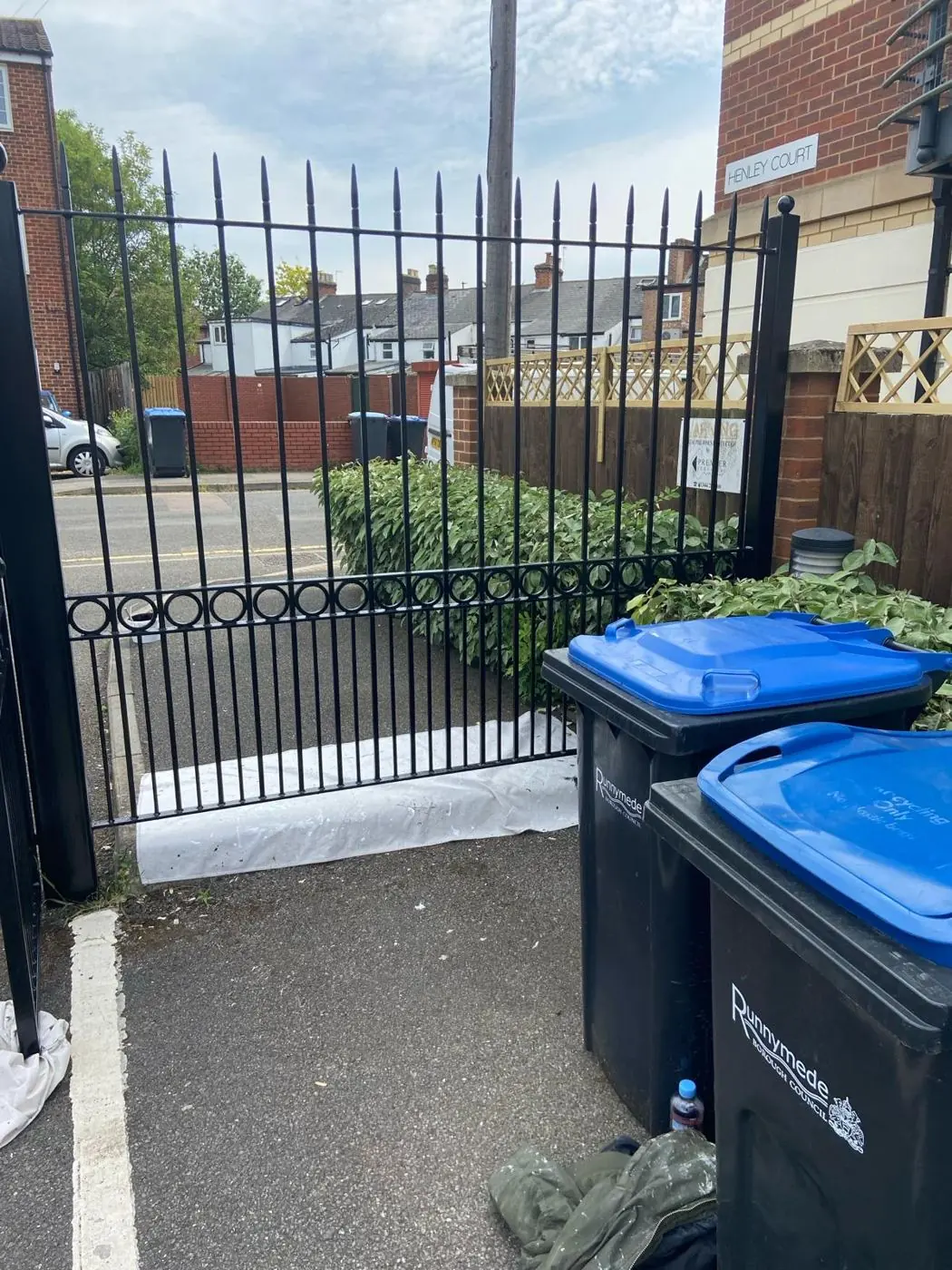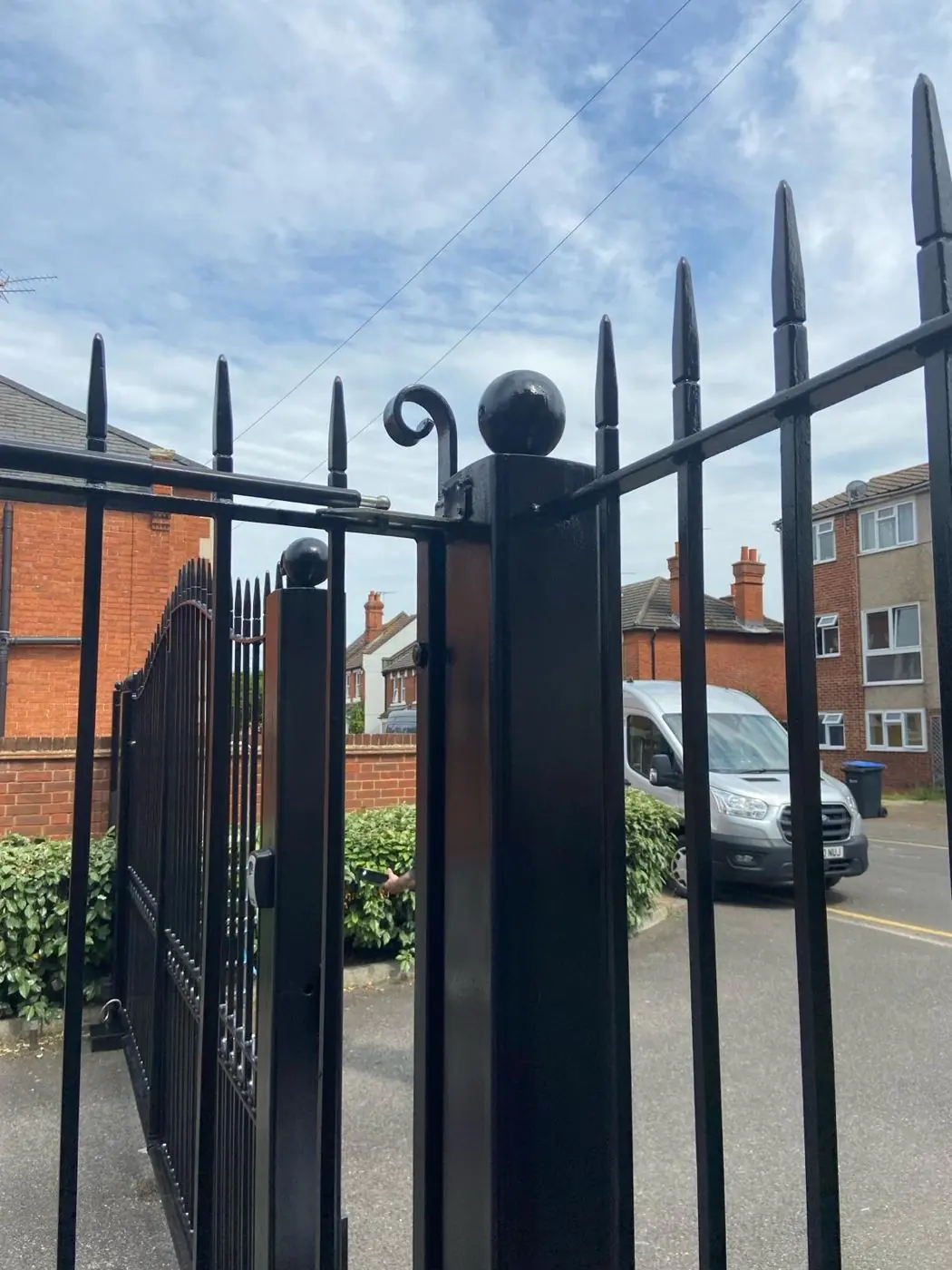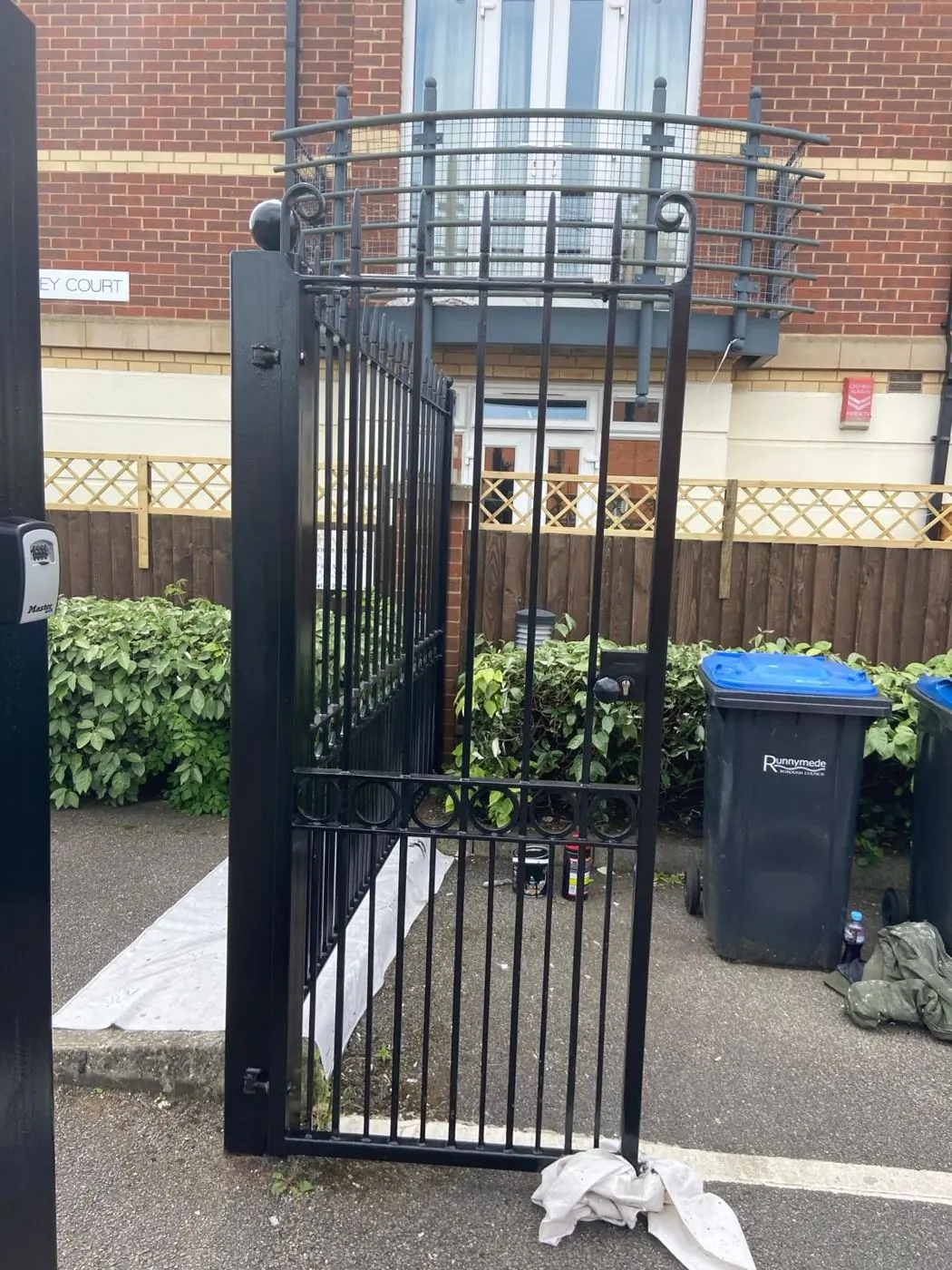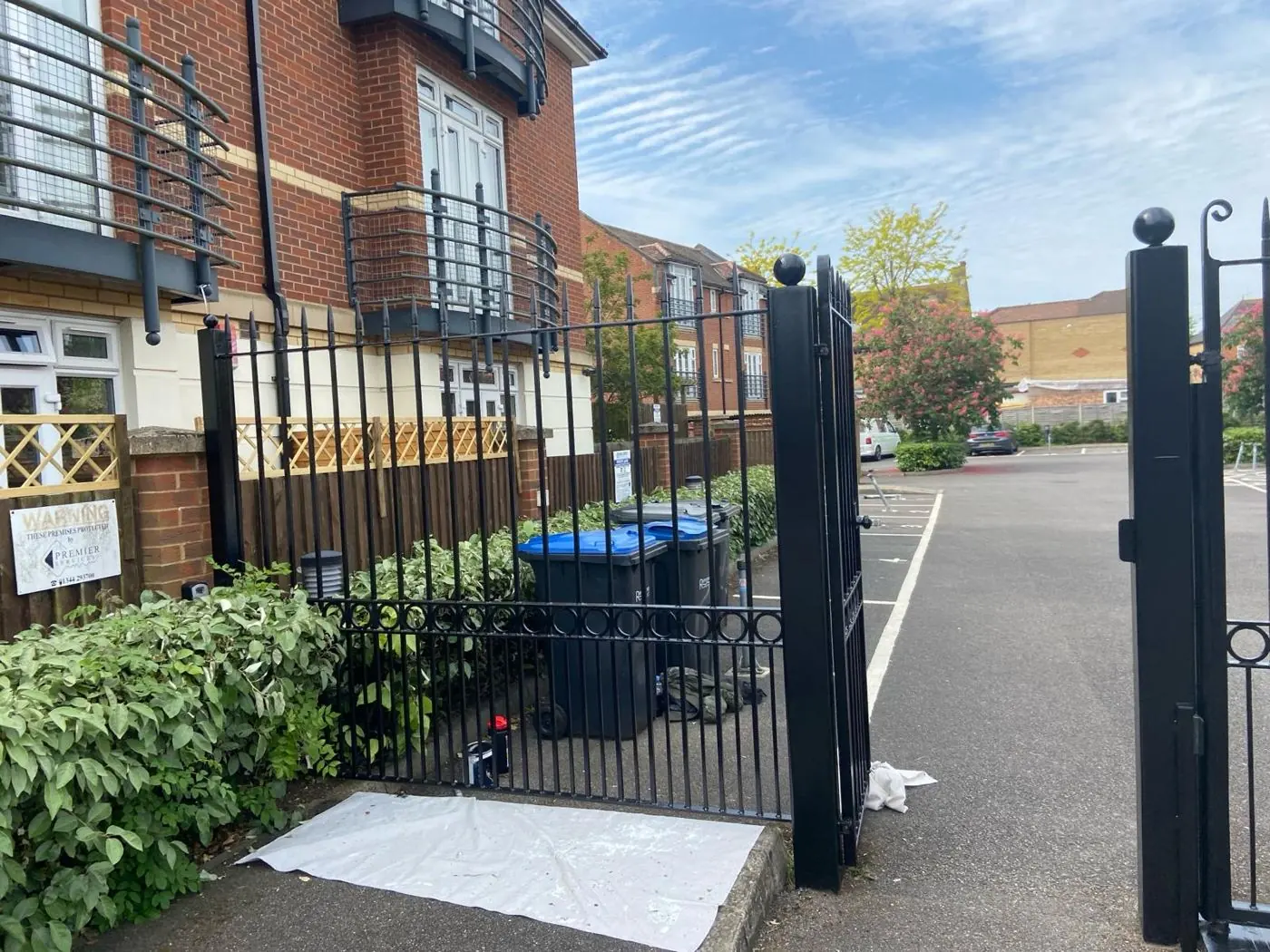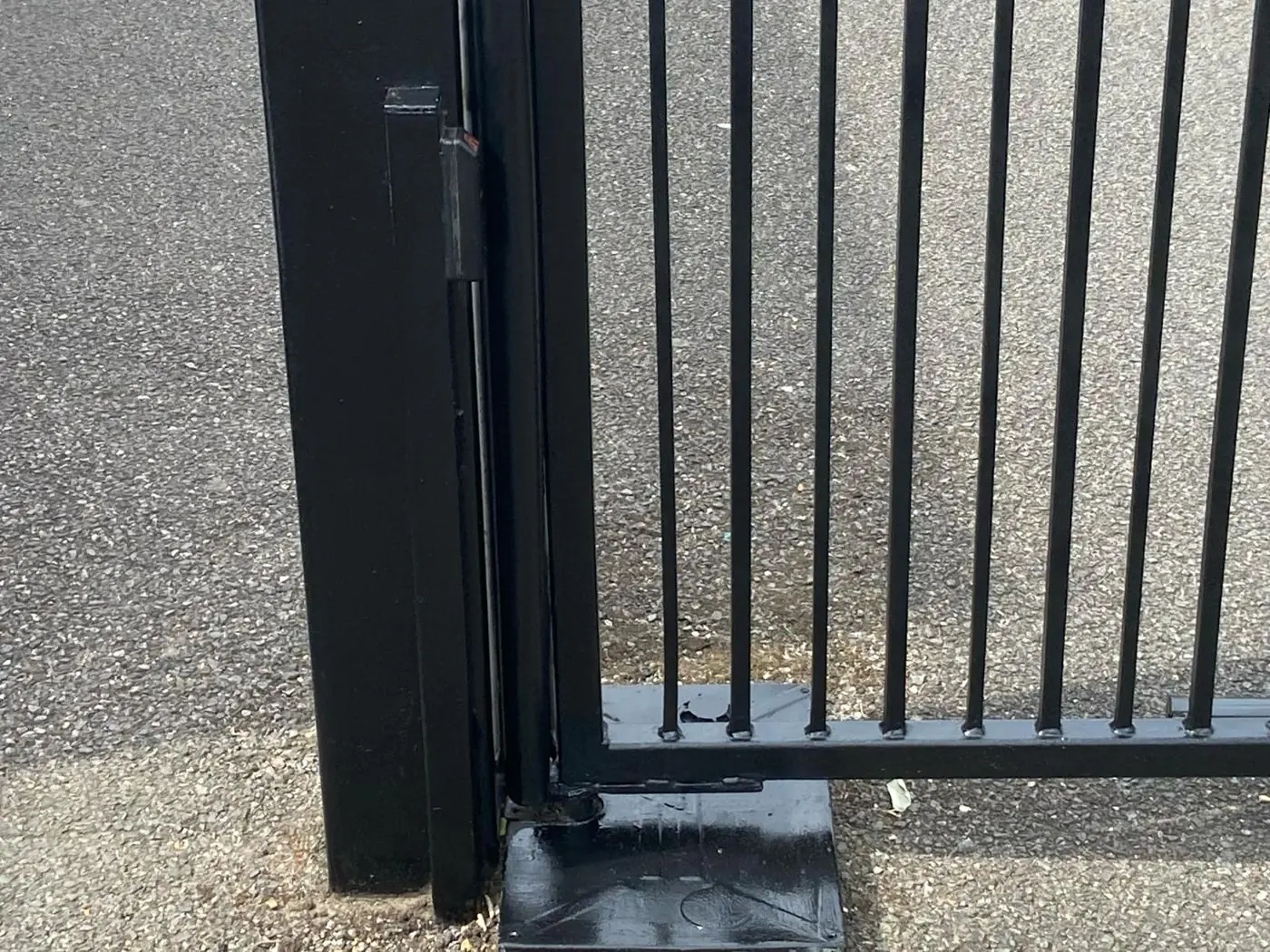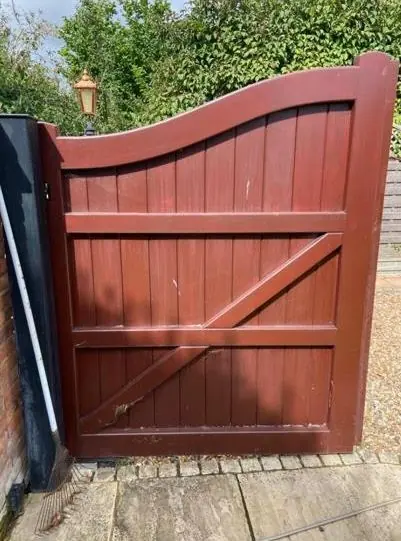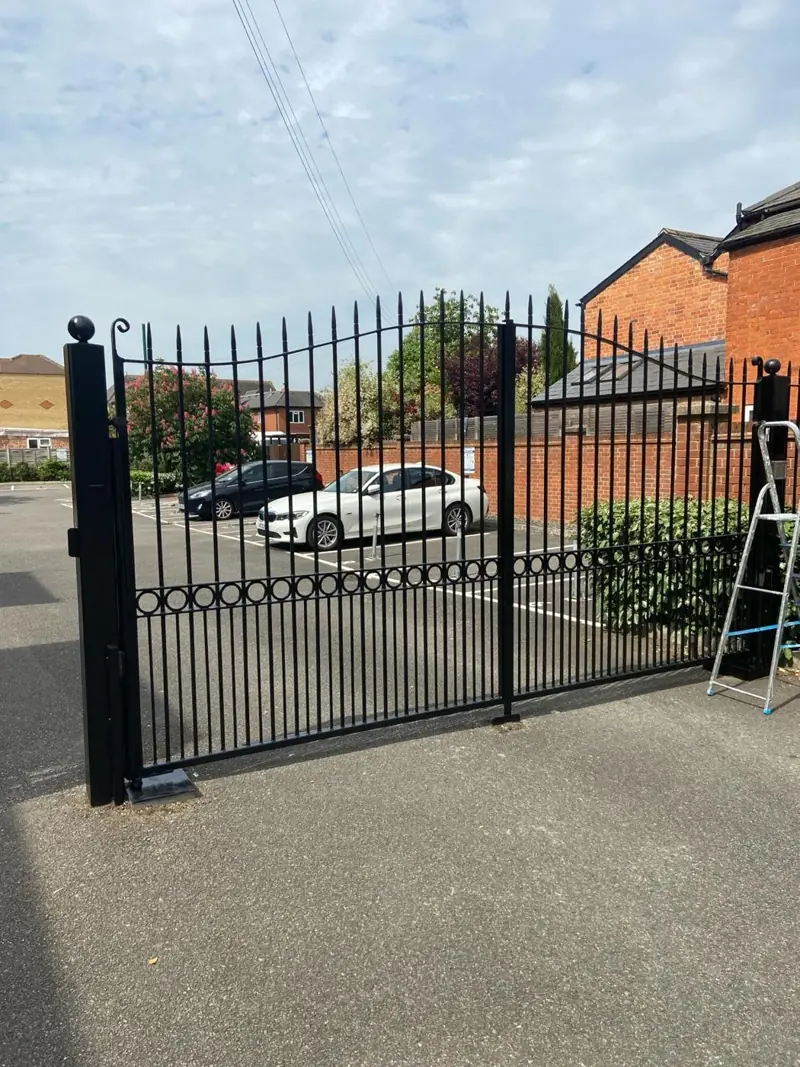
DH Painter & Decorator paints metal gates, railings and handrails for homes in Blackthorn, NN3, around 3.8 miles north-east of Northampton town centre. Metalwork on this 1970s estate is mostly small items, so Dean often paints it alongside other outside work in a single visit.
Small metalwork on a 1970s estate
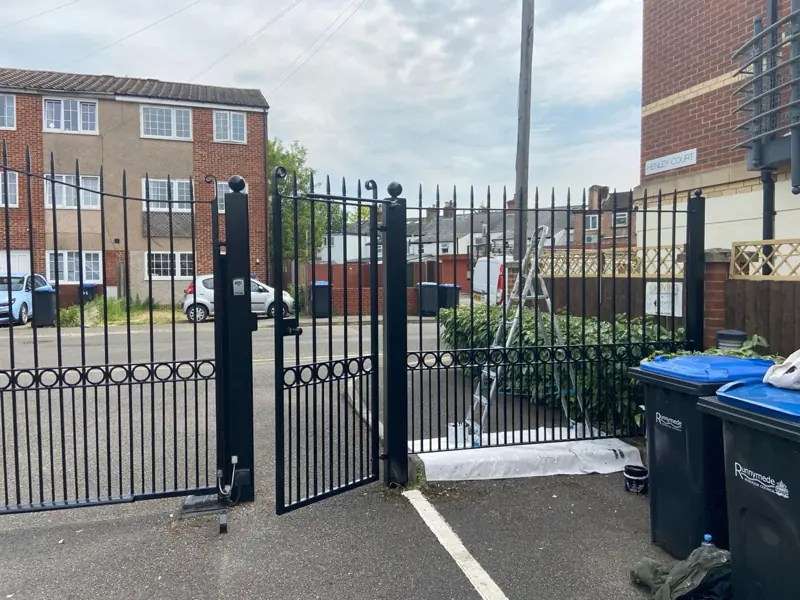
Blackthorn does not have the Victorian cast-iron railings you find in the older streets nearer the town centre. It was built from the mid-1970s by the Northampton Development Corporation, and nothing on the estate is listed, so the metalwork tends to be practical rather than ornamental. In practice that means:
- Garden gates, often mild steel, at the front or opening onto a shared rear path.
- Short runs of railing beside steps or along a front boundary.
- Handrails on private steps, where a house sits above or below its path.
- Balcony rails and stair rails on the estate’s purpose-built flats, which make up between 5% and 11% of homes in the Census areas.
Each piece is small, but rust does not care about size, and on an estate this age some gates and rails will be original while others were fitted by later owners, often in a different metal or with a different coating. Once the coating breaks, mild steel corrodes quickly, and a gate that has been patch-painted over the years can hide pitting under a skin of loose paint. Gates near Lings Wood also stay damp for longer after rain, which speeds things up at the bottom rail and around the hinges.
Why these jobs are usually paired
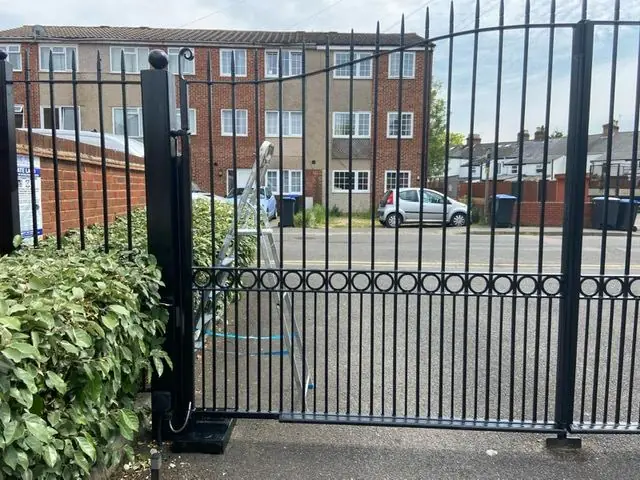
A single gate is rarely worth a separate visit on an estate where parking is limited to the courts and the front door may be a short walk along a footpath. It makes more sense to treat the metalwork while we are already there for fascias, a front door or a fence. Rust treatment and primer need drying time between stages, so tucking the metal coats in around other work keeps the job moving without extra trips. You can still book metalwork on its own; combining it simply saves a trip along the walkway. Our cost guide explains how we price.
Balconies and rails on the flats
If you own a flat on the estate, check your lease before booking anything. Balconies and external rails on purpose-built blocks are often the freeholder’s responsibility, and colour may be set so the block matches. Where a leaseholder is allowed to repaint their own balcony rail, access is from the balcony itself, so we protect the floor, sheet the area below and make sure nothing drops onto the paths underneath. Rails on communal stairs are a different matter and are normally handled by whoever manages the block.
The same caution applies to council-owned houses, which make up a large share of the estate. Census 2021 put council renting at 22.5% around Bridge Court and 45.9% in the neighbouring area, and external metalwork on those homes is the landlord’s to maintain.
Matching the treatment to the metal
| What you have | How it is prepared |
|---|---|
| Painted mild steel gate with rust spots | Loose paint and rust removed back to sound metal, rust-inhibiting primer, then two top coats. |
| Galvanised rail or gate, never painted | Cleaned and degreased, then a primer made for galvanised surfaces before any top coat. |
| Galvanised item already painted and peeling | Failed paint stripped where it has lost grip, then primed for galvanised steel. |
| Handrail people hold every day | A hard-wearing finish, with the job timed so it can be left to cure before heavy use. |
The full process, including wire brushing and rust converters, is set out on our main metal gate and railing painting page. For everything else we cover on the estate, see the Blackthorn area page.
Last updated by Dean, DH Painter & Decorator.