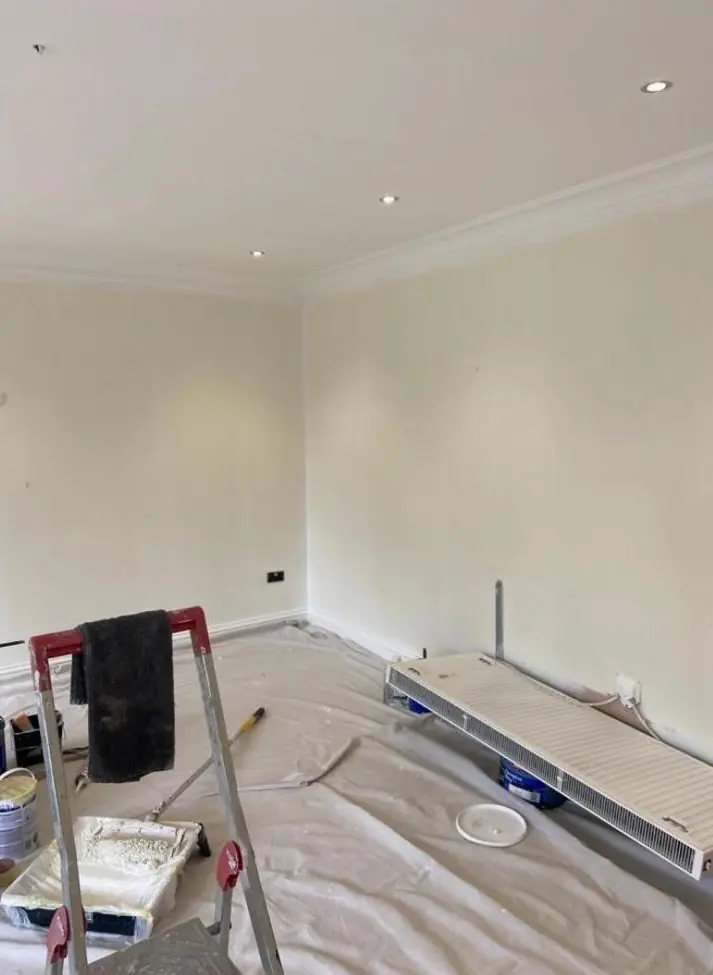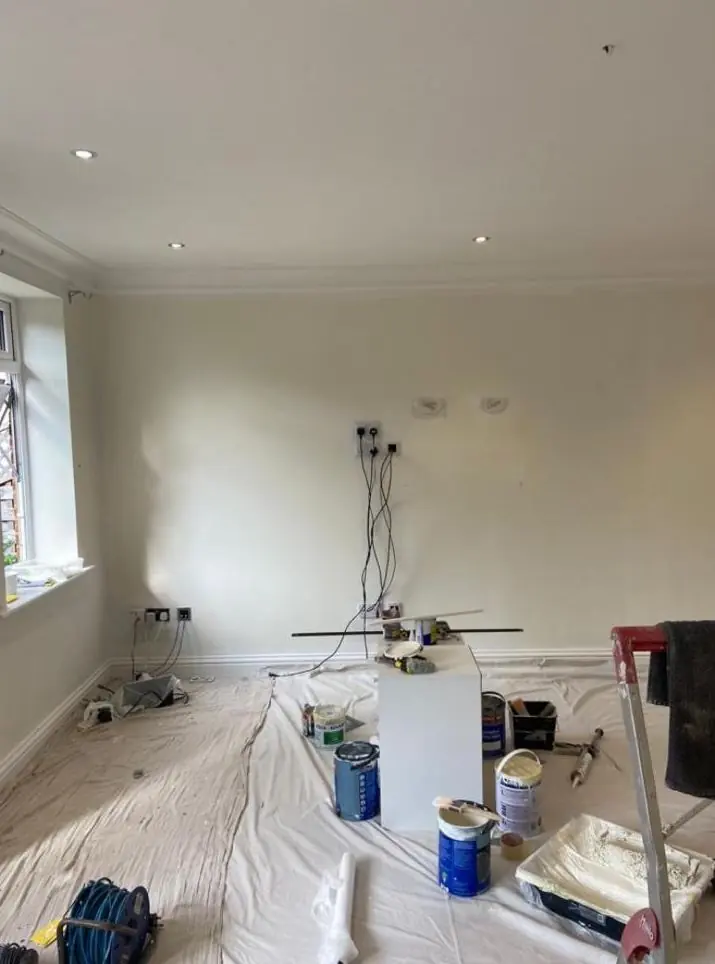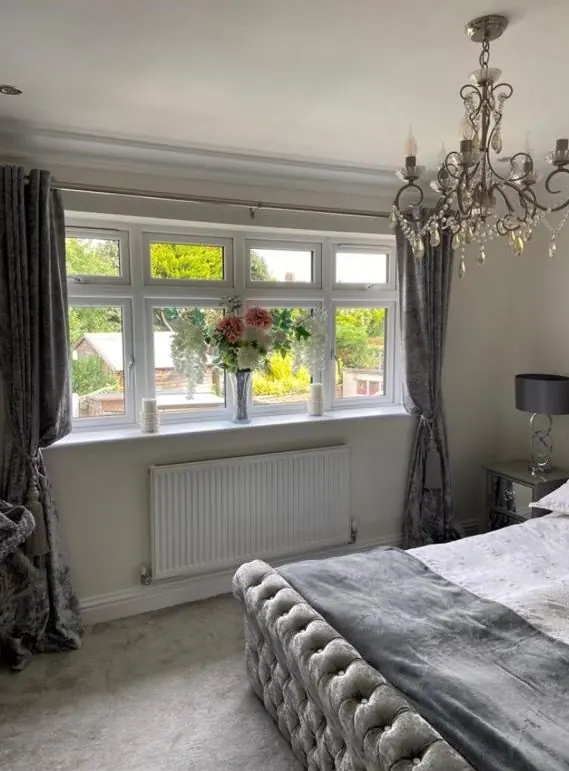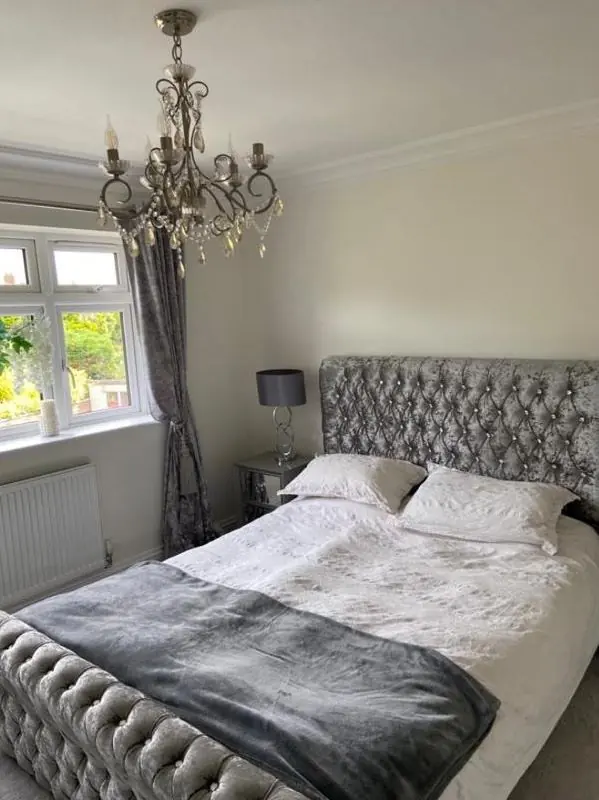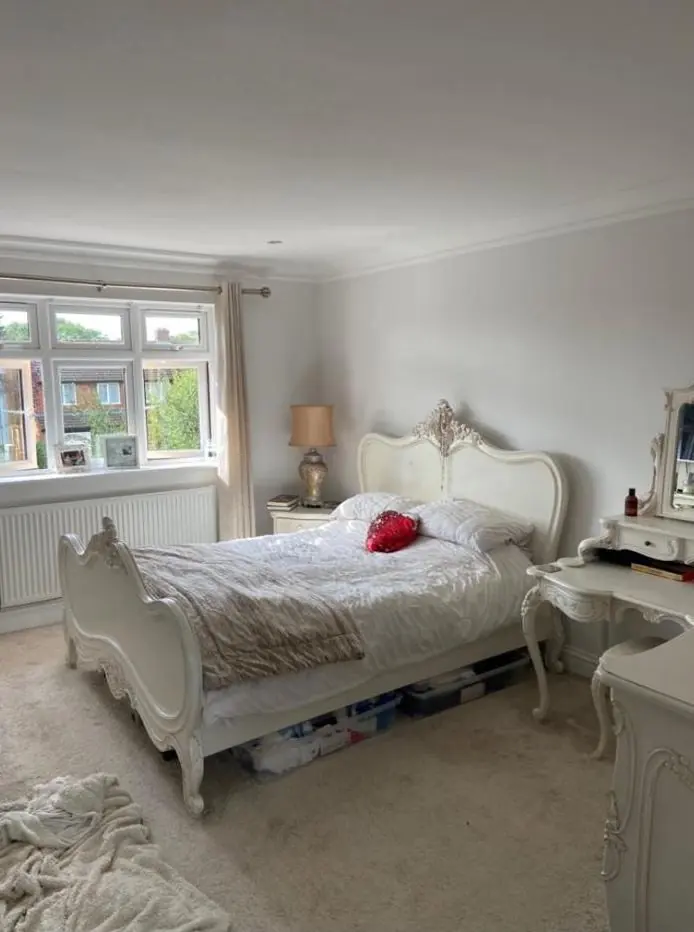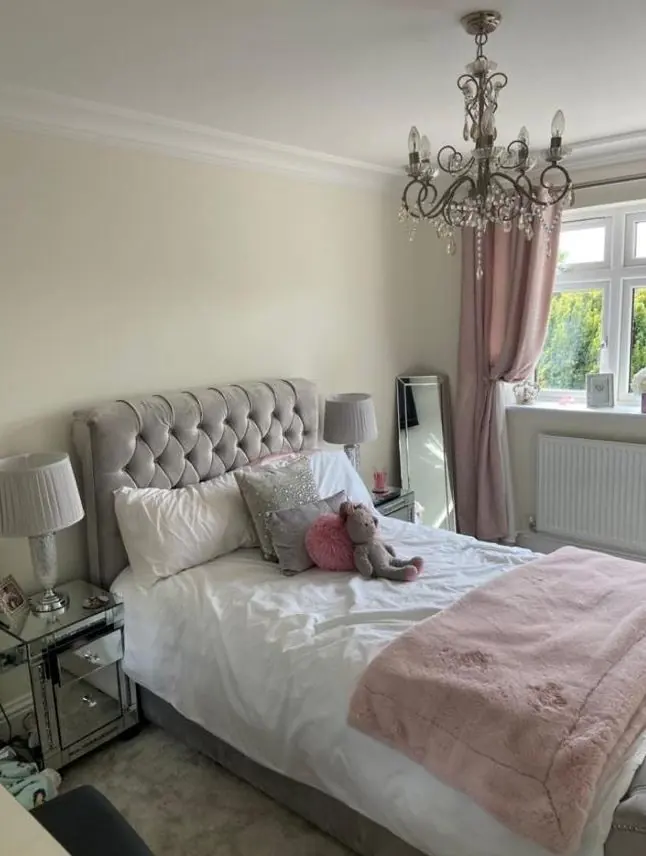
Dean hangs wallpaper and lining paper in Gayton, a ridge-top village a short drive south-west of Northampton. In its older limestone houses that means choosing papers and patterns that cope with walls that are rarely true; in the recent infill homes it usually means feature walls in larger, squarer rooms.
Old Gayton walls are rarely true
Behind the plaster, the historic houses in the conservation area are coursed limestone rubble, and at their age the inner face would normally have been finished in lime. Walls like that bow, lean and dip. Corners are seldom square, ceilings can drop several centimetres from one side of a room to the other, and a window reveal in a thick stone wall rarely runs at a right angle. A paper hung to a true plumb line will look crooked against a ceiling that slopes. A paper hung to follow the ceiling will lean away from the vertical.
So the first job in an older Gayton room is deciding where the eye will judge the pattern from. That is usually the main wall facing the door or the chimney breast. The drop is set out from there and any drift is pushed into the least visible corner. This planning matters more in 17th- and 18th-century houses like The Weir or Beech House than on the flat walls of a modern home.
Lining lime plaster before the paper goes up
Lining paper does a lot of work on old walls. It bridges fine cracks, evens out patched areas and gives the finishing paper a consistent surface to grip. Where old plaster has come away from the stone, it has to be repaired before lining, because paper hung over loose plaster will simply come down with it.
The paper itself needs some thought on solid stone walls. Heavy vinyl wallcoverings are close to impermeable. On a wall that needs to release moisture, a paper-based or non-woven paper is usually the safer choice. Stripping old paper is also gentler work here than in a modern house. Steam softens lime plaster, so it is used sparingly and in short bursts, with scraping done carefully to avoid gouging the surface. If the house is listed, check before removing any historic wallcovering.
Which patterns forgive a low, sloping room
Gayton’s older houses are often two storeys plus an attic, with gabled dormers set into the roof. Attic bedrooms with sloping ceilings and dormer cheeks mean dozens of angled cuts, and a large pattern with a long repeat will show every one of them. In those rooms these generally work better:
- Small, loose or random patterns that hide a wall going out of true
- Papers with no strong horizontal lines, which would expose a dipping ceiling
- Papering the upright walls only and painting the slopes
- Avoiding stripes, which make a leaning wall obvious
Feature walls in the newer houses
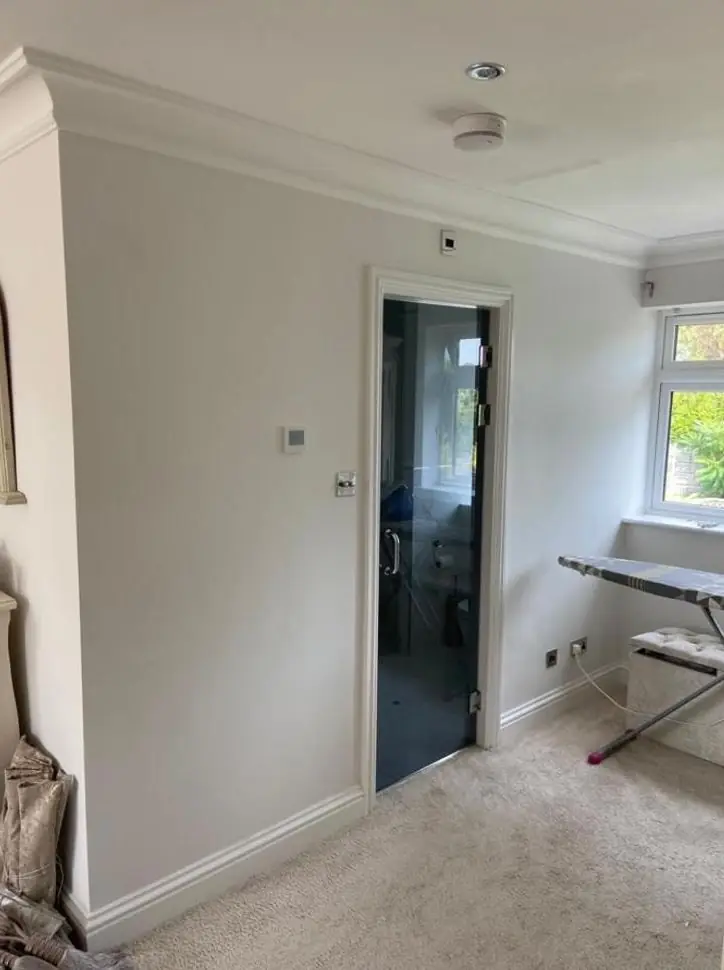
The recent infill and brownfield homes in Gayton, described in the village’s neighbourhood plan as high-value housing, are a different proposition. Rooms are larger and walls are straighter, so bold prints, large repeats and textured or grasscloth-style papers become practical choices. A feature wall behind a bed or across the main wall of a living room suits these houses well. New plaster needs to be fully dry and sized first, so that the paper can be slid into place and the paste does not soak straight in.
The consented barn conversion will bring tall walls with long drops. Hanging a single length from high up without a join, and keeping it straight, calls for a tower and two pairs of hands on the longest runs.
The step-by-step process we follow, from stripping to trimming, is on our main wallpaper hanging page, and our guide to choosing a decorator covers what to ask before booking anyone. The Gayton area page goes further into the stone houses and new builds of the village.
Last updated by Dean, DH Painter & Decorator.