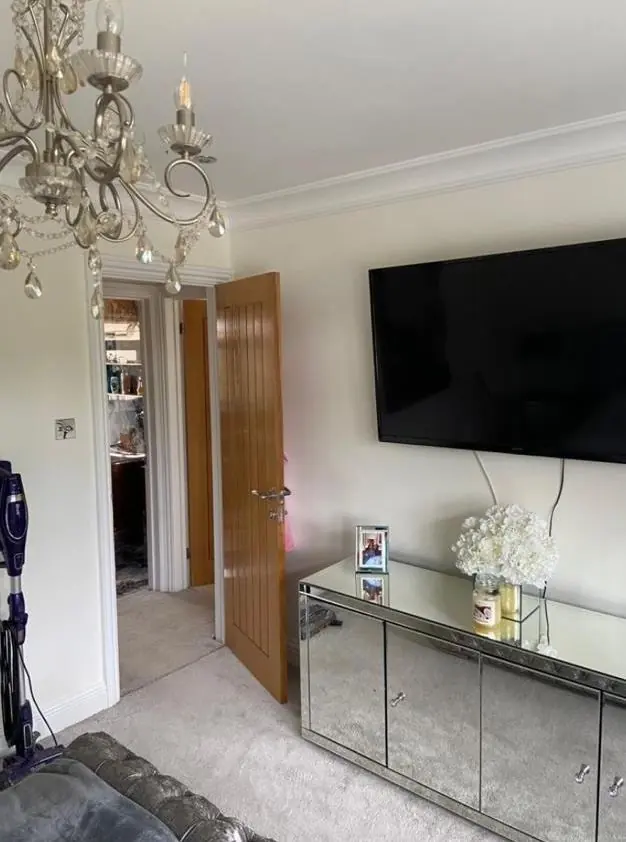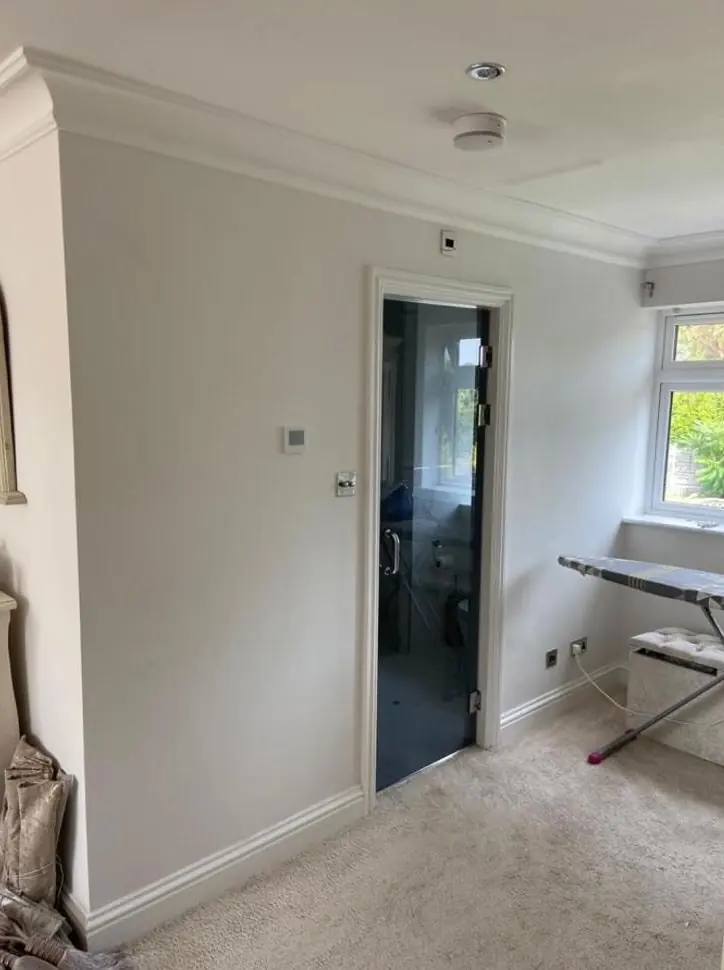
Dean hand-paints feature walls, panelling and decorative effects in Parklands, NN3, on the north-east edge of Northampton some 2.5 miles from the centre. The ground-floor living rooms of the larger semis and detached houses on Parklands Avenue and Parklands Crescent are where these finishes suit the house most.
Plain rooms that can take a focal point
Parklands houses are cavity-wall brick, and the estate has no listed buildings or conservation area. Decorative work here is not about restoring period features. That gives decorative work a different purpose here: rather than highlighting what a room already has, it adds character to rooms that were built plain.
The ground-floor living rooms of the larger semis and the detached houses on Parklands Avenue and Parklands Crescent are the obvious candidates. They are regular in shape, and the wall facing the window, or the one behind the sofa, naturally draws the eye. A focal point on that wall gives the room a centre without needing new furniture.
Panelling effects without rebuilding the wall
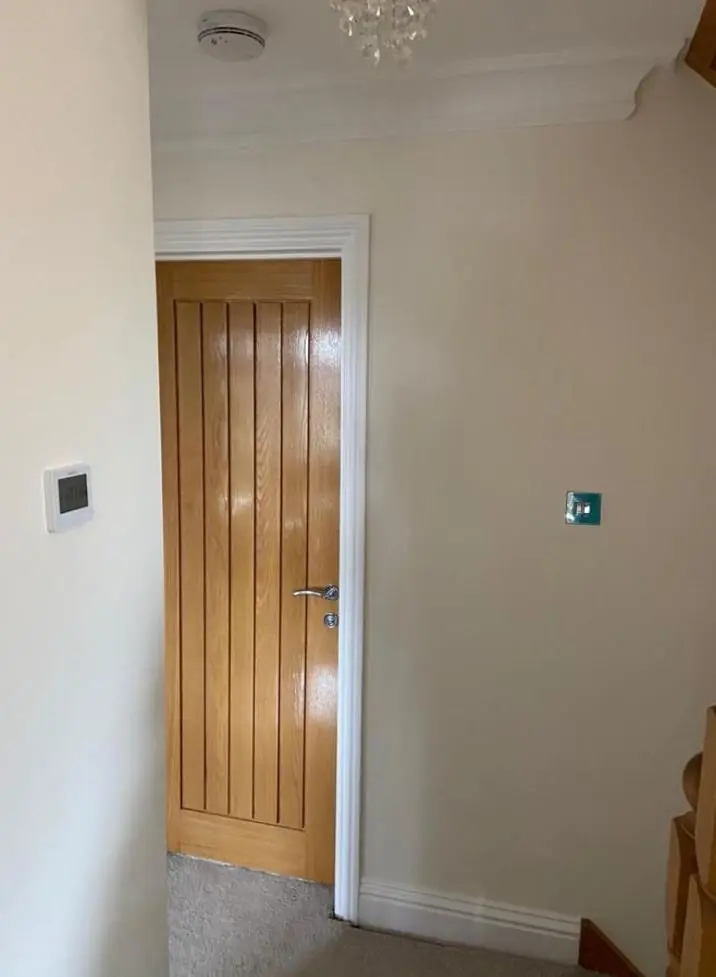
Panelling is popular in houses of this kind, and there are two ways to do it. The first is applied moulding: timber or MDF strips fixed to the wall to form boxes or a dado-height grid, then filled, caulked and painted so the pins and mitres disappear. The second is purely painted: the panel outlines are marked out and painted in a slightly deeper or lighter shade, which suggests panelling without anything fixed to the wall.
In a Parklands semi, a few practical points shape the choice:
- Suspended timber floors flex slightly, so the bottom rail of any applied panelling needs a flexible caulk line, just as skirtings do, or the joint will open
- A painted panel effect is quicker and easy to change later, which suits a family that redecorates every few years
- Applied panelling to dado height protects the lower wall in a busy hallway, where school bags and bikes come in off Spinney Hill Road
Two-tone and colour-block walls
A simpler route is a split wall: a deeper colour below dado height and a lighter one above, or a block of colour framing a shelf or a bed. These rely entirely on crisp lines. We mask with low-tack tape on fully cured paint, seal the tape edge with the base colour so the top coat cannot creep under it, and pull the tape at the right moment. The result is a sharp line with no bleed.
Colour-block shapes also work well in the smaller Coppice Drive bungalows and the maisonettes above the parade, where a bold colour over a whole wall can feel heavy. Keeping the shape to the area behind a sofa or desk adds interest without crowding the room.
Where we would hold back
Roof rooms are common on the estate, and energy certificates record several of them as poorly insulated. Cold sloping ceilings attract condensation, and a layered glaze or textured effect on a damp-prone surface will mark and mould sooner than a plain mould-resistant matt. In those rooms we usually suggest keeping any feature to a dry, vertical wall, or using a colour change rather than a hand-applied glaze. If you want an effect up there anyway, we check the surface first and tell you honestly what to expect.
Planning the work
Decorative work takes longer than flat painting because each layer needs time before the next. In an owner-occupied house, which describes most of Parklands, we plan the room so it is out of use for as short a time as possible. Sample boards let you see an effect before it goes on the wall. The full range of effects we offer is on the main decorative finishes service page, and for everything else on the estate, see the Parklands area page.
Last updated by Dean, DH Painter & Decorator.