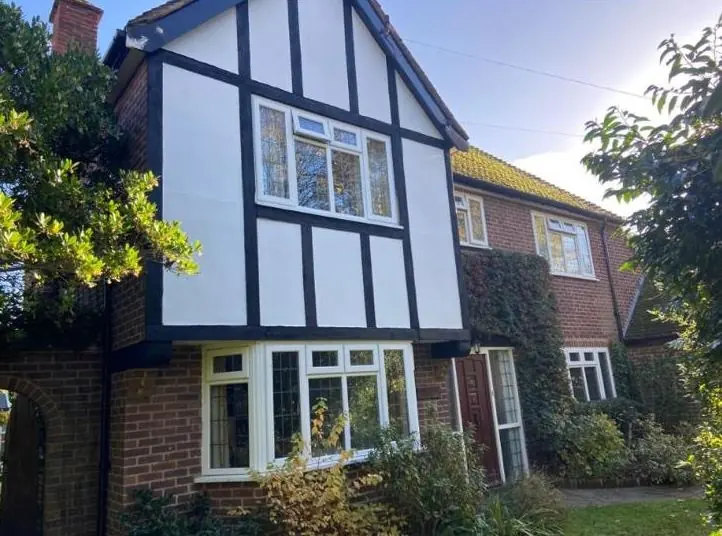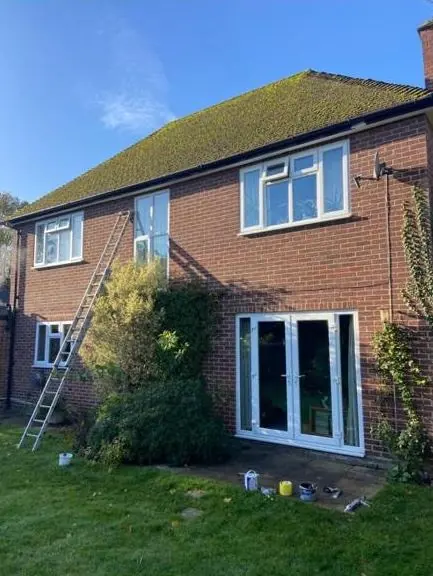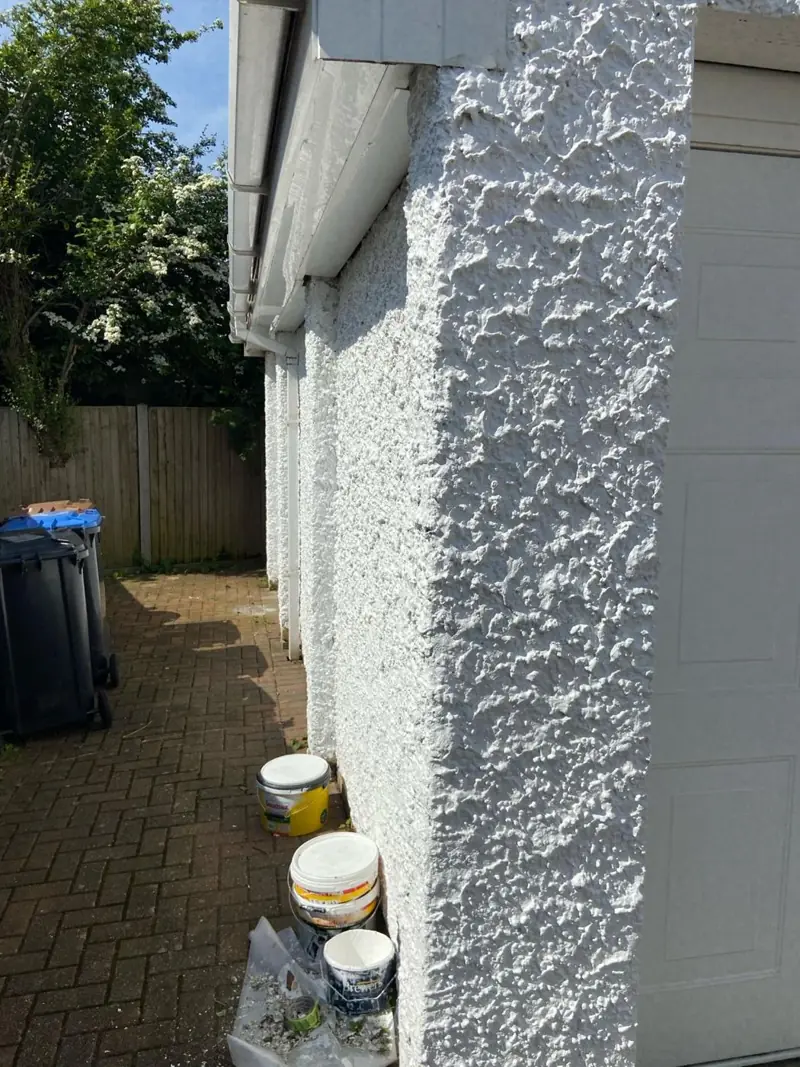
We paint render and masonry in Parklands, the estate off Spinney Hill Road in NN3, about 2.5 miles north-east of Northampton town centre. Most walls here are bare cavity brick, so Dean focuses on surfaces that already carry paint or render and will tell you honestly when a wall should be left alone.
Most Parklands walls should stay bare brick
Energy certificates for Parklands Avenue, Parklands Crescent and Coppice Drive describe cavity walls, mostly with filled cavities. The outer leaf is brick that was laid to be seen. On a wall like that, masonry paint brings no benefit. It adds a surface that needs recoating, can trap moisture if the wrong product is used, and is very hard to remove later. If your house has never been painted, our advice will usually be to clean the brick and leave it.
That is a different position from older parts of Northampton, where solid walls of ironstone or soft brick need breathable limewash or mineral paint. The nearest example is Manfield Grange, the Grade II listed former orthopaedic hospital in neighbouring Spinney Hill, built of ironstone. None of that applies in Parklands. Standard modern masonry systems are suitable here, which keeps the job simpler.
If you do want a change of look on bare brick, there are gentler options than paint. A professional clean removes traffic film and algae, and repointing tired joints changes the appearance more than many owners expect. We are happy to talk these through at the quote even if they lead to less painting.
Where masonry paint does belong on the estate
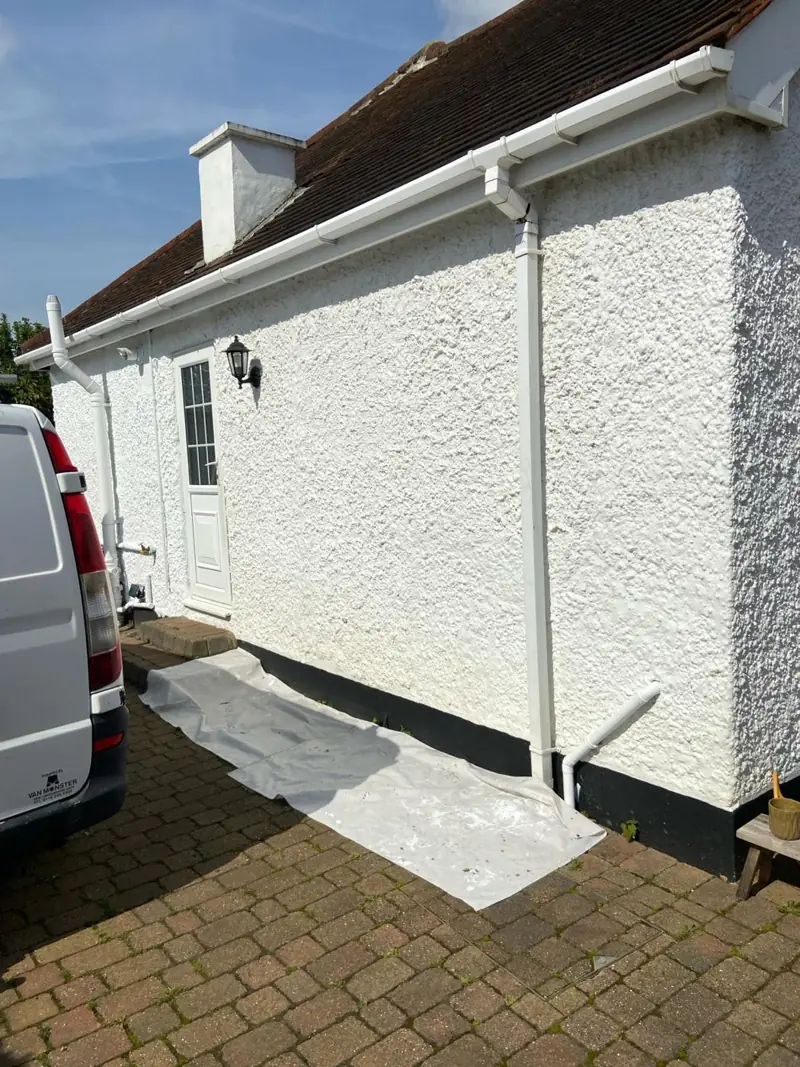
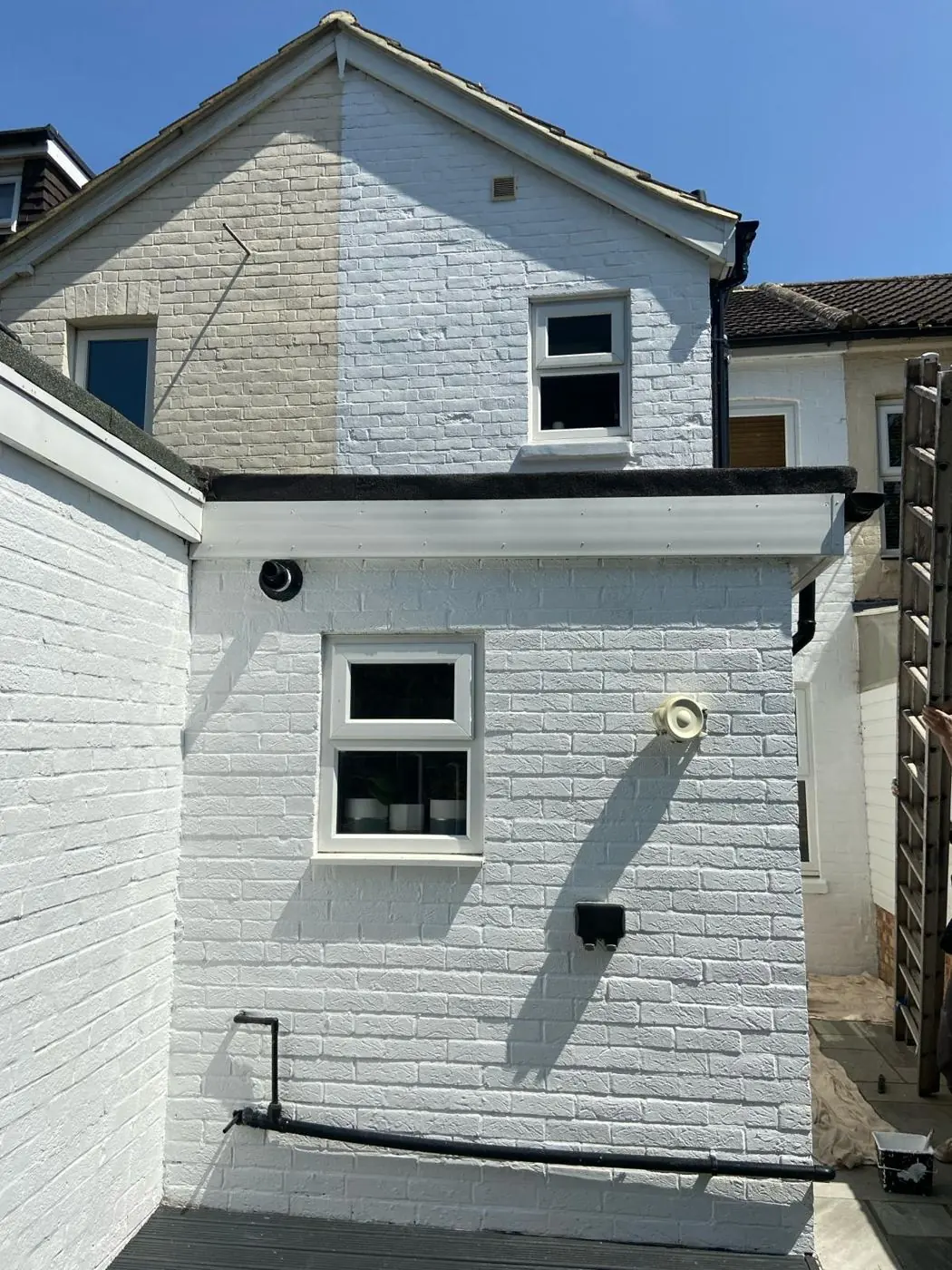
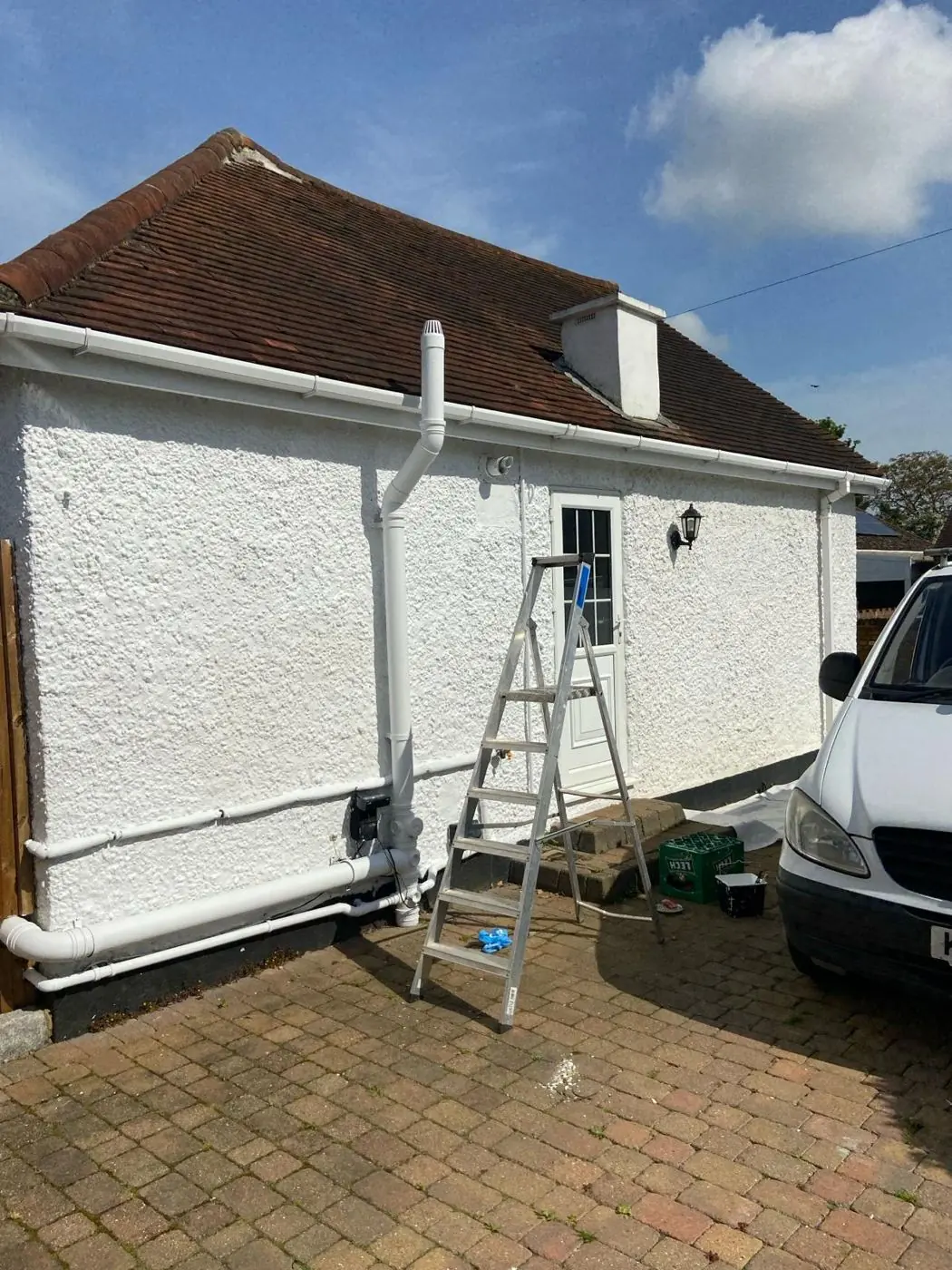
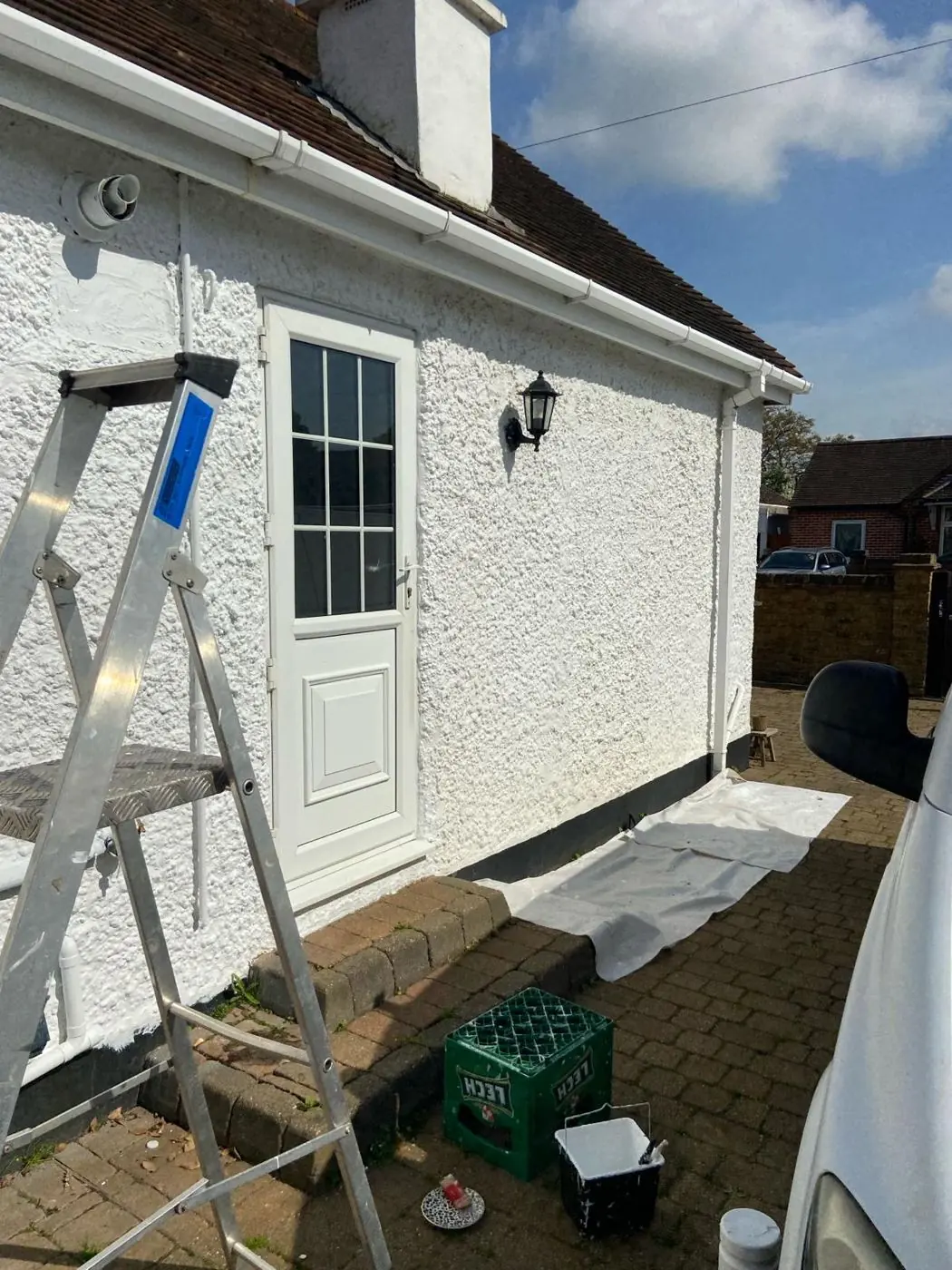
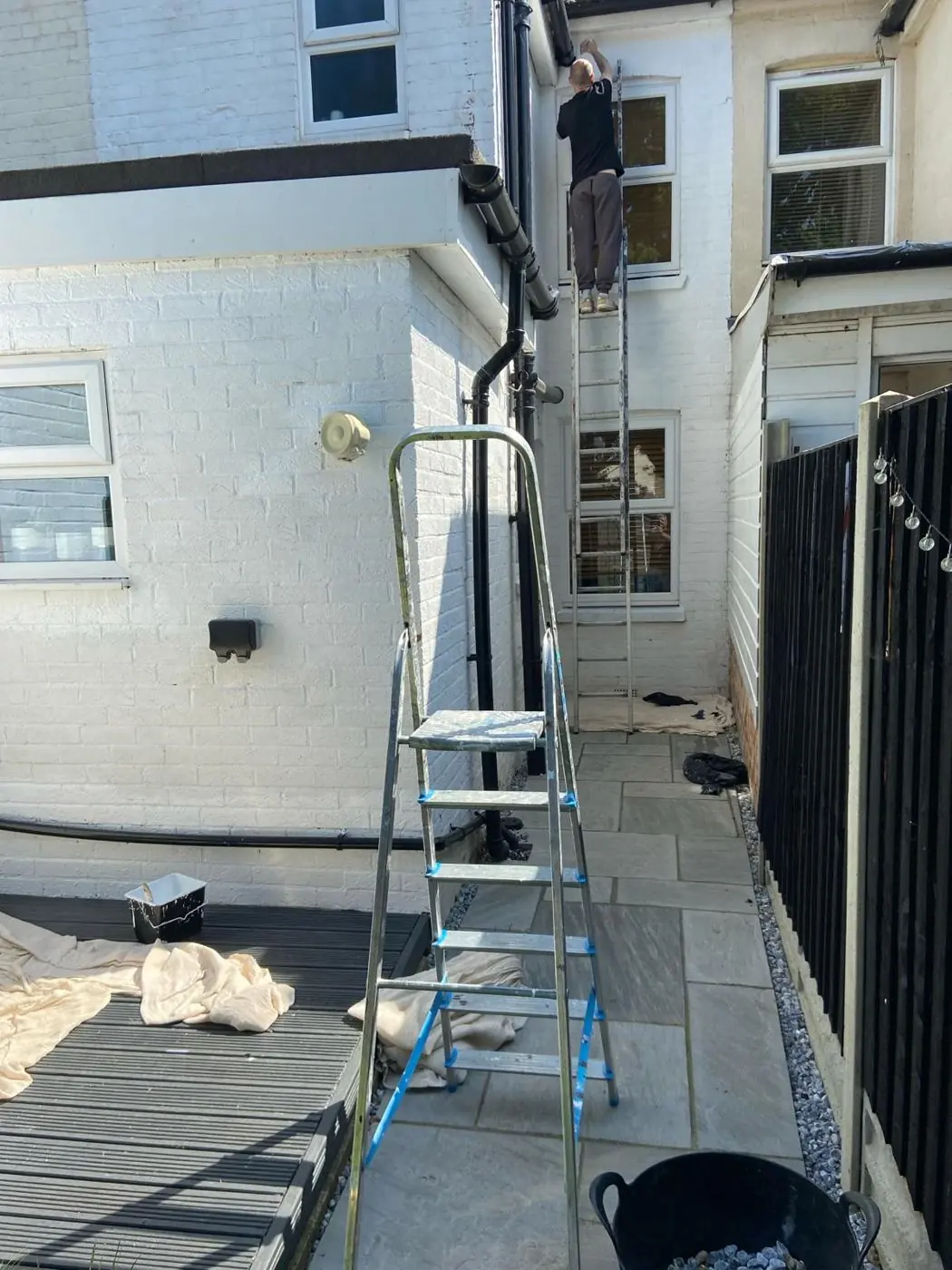
Masonry painting in Parklands is mostly maintenance of surfaces that someone painted or rendered before. Typical examples are:
- rendered or painted panels on a front elevation, porch or extension
- brickwork painted by a previous owner, now flaking or patchy
- plinths and low walls that have been painted and are showing wear
- the masonry on the Coppice Drive parade, where the shops sit below top-floor maisonettes
Once a wall has been painted, keeping it in good order is the right call, because bare patches let water into the paint film and speed up failure. We scrape back loose material, check for hollow render by tapping, fill cracks with a flexible exterior filler, and use a stabilising primer on any chalky surface before two coats of a smooth or textured masonry finish.
Traffic film, algae and drying times
Painted masonry facing Kettering Road, the four-lane A5123 along the estate’s eastern edge, collects a grey traffic film. It has to be washed off and the wall left to dry before priming, otherwise the new coat sits on a layer of grime. On the opposite side, near Bradlaugh Fields, the allotments and the patch of woodland, shaded walls grow green algae. Those need a biocide wash and a dry spell before painting.
Masonry holds water longer than timber, so we want several dry days before and after the work and air temperatures within the range the manufacturer specifies. Our guide to painting render and roughcast covers the product choices and timing in more depth.
Cavity fill and damp patches
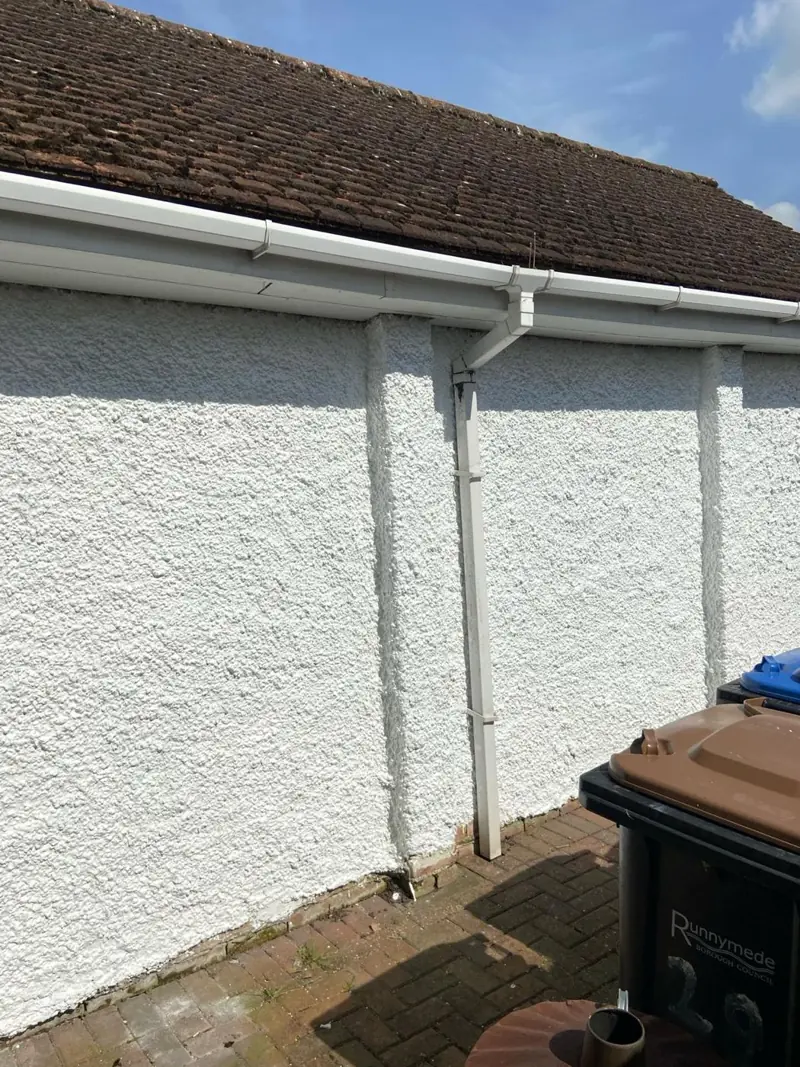
Most Parklands houses have filled cavities, and one EPC on Parklands Avenue recorded an unfilled cavity with fill recommended. If a painted or rendered wall shows damp patches, painting over them hides the cause. We look first for blocked gutters, failed sills or damaged render, and if the wall looks like it is wicking water across the cavity we will say so and suggest a specialist before any paint goes on. There are no conservation controls on the estate, so colour is your choice, though a colour near the brick usually looks most settled.
For full detail on the systems Dean uses across town, see the main render and masonry painting page, and the Parklands area page for the rest of our work in Parklands.
Last updated by Dean, DH Painter & Decorator.