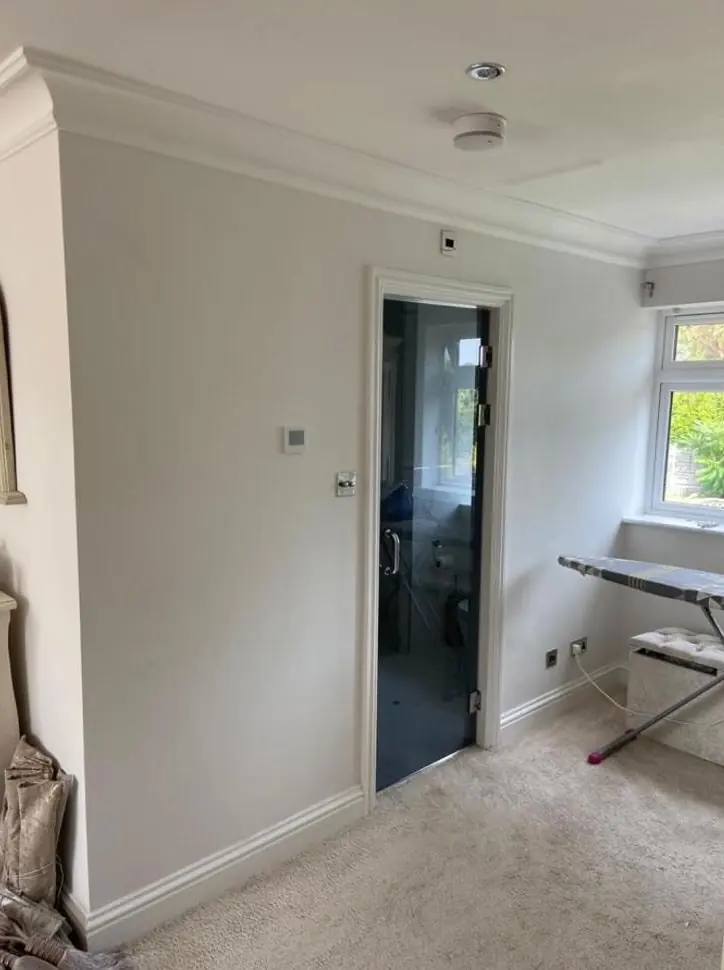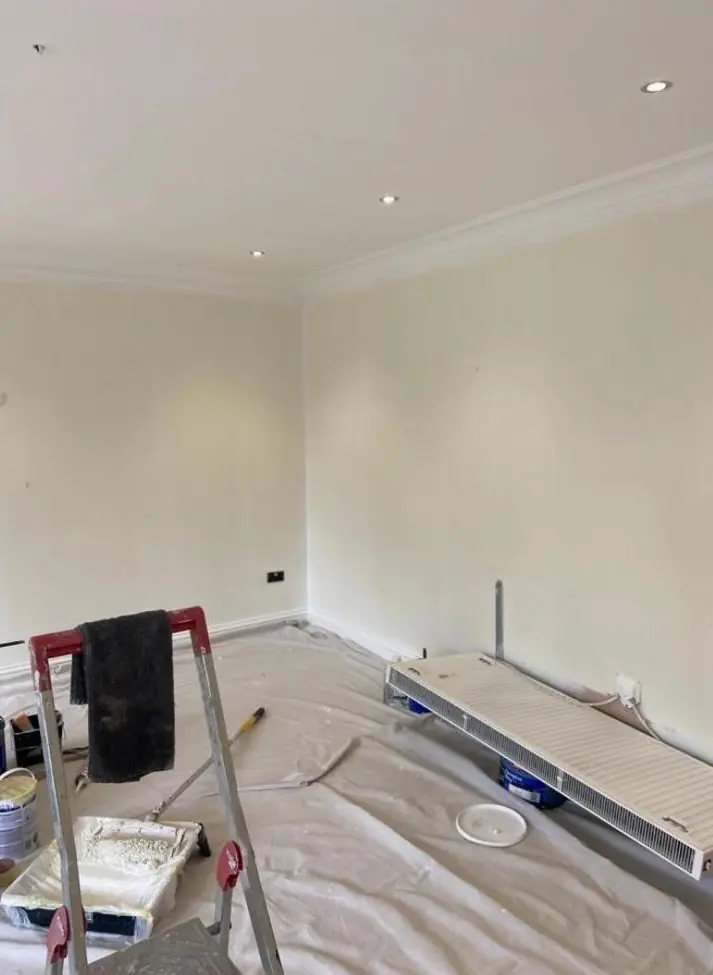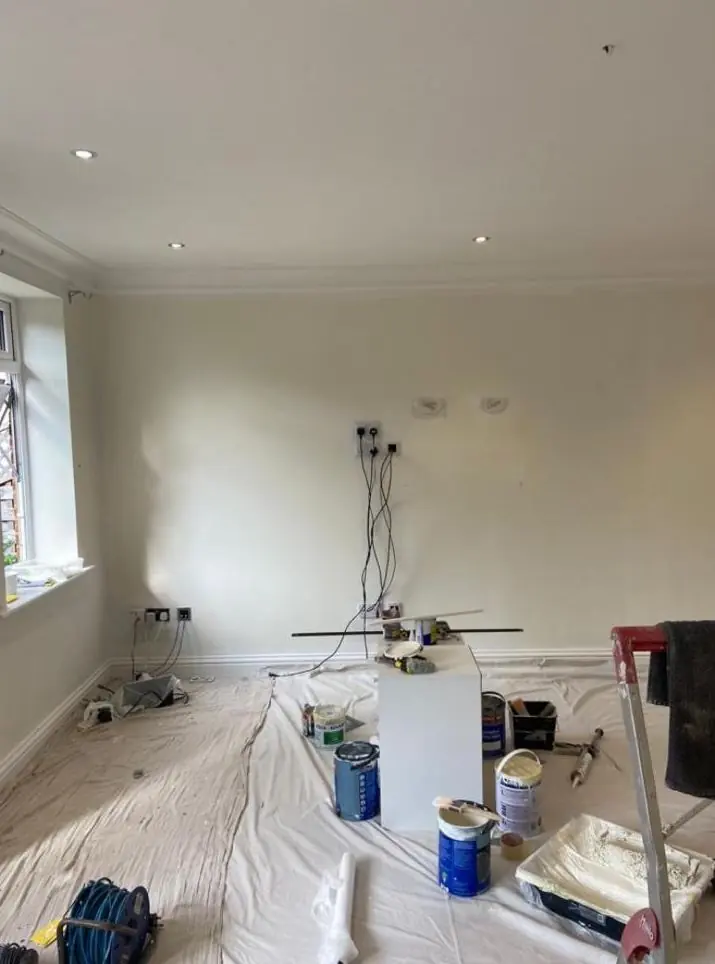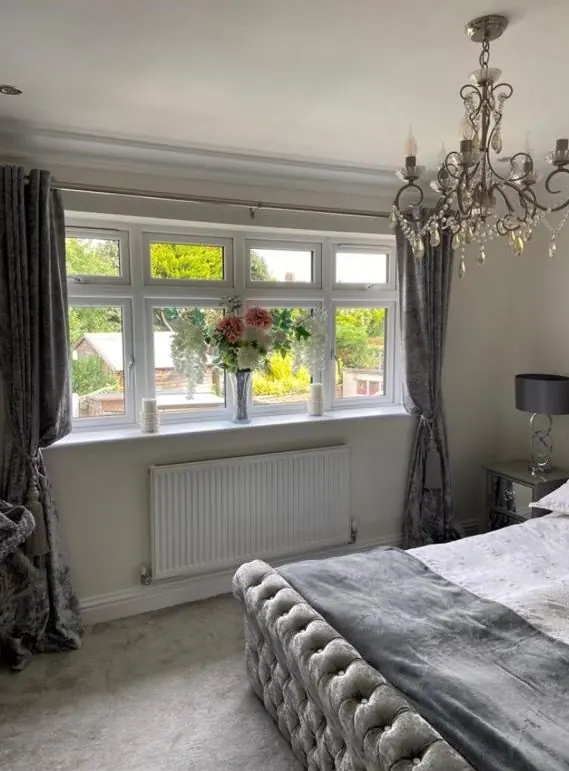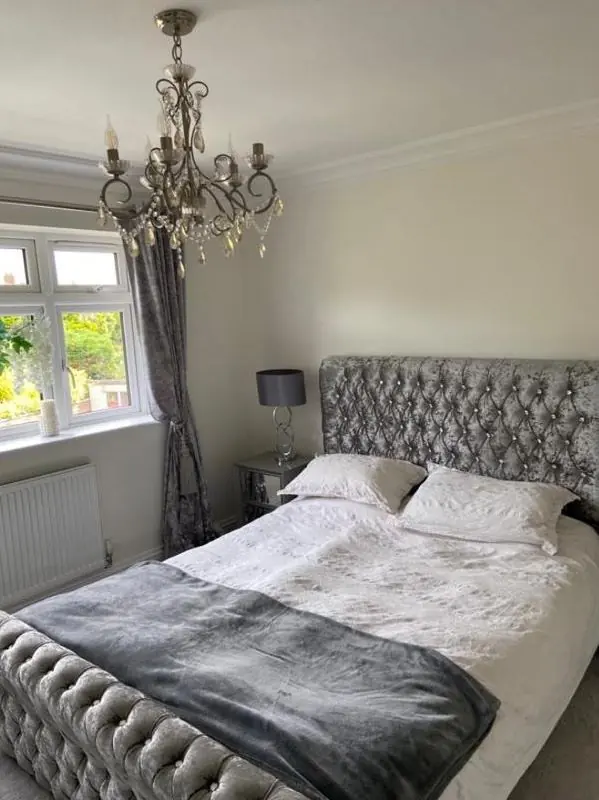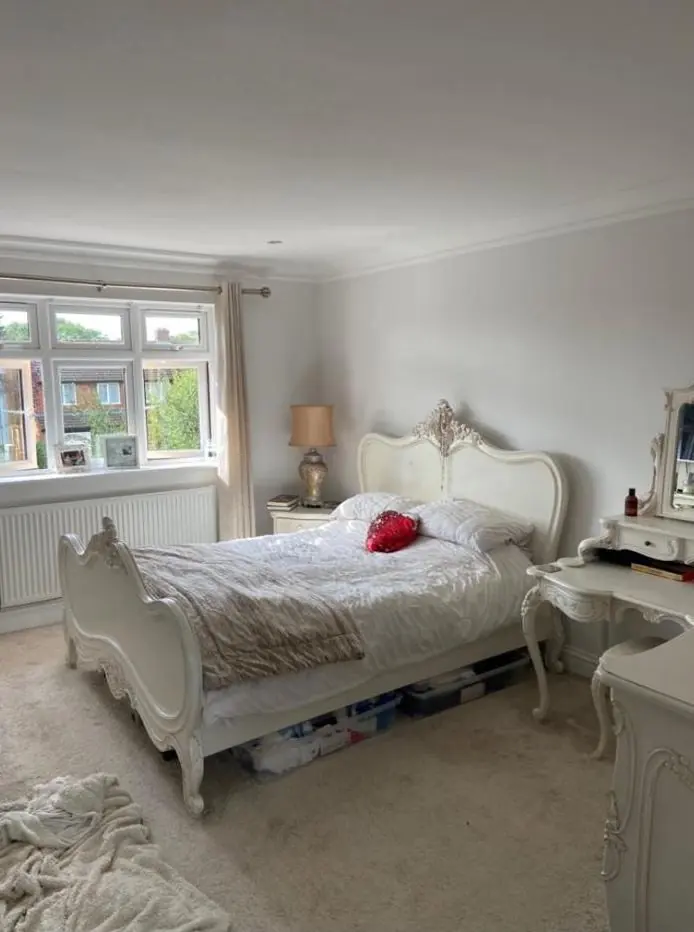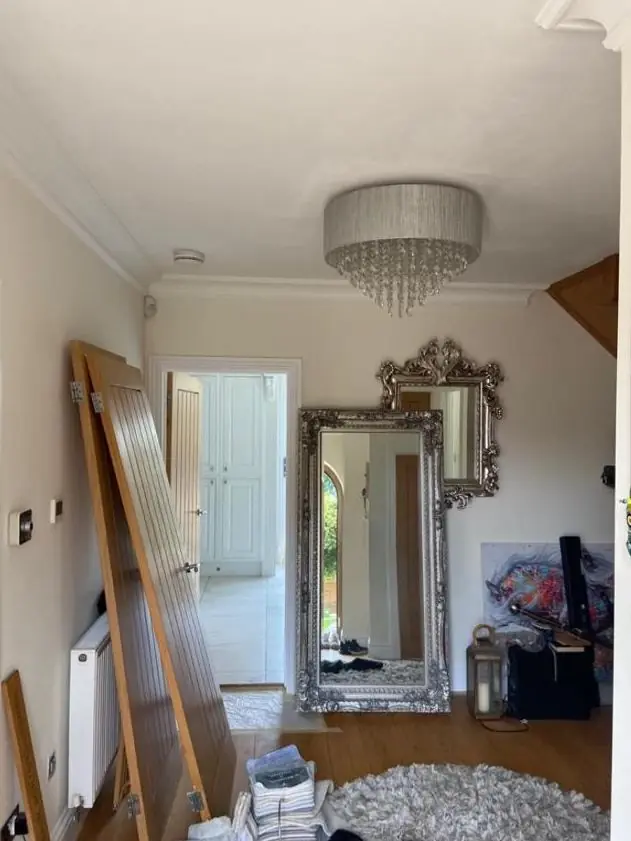
Dean hangs wallpaper and lining paper in Parklands, NN3, which sits 2.5 miles north-east of Northampton town centre. Roof rooms with sloping ceilings and dormers are a feature of many semis here, so the choice of paper and pattern matters as much as the hanging.
Two very different walls in the same house
A typical Parklands semi gives a paperhanger two contrasting jobs. Downstairs, the living and dining rooms have plain, regular walls in a cavity-brick house, which is about as straightforward as papering gets. Upstairs, energy certificates on Parklands Avenue and Parklands Crescent show many of these houses have rooms in the roof, and those rooms are all angles: a short vertical knee wall, a slope rising to a flat ceiling, and one or more dormers cutting through it.
Before you buy a single roll, it helps to know which of those two you are papering, because the answer changes what you should buy.
What works under a sloping ceiling
On a slope, each length of paper is cut to a different height and the pattern has to keep running across the angle. With a large drop pattern or bold stripes, the eye follows the motif straight into the slope, and any small wander in the wall shows up. With dormers, the paper has to wrap into the reveals and meet the window frame, which leaves short pieces on every side.
For roof rooms here we usually suggest one of three routes:
- A small, random or non-directional pattern, which hides the joins where lengths change height
- Paper on the vertical walls only, with the slope painted in a matt ceiling-white so the angle becomes a clean line
- A single papered wall, usually the full-height gable end, leaving the sloping sides painted
Any of these keeps the room calm and avoids the pattern-matching headaches of papering every slope. We will hang a full slope if that is what you want, but we will show you where the awkward joins will fall first.
Cold roof rooms and the right paste
The same energy certificates record poorly insulated roof rooms on the estate. Cold top-floor surfaces attract condensation, and paper on a damp wall can lift at the seams or grow mould behind it. So we check those walls before quoting. Where there are signs of moisture, we treat any mould first, use a paste with a fungicide in it, and often recommend a breathable non-woven paper rather than a heavy vinyl. If the wall is properly wet, we will tell you that papering should wait until the cause is sorted.
Lining the ground floor for a feature wall
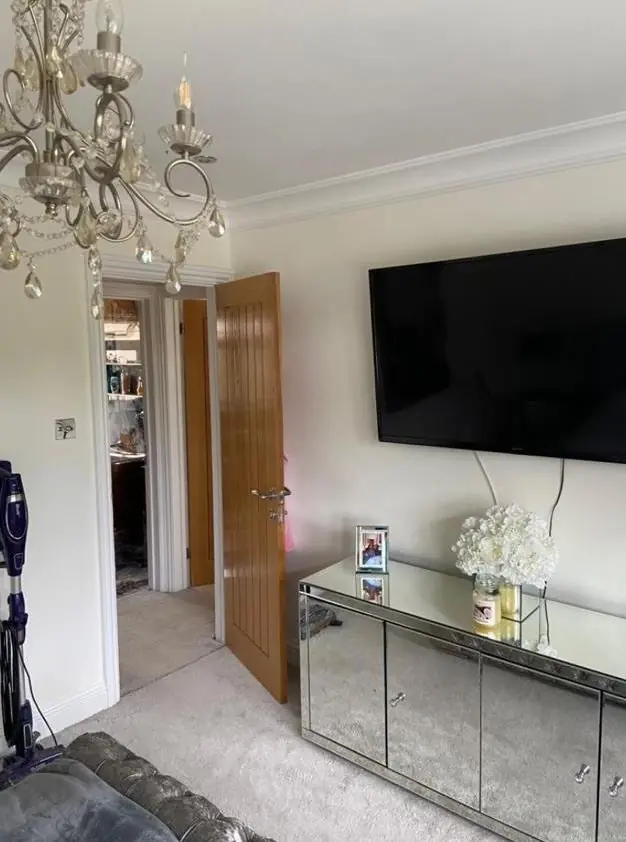
Downstairs is where Parklands homes suit a statement paper. The ground-floor rooms of the semis and detached houses are regular rectangles, and the wall behind the sofa or facing the window takes a bold print well. If the plaster is uneven or patched from years of picture hooks, we hang lining paper first, cross-lined so its joins do not sit under the finish paper’s joins. The result is a flat base that lets an expensive paper sit properly.
Smaller rooms in the single-storey Coppice Drive homes and the flats over the shops need restraint: one papered wall usually does more than four. Our colour and finish advice can match the painted walls to the paper you pick.
Stripping old paper first
If you are taking over a house that has been papered before, there may be several layers under the paint. We steam and strip it, repair the plaster beneath and let any patch repairs dry before hanging. If the walls need new skim, they will need time to dry and the right base coat; our guide to painting new plaster explains why. The full stripping and hanging process is on our main wallpaper hanging service page.
Last updated by Dean, DH Painter & Decorator.