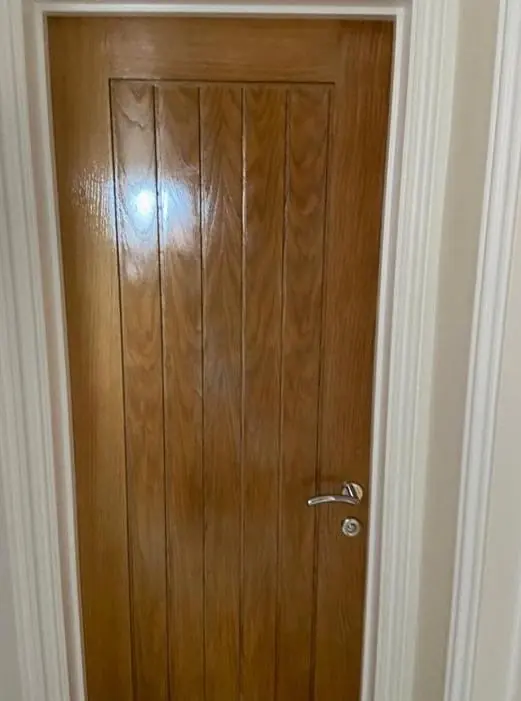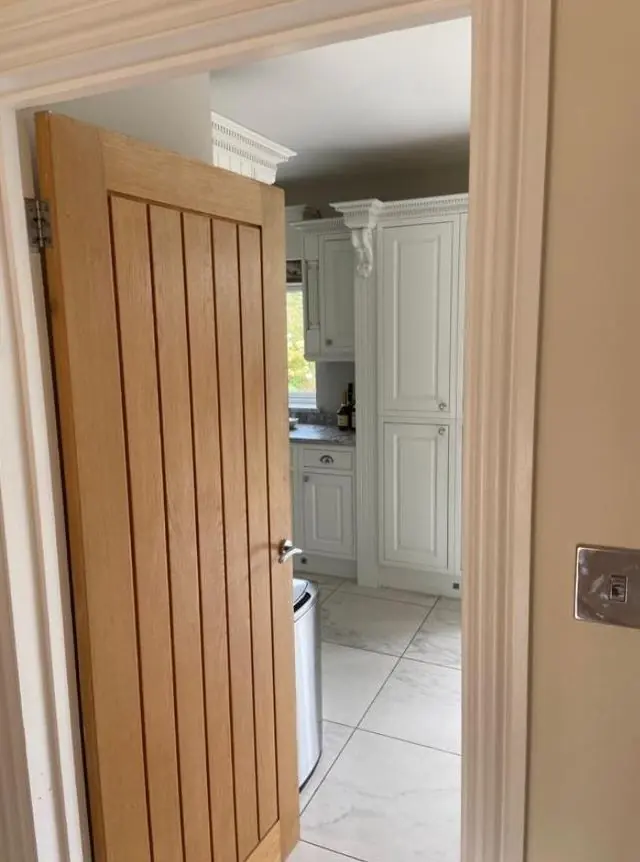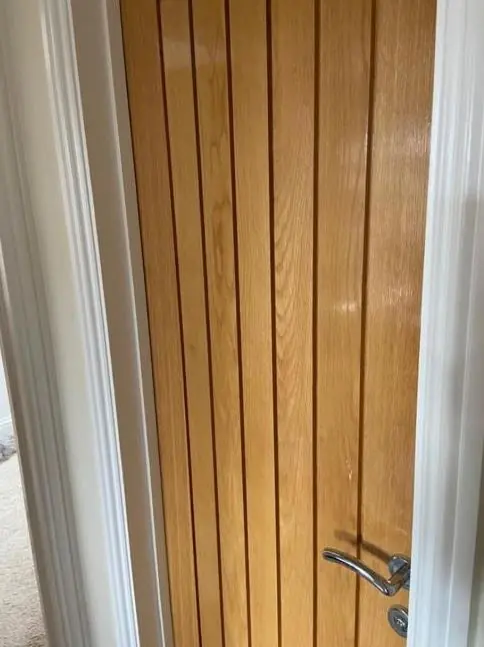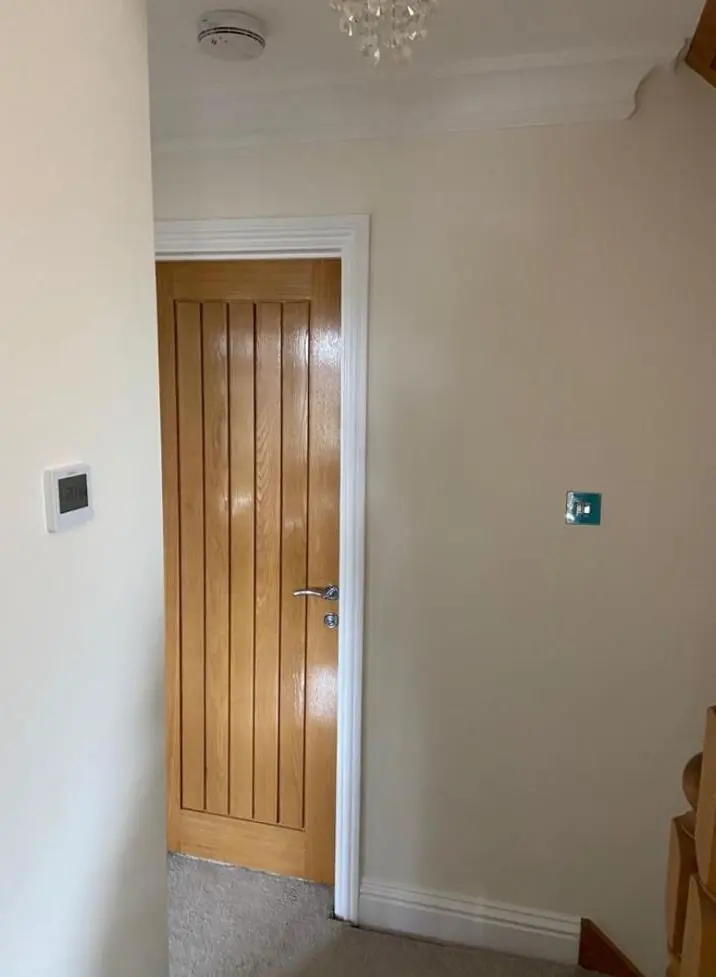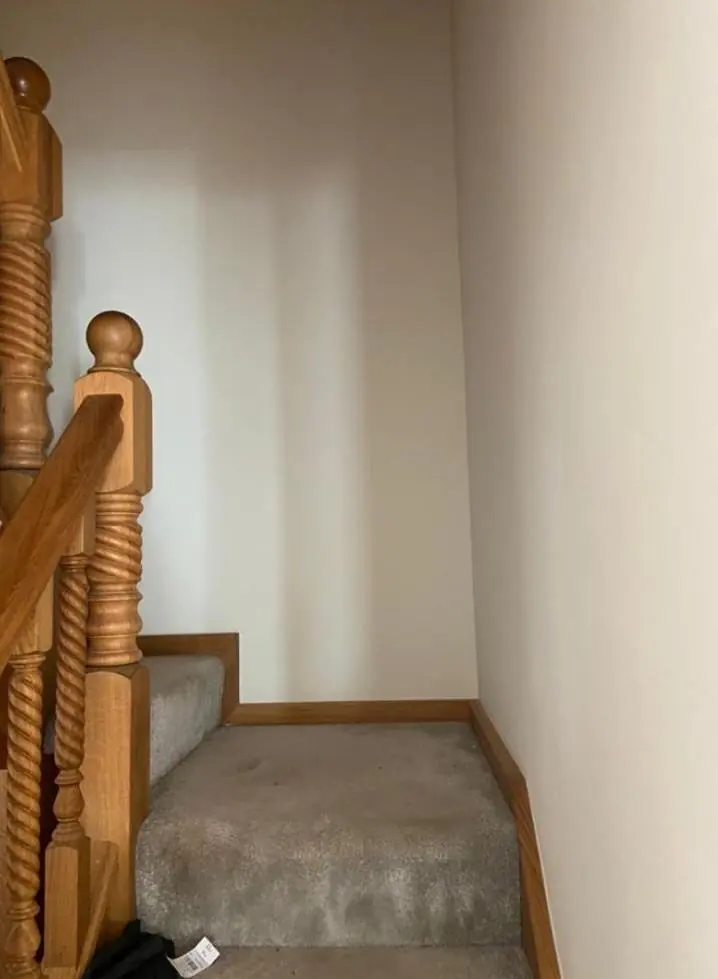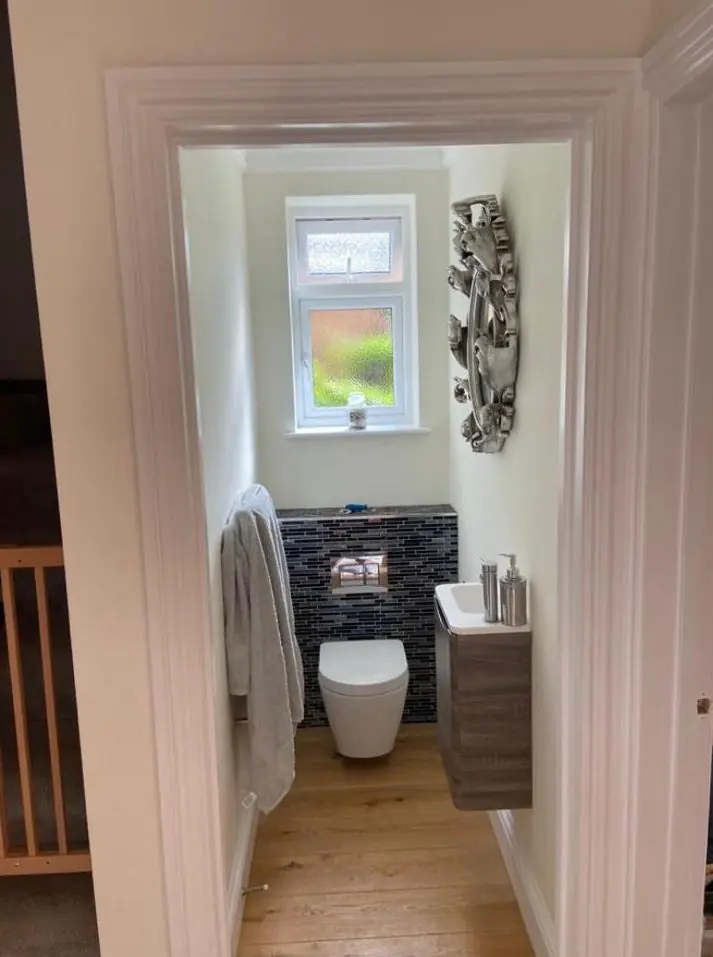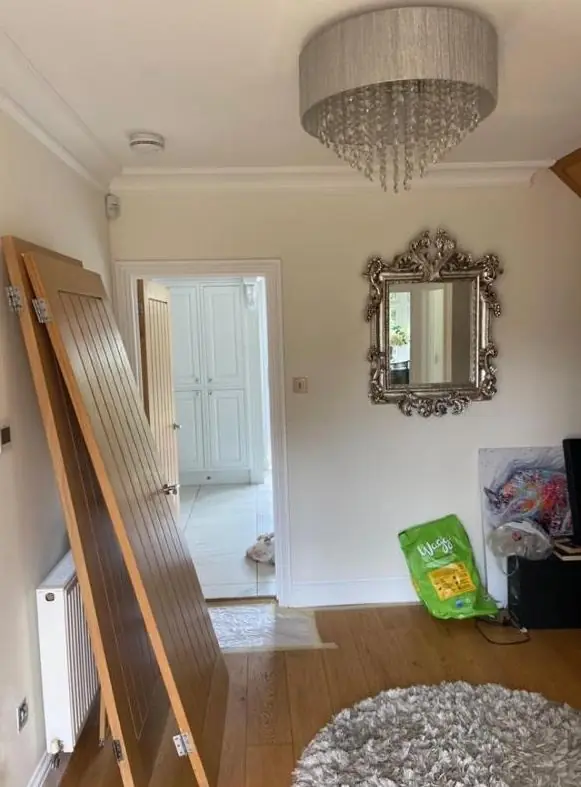
DH Painter & Decorator paints doors, skirtings, architraves and staircase woodwork in Parklands, NN3, a 2.5-mile drive north-east from Northampton town centre. Dean plans each job around how these houses are built, especially the suspended timber ground floors and the extra flight of woodwork that climbs to the roof rooms.
Why skirting joints crack in Parklands houses
Energy certificates for Parklands Avenue, Parklands Crescent and Coppice Drive properties record suspended timber ground floors. A timber floor on joists flexes slightly underfoot and moves with the seasons, and the skirting fixed along it moves too. The result is a fine crack where the top of the skirting meets the wall, or a split at the mitre in a corner, often within months of a repaint that used rigid filler.
On a Parklands job we deal with that first. Old cracked caulk is cut out rather than painted over. The gap is cleaned, then refilled with a flexible decorator’s caulk that can stretch a little as the floor moves. Rigid filler is kept for dents and nail holes in the face of the board, where nothing moves. It is a small change in method, and it is what stops the same hairline crack coming back along the hall and front room.
Two floors of woodwork, and then a third
Roof rooms turn up on EPC after EPC for Parklands Avenue and Parklands Crescent, and they change how much woodwork a house holds. Beyond the usual ground and first floor doors, there is often a second staircase with its own strings, spindles and handrail, a door at the top, and short knee-wall skirtings running under the sloping ceilings.
- Second-flight strings and spindles: these take more knocks than people expect, because furniture for the roof room goes up a tight stair.
- Roof-room doors and linings: rooms under a poorly insulated roof can run cold, so door frames on outside-facing walls may show condensation marks that need cleaning and a stain-block before any top coat.
- Short skirtings under the slope: fiddly to cut in where the board meets the angled ceiling, and worth finishing in a durable satin.
The single-storey semi bungalows on Coppice Drive are a different job. At around 53 sq m there are fewer doors and shorter skirting runs, so a full woodwork repaint there is quicker and fits easily around living in the house.
Choosing a finish for each part of the house
| Where | What we tend to suggest | Why it suits Parklands |
|---|---|---|
| Hall and stair skirtings | Water-based satin | Takes scuffs from shoes and the stairs up to the roof rooms, and wipes clean |
| Internal doors | Satin or eggshell | Low sheen hides minor dents on doors that see daily use |
| Roof-room frames on cold walls | Stain-block, then satin | Seals any mould staining from condensation before it bleeds through |
| Front door facing Kettering Road | Washable exterior gloss | Traffic grime from the A5123 washes off more easily |
If you’d rather keep a traditional oil gloss, we can do that too, though it yellows over time on north-facing landings. The general preparation process, from keying old gloss to knotting bare softwood, is set out on our main door and skirting painting page.
Fitting the work around a Parklands household
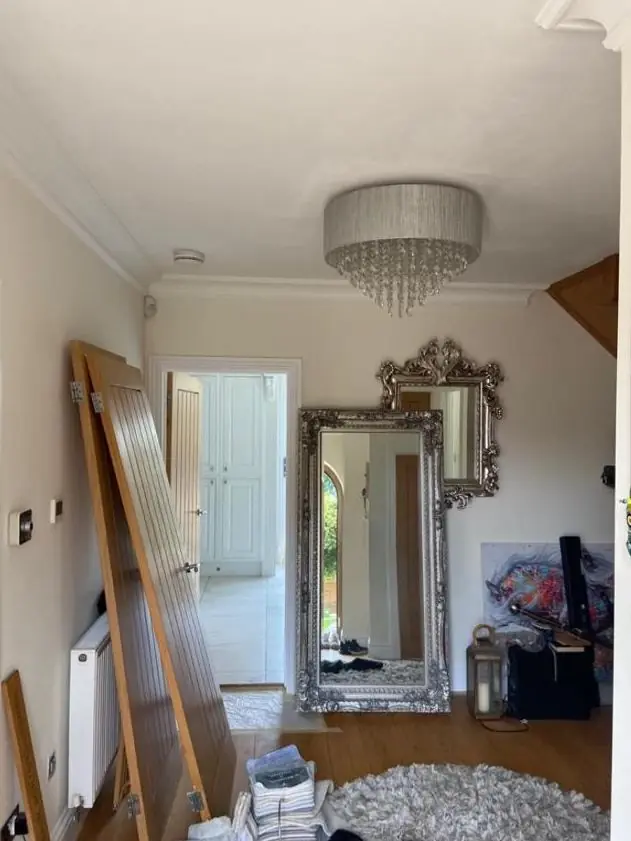
Woodwork is often done in stages, because doors need to stand open to dry and the stairs are the only way up to the roof rooms. We usually paint the second-floor flight and doors first, then work down, so the house never has every route blocked at once. Arrival times are planned around the school run on Spinney Hill Road, where drop-off at Parklands Primary and the nursery makes parking tight.
With no planning designation on the estate, front door and frame colours are up to you. More about the estate’s homes is on our Parklands area page.
Last updated by Dean, DH Painter & Decorator.