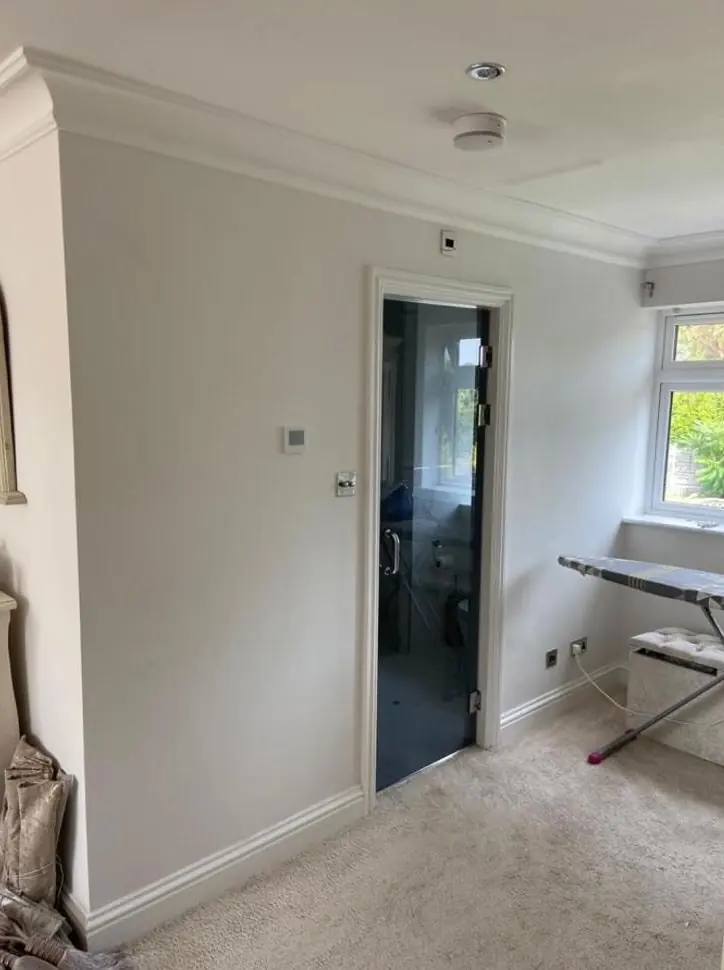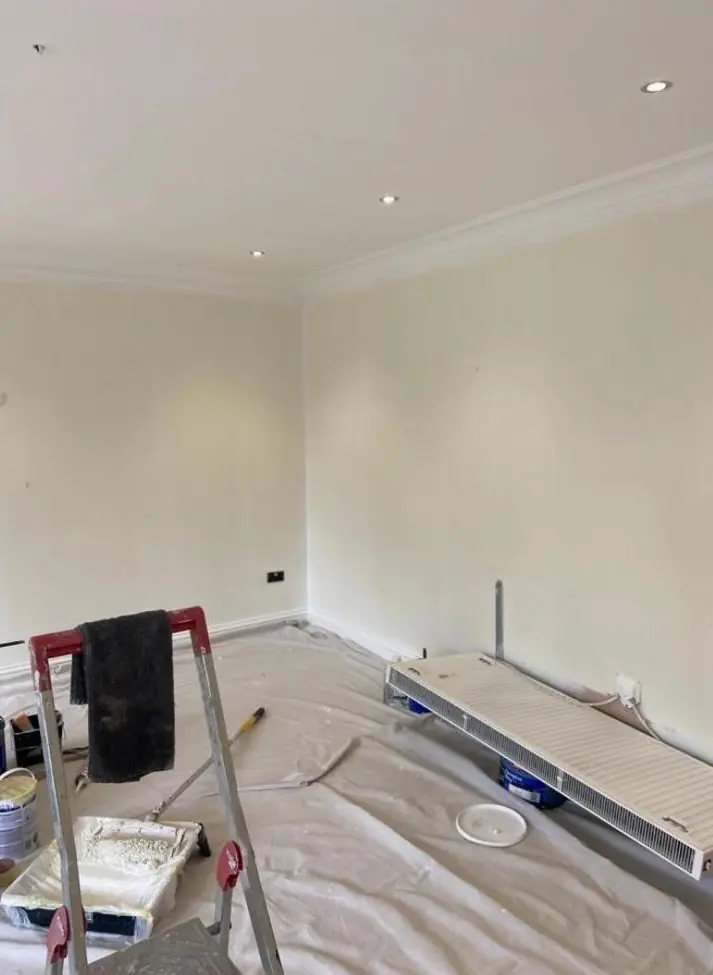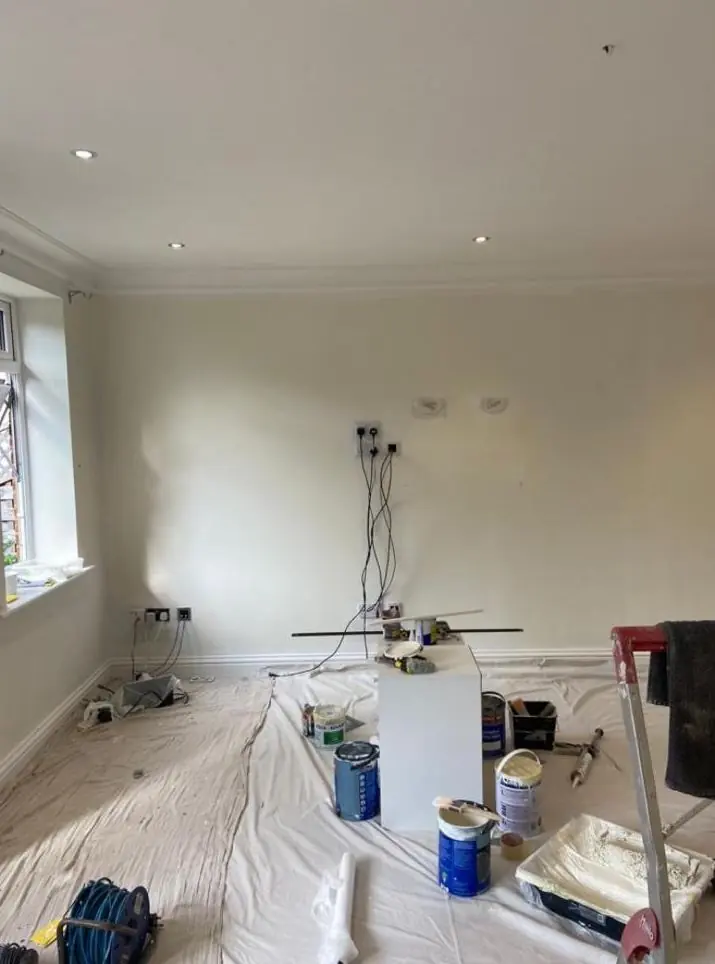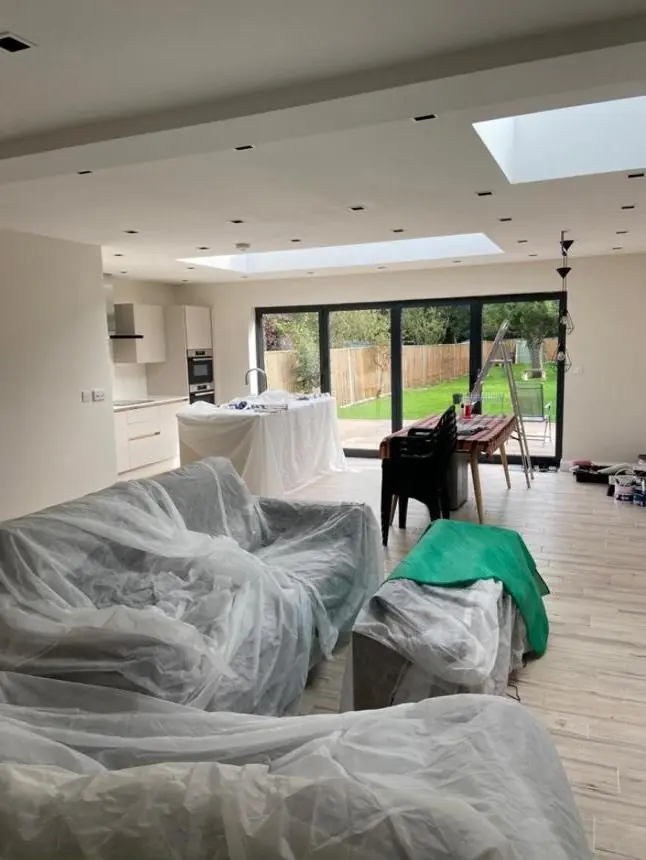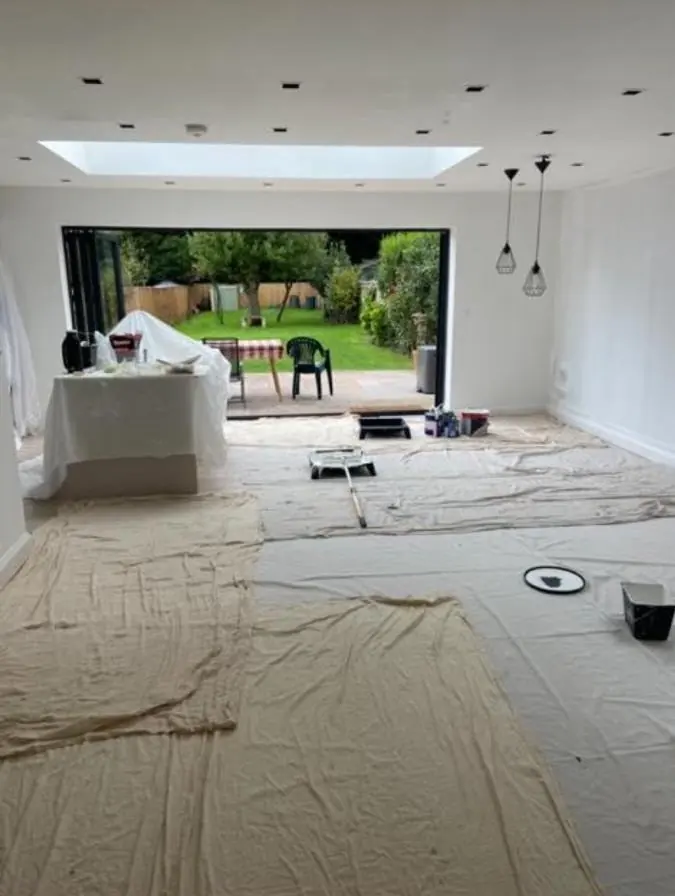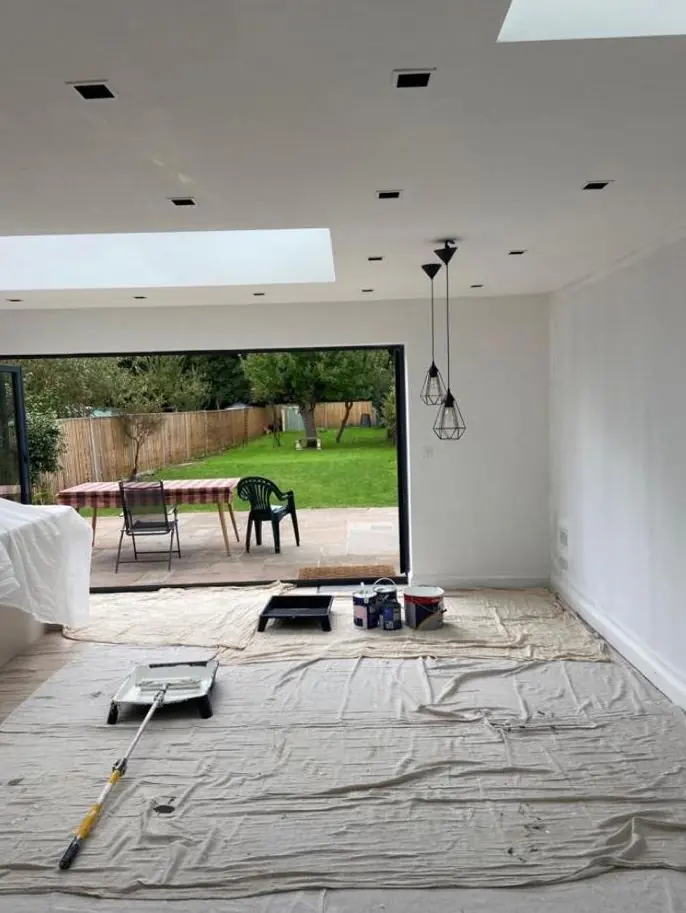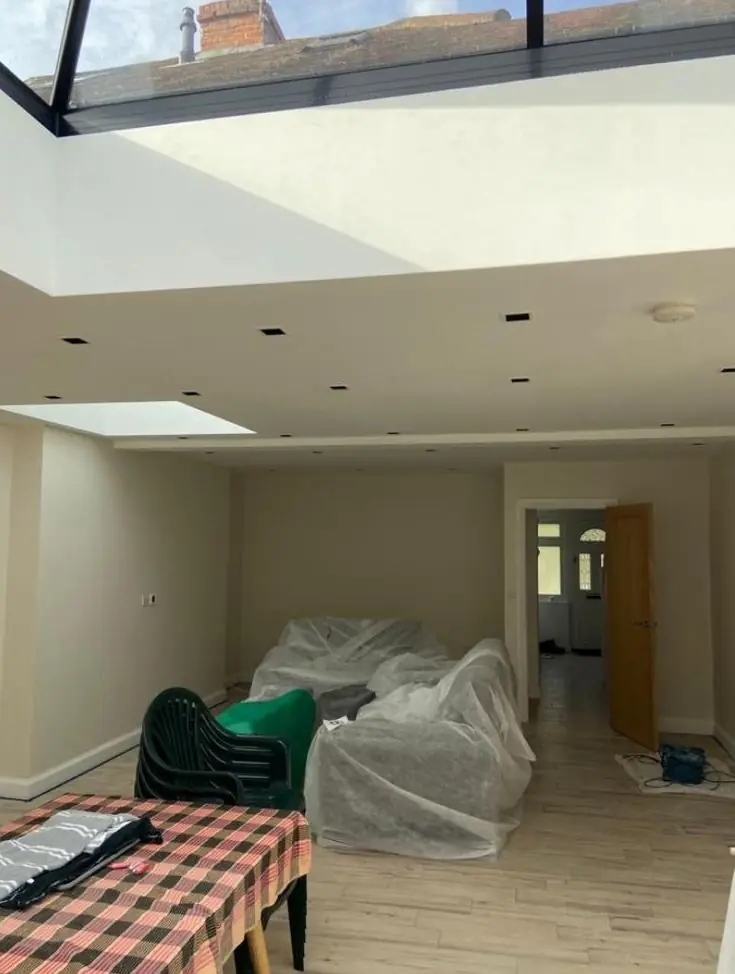
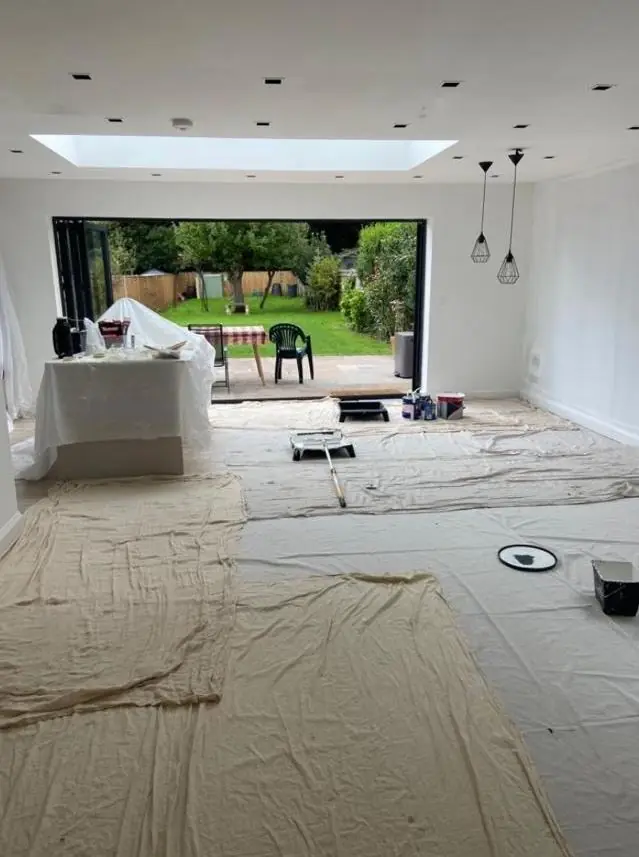
We decorate new plaster in Parklands, an estate 2.5 miles north-east of Northampton town centre in NN3, from re-skimmed bedrooms to roof-room conversions and extensions. Dean checks the plaster is dry, seals it with a mist coat, then applies the finish coats.
Where new plaster turns up on this estate
Parklands is mostly freehold semis and detached houses with filled cavity walls, around 74 to 105 sq m. Energy certificates already list rooms in the roof on Parklands Avenue and Parklands Crescent, and loft conversions and extensions are the usual ways these semis gain space. New plaster here usually comes from a few kinds of job:
- Roof-room and loft conversions, with sloping ceilings, dormer cheeks and short knee walls.
- Single-storey rear extensions on semis, where a new kitchen or family room joins the old back wall.
- Re-skims after rewiring or after old textured ceilings are boarded over.
- Patch plastering in the flat-roofed maisonettes over the Coppice Drive shops, for example once a roof leak has been repaired.
Plaster in a roof room dries differently
A loft conversion is often plastered in a hurry once the boarding is up, and it is tempting to paint the next week. In Parklands that carries a particular risk. Energy certificates record roof rooms with limited insulation, and plaster on a cold slope dries more slowly than a warm ground-floor wall. Damp patches at the junction of slope and knee wall are common. Dormer cheeks are another slow spot, because they are thin, exposed and often plastered last.
We check each surface before sealing it: an even pale pink with no darker patches, including behind radiators and inside dormer reveals. If the corners are still dark we wait. Painting too early traps moisture, and that shows later as peeling or as mould on a cold ceiling. When it is dry, the mist coat goes on, then the finish coats in a mould-resistant emulsion for the top floor. Full detail of the mist coat is in our new plaster mist coat guide.
Joining an extension to the old house
On a semi with a rear extension, the hard part is often the line where new plaster meets the old painted wall. The two surfaces take paint differently, so a single finish across both can leave a visible band. We mist coat the new work, spot-prime any filled cracks on the old side, and run the finish coats across the whole wall so the sheen matches from end to end.
Extensions also bring new MDF skirtings, architraves and door linings. Because the original ground floors here are suspended timber, the joint where a new solid floor in the extension meets an old timber one can move. We use flexible caulk along the skirting there, so a crack doesn’t open at the step between the two floors. New MDF is sealed with a primer suited to it before the undercoat, since raw MDF edges soak up paint and swell slightly if left bare.
Getting the timing right with your builder
| Stage | What happens | Parklands detail |
|---|---|---|
| Plaster finished | Drying time, heating on low, windows cracked | Roof rooms and north-facing slopes take longer |
| Dryness check | Every wall and ceiling inspected | Knee-wall corners and dormer reveals checked closely |
| Mist coat | Thinned breathable emulsion | Sloping ceilings cut in carefully at the ridge |
| Snagging | Fill and sand marks the mist coat shows up | Joints on new boarding often need extra filling |
| Finish coats | Two coats on walls, ceilings and woodwork | Mould-resistant finish under the roof |
On the estate roads, skips and builders’ vans plus the school run on Spinney Hill Road can make mornings tight. We agree arrival times around that. The main new plaster and extension page covers what is included, and our Parklands area page describes the estate’s homes.
Last updated by Dean, DH Painter & Decorator.