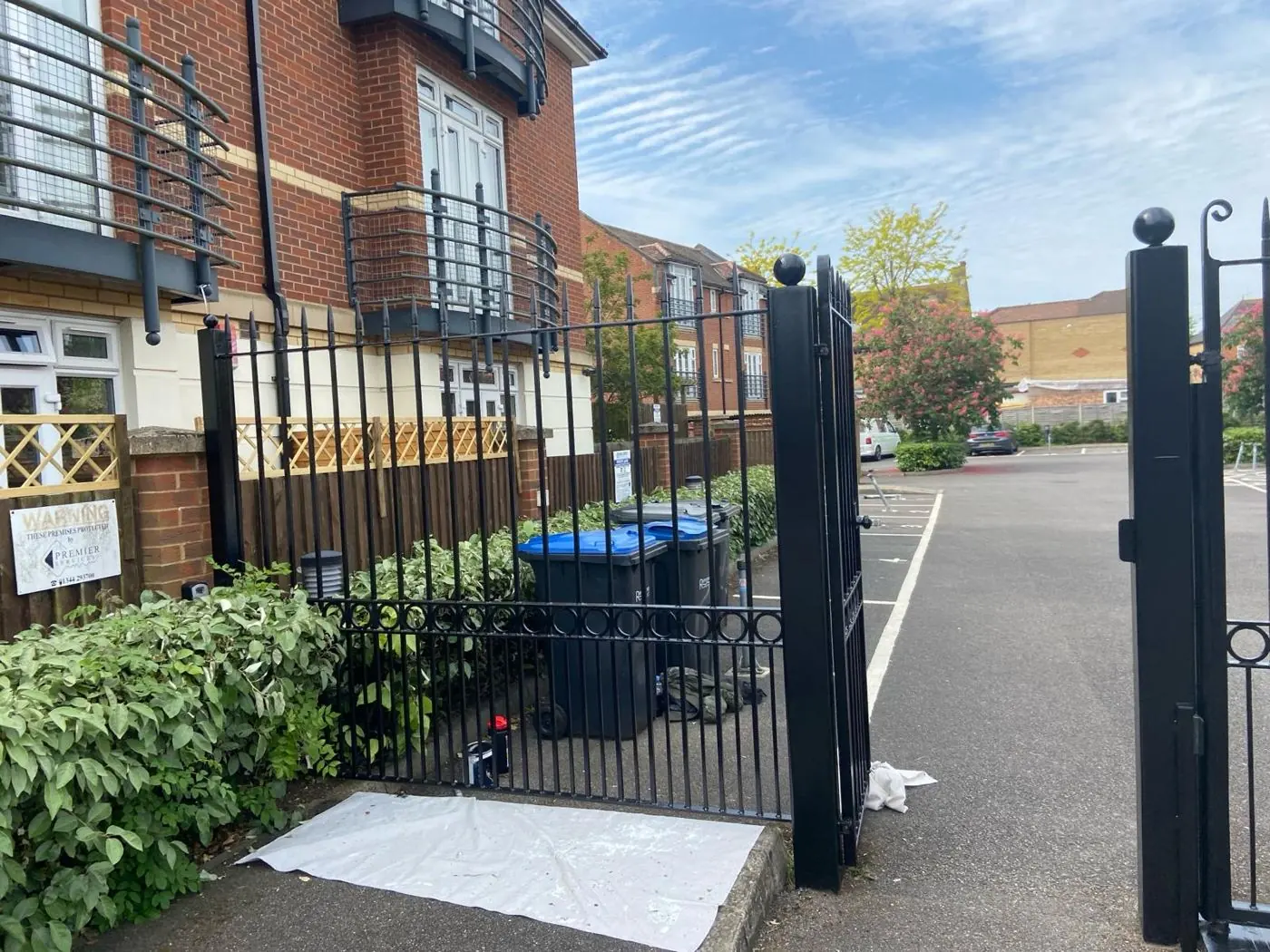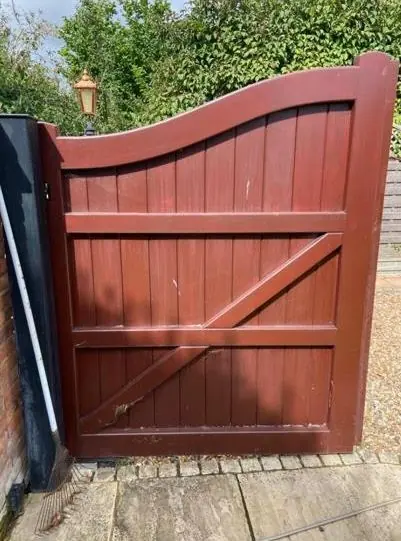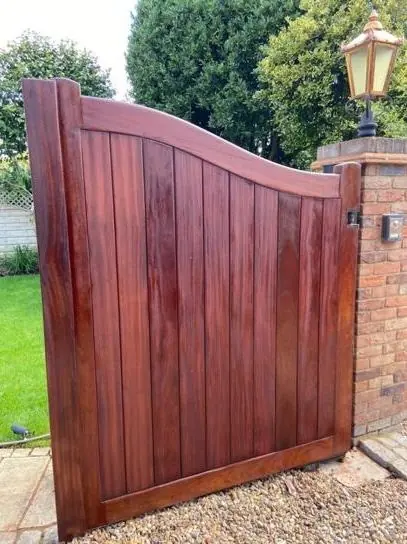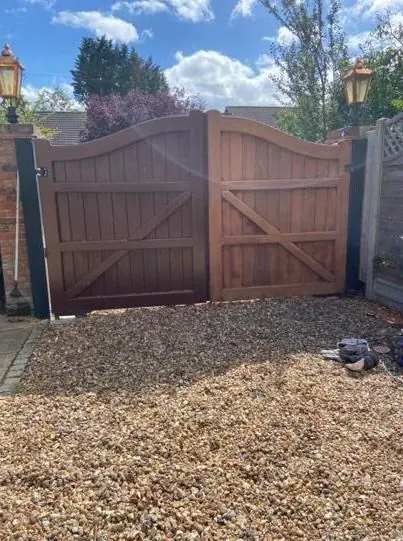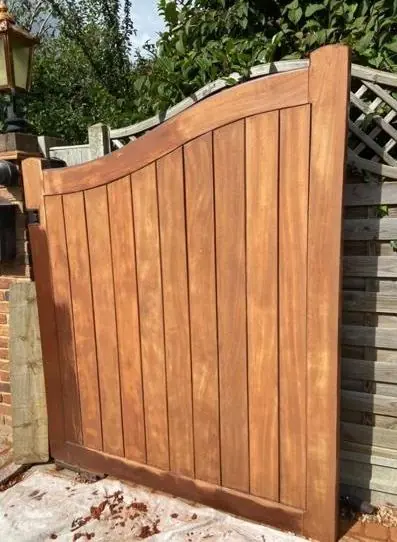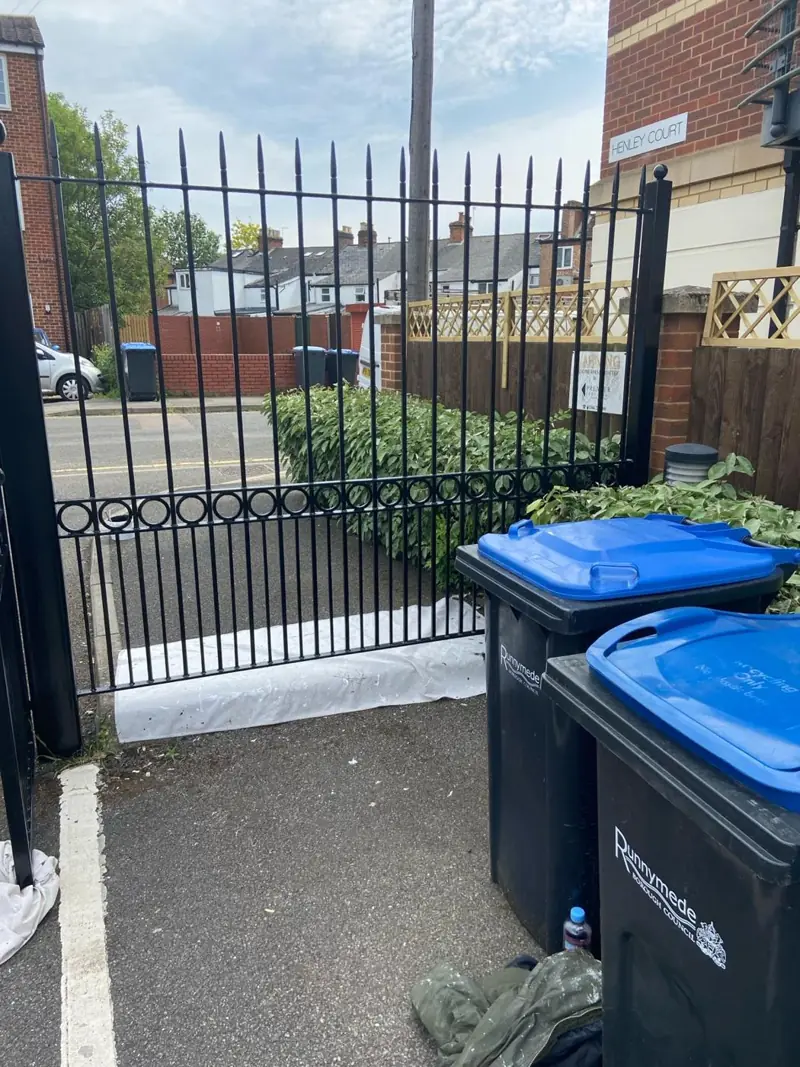
We stain and paint fences, gates and outdoor timber in Spratton, a village on the A5199 about 6.5 miles north of Northampton town centre. Farmland surrounds it, so garden and farmhouse timber takes more wind and weather than it would in town, and Dean picks finishes to suit that exposure.
Open country on every side
Spratton sits on the A5199 with farmland round it, plus large green spaces such as the 50-acre grounds of Spratton Hall School. There is little shelter from tall buildings or dense streets, so fences and gates on the edges of the village get the wind and driving rain head on, and the south-facing runs get full sun. Timber in that position greys and dries out faster than a fence in a town garden, and a finish that wears unevenly shows it within a couple of seasons.
That affects the product. On an exposed boundary we usually lean towards a good penetrating stain that wears back gradually rather than a film that cracks and peels. Where an owner wants a solid colour, we use a microporous timber paint that lets the wood breathe. The comparison between stain and paint, and how we prepare each, is on our main fence and gate staining page.
Farmhouse gates and field-edge timber
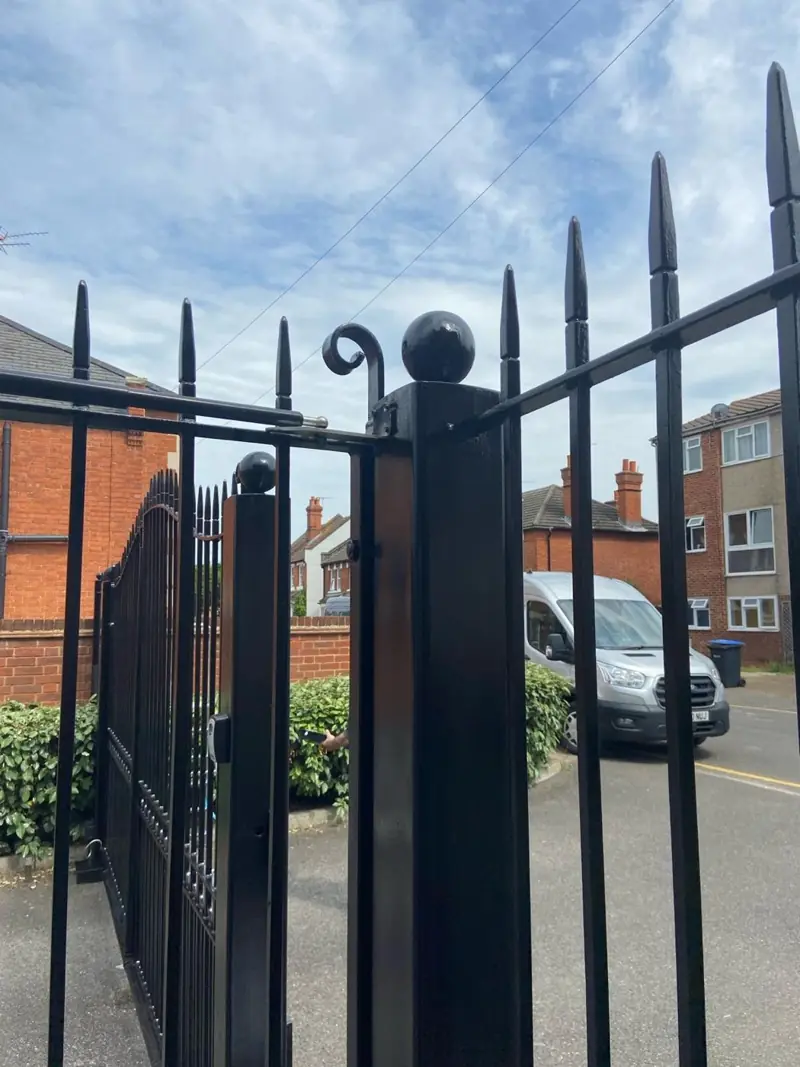
The older farm properties in the village, such as Olde House Farm (built of ironstone in 1691) and Home Farmhouse on Smith Street, show how much of Spratton’s character comes from its farming past. Properties like these tend to have wider timber gates, post-and-rail sections and boarded doors to sheds and stores. Larger gates take extra preparation at the joints and hanging stile, where water gets in first. We clean off algae, let the timber dry, fill open shakes where it makes sense, and work the finish into end grain and joints so they do not become the weak points.
Coach house and outbuilding doors
Some of the bigger houses had their own coach houses, and Spratton House is recorded as one of them. Outbuildings of that kind usually close with tall ledged-and-braced or boarded doors, which swell in wet winters and shrink back in summer. A rigid gloss system tends to crack along every board joint as the timber moves. A microporous wood paint or a stain suits them better because it flexes with the timber and lets trapped moisture out. Where the door hangs on old ironwork, we prepare and paint the hinges and straps as part of the same job.
Gates in stone walls and conservation colours
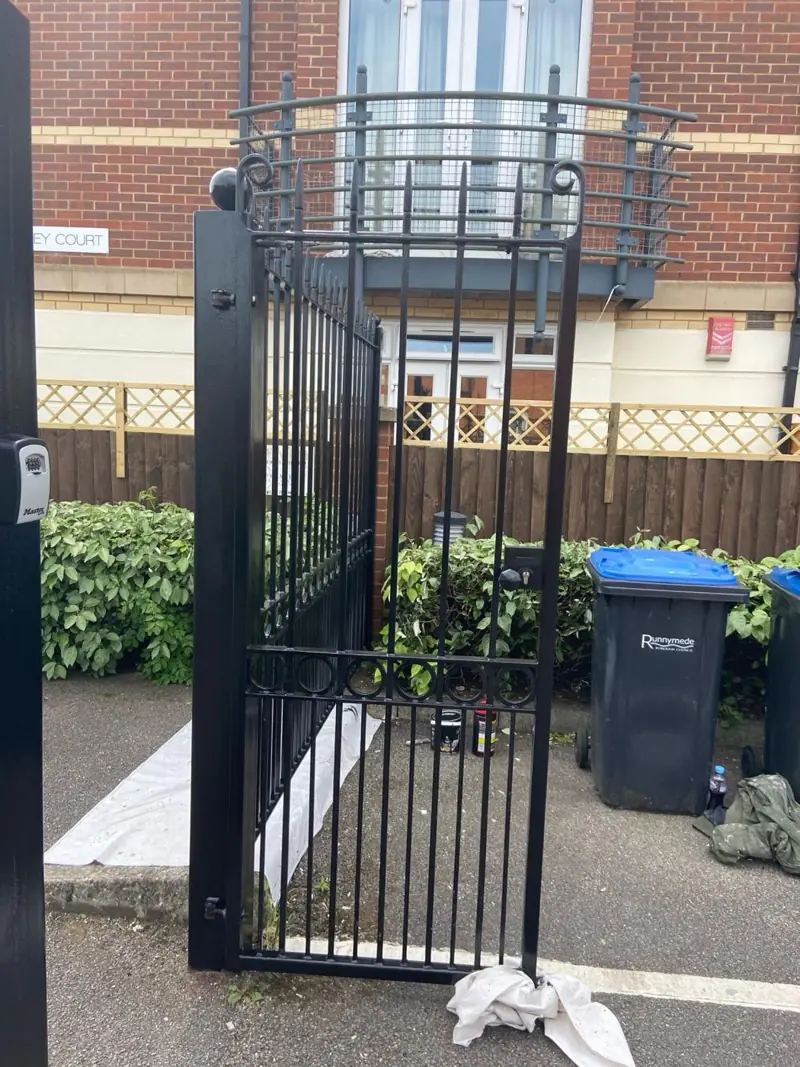
Where a garden boundary in the village core is a stone wall and a timber gate hangs in it, the gate sits right against ironstone or lias. We mask the stone so stain does not soak into it, since stone stains are hard to remove. Spratton’s historic centre is a conservation area, so colour is worth some thought. Natural oak and darker brown stains, or muted greens and greys in paint, usually sit well beside stone, while bright garden shades stand out on a street frontage.
- Back garden fences away from the street: most colours are fine.
- Front gates in the conservation area: traditional tones are the safer choice.
- Gates on listed properties: check with the owner and the council before a change of colour.
Stain needs dry timber and a few dry days after application, so we book fences and gates for settled spells between late spring and early autumn. Bare, greyed wood soaks up more product on the first coat than you might expect, which is normal and helps the finish last. Our seasonal guide to outside painting goes into timing. Other village services are on the Spratton page.
Last updated by Dean, DH Painter & Decorator.