
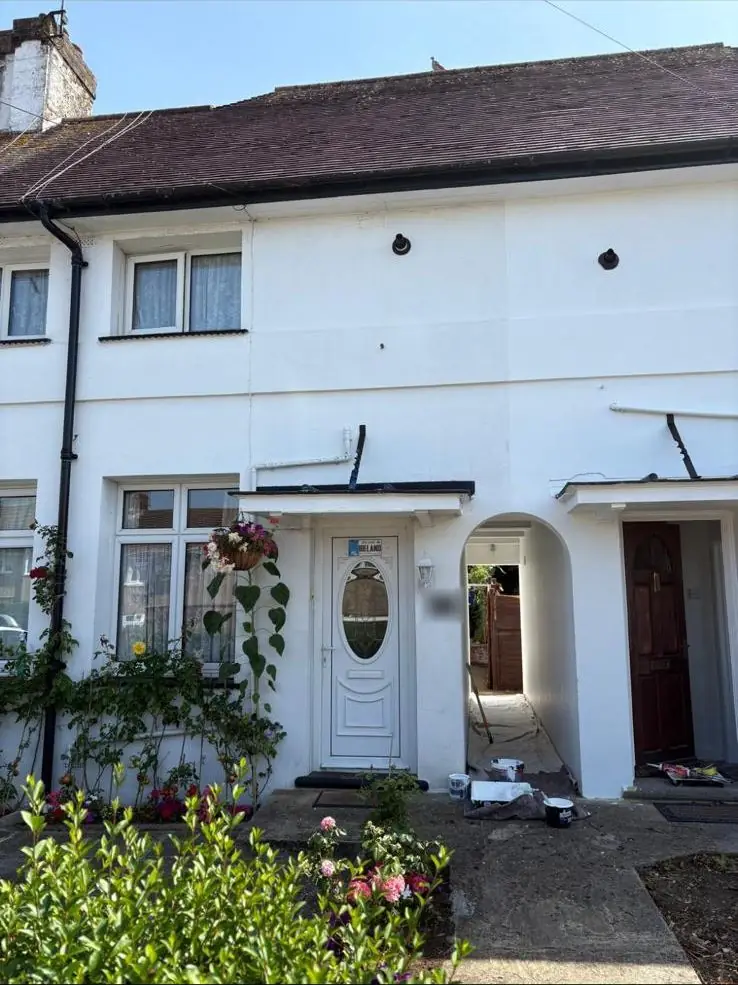


We paint the outside of houses in Bugbrooke, the NN7 village about 5 miles west of Northampton. In the conservation area that means the timber joinery on stone fronts; on the post-war and newer streets it is usually woodwork, the roofline and garden timber.
| Fact | Detail | Source |
|---|---|---|
| Main threat named in the 2013 appraisal | Loss of traditional windows, doors and roofing on unlisted buildings; uPVC discouraged | West Northamptonshire Council |
| Article 4 direction | None made for Bugbrooke (West Northamptonshire Council list) | West Northamptonshire Council |
| Listed building entries in the parish | 34: 2 Grade II*, 32 Grade II | services-eu1.arcgis.com |
| Heygates fleet at Bugbrooke Mills | About eighty trucks run from the company’s main site | heygates.co.uk |
| Streets in the flood warning area | Church Lane, Great Lane and West End (Environment Agency area 055FWFPUNE09) | Environment Agency |
Why repainting the old timber matters in Bugbrooke
When South Northamptonshire Council adopted the Bugbrooke Conservation Area appraisal in March 2013, it named one threat above the others: the gradual loss of traditional timber windows, doors and roofing on unlisted buildings, replaced with uPVC and other modern materials. The appraisal says uPVC is discouraged and its removal supported. Once a timber casement has rotted at the bottom rail, the usual replacement is a plastic one, so regular repainting is what keeps the originals in the village.
Most of that joinery is simple and close to the wall. The appraisal describes Bugbrooke’s cottages as having timber casements with upper windows tight under the eaves, timber lintels, and cills of timber or mortar. Paint fails first where water sits: the bottom rail and cill, the end grain of lintels and the foot of plank doors. Our exterior jobs in the old core start there, with soft timber cut out and spliced or filled with resin before any primer goes on.
Do I need permission to repaint the outside of my Bugbrooke house?
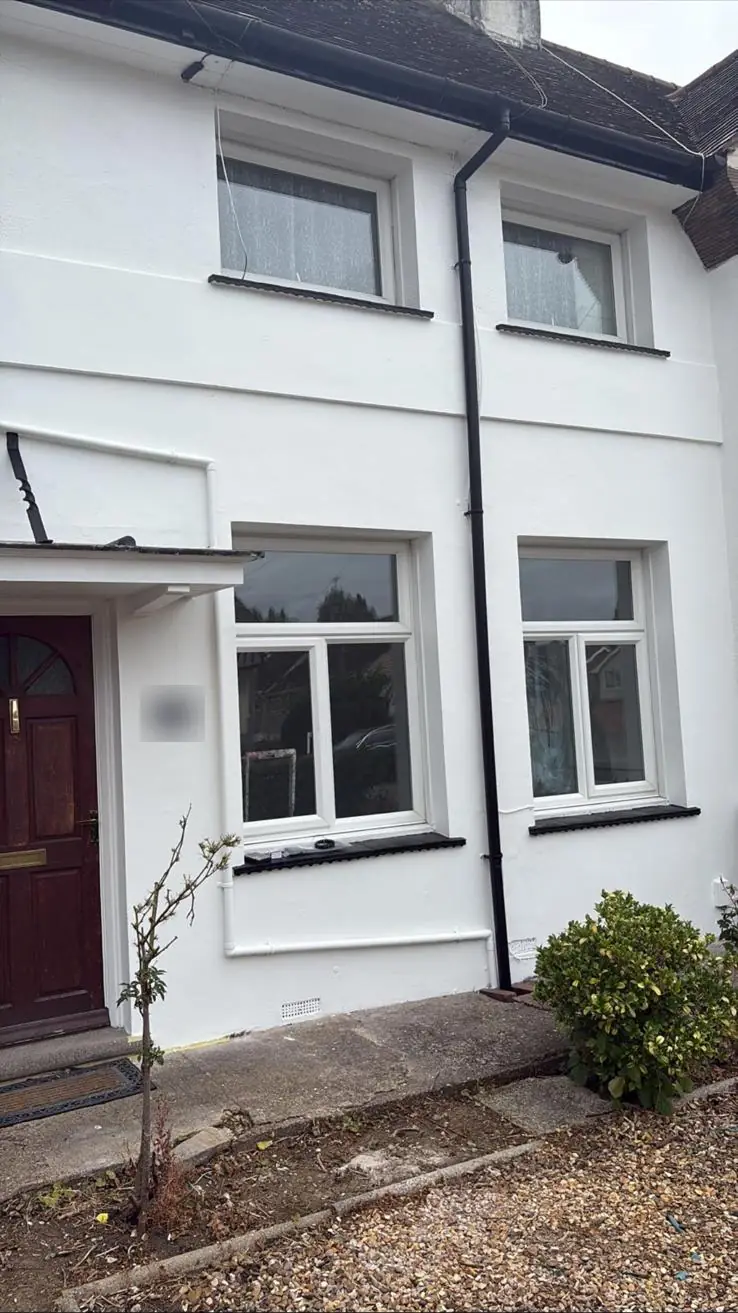
It depends on whether the house is listed. Bugbrooke has 34 entries on the National Heritage List, two of them Grade II*, the church and the Dower House. On a listed building, a change of colour or finish can need listed building consent, so the existing paint is our starting point and any change is checked first.
For an unlisted house, even inside the conservation area, repainting is not controlled, because no Article 4 direction has been made here; the 2013 appraisal only proposed considering one. Several modern cul-de-sacs were drawn out of the boundary altogether, including The Anvil and The Paddocks off High Street. Colours are still worth thinking about on the old streets, and the Bugbrooke colour advice page goes through the stone and brick you are painting against.
| Type | Share |
|---|---|
| Detached | 44.4% |
| Semi-detached | 45.1% |
| Terraced | 6.8% |
| Flat or maisonette | 3.5% |
Source: Census 2021 (ONS), accommodation type (TS044) tables via Nomis. The figures are for the census area that best fits Bugbrooke, so its edges are not exactly Bugbrooke’s.
What gets painted on an ironstone or limestone front
The walls of the listed houses are coursed ironstone, limestone, or the two banded together, and the list entries describe them as bare stone. They stay unpainted. The exterior work is everything else:
- Casements and sashes: leaded casements, the unusual horizontal sliding sashes at 37-43 High Street, and 12-pane sashes on the larger houses such as The Grange and 47 High Street. Leaded lights are scraped by hand, never heat-stripped.
- Lintels and cills: exposed timber lintels take a microporous finish so the wood can dry out.
- Doors and porches: plank doors, panelled doors, the 20th-century porch at 45 High Street and the 19th-century gabled porch at Beehive Cottage, 1 West End.
- Rendered plinths: 28 and 73 High Street and the Dower House have them, and they need a breathable coating, covered on the render and masonry page.
Outside the old core, on houses from the 1960s onwards, the exterior job is usually the fascias and soffits, the front and garage doors, any timber cladding and the garden fence, often done in one visit, so the ladders or tower only go up once. Each of those surfaces gets its own primer and topcoat in the quote, because softwood, old gloss and weathered fence boards do not take the same products.
Lorry dust, low ground and choosing the weeks
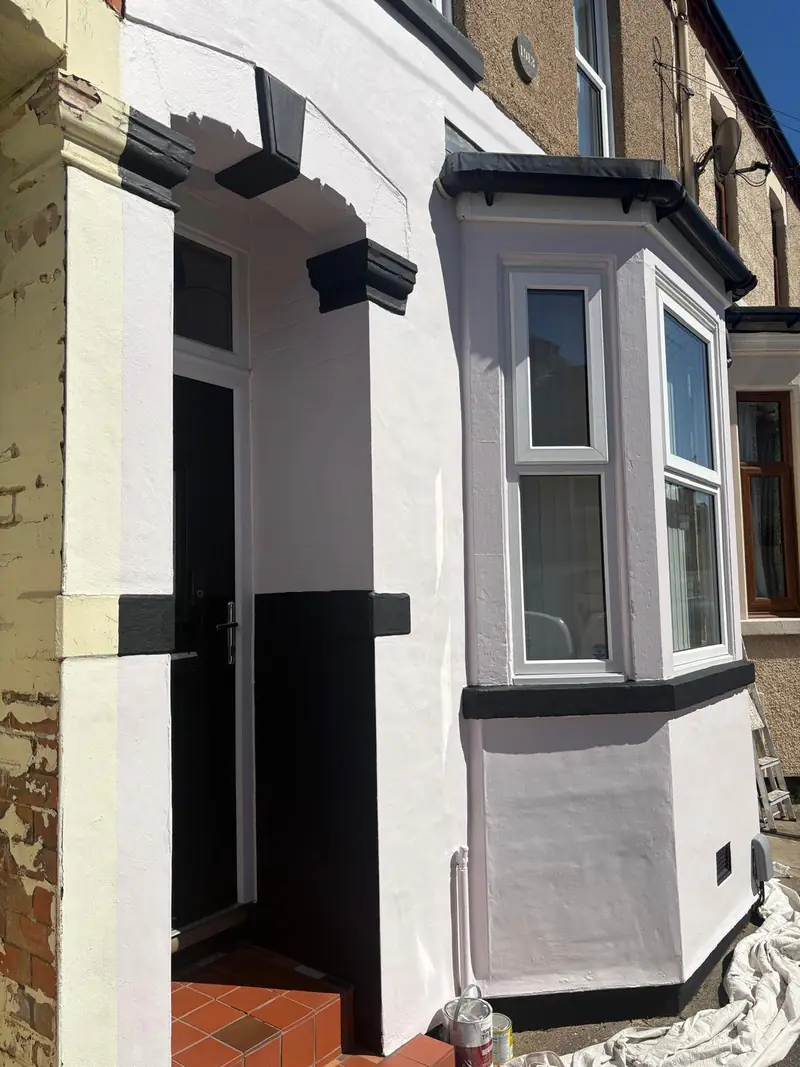
Bugbrooke Mills is the main site of Heygates, and the company runs a fleet of about eighty trucks from it. Fronts on the through roads collect a grey film of road dust, and paint applied over it peels with the dirt. Those elevations are washed down and left to dry before any sanding.
The other local factor is water. The Environment Agency’s flood warning area for Bugbrooke names Church Lane, Great Lane and West End, near the Hoarestone Brook, and the village drops to the Nene meadows on the north side. Joinery on that low ground holds moisture longer, so we check cills and door bottoms with a moisture meter and keep these elevations for the drier months; the best time for exterior painting guide explains the temperatures and dew points we work to. Our general method is on the exterior painting service page, and the Bugbrooke page sets out the conservation areas and flood warning streets.
Last updated .