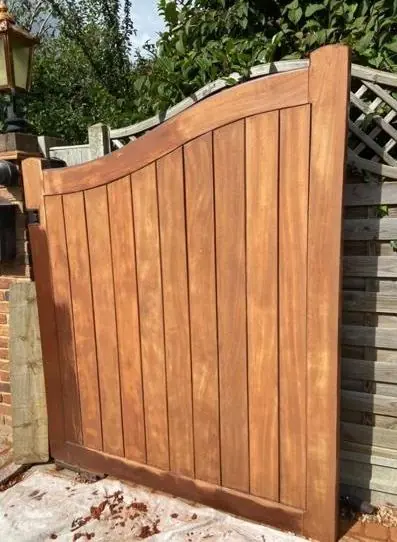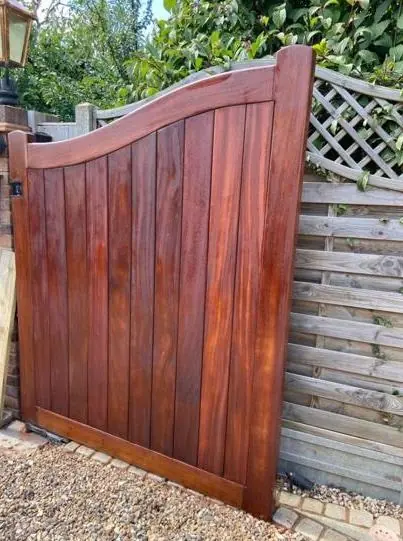
We stain and paint fences, side gates and sheds for homes in Spinney Hill, NN3, where many gardens run down to the edge of Bradlaugh Fields. Dean looks at the timber, how much shade it gets and what lies beyond it before recommending a finish.
Two sides of the same fence
Sampled Spinney Hill listings describe south-facing rear gardens with mature trees, shrubs and timber fencing. That combination gives a fence two very different lives. The stretches in full sun dry out, fade and turn silver-grey, while the runs under trees stay damp and go green. A single product and a single visit can handle both, but the preparation differs. Sun-bleached boards need a good brush down and sometimes a second coat to even the colour, and shaded boards need cleaning and a biocide before any stain goes near them.
Gardens that back onto the nature reserve
Bradlaugh Fields borders the district: about 60 hectares of limestone grassland, ancient hedgerow fragments and mature trees, including the Hills and Holes former quarry and an area used by badgers. Many Spinney Hill gardens back onto that open, vegetated ground. For staining, that means three practical things.
- Leaf litter and shade feed green algae on the boards, so cleaning and a biocide come first.
- Stain is brushed rather than sprayed along boundaries next to open ground, so it stays on the fence and off hedges and grassland beyond.
- The far face of a boundary fence may not be reachable from your garden, so the quote states which faces are included.
Feather-edge, sheds and side gates
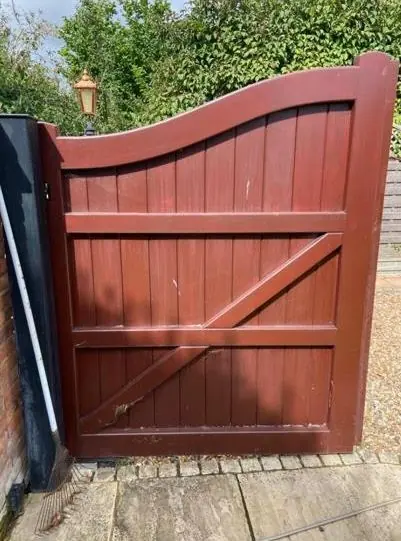
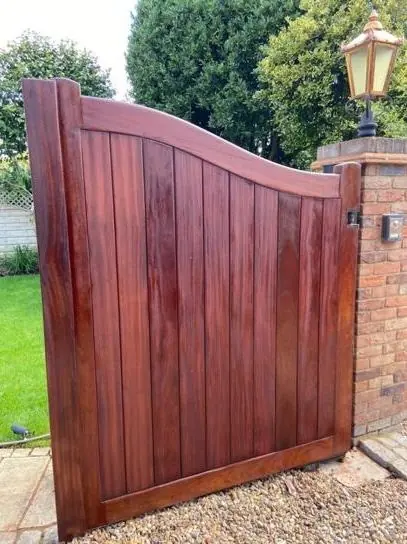
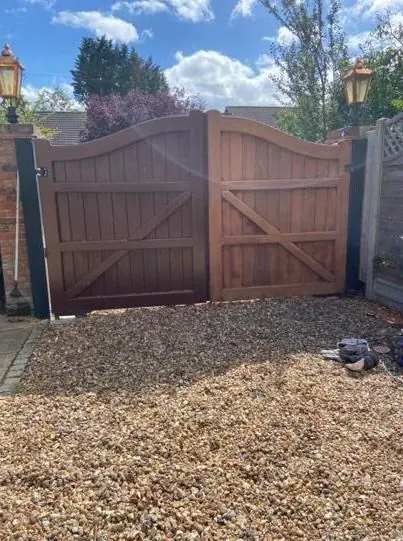
The fencing on these semis is typically timber feather-edge, with sheds at the bottom of the garden and a side gate between the house and its neighbour. Feather-edge is overlapping vertical boards, which means many edges and a lot of end grain where the boards meet the rails. Stain has to be worked into those overlaps, not just across the faces, or the gaps weather first. Side gates take more handling than fence panels, so their bottom rails and hinge sides get extra attention. Sheds are treated as their own small job: the cladding, the door, the window frame if there is one and the fascia boards under the roof edge. A shed sitting under trees often has a green north face and a dry south face, much like the fence beside it, and gets the same split preparation. Gravel boards at the bottom of the fence stay wet longest, so they are cleaned and given a proper coat rather than a quick wipe.
Both oil-based and water-based fence stains suit feather-edge timber. Oil-based products soak in deeper and suit older, drier boards. Water-based ones dry faster and keep smell down, which can matter if the garden is used every day. Expect to recoat every one to two years, depending on how much sun and shade the fence gets.
Fitting the work around a family garden
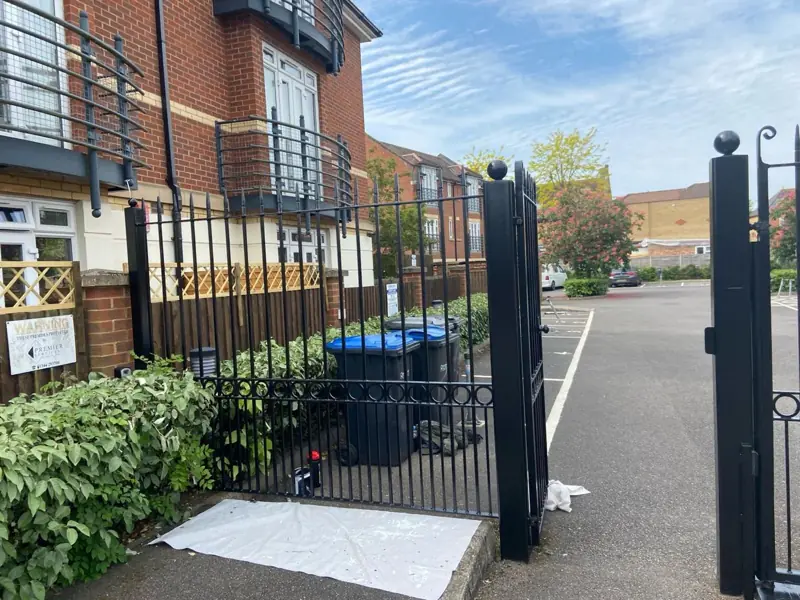
Spinney Hill semis usually have side access to the rear, which lets us bring materials round without going through the house. The front driveway usually gives room for the van, and if your house sits opposite Northampton School for Girls, we arrive outside school-run times.
Front boundaries on the Lindale Close chalet homes are open-plan, so fence work there is mostly at the rear and sides. Find out how we prepare and finish garden timber on our fence and gate staining page, or read more about the area on our Spinney Hill page.
Last updated by Dean, DH Painter & Decorator.