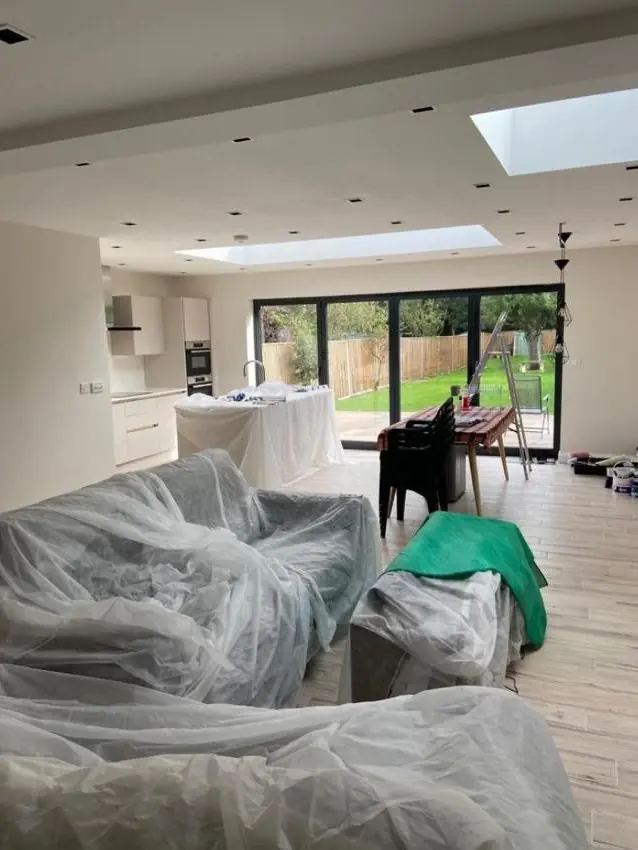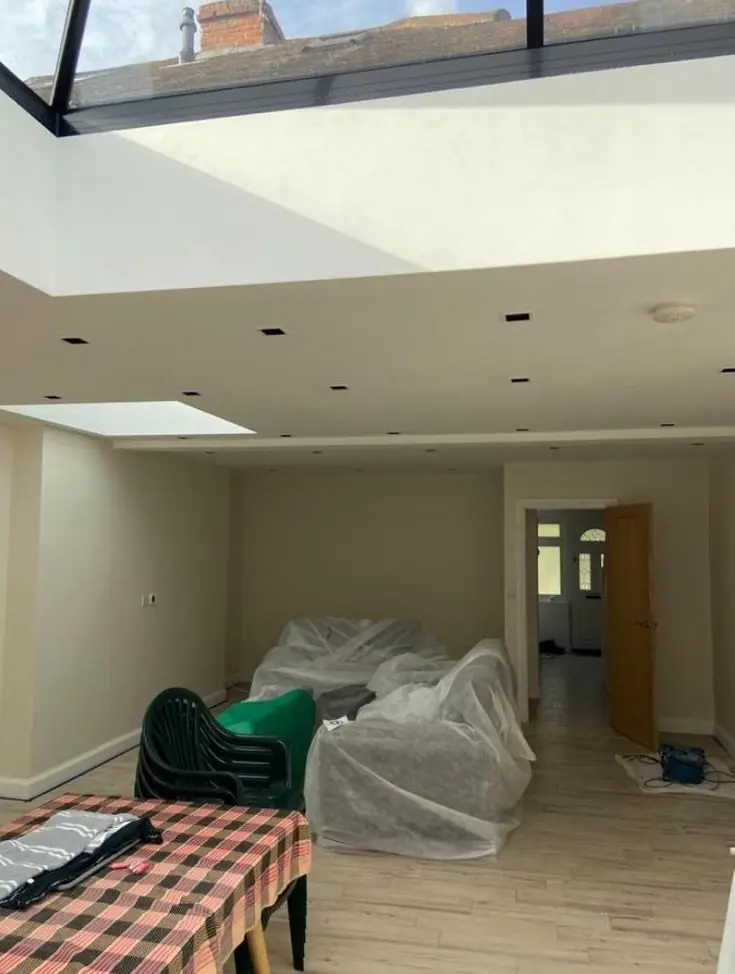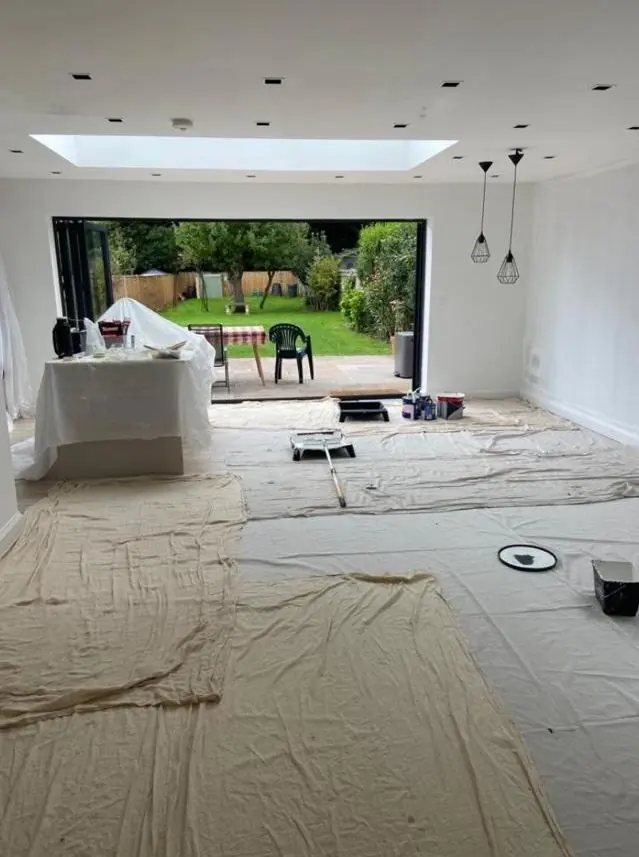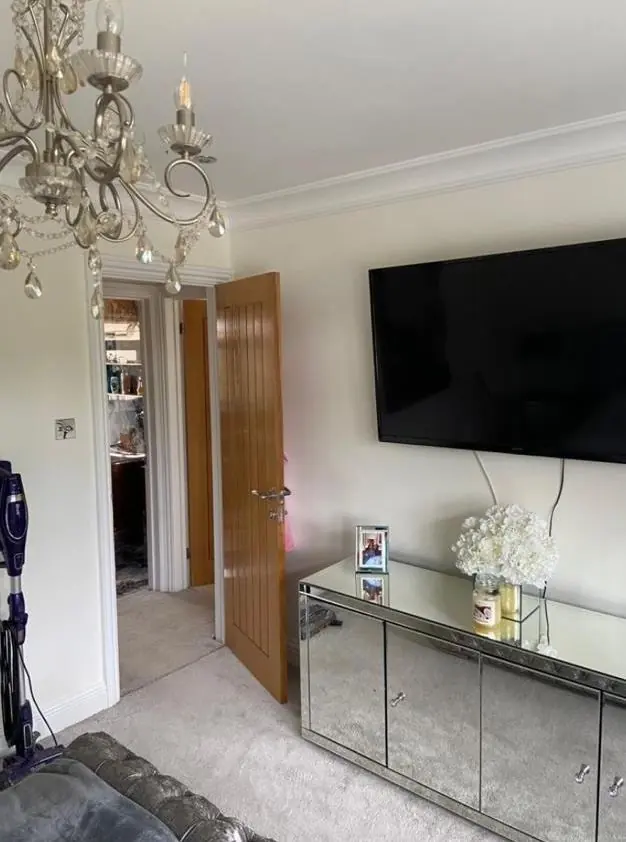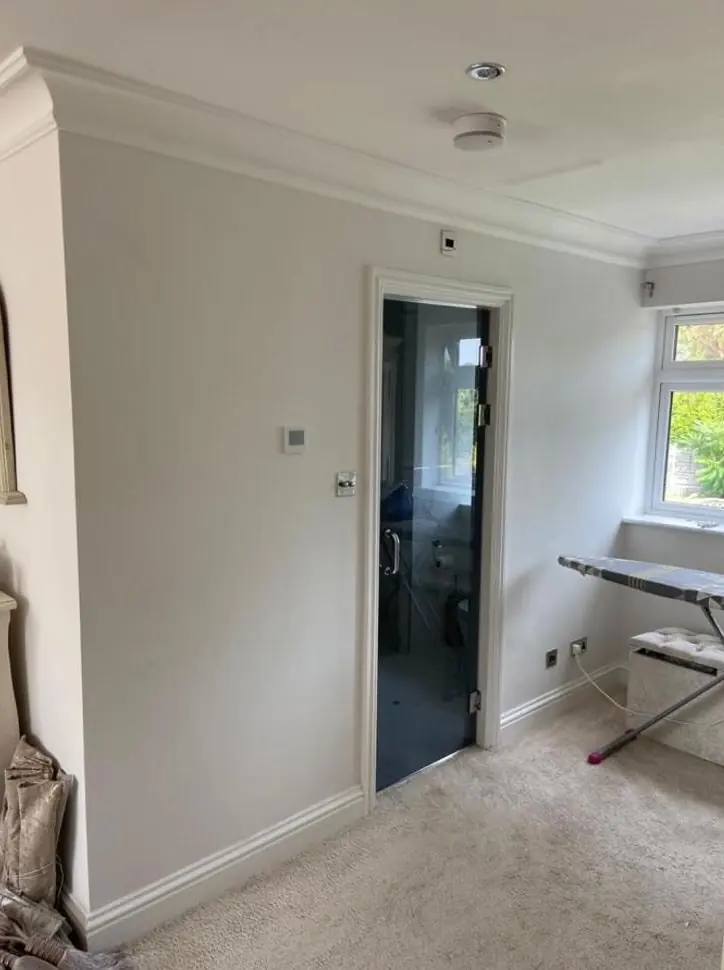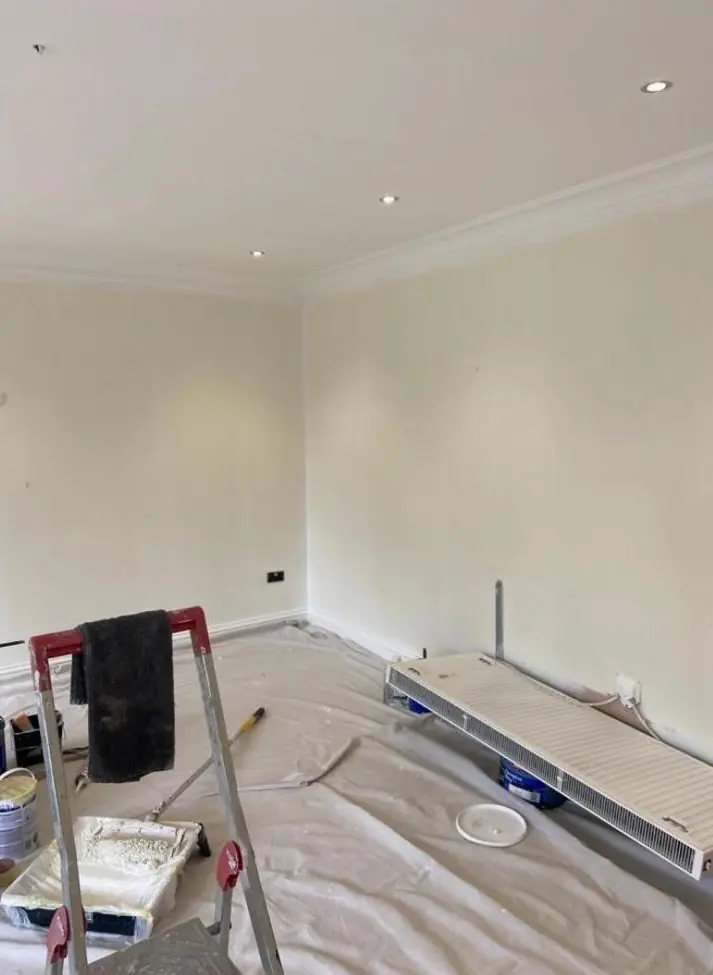
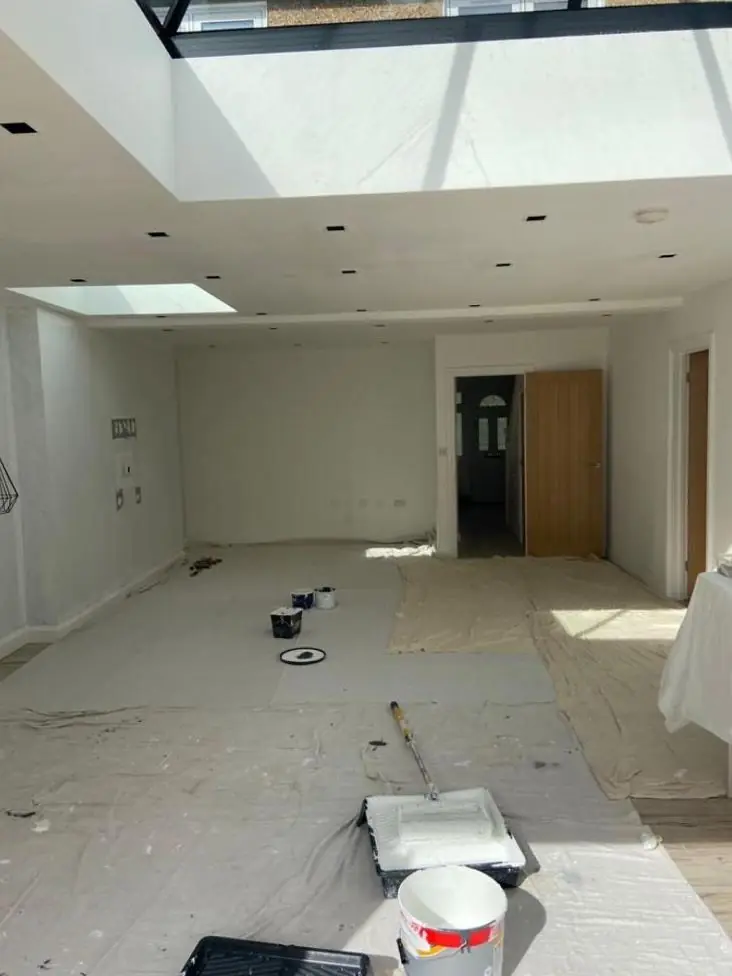
Dean decorates newly plastered walls and ceilings in Spinney Hill, NN3, 2.1 miles north-east of the town centre off Kettering Road. Most of this work is in extended 1930s-1950s semis: rear family rooms, rooms built onto conservatory brick bases and converted annexes, all needing a dry-out check and a mist coat before finish paint.
Why so many Spinney Hill semis have bare plaster
The three- and four-bedroom semis on and around Spinney Hill Road come with front driveways and private rear gardens, and owners have built into that space. Agent listings for the area describe houses extended with conservatories, rear family rooms and in one case a separate one-bedroom annexe. Every one of those projects finishes with a plasterer leaving behind fresh pink walls. Re-skimming tired ceilings in the original house, or opening up a through lounge-diner into the extension, adds more. That fresh plaster needs the right first coat, and that’s where we come in.
The full process, from moisture checks to the final coat, is on our new plaster and extension painting page, and our mist coat guide explains why a thinned first coat matters. This page covers how it applies to the houses in Spinney Hill.
South-facing rooms and uneven drying
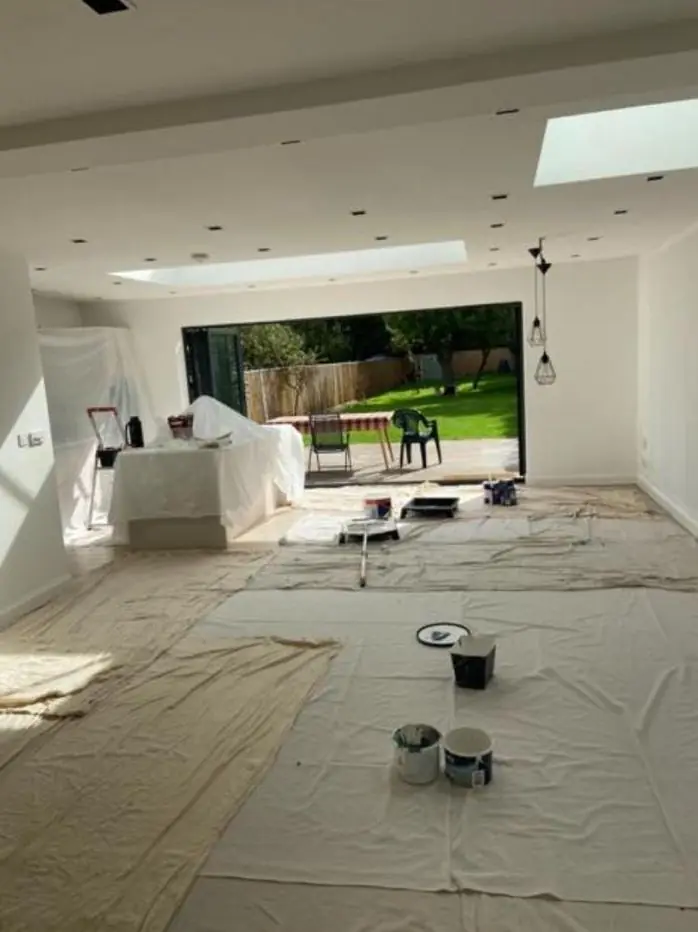
Rear gardens on the semis here are often south-facing. That is good for the garden, but it affects a new extension with large glazed doors or roof lights. Strong sun dries the plaster nearest the glass quickly, while the wall shared with the original house, and anything in shade, stays damp for longer. The plaster can look dry in one corner and still be holding moisture behind the paint line in another. We read the walls with a moisture meter instead of going by colour, and we won’t put a finish coat over plaster that is still giving off moisture.
- Fresh skim on a sunny rear wall can be ready well before the shaded party wall.
- Rooms built on an old conservatory’s brick base sometimes mix new blockwork, render-and-skim and plasterboard, and each dries at its own rate.
- Ventilation during drying matters more than heat. Running heaters flat out can crack a new skim.
Annexes that work as a separate home
A self-contained annexe at the back of a semi is decorated like a small flat. It has its own kitchen area and shower room, and those rooms take steam every day. Once the mist coat has gone on, the finish there should be a kitchen and bathroom paint that resists moisture and mould, not the same matt used in the bedroom. Ceilings over the shower need the same attention. New plasterboard in a stud partition also needs sealing differently from a wet skim on block, so we check what each wall is made of before choosing the first coat.
Where old plaster meets new
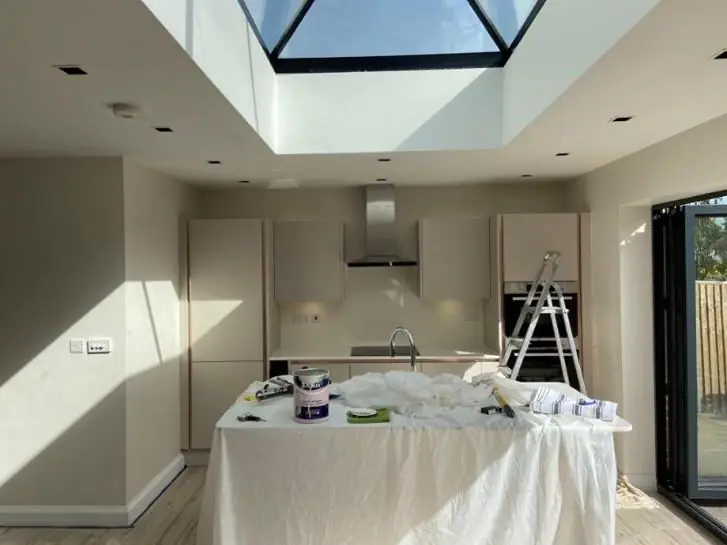
The original walls in a 1930s to 1950s house have been painted many times over the decades. Where an extension or a widened opening joins them, the two surfaces absorb paint differently, and the joint is where cracks usually show first. We cut out and fill that line with flexible filler and, where needed, a scrim tape, then prime the patches so the finish coats dry to an even sheen.
If you live in one of the Manfield Grange apartments, any plaster repairs inside the listed building should be agreed with the managing agent first, because the original plasterwork is part of the listing. Older lime plaster also needs a breathable paint instead of a standard vinyl emulsion.
Booking around the builder
The easiest projects are the ones where we are booked while the extension is still being built, so we can come in once the plasterer has finished and the walls have dried out. Most semis here have a driveway, which keeps our van off Spinney Hill Road, and side access means materials don’t have to come through the new room. The Spinney Hill area page lists the other services we offer there.
Last updated by Dean, DH Painter & Decorator.