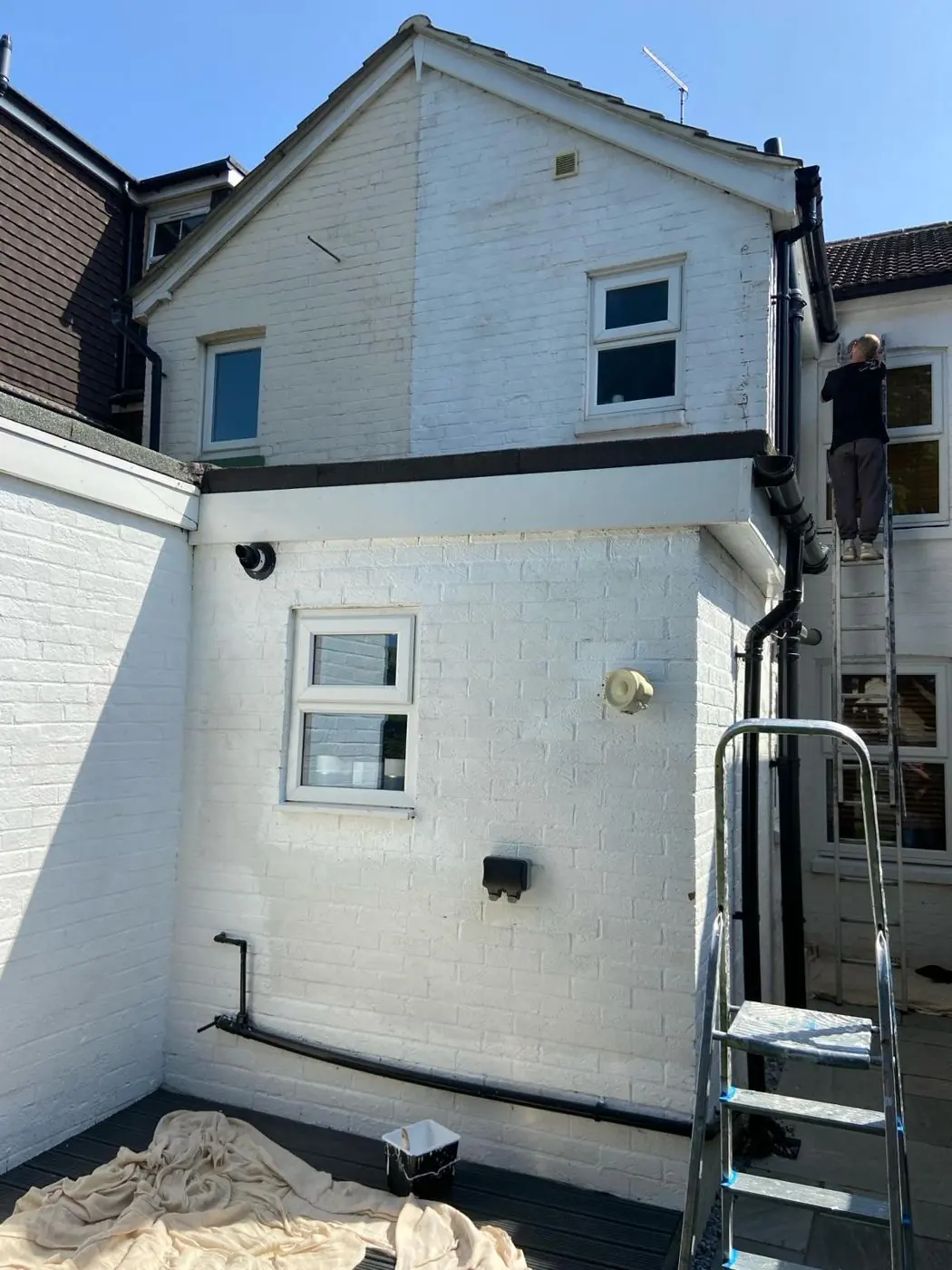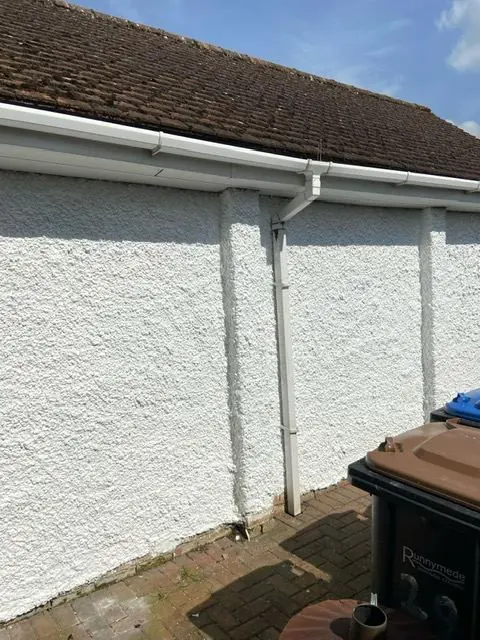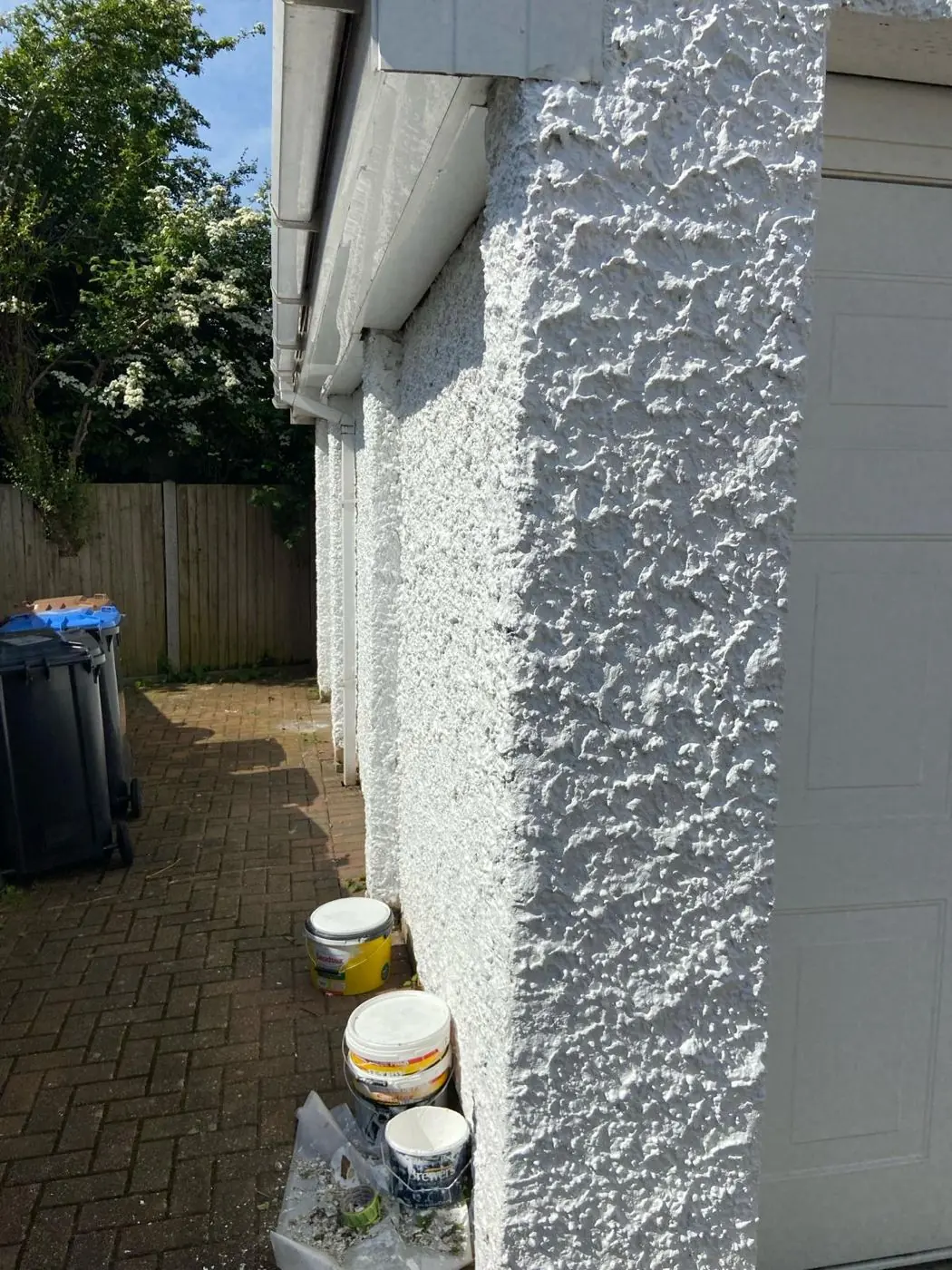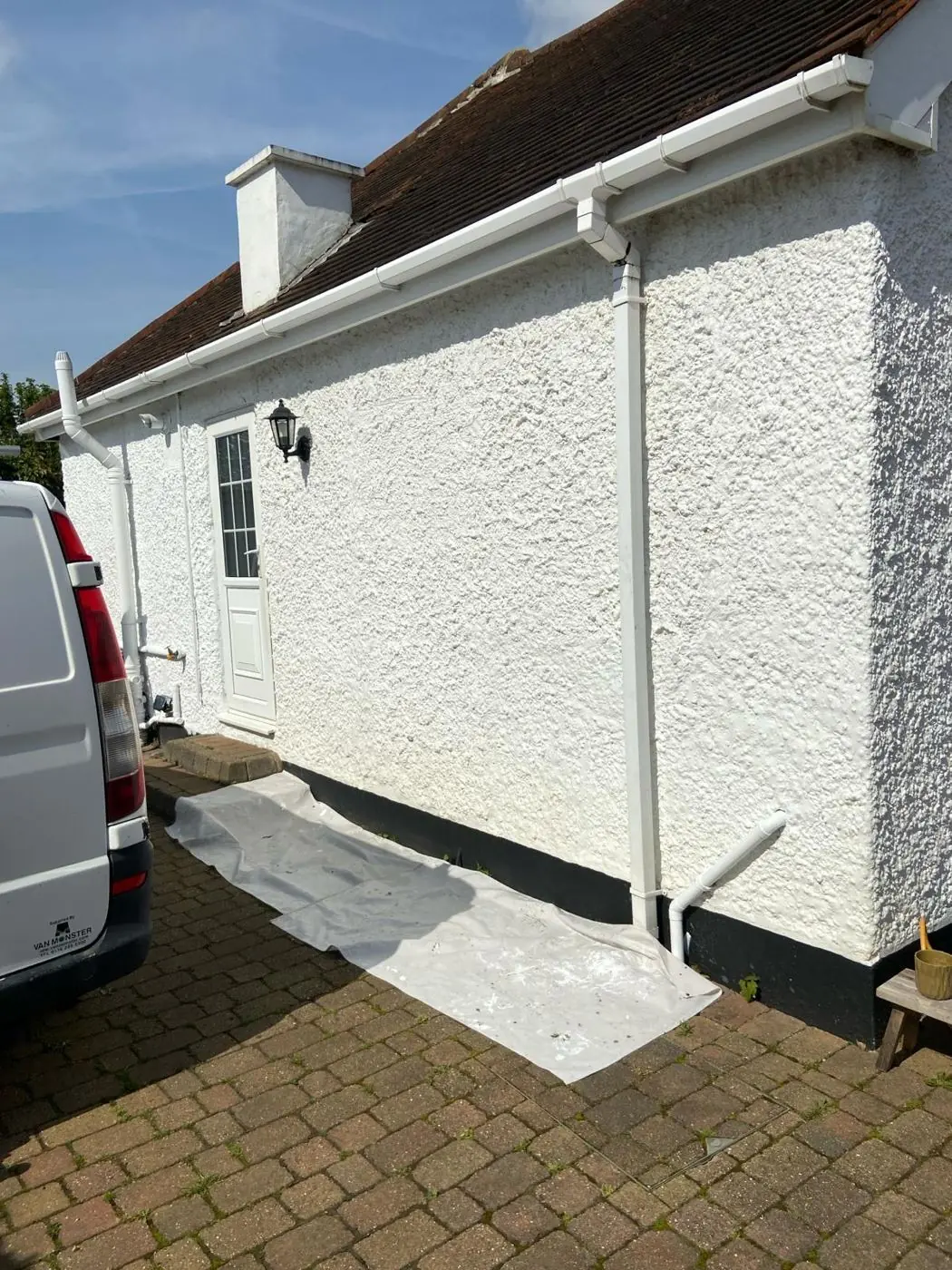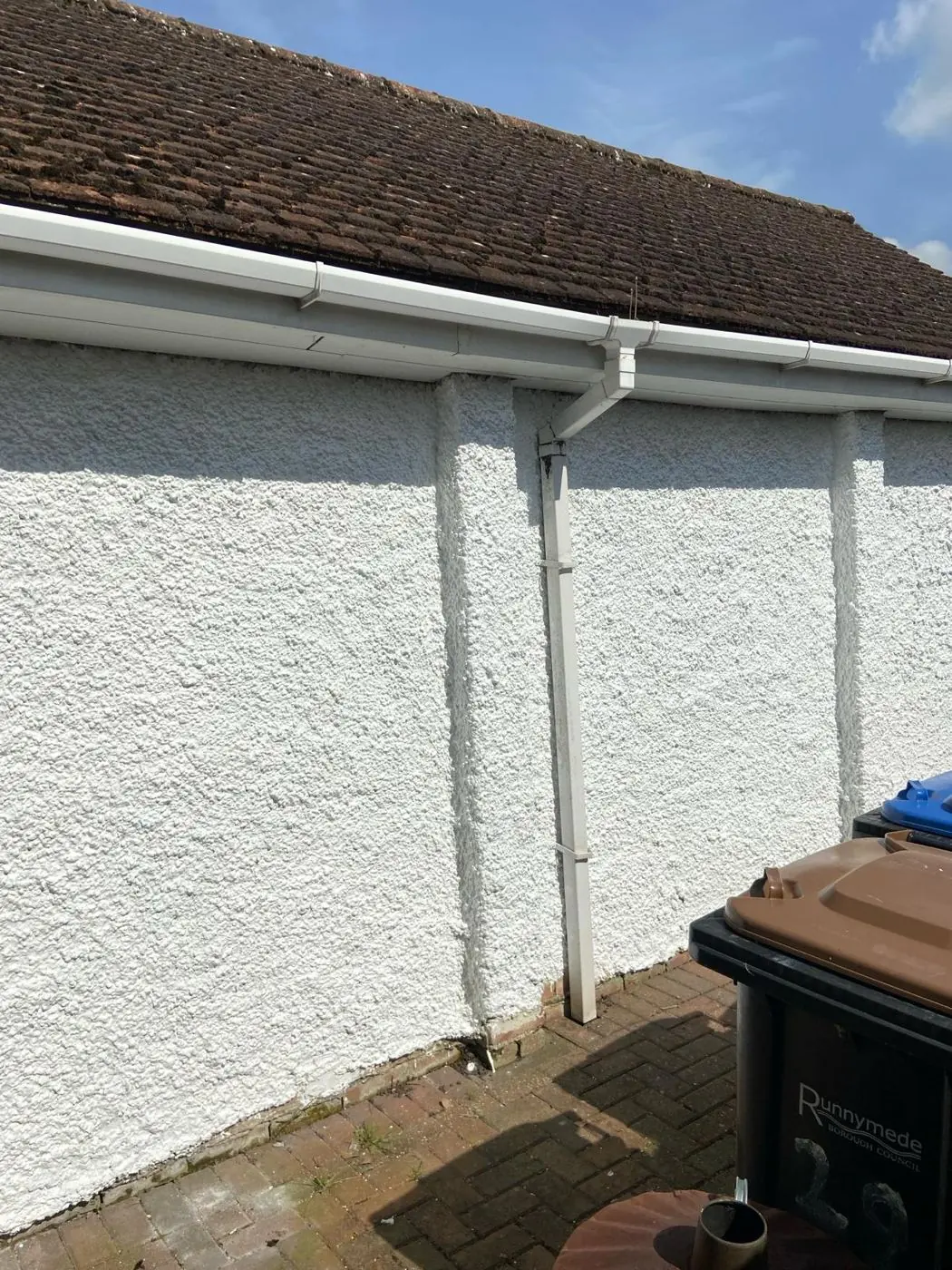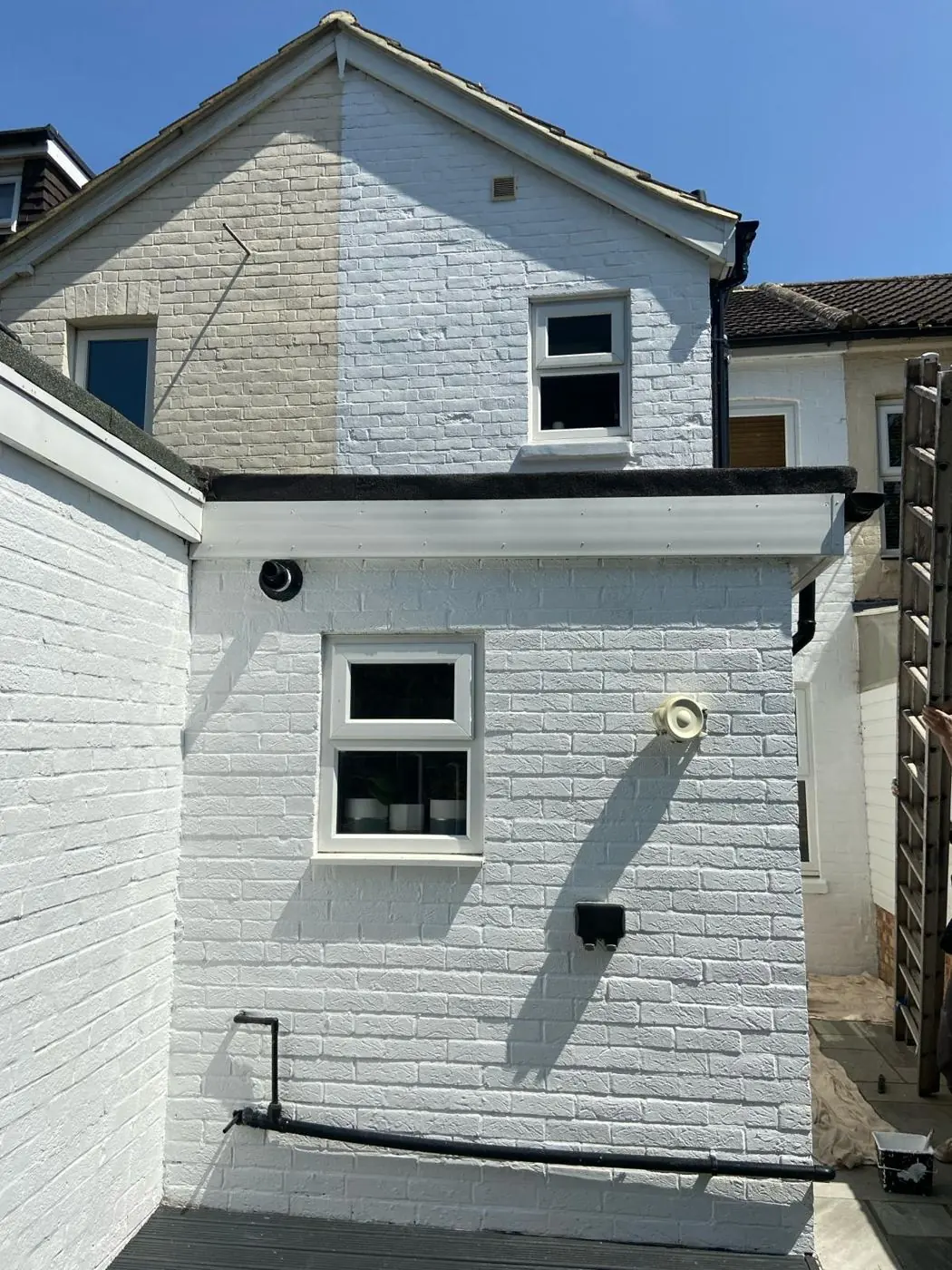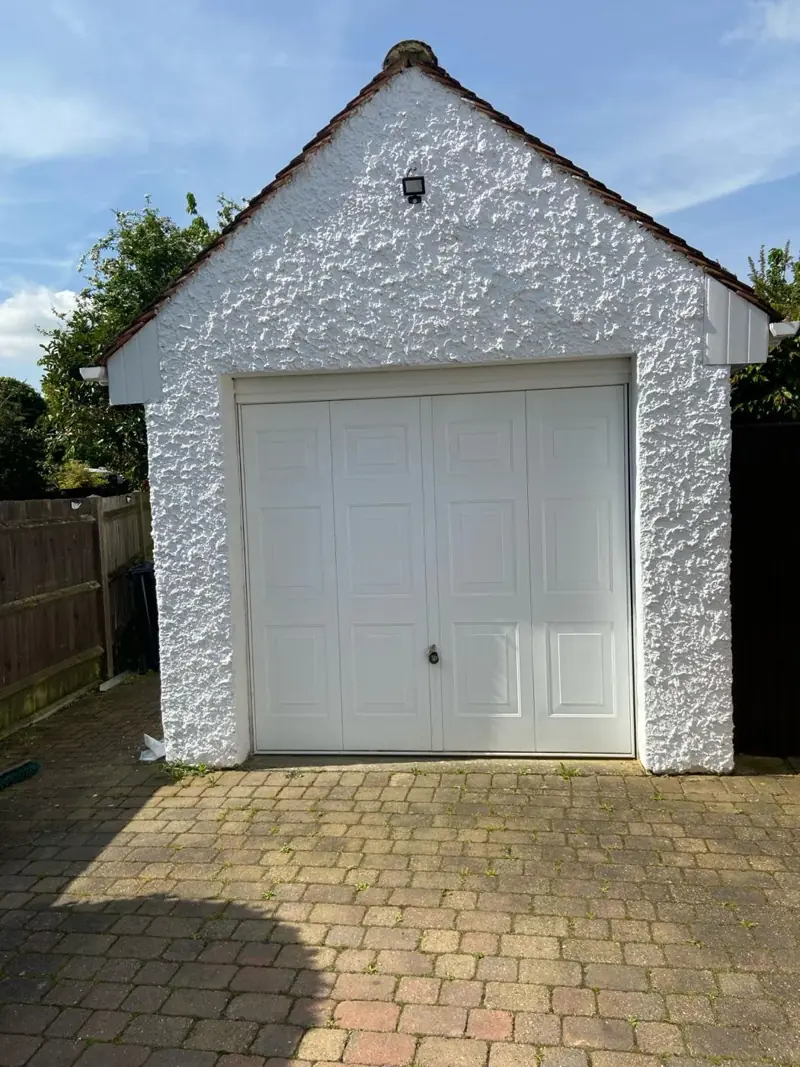
We paint render and previously painted masonry on houses in Spinney Hill, NN3, and leaves the listed ironstone at Manfield alone. Because the wall finishes on the semis vary and are not recorded, Dean inspects each house before quoting.
Start by finding out what the wall actually is
Nobody has catalogued the wall finishes on Spinney Hill’s 1930s-1950s semis, and we would rather say so than guess. In practice that means the first visit is a survey, not a sales pitch. Dean looks at whether a wall is rendered, previously painted brick or bare facing brick, taps for hollow patches, checks for cracks running from bay corners and window heads, and notes any damp lines under leaking gutters. A bare brick wall that has never been painted is often better left alone, and we will say that if it applies.
Where render or painted masonry is present, the coating needs to let moisture out. Breathable masonry paint goes on after cleaning, stabilising any chalky areas and filling cracks, and the quote spells out which walls are included so there is no confusion about side elevations or extension walls.
Ironstone that should never see a brush
The former Manfield Orthopaedic Hospital off Kettering Road, now the Manfield Grange apartments, was built between 1899 and 1902 in dressed ironstone with Rutland stone dressings. The main building, the entrance lodge, the stables and the summerhouse are all individually Grade II listed. Unpainted stone on these buildings must stay unpainted: masonry paint would trap moisture in the stone and change the look of a protected building. Any work to them needs listed building consent, and where painting of existing painted elements is approved, the materials have to be breathable and appropriate to historic fabric. If you manage or live in one of these buildings and want advice on what can be done, we will tell you plainly when the answer is to leave the stone alone.
Extensions, annexes and garden walls
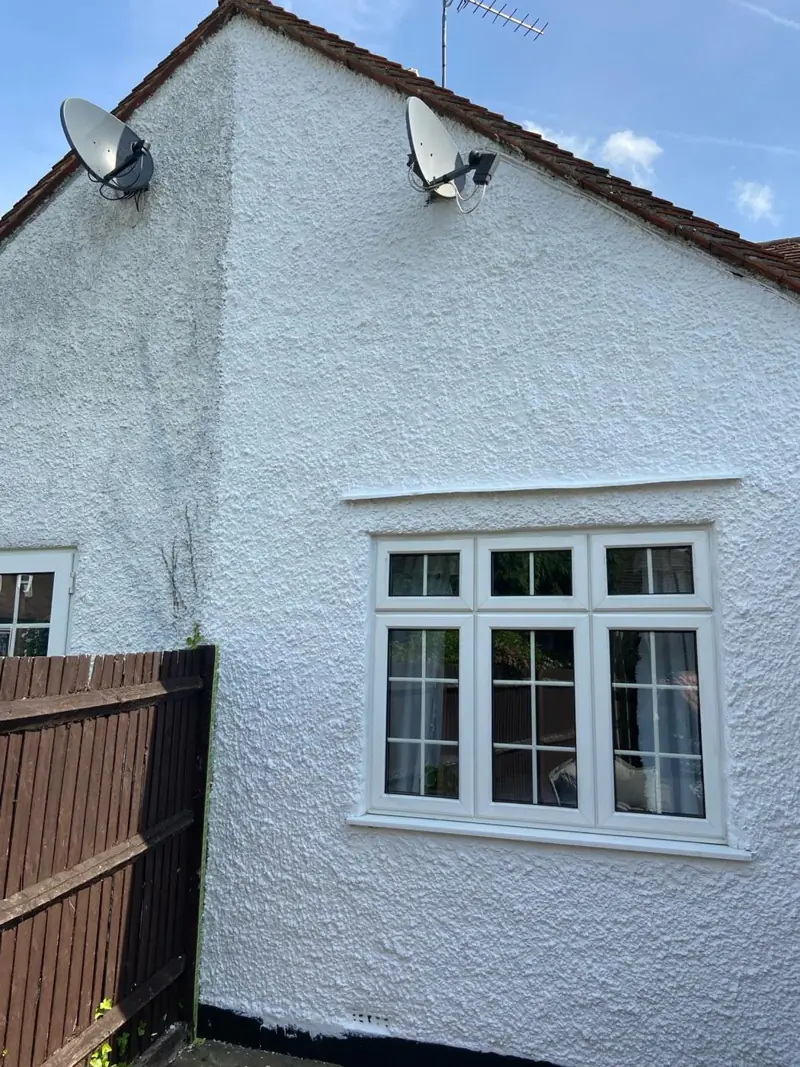
Many Spinney Hill houses have grown at the back, with family-room extensions, conservatories on brick bases and self-contained annexes. That often leaves a rear elevation with two or three different wall finishes side by side. New render on an extension needs time to cure before it takes paint, and the join between old and new walls is where hairline cracks tend to appear, so we fill and feather those before coating. Low brick bases under conservatories sit close to the ground and pick up splashback, so they get a thorough clean first. A self-contained annexe is often rendered or painted on its own schedule, so we can quote it separately or with the house, and we keep the colour consistent if both are done.
Grime at the front, green growth at the back
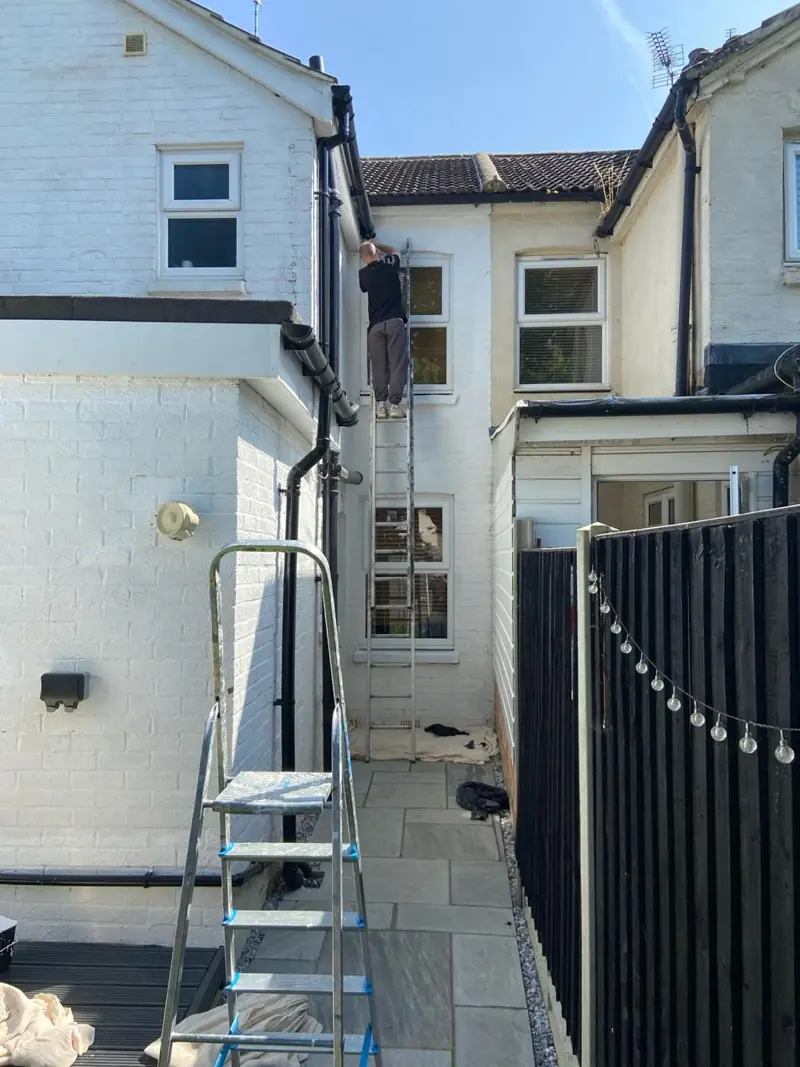
The two sides of a Spinney Hill house face different problems. Front walls on Kettering Road, a busy bus corridor, gather traffic film that has to be washed off before paint will grip. At the rear, gardens backing onto Bradlaugh Fields and mature trees stay shadier and damper, and painted walls in shade grow green algae. Those areas get a fungicidal wash, left to work, before any coating is applied. Side passages between neighbouring semis are a third micro-climate: narrow, shaded and often damp at the base, so the lower metre of wall there is checked for salts and flaking before it is recoated.
- Front, roadside: degrease and rinse, then dry.
- Rear, tree-shaded: biocide, brush off dead growth, then dry.
- Extension joints: rake, fill, feather.
- Listed ironstone: no paint.
The full process is on our render and masonry painting page, and our guide to painting render and roughcast covers products and preparation in depth. For other work in the district, see the Spinney Hill area page.
Last updated by Dean, DH Painter & Decorator.