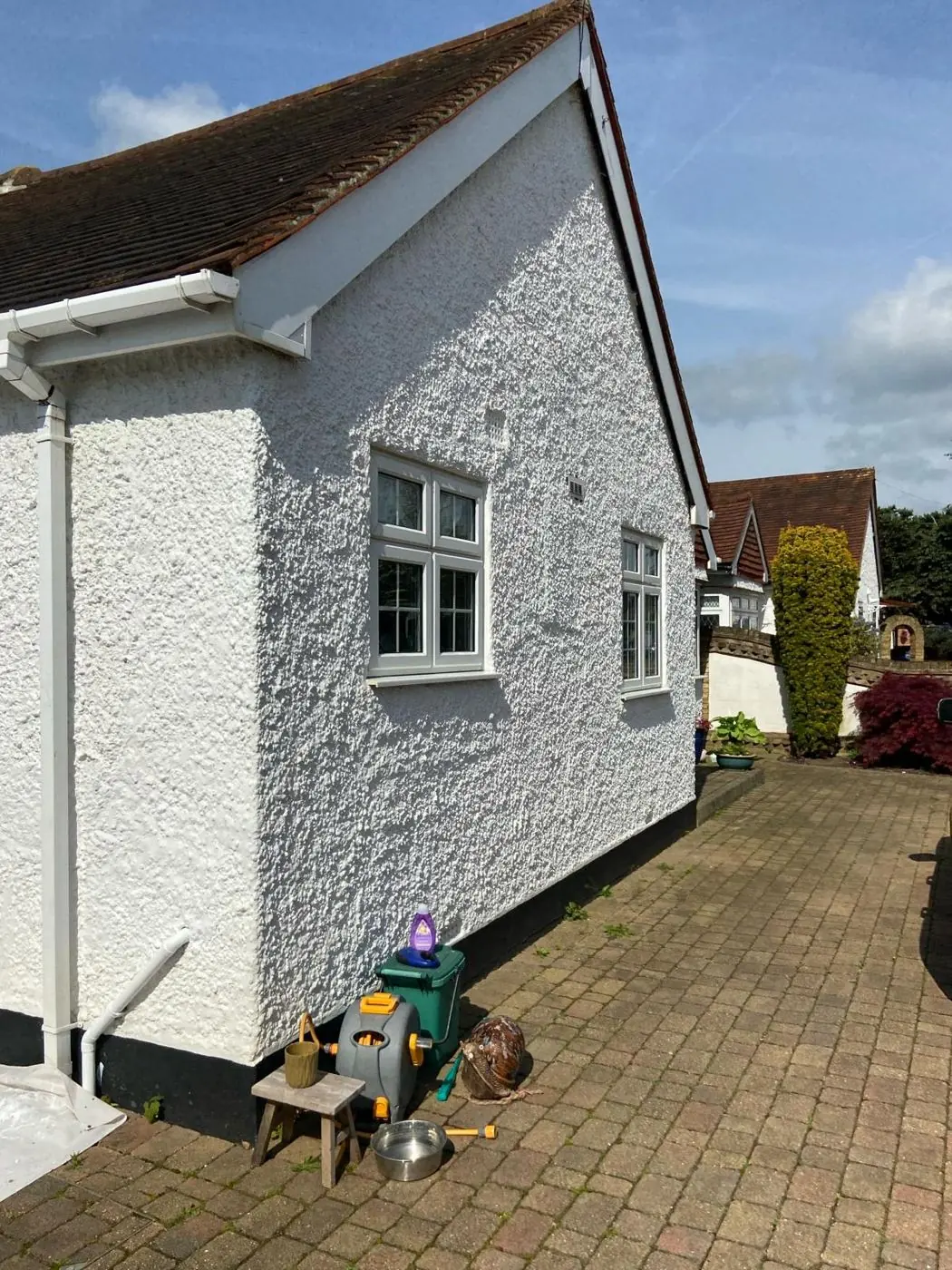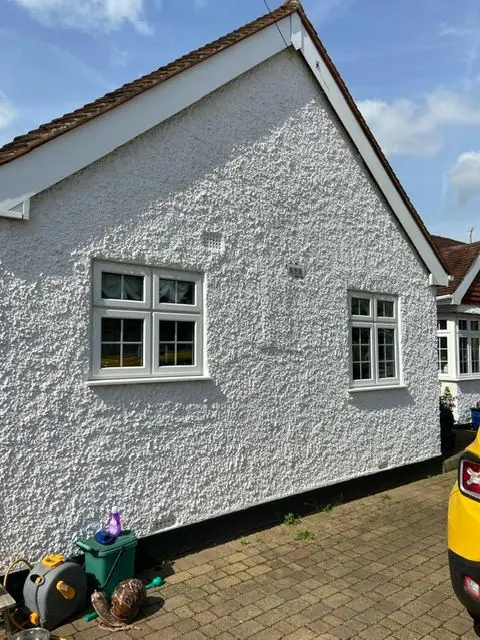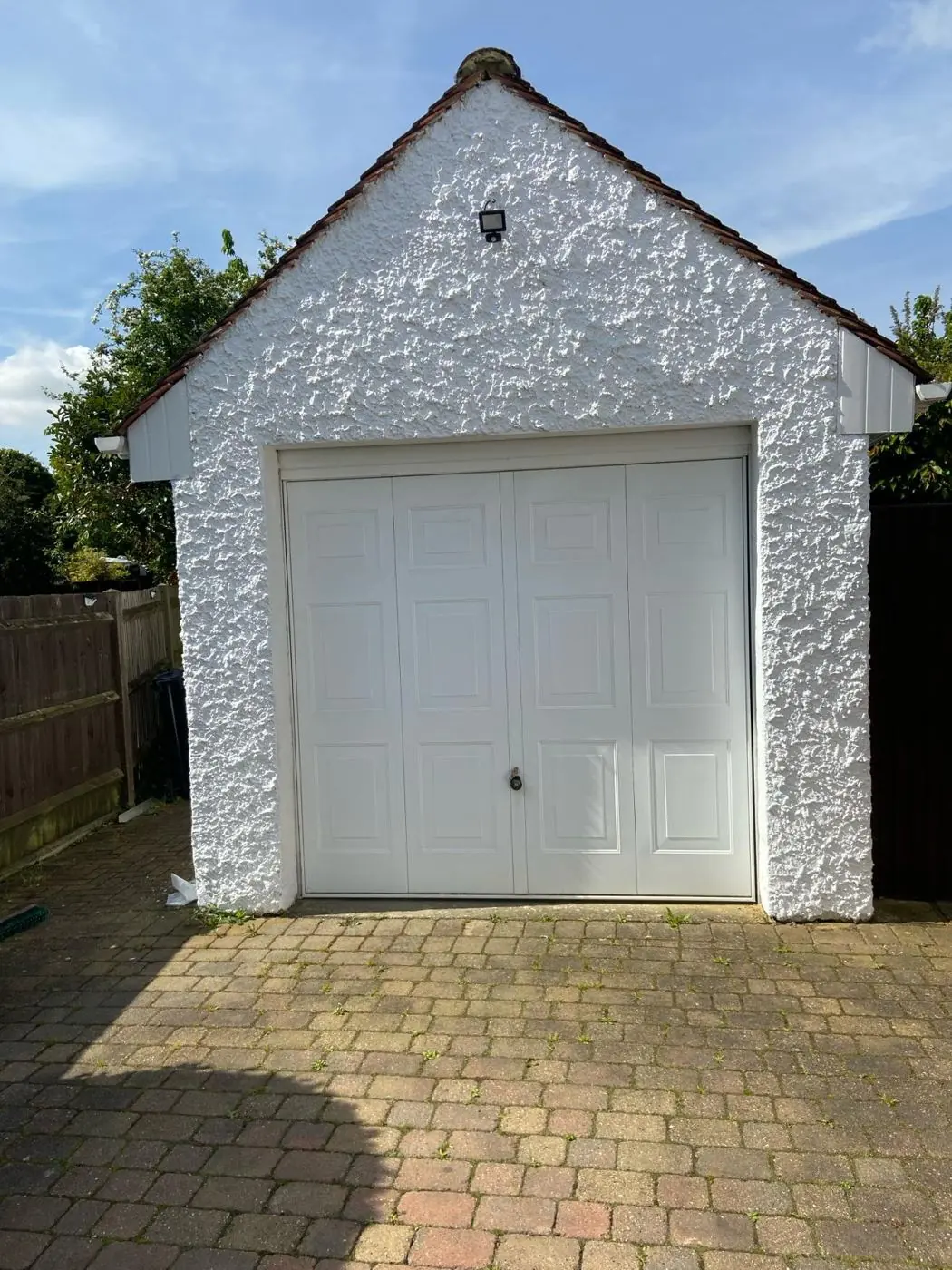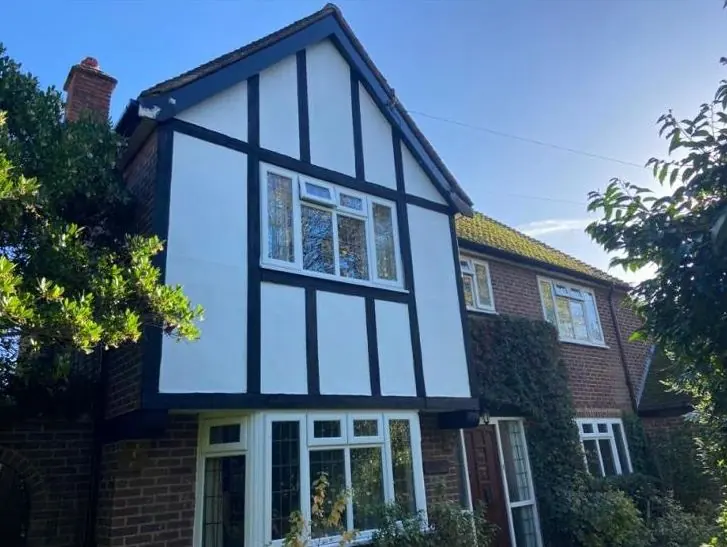
DH Painter & Decorator paints fascias, soffits, bargeboards and gutters in Weston Favell, NN3, about 2.9 miles north-east of Northampton town centre. That covers timber eaves on the conservation-area cottages, the roofline on the 1970s closes and uPVC or timber boards on the 20th-century semis.
Eaves under slate, pantile and clay tile
Roofs in the old village of Weston Favell come in several kinds, and each one meets its eaves in a different way. The Grange at 10 High Street and 105 High Street have Welsh slate. The Priory at 113 and several of the listed cottages carry pantiles, whose rolling profile leaves an uneven edge along the bargeboard. Hervey’s Cottage on Church Way has a tiled roof, and a few later roofs are concrete tile. Many of these cottages were once thatched, so the eaves timber may have been altered or added since, and it is not always as old or as sound as the stone around it.
On these roofs we work around the tiles rather than over them. We do not lean ladders on old pantile edges or loose slate courses, and we use a ladder stand-off or a tower where the gutter line is fragile. Bargeboards on the gable ends sit right under prominent stone and brick chimney stacks, so we look up as well as along. A crumbling stack is a job for a roofer, and we will point it out before we paint beneath it.
Hipped roofs and a few awkward shapes
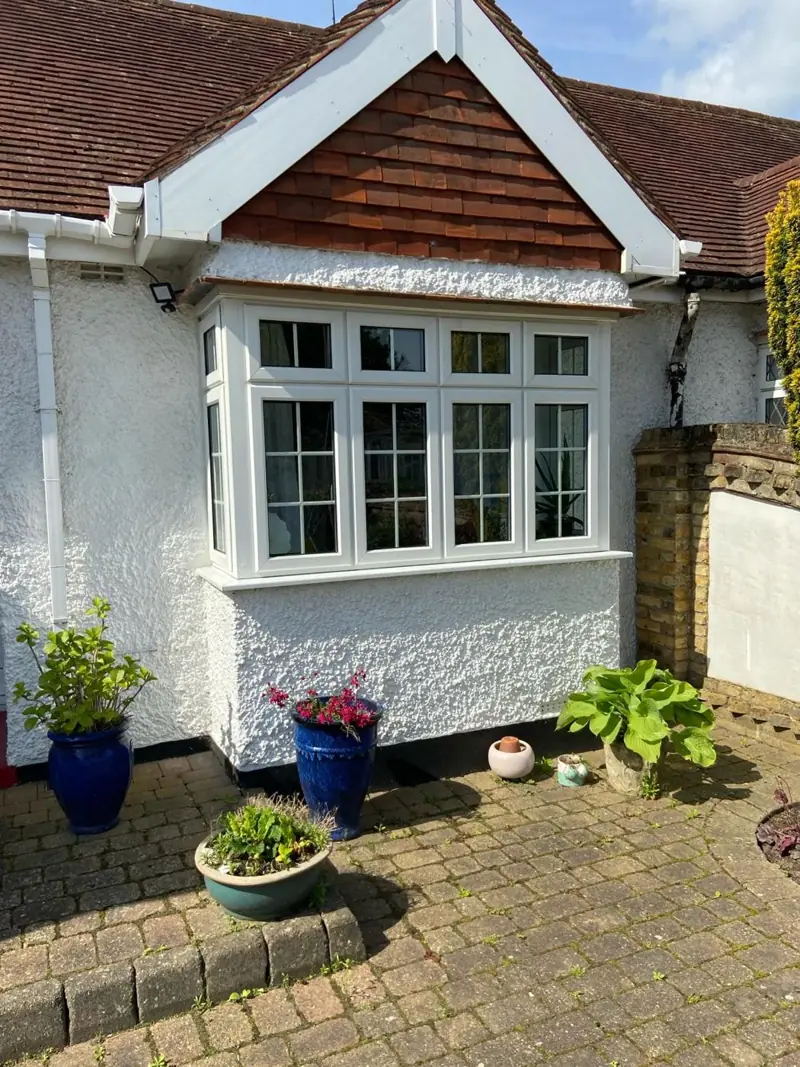
Not every roofline here is a simple pair of gables. 105 High Street, dated 1812, has a hipped Welsh slate roof, so it has eaves running round all four sides and no bargeboards at all. That means more fascia and soffit to prepare, and more corners where water collects. The garden gazebo at 111 High Street has a tiled pyramidal roof with a weather vane. The 1853 Wesleyan Chapel has a slate roof over red brick that should stay unpainted, so its eaves joinery is among the few surfaces there that take paint.
Listed status covers the whole building, eaves included. Repainting existing boards in the same colour is normal maintenance. Swapping timber boards for uPVC on a listed cottage, or changing the colour noticeably, is the kind of change to check with the conservation officer first.
Leaves, sap and the gutters under protected trees
Many of the churchyard trees, and those where High Street meets Church Way, carry Tree Preservation Orders, and conservation area rules cover other trees over 75mm in diameter, with six weeks’ notice needed before any work on them. In practice the branches stay, and so does the leaf drop. Blocked gutters overflow down the face of the fascia, soak the bottom edge of the board and stain the soffit. Before we paint we clear the gutters on that run and check the joints and outlets, because new paint on a board that is still being soaked will not last.
Sap and honeydew settle on soffits under the trees too. We wash those boards down and let them dry properly. North-facing eaves in the shade can take a full day longer than the sunny side.
Timber and uPVC on the 20th-century streets
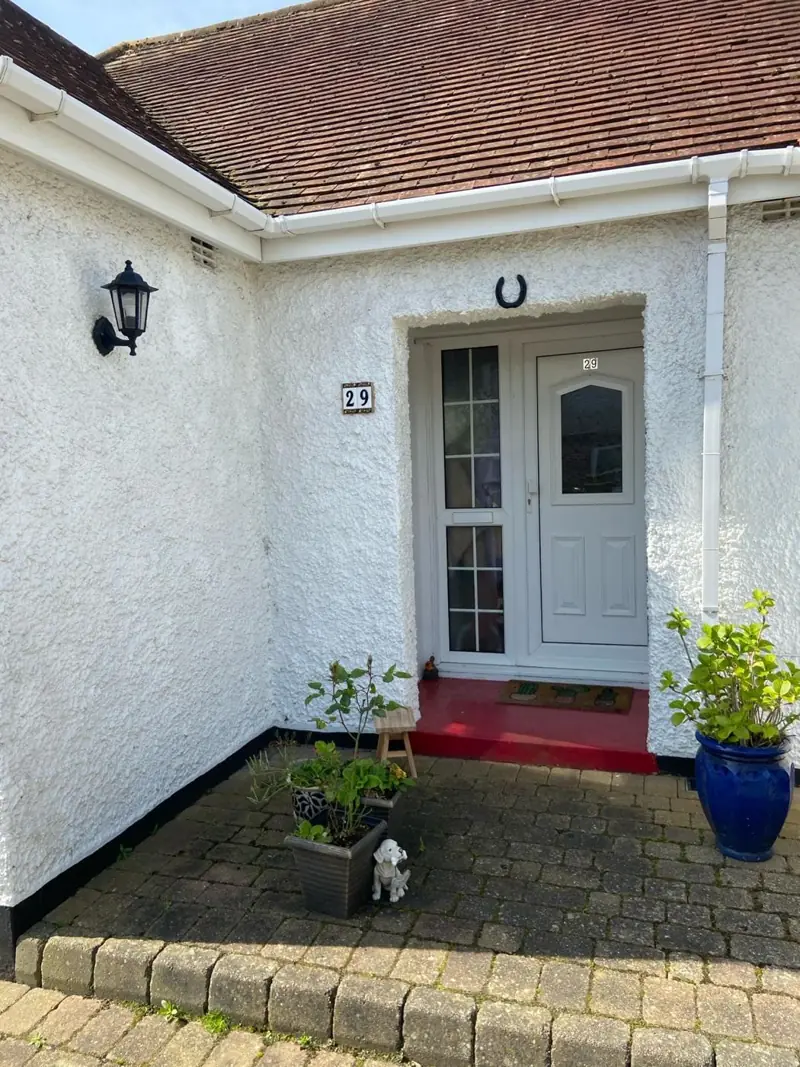
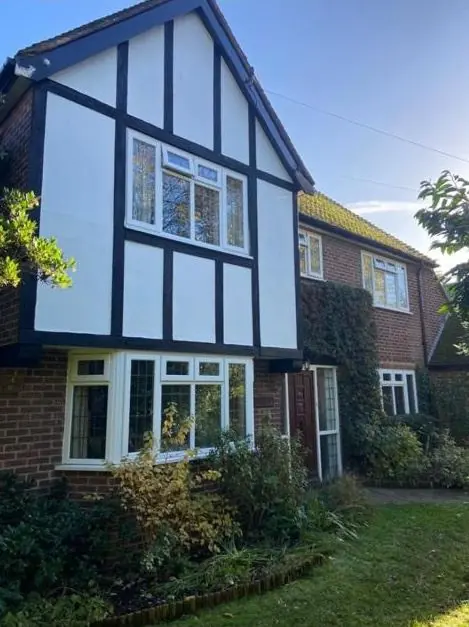
Kestrel Close (late 1970s), The Smithy and The Mews were built inside the conservation area in the late 20th century, with stone, render and brown brick, and their rooflines are ordinary modern work. Out on Park Way, Graspin Lane, Edgemont Road and the other suburban streets, many houses have had uPVC fascias and soffits fitted, while others still have painted timber.
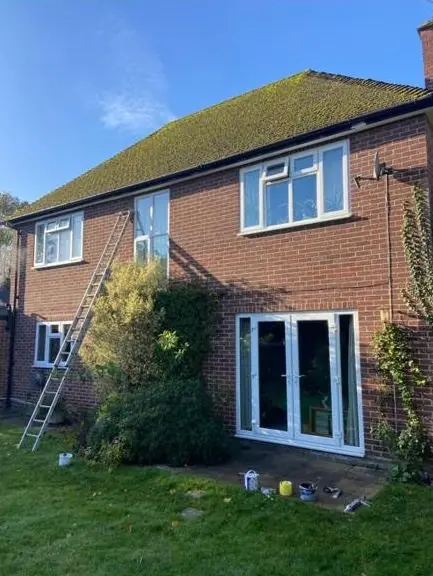
uPVC does not need regular painting, but faded white or brown boards can be cleaned and, where wanted, recoated with a primer made for plastic. Timber boards get the full sequence of scraping, sealing knots, priming, undercoat and top coat, with gutters and downpipes done at the same visit. The steps are set out on our main fascia and soffit painting page, and the painter and decorator cost guide explains what affects the price of a roofline job.
Last updated by Dean, DH Painter & Decorator.