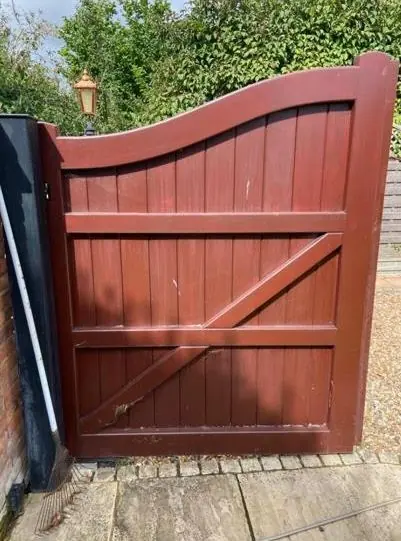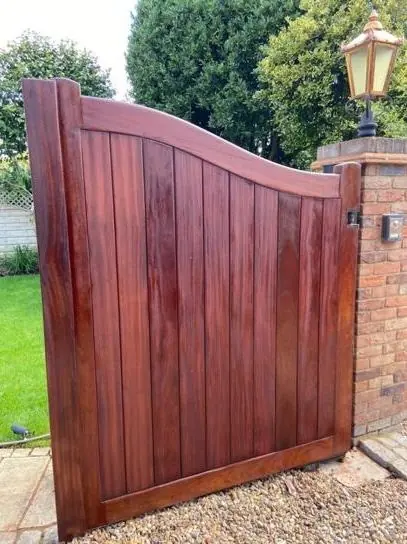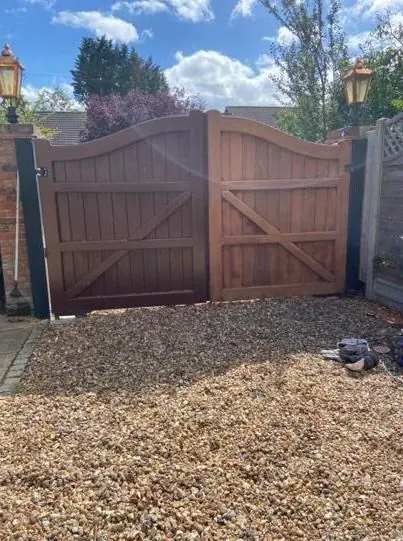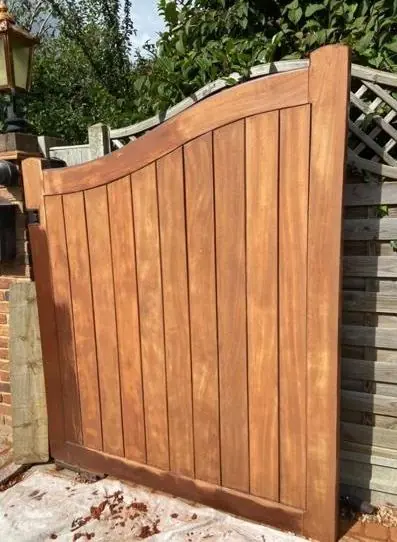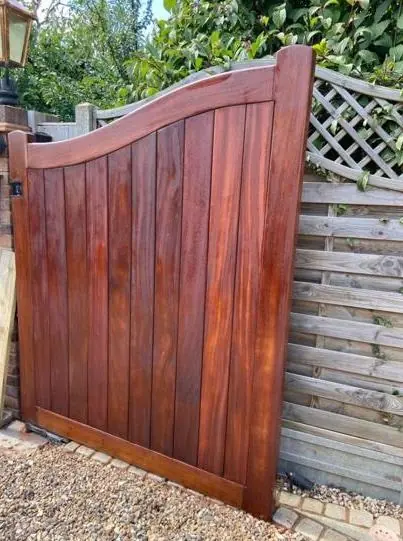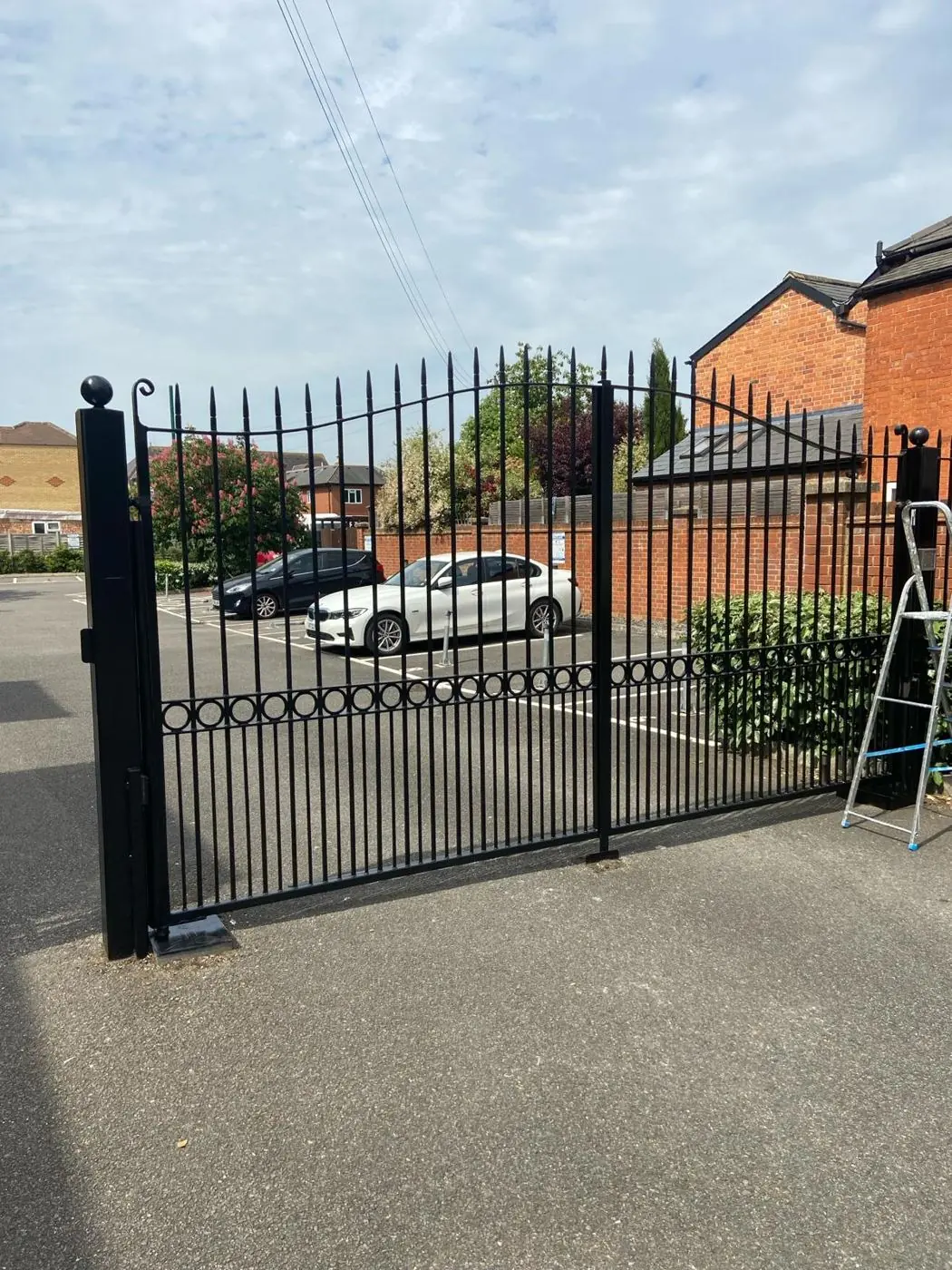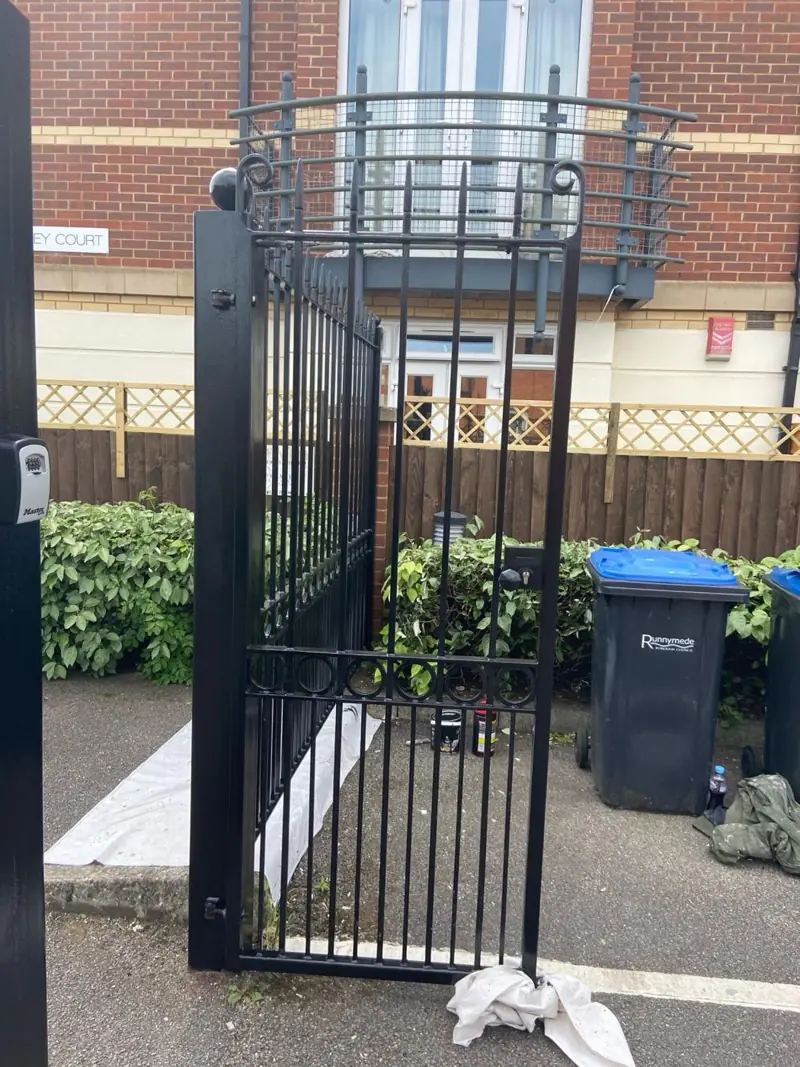
Dean stains and treats timber fences, side gates and garden structures across Parklands, the NN3 estate beside Bradlaugh Fields, 2.5 miles from Northampton town centre. Many gardens here border Bradlaugh Fields, the allotments or the small wood, so cleaning off algae comes before any stain.
Gardens next to green space
Parklands has green space both on its edge and inside it. Bradlaugh Fields, around 60 hectares of ancient hedgerows, limestone grassland and a disused quarry, runs along the south-west edge. Inside the estate, maps show allotments, a small wood and a public footpath. Fences that back onto any of these sit in shade for much of the day and catch falling leaves.
The result shows up on the timber. Shaded boards stay damp after rain, green algae grows on the rails and lower boards, and leaf litter piles against the base where it holds moisture. Staining over that growth wastes the stain: it will not soak in, and the algae carries on underneath. So in Parklands the cleaning is the main part of the job, not a quick brush-down.
Clean, treat, dry, then stain
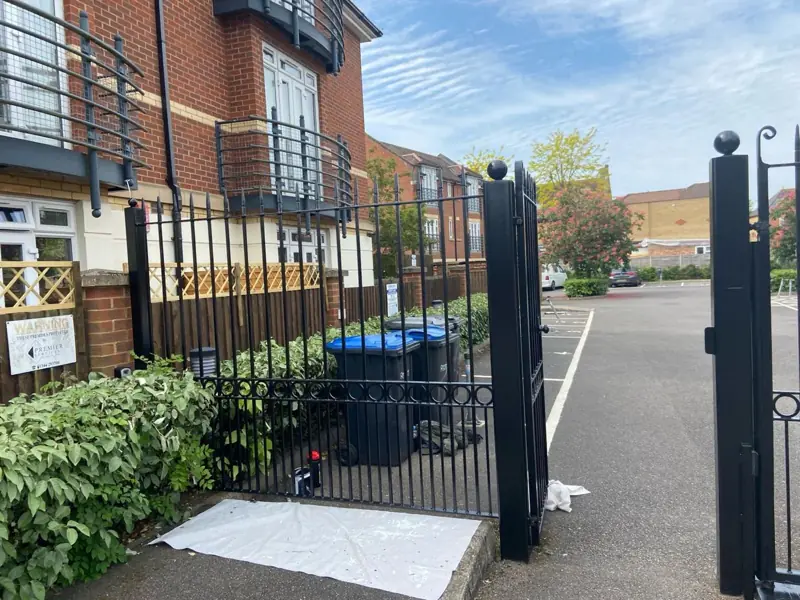
Our order of work on a Parklands fence:
- clear leaf litter and soil from the base of the panels and posts
- scrub or low-pressure wash with a fungicidal wash to kill algae and mould
- leave it to dry fully, which takes longer on the shaded side
- check posts, rails and gravel boards for rot and point out anything that needs a carpenter
- apply two coats of stain or treatment, worked into the grain and the edges of each board
Rough-sawn panels drink stain, so the second coat matters for evenness. Planed gates and smooth boards take less. Staining needs dry weather and timber that is dry right through, which is why we prefer late spring to early autumn. The guide to timing outdoor work explains the limits.
Side gates on semis and detached homes
Most Parklands homes are semi-detached or detached with side access, so many houses have a timber side gate between the front and back garden. Gates get handled every day and take knocks from bins and bikes, and the bottom rail often sits in a damp corner by the house wall. We take extra care at the end grain and the bottom edge, which are where rot starts, and if the hinges or latch are rusting we clean and paint those small metal parts in the same visit so they do not stain the fresh timber.
Shared fences between semis need agreement on colour from both sides. With no conservation rules on the estate, any shade is allowed, but the neighbour sees the other face of the panel, so we suggest you speak to them before booking. Where the two of you want different colours, each side can be finished separately, though stain does creep through gaps between boards, so a similar tone on both faces gives a tidier result.
Gardens on Coppice Drive bungalows tend to be smaller, with shorter fence runs that can often be cleaned and stained in a single settled spell. The larger plots behind the detached houses take longer, mainly because of the drying time after washing.
Choosing stain or paint for the fence
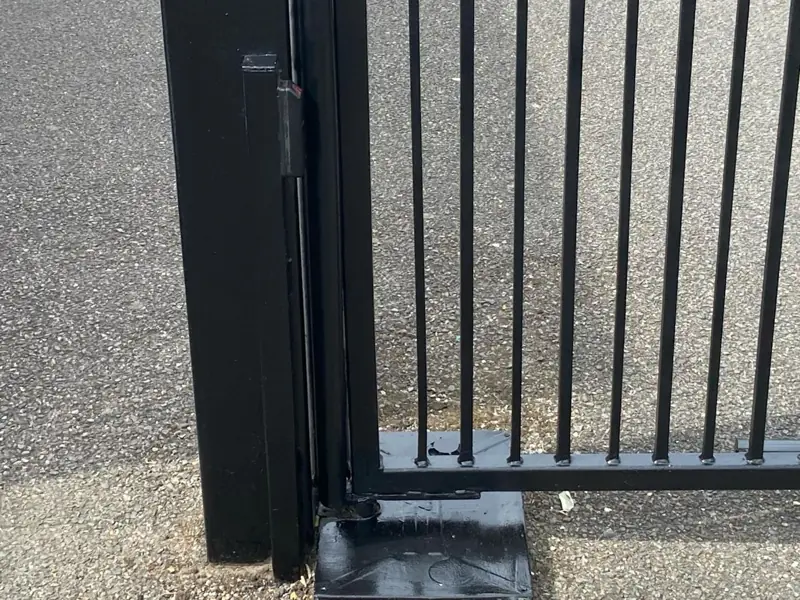
There are a few product routes, and the choice depends on the timber and how much upkeep you want:
| Product | Suits | Upkeep |
|---|---|---|
| Water-based fence treatment | Rough-sawn panels, quick colour refresh | Shortest life, easy to recoat |
| Penetrating wood stain | Gates, planed boards, feather-edge | Shows the grain, recoat every few years |
| Opaque garden paint | Panels already painted, strong colours | Can flake if moisture gets behind it |
On shaded fences near the green space, a product with a built-in fungicide helps slow regrowth. For more on the stains and oils Dean uses, see the main fence and gate staining service, and the Parklands page for everything else we do on the estate.
Last updated by Dean, DH Painter & Decorator.