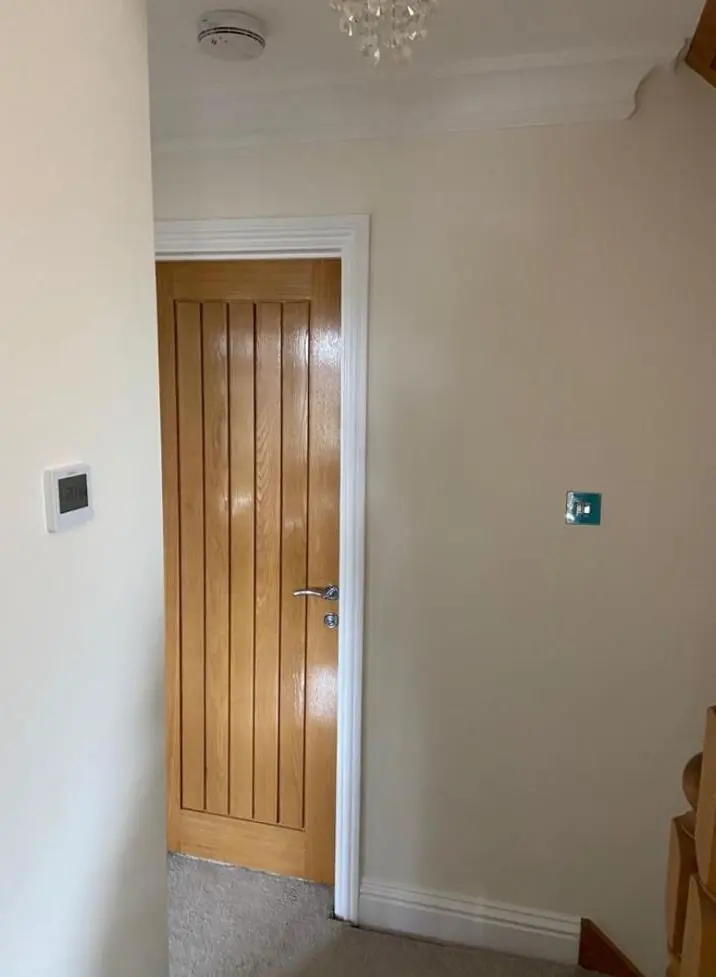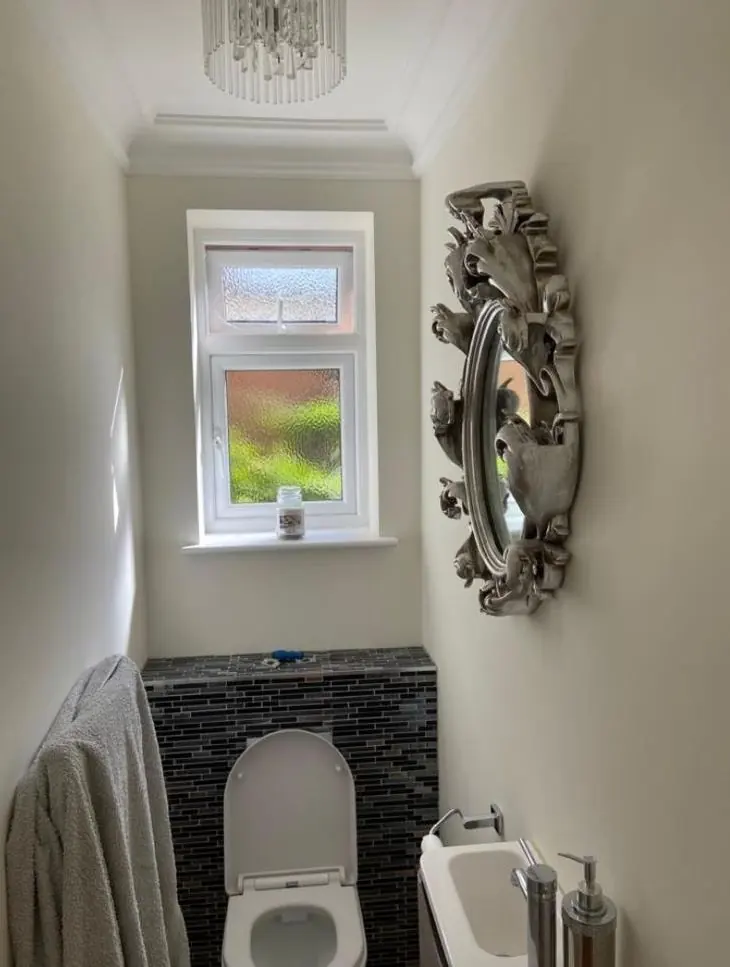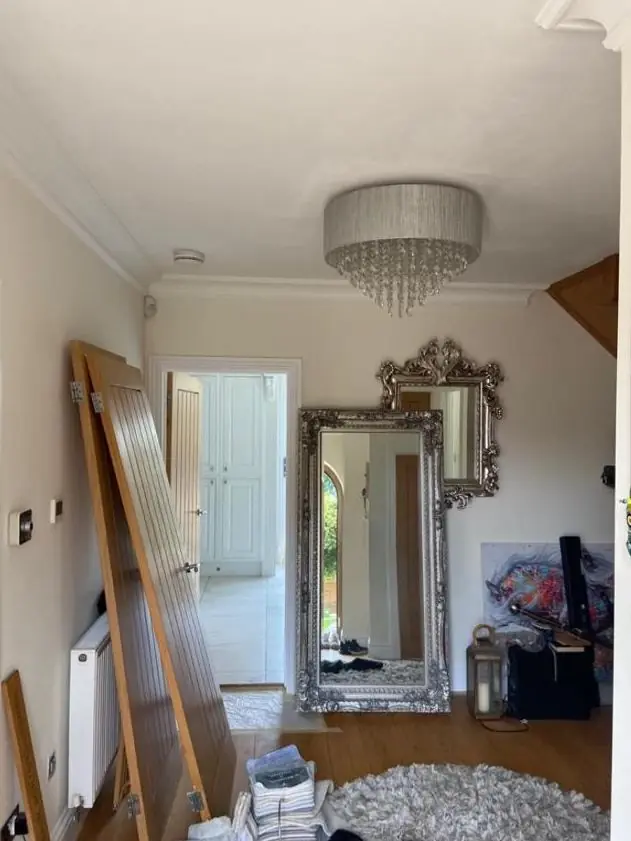
We decorate hallways, staircases and landings in Paulerspury, a village in the NN12 postcode about 9.8 miles south of Northampton town centre. Dean handles walls, ceilings, banisters, spindles and stair woodwork, planning access around each house's layout.
Two very different kinds of staircase
Stairs in Paulerspury fall broadly into two groups. The 18th-century limestone cottages and farmhouses usually have a steep, narrow flight, sometimes boxed in, sometimes turning tight at the top under a low ceiling. The larger early 19th-century houses, such as the Former Rectory and the Hunt House, were built with proper entrance halls and taller stairwells. Both need decorating, but they need different planning.
In a cottage the main challenge is space. A narrow flight leaves little room for a ladder, so we use a stair platform or adjustable steps sized for the run, and dust sheets are fixed down so nothing slides on the treads. In a taller house the challenge is height: reaching the top of a stairwell wall or a landing ceiling safely means a proper stair access system rather than a ladder leaned against fresh paint.
Stone walls, old plaster and a front door that opens onto the weather
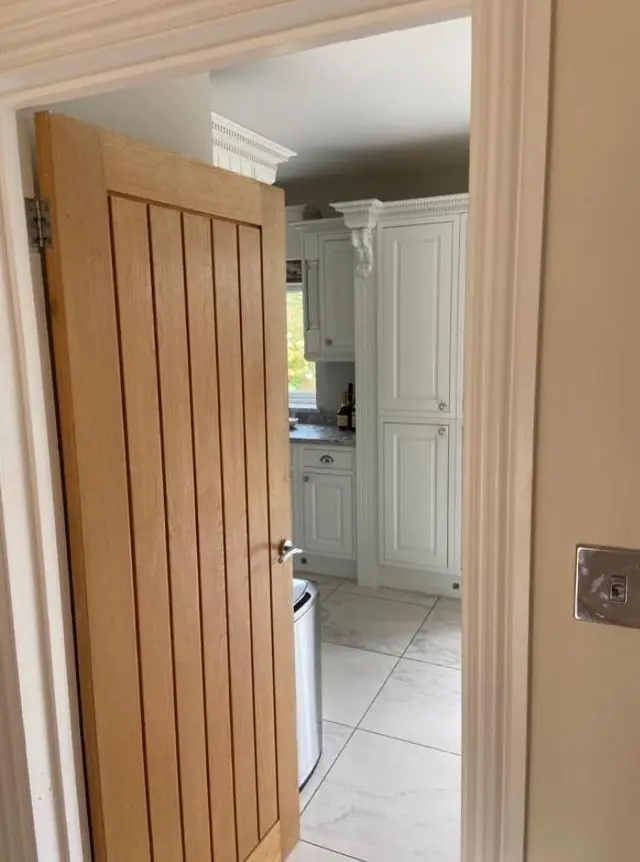
Hallways in solid limestone houses tend to be the coolest part of the home, and they are often the first place damp shows. The parish sits on limestone and Boulder Clay, and in older properties the lower part of a hall wall can hold moisture or show salts. Sealing it under a vinyl or acrylic emulsion tends to make that worse, with blistering and flaking a season or two later. Where the plaster is lime-based, we suggest a breathable emulsion or a mineral paint and salt-tolerant preparation rather than heavy filling and sealing.
- Hairline cracks where old plaster meets a timber lintel or door frame are cut out and filled with a flexible filler that suits the background.
- Areas of loose or hollow plaster are flagged before quoting, since paint will not hold them together.
- Where 20th-century alterations have added gypsum patches to an older lime wall, we treat the two surfaces differently so the patch does not stand out under the topcoat.
Handrails, spindles and heavy-use surfaces
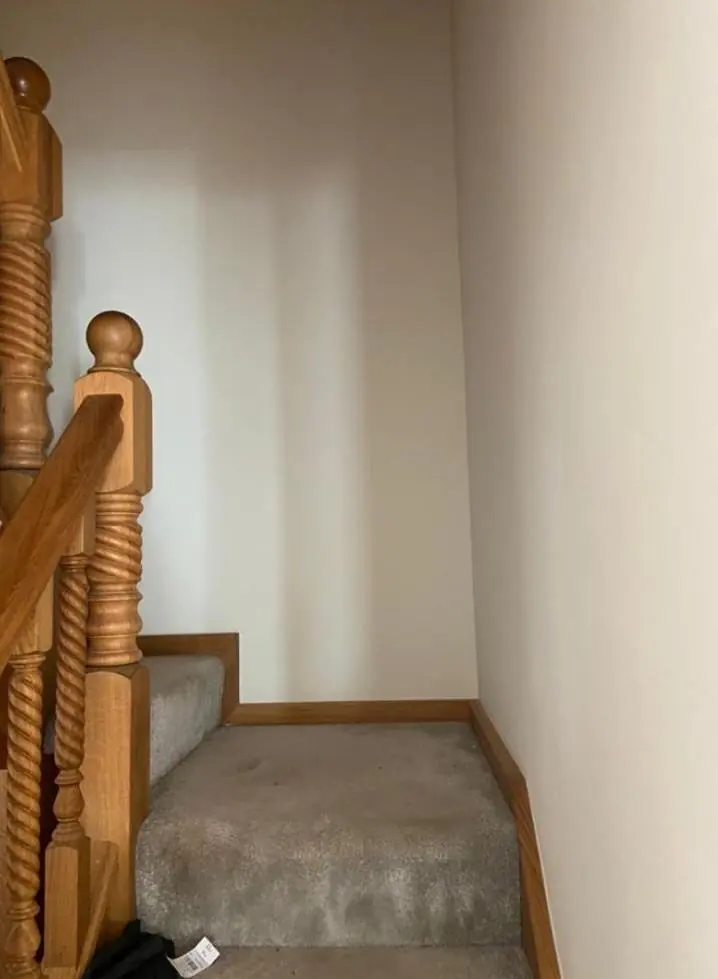
Stairs carry more wear than any other room. Handrails and newel caps pick up grease from hands, spindles get knocked by bags and hoovers, and stair strings take scuffs from shoes. On older joinery we degrease thoroughly and test adhesion first, because layers of old gloss can be slippery underneath a fresh coat. A hard-wearing satin or eggshell on the woodwork and a scrubbable matt or eggshell on the lower walls helps a hall keep looking tidy for longer. If you want the stair spindles a different colour from the strings or treads, we set that out at the quote stage so the order of work is clear.
For a listed house, an original staircase or panelling may be part of what is protected. Redecorating in a similar way is usually fine, but removing balusters or stripping historic finishes is a different matter, so check with West Northamptonshire Council before planning anything beyond a repaint.
Fitting the job around the household
Because the hall and stairs are the route through the house, we plan the sequence so you can still get up and down: ceilings and upper walls first, then woodwork, with treads and handrails done when you can avoid them for a few hours. Cottage stairs in particular can rarely be closed off, so we agree timings with you on the first visit. Paulerspury is spread across separate ends, and some of the lanes are narrow, so we also check where the van can stop for loading.
The hallways, stairs and landings page covers how we approach these spaces in general. For other work in the village, see our Paulerspury page.
Last updated by Dean, DH Painter & Decorator.