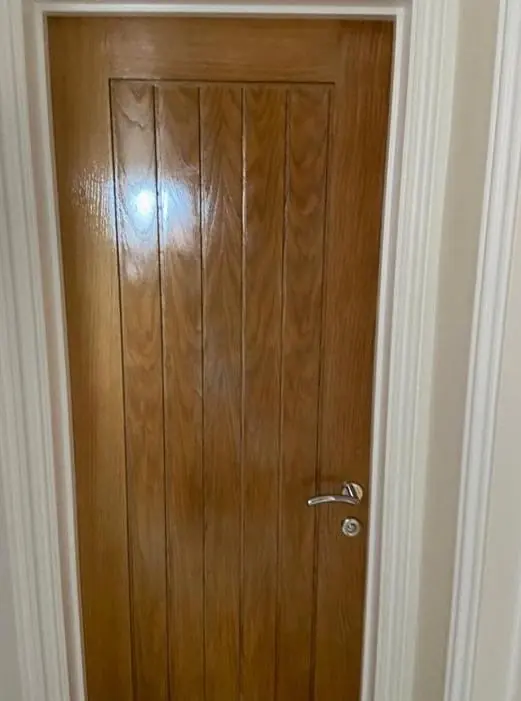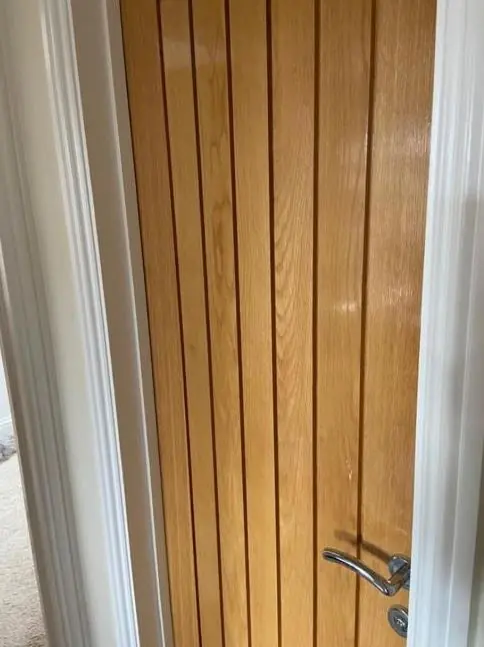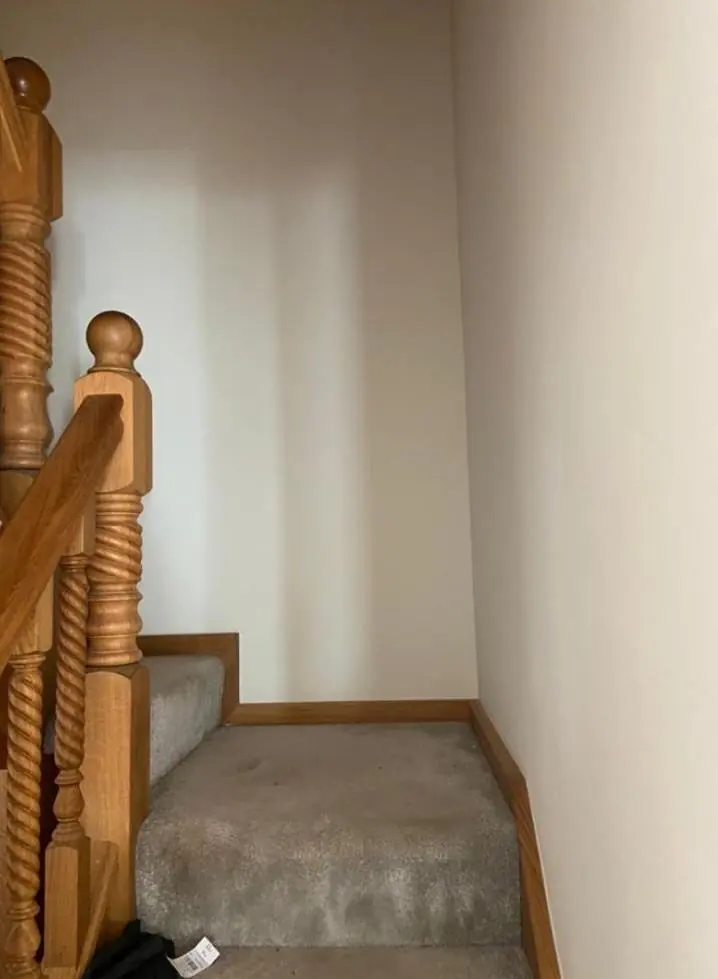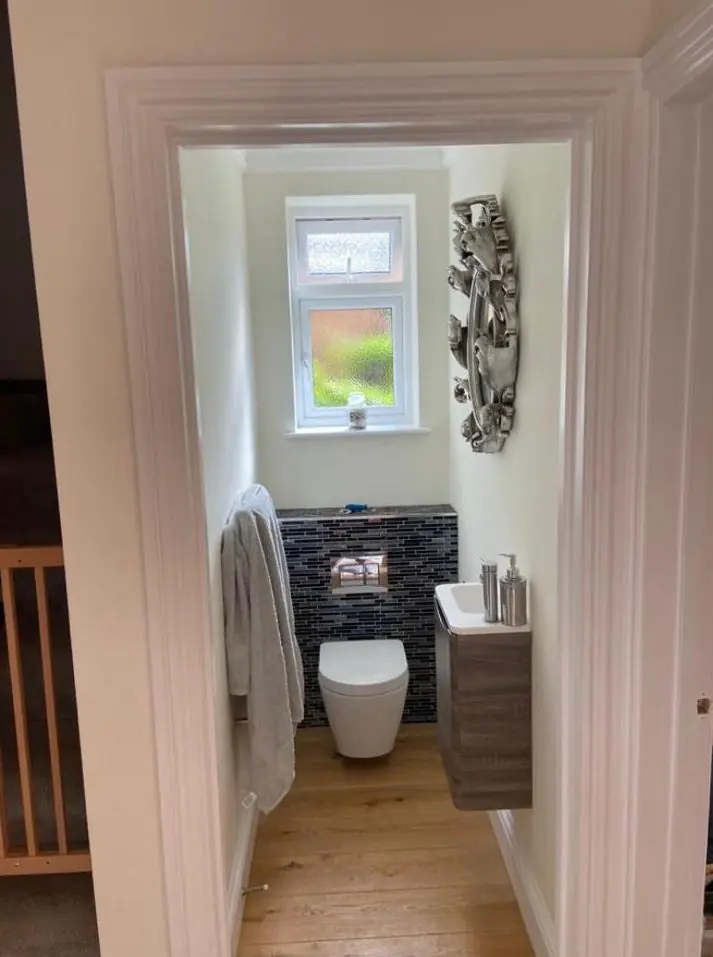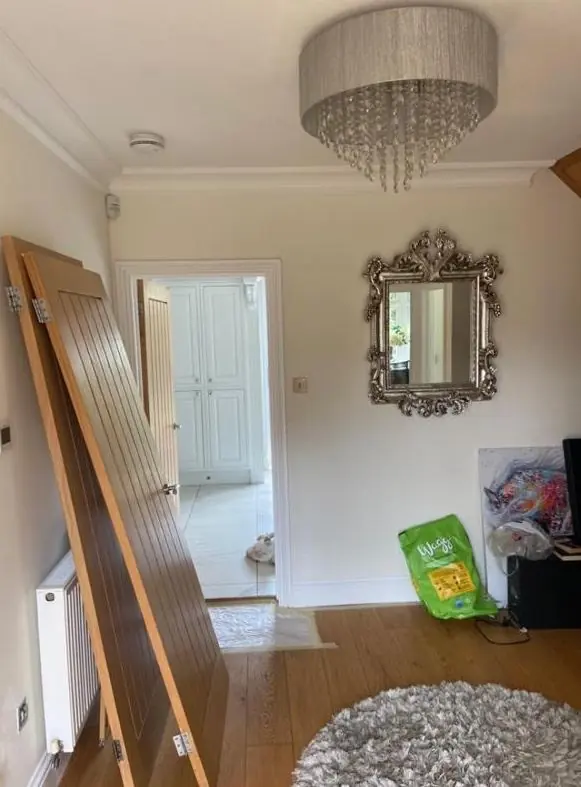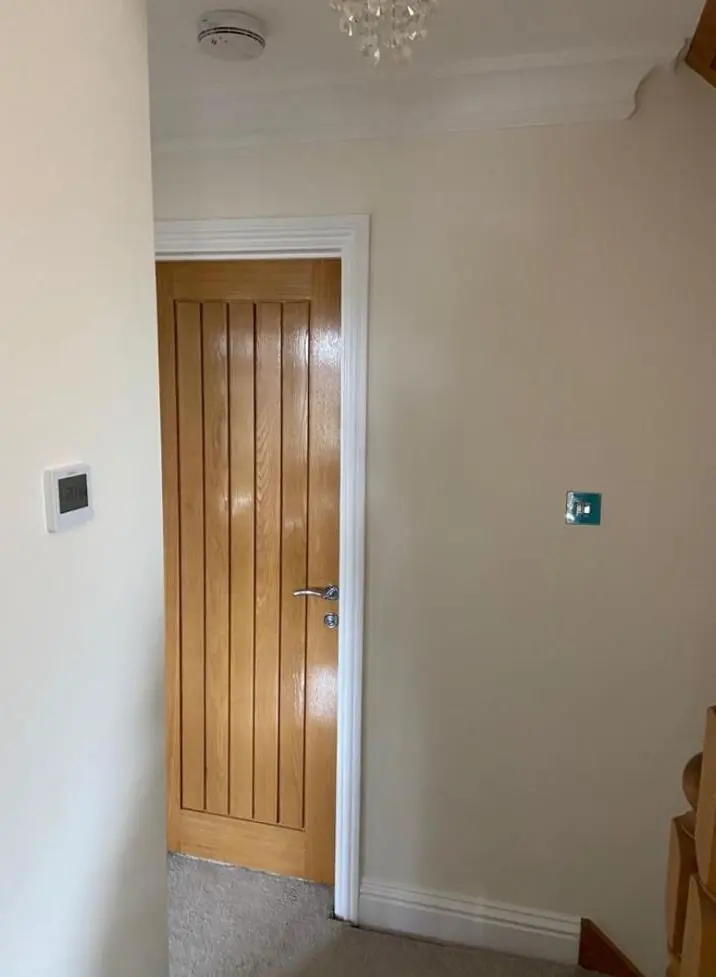
We decorate hallways, stairs and landings in Yardley Gobion, a village 9.7 miles south of Northampton town centre in postcode district NN12. Dean plans the access equipment and finishes around the type of house, whether that is a low-ceilinged limestone cottage, a formal 18th-century house or a post-war estate home.
Three kinds of stairwell in one village
Yardley Gobion grew in two very different bursts. The historic core along the High Street, Moorend Road, Chestnut Road and Grafton Road is limestone cottages and formal stone houses dating back to the 17th century. Then post-war building to the south took the population from 600 in 1961 to almost 1,400 a decade later. That history decides what a hallway and stairs job looks like here.
| House type | Typical stairwell | What it means for decorating |
|---|---|---|
| 17th-18th-century cottages | Steep, narrow, often boxed in, low ceilings | Compact platforms and short ladders; breathable paint where walls are old lime plaster |
| Formal 18th-century and later houses | Taller entrance halls and landings | Stair platforms or towers to reach high walls safely; more joinery to cut in |
| 1950s-1970s estate homes | Standard modern stairwell | Usual stair-ladder set-up; modern plaster and durable finishes |
Working on steep cottage stairs
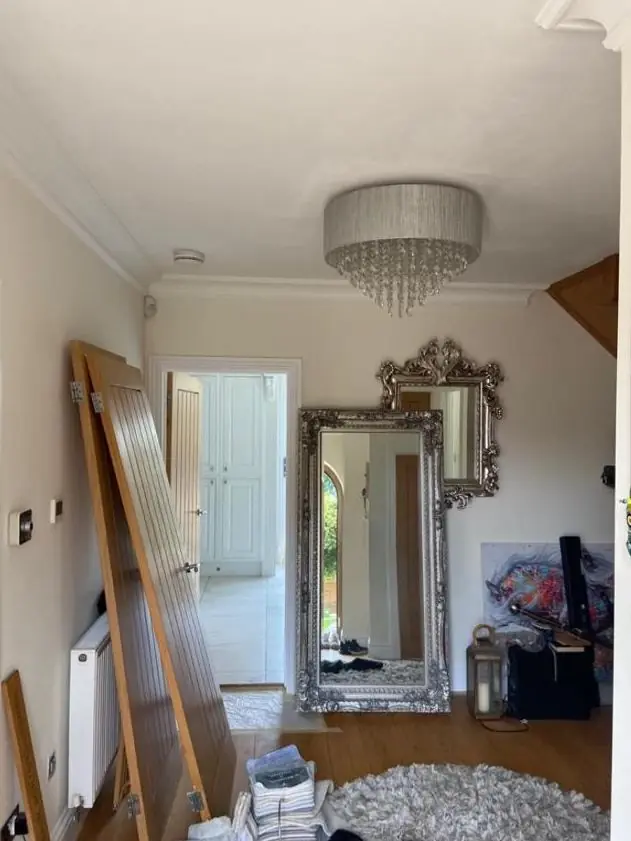
Cottage staircases in the older terraced ranges are often steep and tight, with little room for a full stair platform. Low eaves mean the landing ceiling can be within easy reach, but the drop over the stairwell is awkward because there is no flat floor to stand a ladder on. Dean uses adjustable combination ladders and short boards fixed so they cannot move, and he works down from the landing ceiling to the hall floor so nothing gets splashed after it is finished.
The walls are the other issue. Behind the plaster these cottages are coursed limestone rubble, and where the original lime plaster survives the walls are uneven and need to breathe. Modern vinyl emulsions can trap moisture in lime plaster and cause flaking, so on those walls we use breathable mineral or clay-based paints. Cracks along the stair string are common where old timber meets old wall, and they are raked out and filled with a flexible filler rather than hard plaster.
Taller halls in the formal houses
The larger houses in the village, such as Prospect House on the High Street, The White House on Chestnut Road and the Edwardian High Croft House, were built with more generous proportions. Their halls and landings are taller, and the drop over the stairwell can be well beyond the reach of a standard ladder. These jobs need a proper stair platform or a small access tower, set up so the stair treads are protected and the household can still use the stairs between working hours.
Formal houses also have more joinery: balusters, handrails, panelled doors off the landing and deep skirtings. Spindles are slow work and should be counted in the time estimate. Our main hallway, stairs and landing decorating page explains the order of work in more detail.
Estate stairwells south of the village
The post-war homes south of the village, near the primary school, have modern plaster or plasterboard and a straight or quarter-turn flight. The challenge there is wear rather than access. Hallways in family houses take scuffs from bags, buggies and bikes, so we suggest a scrubbable matt on the walls and a hard-wearing eggshell or satin on the skirtings, spindles and handrail. These houses are outside the conservation area, so there is no reason to stick to heritage colours.
Parking and dust on the older streets
Moorend Road rises and falls, its buildings stand right at the carriageway edge, and it squeezes tight where it meets the green and again outside No. 49. Chestnut Road is enclosed by walls, and the way into Mount Pleasant is one vehicle wide, unsurfaced gravel, without a pavement. On these streets we agree in advance where the van can stop to unload ladders and platforms, because a hall job means carrying long equipment through the front door. Dust sheets go down the full length of the hall and up the stairs, and the stair carpet is protected or taped back.
For more on the different house types in the village, visit our Yardley Gobion page.
Last updated by Dean, DH Painter & Decorator.