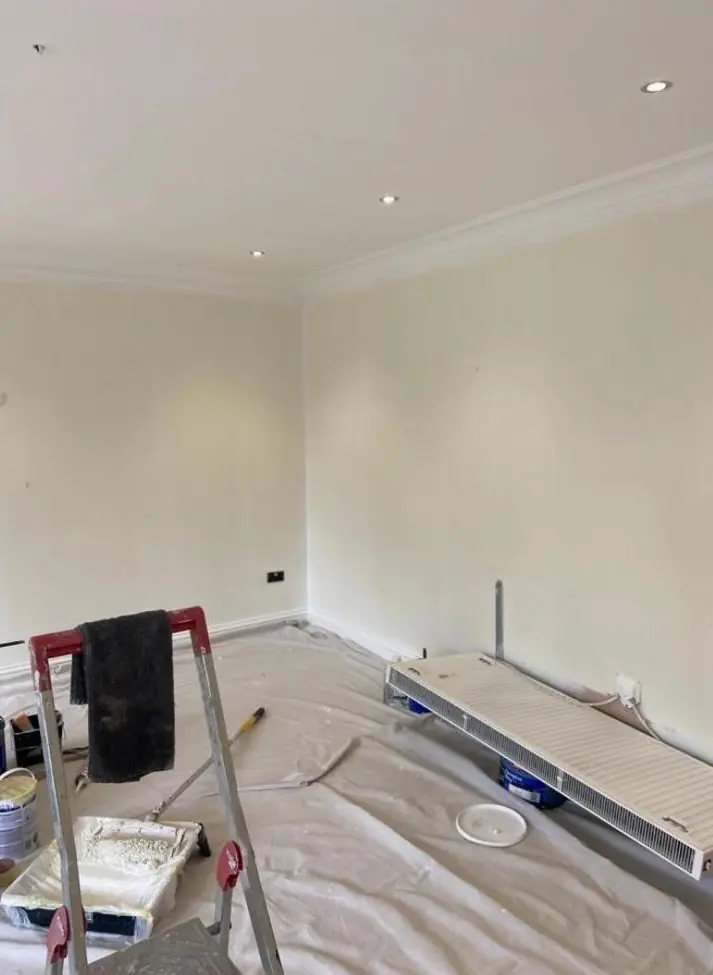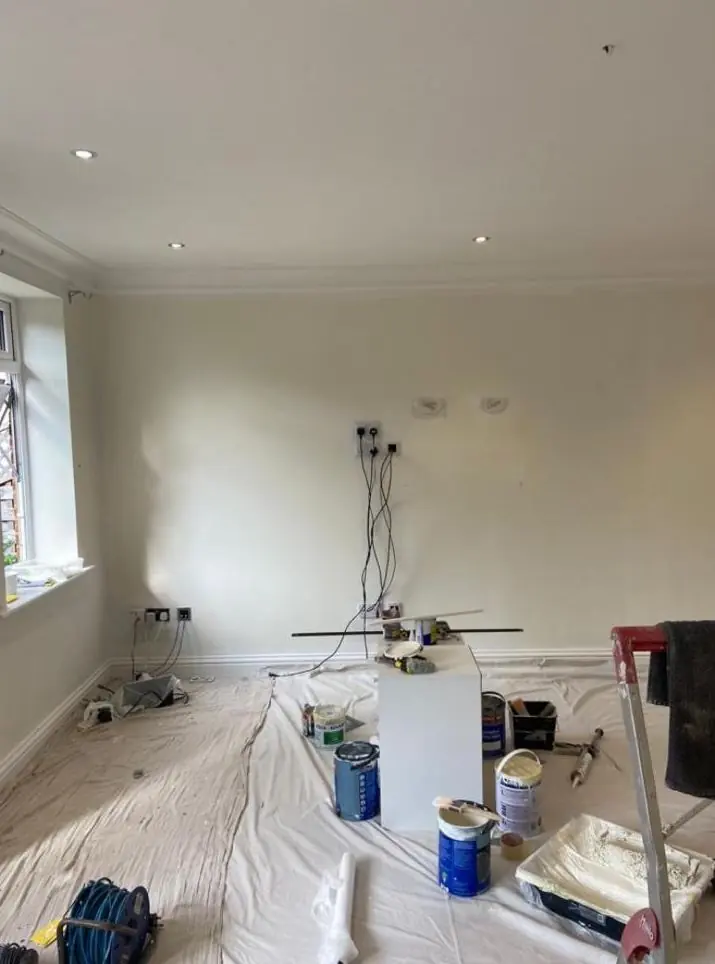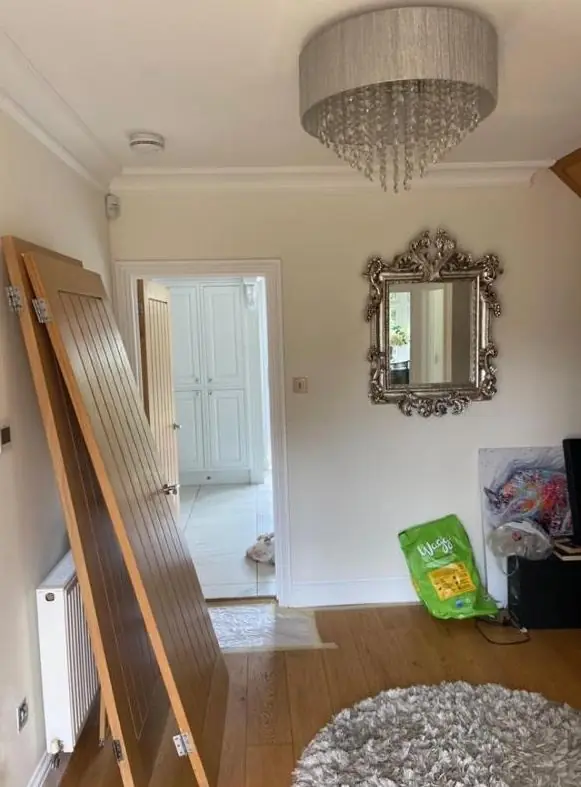
We hang wallpaper in Spratton, about 6.5 miles north of Northampton on the A5199. Dean sets out every room by hand, because the village's 17th and 18th century walls are rarely straight, and helps you pick a paper that suits the wall as well as the room.
Why a plumb line comes before the first drop
Walls in Spratton’s older cottages lean, bow and wander. The houses on Yew Tree Lane, Home Farmhouse on Smith Street and 7 Manor Road were built in the late 17th and 18th centuries of lias limestone and ironstone, finished inside with lime plaster that follows the stone underneath. Hang the first length tight into a corner on a wall like that and every drop after it drifts, until the pattern runs visibly downhill by the far side of the room.
So the setting out comes first. Dean finds the focal point of the room, usually a chimney breast or the wall you face as you walk in, drops a true vertical from there and works outwards in both directions. The awkward mismatch is pushed into the least-seen corner, often behind a door or in the angle beside a deep window reveal. Under low beams, where the ceiling line itself may slope, he decides whether the pattern should follow the beam or the floor, because it cannot follow both.
Matching the paper to the wall
A lot of wallpaper trouble in old houses starts in the shop. A tight geometric or a broad plain vinyl shows every undulation in a 300-year-old wall, while a busy small-scale pattern hides them. This is the rough guide we work to in the village:
| Wall | Papers that cope well | Papers to be wary of |
|---|---|---|
| Uneven lime plaster in a thatched cottage | Small, irregular florals and trails; papers with a loose repeat | Stripes, grids, large plain vinyls, metallic papers |
| Straighter walls in a Georgian room at a house like Spratton House or Northbank House | Formal damasks, traditional stripes, hand-printed papers | Very thin papers over plaster that has been patched many times |
| Newer plaster in an extension or conversion | Almost anything, once the plaster is sealed | Hanging before the plaster is fully dry |
On old walls we often hang a lining paper first, cross-lined at right angles to the finish paper. It evens out small dips, gives the paste something consistent to grip and stops the face paper splitting over hairline cracks. Breathable papers and traditional pastes are a better match for lime plaster than heavy vinyls, which can trap moisture against a solid stone wall in the same way a plastic paint does.
Stripping old paper without pulling the plaster off
Older Spratton rooms may have several layers of paper, sometimes painted over. Soaking and steaming them off is slow on lime plaster, which can soften and come away with the paper if it is rushed. We score lightly, steam in short bursts and stop to assess where the plaster underneath is weak. Any loose areas are made good and allowed to dry before lining starts, which is why stripping time is always built into the quote rather than guessed at.
Booking a room in the village
On a visit to Spratton, Dean will look at the walls, measure up, and help you work out how many rolls you need for your chosen pattern repeat, since large repeats waste more paper on tall or broken walls. In a listed house, papering over plain plaster is normally like-for-like decoration, but if historic paper or panelling is involved it is worth asking West Northamptonshire Council before anything comes down.
The full process is on our main wallpaper hanging page, and there is more about the village’s houses on our Spratton area page. If you are still choosing between papers, our colour and finish advice covers how patterns and paint colours work together.
Last updated by Dean, DH Painter & Decorator.