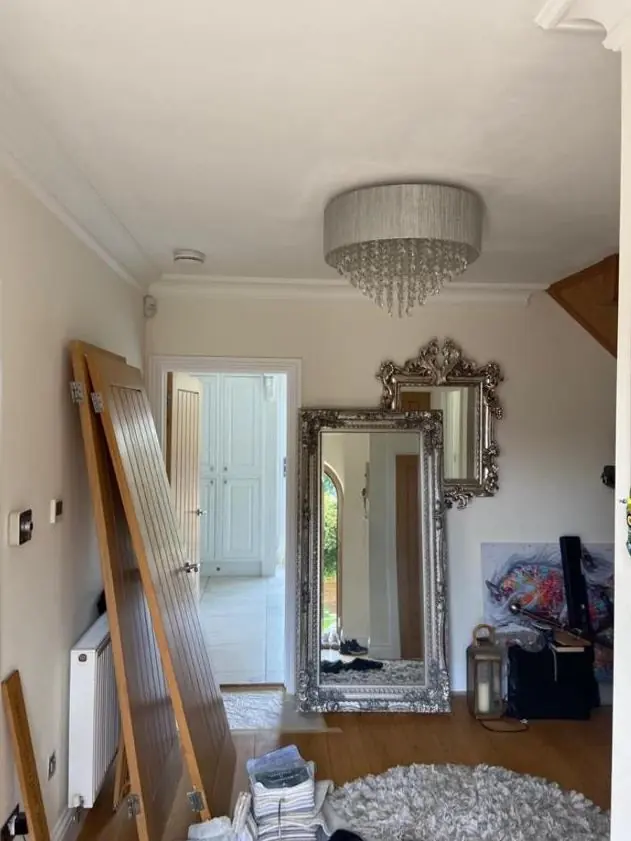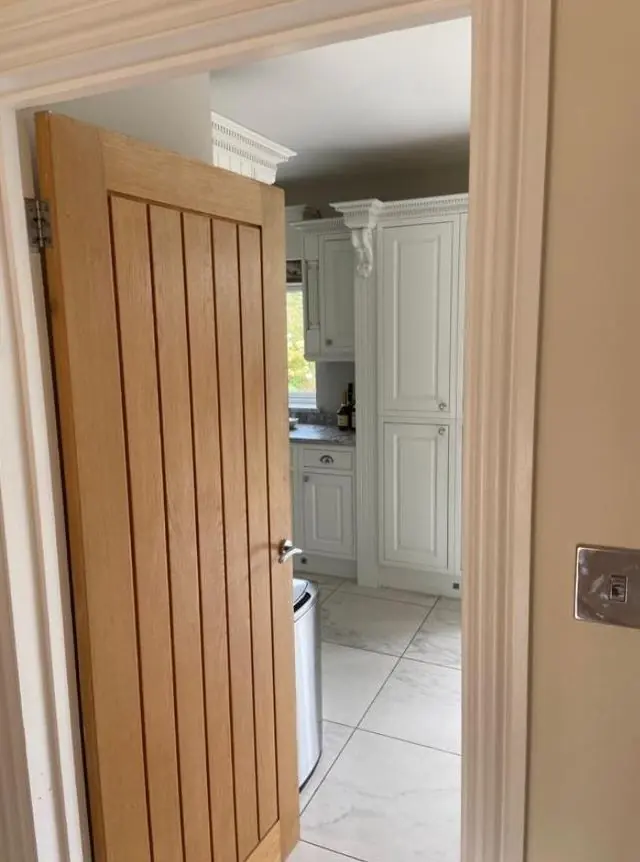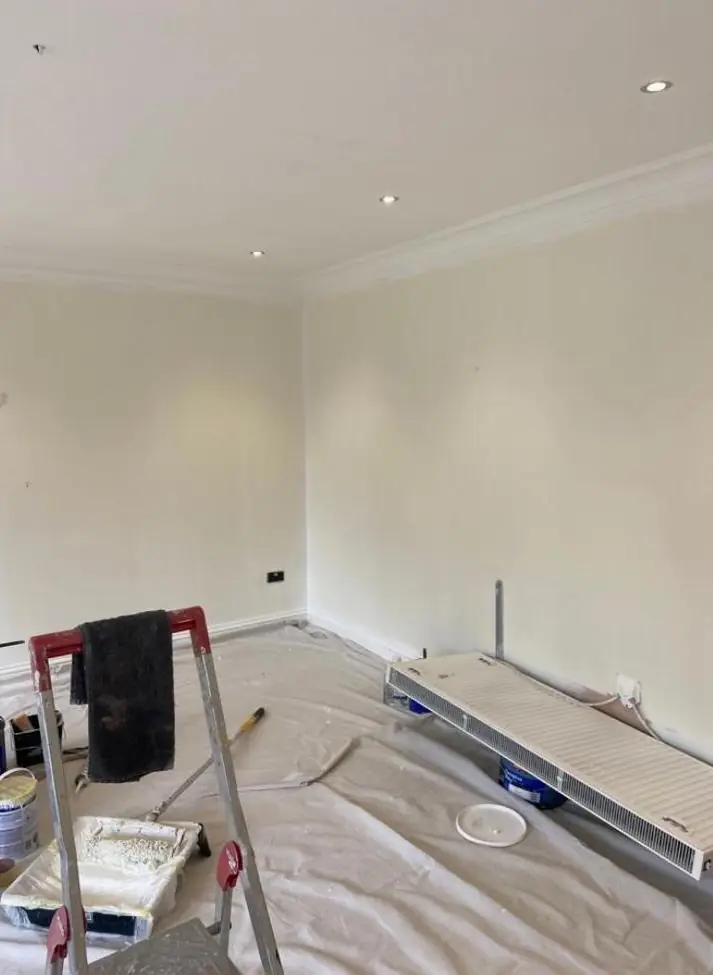
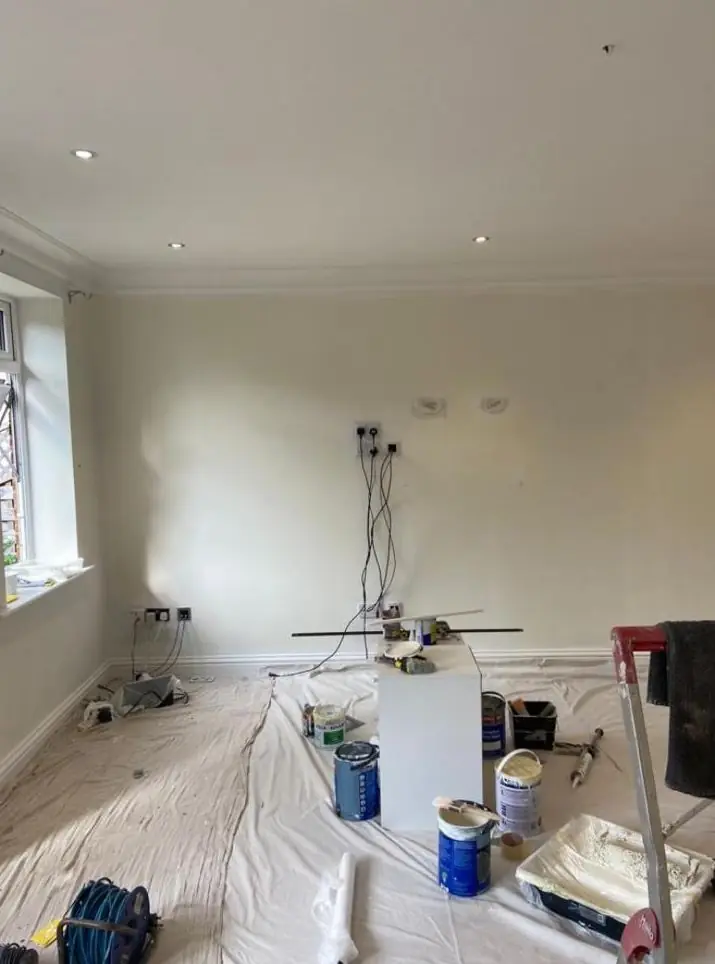
Dean paints the inside of homes in Spratton, the conservation village on the A5199 about 6.5 miles north of Northampton town centre. Most of the work here is in old stone houses, so the job is about breathable paint, patient preparation and safe access in tall or awkward rooms.
What sits behind the plaster in Spratton
The oldest houses in Spratton’s conservation area go back to the late 17th century. 2 Yew Tree Lane carries a datestone of 1684, Olde House Farm was built of ironstone in 1691, and The Fir Tree at 10 Yew Tree Lane is dated 1725. These are squared lias limestone and coursed ironstone rubble walls, many under thatch, and the plaster inside them was never meant to be flat or sealed.
That matters the moment a brush goes on. Solid stone walls with lime plaster move moisture in and out through the year. Cover them with a vinyl emulsion and the damp has nowhere to go, so it pushes the paint off in blisters or leaves a tidemark along the bottom of the wall. For rooms like these Dean will normally suggest a flat or matt breathable emulsion, such as a clay or mineral-based paint, and will check first whether a modern plastic paint is already on and failing.
Three kinds of room, three ways of working
| Type of house | What the walls are like | How we approach the paintwork |
|---|---|---|
| Lias and ironstone cottages on Yew Tree Lane, Manor Road and Smith Street | Uneven lime plaster, low beams, deep window reveals | Hand-filling with lime-compatible fillers, matt breathable paint, careful cutting-in along beams |
| Georgian houses such as Spratton House (1793) and Northbank House | Taller, straighter rooms with sash windows and moulded joinery | Fuller preparation of walls and woodwork, sash-friendly paint on glazing bars, sheen chosen to suit the room |
| Converted buildings such as The Old Chapel on Brixworth Road | High open walls and ceilings | Tower or long ladders set up safely, planned so one wall is finished in a single wet edge |
The cottages reward a slower pace. Old lime plaster can be soft and dusty, so loose areas are scraped back and consolidated before anything is filled. Hairline cracks in an old wall are part of its character, and chasing every one with a rigid filler usually just makes new cracks around the patch. Beams get masked by hand, because tape pulls at old limewash and dry timber.
Height, stairs and converted spaces
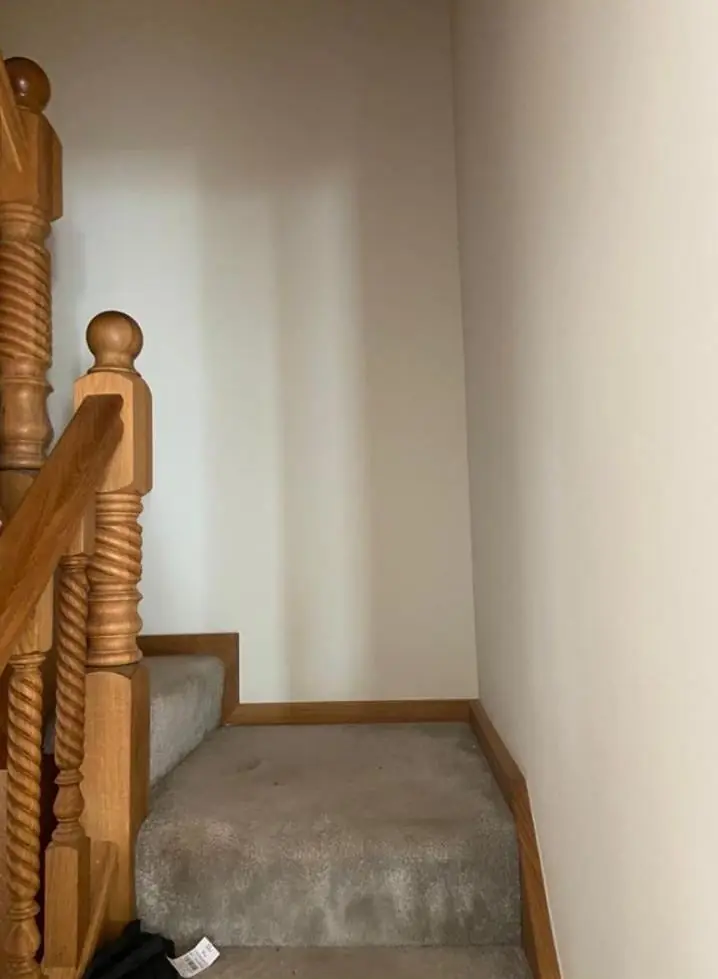
Not everything in Spratton is low and cottage-sized. Holly House on Church Road is a three-storey red brick house from the early 19th century, and a stairwell rising through three floors needs staging or a tower rather than a stepladder balanced on a landing. The Old Chapel, licensed in 1843 and turned into a home in 1982, is the kind of space where a single wall can be far taller than a normal room. Access is chosen for the building, with floors and treads protected and the house kept usable while the work goes on.
Converted spaces often mix old and new materials. A 1980s conversion may have modern plasterboard next to original masonry, and the two need different paints if the finish is going to last. We look at each wall rather than treating a room as one surface.
Getting a quote for a Spratton interior
Dean calls in before quoting, because in Spratton the state of the lime plaster, not the size of the room, decides how long a job takes. If your house is listed, like-for-like redecoration inside is normally fine, but stripping historic finishes or changing original features can need consent, so it is worth checking with West Northamptonshire Council first.
For what is included in a typical job, see our main interior painting service. There is more on the village as a whole on our Spratton area page, and our decorating cost guide explains what affects the price of a room.
Last updated by Dean, DH Painter & Decorator.