Dean gives colour and finish advice to Yardley Gobion homeowners as part of a decorating job, covering the NN12 village from our Northampton base about 9.7 miles to the north. Inside the conservation area, heritage colours and listed building rules shape the choice; the post-war houses have more freedom.
Starting from the stone
The historic core of Yardley Gobion is built of light yellow and grey limestone, roofed in red clay tile, slate and some thatch, with brick at Mount Pleasant and at Nos 50 to 54 at the west end of Moorend Road. Any exterior colour has to sit next to that stone, so we begin by looking at the walls themselves in daylight rather than at a chart. Against warm limestone, a stark brilliant white can look harsh and blue; softer off-whites, stone shades, muted greens, deep blues and dark reds usually look more settled. On the brick terraces, the yellow brick and stone detailing should stay bare, and the joinery colour has to work with both the red brick and the yellow.
What the conservation area appraisal means for a front door
The Yardley Gobion Conservation Area was designated in 1999, and its 2013 appraisal names small, cumulative changes to unlisted buildings as the main threat to the area’s character. It objects to uPVC replacements and proposes reviewing Article 4 Directions so that new doors and windows on significant buildings do not harm the area. Repainting is not replacement, but a colour change on a prominent front door is noticed in a village this compact. For listed buildings, such as Prospect House, Melita Cottage on Grafton Road or Nos 37 and 39 Moorend Road, a change of external colour may need listed building consent. Check with West Northamptonshire Council before you commit; we can help you gather paint references and sample photos to send them.
The appraisal also lists shop fronts and signage among things that can erode the area’s character, so a colour scheme for the Coffee Pot or any other High Street frontage should stay traditional.
A quick guide by house type
| House type | What drives the choice | What tends to work |
|---|---|---|
| 17th-18th-century limestone cottages | Plank doors, side-hung casements, timber lintels; many listed | Muted heritage colours, soft off-whites on casements |
| 18th-century formal houses | Six-over-six sashes, fanlights, panelled doors and surrounds | Off-white sashes with a deeper, considered door colour |
| Mount Pleasant and 50-54 Moorend Road | Red brick with yellow brick and stone detail | Joinery colours that suit both bricks; detail left unpainted |
| Post-war estate to the south | No conservation-area constraints | A wide choice, including modern greys and darker doors |
Valley light and big trees indoors
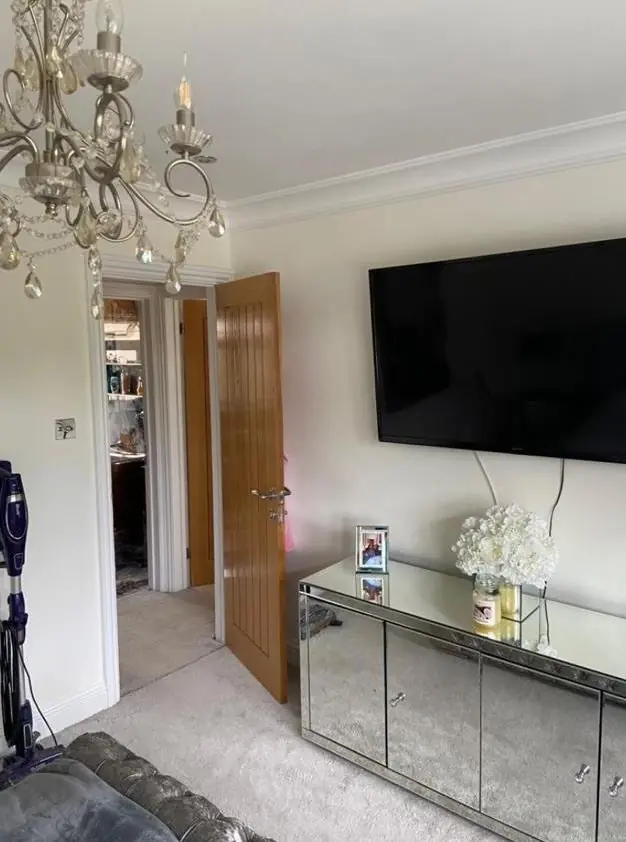
Colour reads differently here than in a town terrace. Yardley Gobion is perched on the Tove Valley side, and rooms that look north and east over the valley get cool, open light that can push greys and pale blues towards cold. Cottage rooms are often small, with low ceilings and modest windows, and the mature trees on Elm Green, Chestnut Green and in private gardens shade them for much of the summer. In rooms like these a warm off-white, or a colour with a yellow or red undertone, usually holds up better than a cool neutral. We put samples on the actual wall and look at them at the time of day you use the room. Dean’s wider approach to undertone and sheen is on the colour advice page.
Paint type limits the palette
On old lime plaster and painted stone, the right product narrows the colour range: breathable mineral and lime paints come in softer, chalkier tones than vinyl emulsions or acrylic masonry paints. We talk through finish and colour together, so you are not set on a shade that only exists in a paint unsuited to your walls. Advice is part of a decorating job we quote for, inside or out, and our exterior painting work on sashes and doors follows from it. The Yardley Gobion area page has more about the village’s buildings.
Last updated by Dean, DH Painter & Decorator.